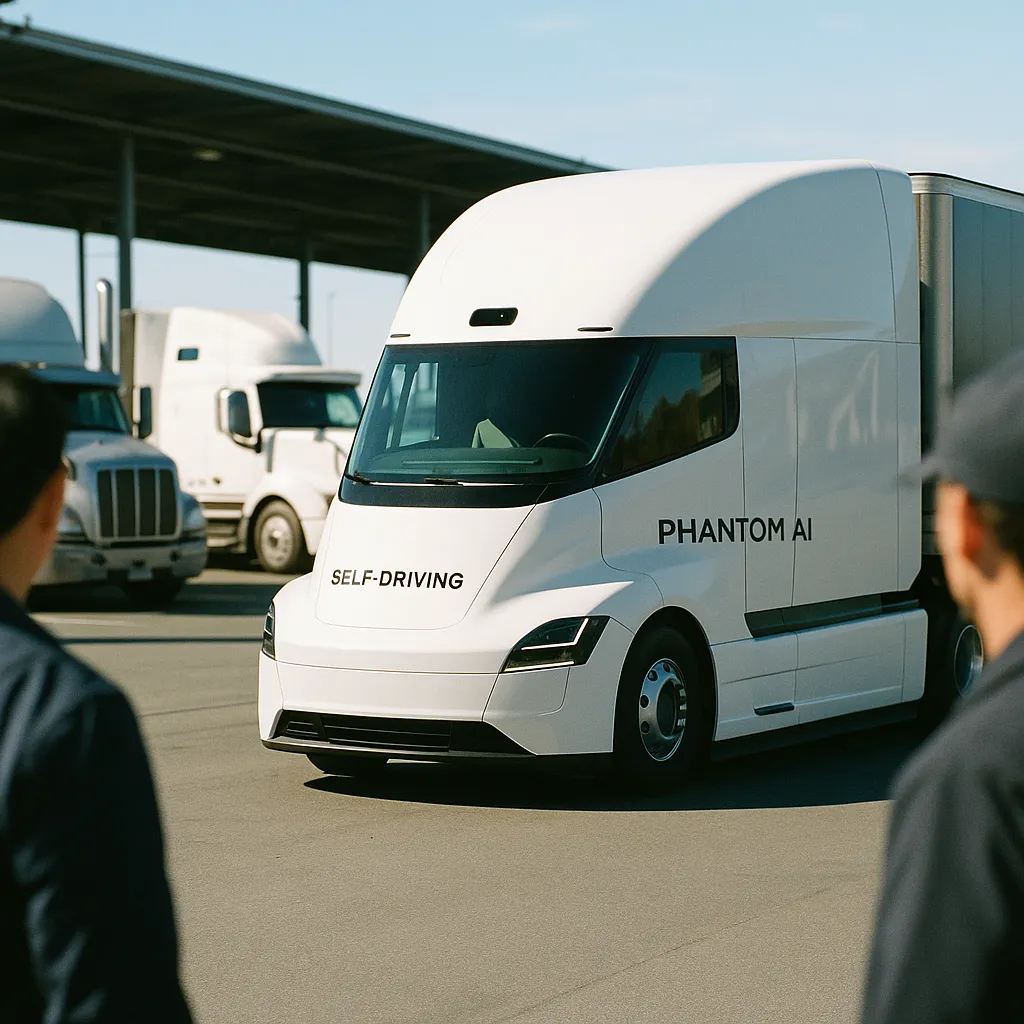
Electric truck maker Harbinger acquired autonomous-driving startup Phantom AI, betting that combining EV powertrains with self-driving software positions it ahead of Goldman Sachs' projected 2028 cost-parity crossover.
Harbinger Acquires Phantom AI to Build Self-Driving Electric Trucks
Electric truck maker Harbinger has acquired autonomous-driving startup Phantom AI, according to FreightWaves, bringing self-driving capability directly into its medium-duty EV platform. The deal is a calculated bet that the two most expensive capabilities in next-generation commercial vehicles — zero-emission powertrains and autonomous operation — are more viable built together than developed independently.
Harbinger builds medium-duty electric trucks: the class of vehicles used for last-mile delivery, grocery distribution, and regional freight. Phantom AI brings radar and camera-based perception systems and the software stack needed to navigate the semi-structured environments where those trucks operate — distribution centers, loading docks, and urban delivery routes. Together, they are building toward a platform that handles both electric propulsion and driver-optional operation without requiring fleet operators to integrate hardware from separate vendors.
Why the Timing Makes Sense
The autonomous trucking sector is approaching a structural inflection point that is reshaping how companies in the space think about capital allocation. Goldman Sachs projects that autonomous trucks will reach cost parity with human-driven trucks by 2028 — meaning the total cost of autonomous operation, including amortized hardware, software licensing, and remote oversight, will equal the loaded cost of a professional commercial driver including wages, benefits, and turnover costs.
That 2028 cost-parity projection has become the North Star for the industry. Fleet operators who have been watching autonomous trucking from the sidelines will face a different decision in two years: not whether to bet on an emerging technology, but whether to buy into economics that have crossed parity. The freight companies that have autonomous operations running before that crossover will have the operational knowledge — edge cases worked through, workflows adapted, customer integrations built — that new entrants will not.
That is the window Harbinger is positioning for. Acquiring Phantom AI is faster and cheaper than building comparable perception and autonomy software internally, and it adds a team with specific expertise in real-world operational complexity — the kind of knowledge that accumulates from years of handling unexpected scenarios in production environments.
How This Fits the Broader Industry Pattern
The autonomous freight industry is sorting into two groups: companies deploying now in constrained, high-predictability corridors, and companies building toward broader autonomous capability for more complex environments.
Get this in your inbox.
Daily AI intelligence. Free. No spam.
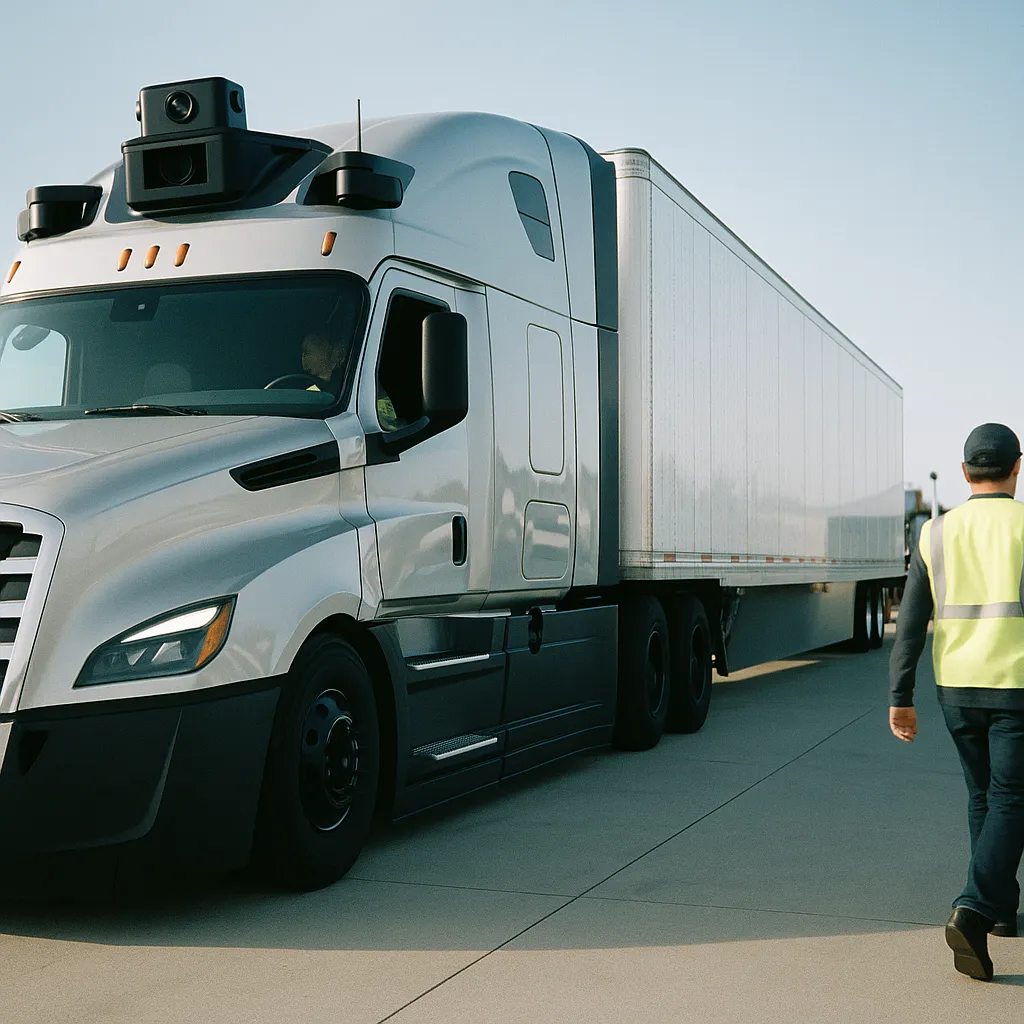
Aurora launched commercial autonomous freight service with McLane Company on the Dallas-to-Houston highway corridor in 2026. Waabi is building toward door-to-door autonomous trucking with a focus on fully driverless operation. Kodiak Robotics is partnering with Roehl Transport for long-haul highway runs.
Each of these is a highway-focused deployment, which is the simpler version of the autonomous trucking problem. Highways are predictable environments: lanes are marked, speeds are consistent, and unexpected obstacles are relatively rare. Medium-duty urban delivery — Harbinger's target market — is substantially harder. Construction zones, double-parked vehicles, pedestrian-heavy areas, loading dock maneuvers, and tight urban intersections generate edge cases that highway systems are not designed to handle.
Harbinger's bet is that the harder problem is also the larger market. Medium-duty trucks handle a significant share of commercial freight by transaction count even if highway trucking dominates by tonnage.
What This Means for Fleet Operators
For fleet operators buying medium-duty trucks today, Harbinger's move is worth monitoring but is not yet actionable. The company is building toward autonomous capability — not shipping it. The acquisition gives Harbinger the technical foundation to offer autonomous operation as a software upgrade path on its EV platform rather than requiring fleet operators to retrofit hardware from a separate vendor later.
That integrated approach has real long-term value. A fleet that buys Harbinger EVs now has a clear upgrade trajectory to autonomous operation as Phantom AI's software matures and regulatory approvals expand, rather than facing a hardware replacement cycle or complex third-party integration.
For the broader autonomous freight market, the consolidation of EV and AV capability in a single platform represents a competitive architecture that may ultimately dominate: not pure-play autonomy companies licensing software to legacy truck makers, but vertically integrated platforms that control both the powertrain and the autonomy layer.
What to Watch
Watch for Harbinger's first public announcement of commercial autonomy pilots, which would signal that the Phantom AI integration has reached operational readiness. Companies in the autonomous freight space that cannot show production deployments by the end of 2026 will struggle to raise the capital needed to reach the 2028 cost-parity window with operational credibility. The next 12 months will sort the serious players from the roadmap announcements.
By Hector Herrera
Did this help you understand AI better?
Your feedback helps us write more useful content.
Get tomorrow's AI briefing
Join readers who start their day with NexChron. Free, daily, no spam.