Waabi is pursuing complete door-to-door autonomous trucking — urban streets, loading docks, depot operations — while Aurora and Kodiak stick to highways. The harder bet could win by capturing the full unit economics that highway-only autonomy cannot.
Waabi Is Betting on Full Door-to-Door Autonomy While Its Rivals Stay on the Highway
By Hector Herrera | May 12, 2026
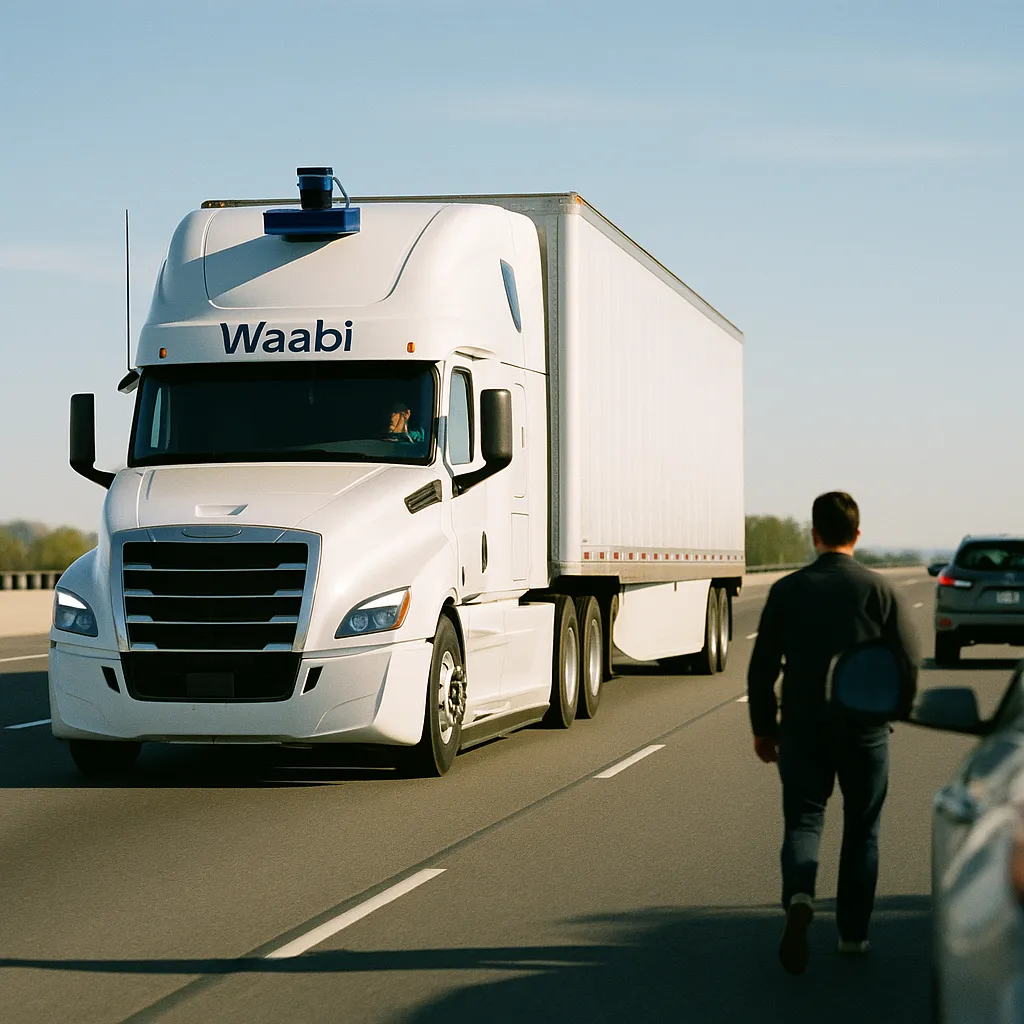
Autonomous trucking startup Waabi is pursuing a fundamentally different strategy than Aurora and Kodiak — one that is technically harder, commercially riskier, and potentially much more valuable if it works. According to FreightWaves, while its primary competitors limit driverless operation to interstate highway segments, Waabi is building toward complete door-to-door autonomy: urban streets, loading docks, and depot operations included. The company is backed by a $1 billion raise with Uber Freight as anchor partner and is racing to validate the approach before Goldman Sachs' projected 2028 autonomous trucking cost-parity window opens.
The strategic choice is not just about ambition. It's about unit economics — and who captures the actual value of autonomous freight.
Why the Highway-Only Approach Has a Ceiling
Aurora and Kodiak have each demonstrated compelling highway performance. Aurora launched commercial driverless operations on Texas interstates in 2024. Kodiak has active partnerships with major carriers. The highway-only model is technically safer to deploy because interstates are structured, predictable environments with minimal pedestrian interaction, controlled access points, and well-mapped road conditions.
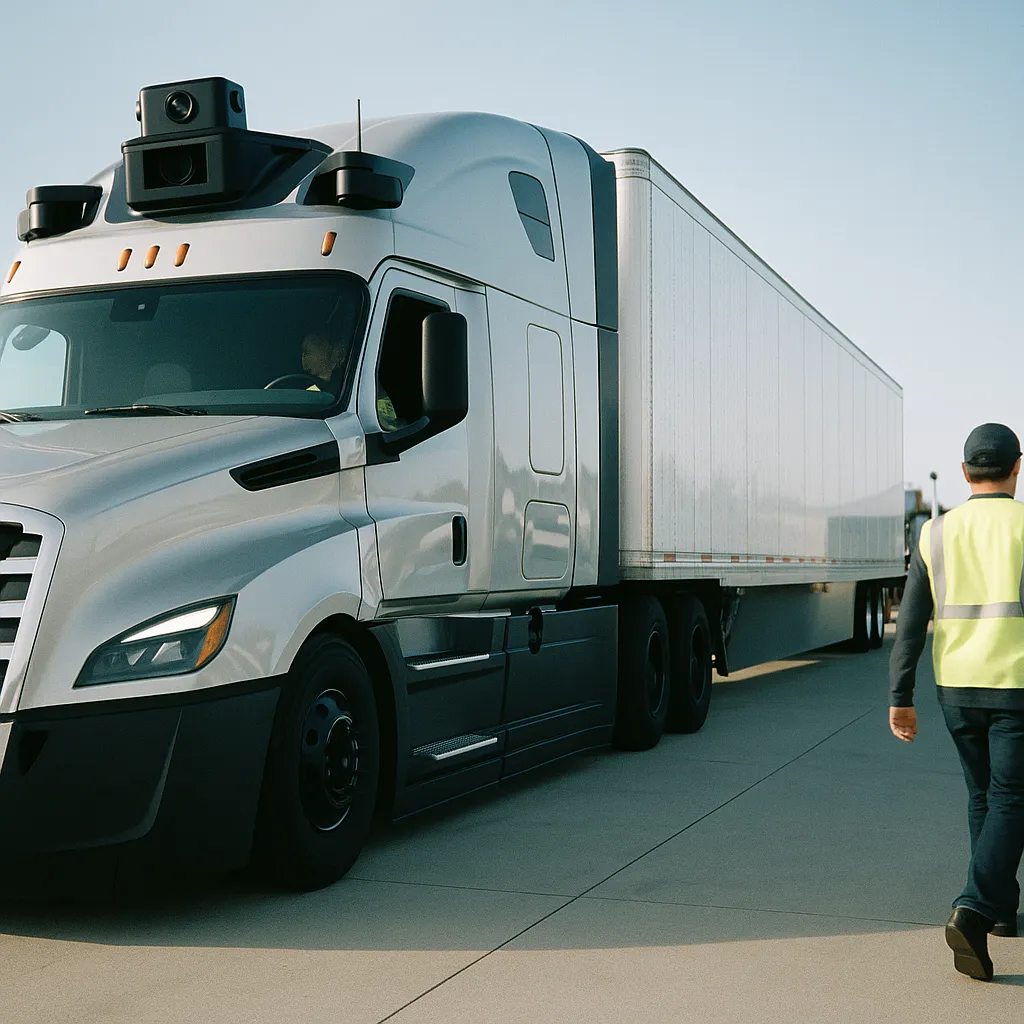
The problem is driver handoffs. Highway-only autonomous systems require human drivers at origin and destination — to navigate the freight yard, manage dock operations, handle urban surface streets, and manage the final miles into a shipper's facility. That means every driverless interstate leg still requires two drivers: one at origin, one at destination.
The math doesn't close. A truck driving autonomously for 600 highway miles but requiring a driver at both ends captures only part of the labor cost reduction. The portion of the route where freight moves slowest, where accidents most frequently occur, and where the driver's judgment is most critical — urban and terminal operations — remains fully manual.
Waabi's thesis is that partial autonomy produces partial savings, and partial savings won't justify the capital required to deploy autonomous fleets at scale.
Get this in your inbox.
Daily AI intelligence. Free. No spam.
Waabi's Technical Approach
Waabi was founded by Raquel Urtasun, former chief scientist at Uber ATG, and is built around an AI-first architecture that it argues is fundamentally more scalable than the sensor-fusion approaches used by earlier autonomous vehicle companies.
The core distinction: Waabi trains its system heavily in simulation before real-world deployment, using AI-generated scenarios to expose its models to situations that would take years to encounter organically on public roads. The company argues this approach compresses the training timeline required to achieve competence in complex environments — exactly the urban and terminal operations that highway-only competitors are avoiding.
What "door-to-door" requires technically:
- Urban intersection navigation with pedestrians, cyclists, and construction zones
- Freight yard and depot operations including backing into loading docks
- Variable road conditions including surface streets without high-definition mapping
- Communication with dispatchers and dock workers during pickup and delivery
These are genuinely harder problems than highway driving. The safety envelope is narrower, the edge cases more frequent, and the stakes for errors higher given proximity to people. Waabi is not claiming it has solved these problems — it is claiming its architecture is better positioned to solve them than the incremental approaches used by highway-first competitors.
The Uber Freight Partnership
Uber Freight's anchor position in Waabi's $1 billion raise is strategic, not incidental. Uber Freight operates one of the largest digital freight brokerage platforms in North America, connecting shippers with carriers across hundreds of thousands of lanes. That gives Waabi:
- Route data at scale — the specific lanes, freight yards, and shipper facilities that represent the highest-volume commercial opportunities
- Commercial pipeline — a direct path to shipper relationships that most autonomous trucking companies spend years trying to establish
- Operational intelligence — real-world data on freight pickup and delivery patterns that can inform simulation training
For Uber Freight, the investment represents a hedge: if door-to-door autonomy works, Uber Freight's network can route volume to Waabi's trucks and extract value from both sides of the transaction. If highway-only autonomy becomes the dominant commercial model, Uber Freight can route volume to Aurora and Kodiak instead.
The 2028 Cost-Parity Window
Goldman Sachs has projected that autonomous trucking will reach cost parity with human-driven freight by approximately 2028 — meaning an autonomous truck will be able to move a load at a cost per mile competitive with a truck driven by a human. That projection is based on improving hardware costs, software maturity, and the compounding labor shortage in commercial trucking.
The 2028 timeline is consequential because it defines when large carriers and shippers will commit to fleet-level autonomous deployment rather than pilot programs. The companies with proven technology and commercial scale at that point will capture the initial contracts; latecomers face a much harder entry.
Waabi is not running a research program. It is racing to prove door-to-door autonomous operations before 2028 so it can compete for those fleet contracts with a technically superior product — one that eliminates driver handoffs entirely and delivers the full cost reduction that makes autonomous trucking's economics genuinely compelling.
What to Watch
Waabi's 2026 operating milestones — specifically whether it demonstrates commercial driverless operations in urban and terminal environments, not just highways — will determine whether its architectural bet is paying off. Uber Freight's integration depth (is it actually routing commercial volume to Waabi trucks, or is this a financial-only relationship?) is the other signal to track. If Aurora's highway-only commercial operations show strong unit economics despite the handoff cost, that would undercut Waabi's thesis. If Aurora's handoff costs prove structurally limiting, it validates Waabi's more ambitious approach.
Hector Herrera covers autonomous vehicles and logistics at NexChron. Source: FreightWaves
Did this help you understand AI better?
Your feedback helps us write more useful content.
Get tomorrow's AI briefing
Join readers who start their day with NexChron. Free, daily, no spam.