Tesla launched the Cybercab as a fully driverless commercial robotaxi—but at least 17 accidents involving its autonomous systems since 2025 are drawing regulator scrutiny.
Tesla Launches Cybercab as a Fully Driverless Robotaxi—But 17 Accidents Shadow Its Safety Record
By Hector Herrera | May 22, 2026
Tesla launched the Cybercab—a fully autonomous two-seater with no steering wheel, no pedals, and no provision for a human driver—as a commercial robotaxi in 2026, entering large-scale production for public ride-hailing deployment. The rollout is Tesla's most consequential autonomous vehicle claim to date. It is also launching against a documented record of at least 17 accidents involving Tesla's autonomous systems between 2025 and 2026, drawing pointed questions from regulators and safety researchers about whether the AI stack is ready for unsupervised commercial operation.
Why it matters: A vehicle built exclusively for autonomous operation is categorically different from a driver-assist feature. There is no fallback. If the AI makes a wrong decision at speed, the only question is how much harm results.
Background
Tesla has been developing its Full Self-Driving (FSD) system for nearly a decade, delivering a series of software upgrades that progressively expanded autonomous capabilities while maintaining the legal requirement that a human driver remain alert and ready to intervene. FSD, even at its most capable, is classified as SAE Level 2 automation—meaning it assists a human driver, not replaces one.
The Cybercab changes that framework entirely. According to Vision Times, the vehicle is designed for Level 4 or Level 5 autonomous operation: no manual override is possible because no manual controls exist. It entered production in 2026 with plans for commercial deployment in select U.S. markets. Tesla has not publicly confirmed a pricing structure for its ride-hailing service.
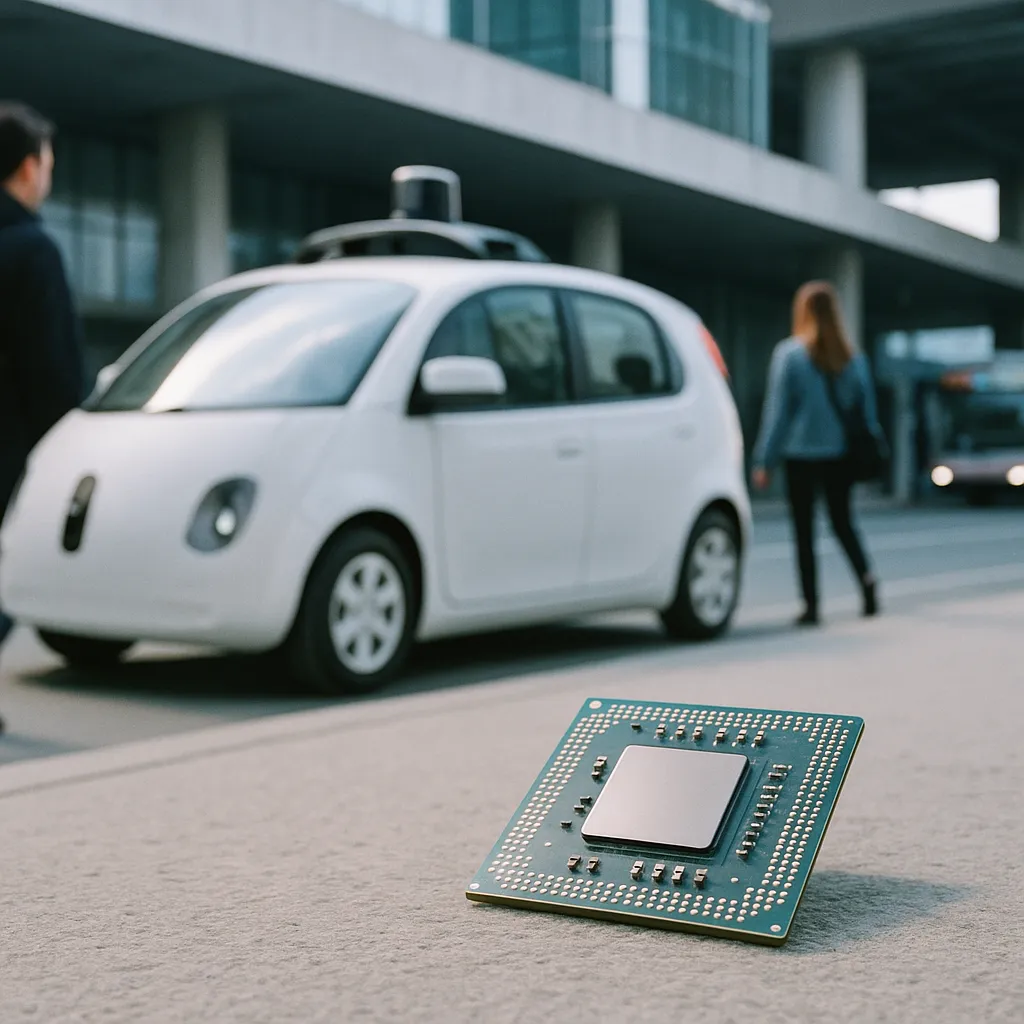
The Cybercab runs on Tesla's in-house FSD chip and neural network stack, which processes inputs from cameras and ultrasonic sensors without lidar—a hardware design that has been a persistent point of contention with autonomous vehicle engineers who argue that camera-only systems have fundamental blind spots in adverse conditions.
The Accident Record
The safety data is the central tension in this launch. Tesla's autonomous systems—across all vehicles running FSD variants—were involved in at least 17 accidents between 2025 and 2026. Key context on what those numbers mean:
Get this in your inbox.
Daily AI intelligence. Free. No spam.
- The 17 incidents span Tesla's broader FSD fleet across millions of vehicles, not Cybercab units specifically (which are new to market)
- The National Highway Traffic Safety Administration (NHTSA) has conducted multiple formal investigations into Tesla autonomous systems, several resulting in recalls of FSD software
- Tesla disputes the characterization that its systems are unsafe, citing aggregate miles-per-incident rates it says compare favorably to human drivers
- Safety researchers counter that this comparison is complicated by the fact that FSD users tend to drive in controlled conditions—highways, clear weather, familiar routes—rather than the full distribution of driving environments human drivers navigate
No Cybercab-specific safety data exists yet because the vehicle is new. But the pattern established by FSD across Tesla's fleet is the only prior signal regulators and operators have to assess.
The Regulatory Gap
Federal autonomous vehicle regulation in the United States has a structural problem: NHTSA has no pre-market approval authority over autonomous driving systems. Unlike the FDA's drug approval process, there is no requirement for an autonomous vehicle company to demonstrate safety before deployment. NHTSA can investigate after incidents and require recalls, but the burden of proof runs backward—harm must occur before federal action is possible.
State regulators operate differently:
- California requires a robotaxi permit from the Department of Motor Vehicles and approval from the California Public Utilities Commission before commercial driverless ride-hailing—a process that Waymo navigated over several years with a documented safety record
- Texas and Florida have more permissive frameworks that give manufacturers broader latitude
Tesla has not publicly confirmed which states are in its initial Cybercab launch market, which makes the applicable regulatory standard unclear.
What This Means
For consumers: Early Cybercab riders are participating in what is functionally a large-scale real-world test. That is a common dynamic in technology product launches—but the risk profile of a software bug in a robotaxi is qualitatively different from a bug in an app.
For competitors: Waymo has logged over one million paid rides in commercial driverless operation with a carefully documented safety record built over years of supervised testing. Tesla's commercial push without an equivalent track record intensifies pressure on Waymo to accelerate scaling while also raising regulatory scrutiny across the entire AV industry.
For AI supply chain: The Cybercab's performance will be the most direct commercial test of Tesla's vertical AI integration strategy—in-house chips, in-house neural networks, proprietary data. Strong performance validates the model. High-profile failures would accelerate calls for third-party safety certification.
For federal policy: The gap between AV deployment speed and federal regulatory authority has been apparent for years. Tesla deploying a steering-wheel-free vehicle commercially may be the event that finally forces Congress and NHTSA to act on pre-market safety standards for autonomous systems.
What to Watch
NHTSA's response to the Cybercab commercial launch is the immediate signal to track. Any incident involving the driverless variant will trigger intense scrutiny and could produce a formal investigation within weeks. Watch Tesla's stated deployment pace—which cities, how many vehicles, and how quickly—as the indicator of whether this is a staged safety-conscious rollout or an aggressive scaling push designed to build a usage data lead over competitors.
Source: Vision Times
Did this help you understand AI better?
Your feedback helps us write more useful content.
Get tomorrow's AI briefing
Join readers who start their day with NexChron. Free, daily, no spam.