AI Is Displacing Tasks Faster Than It Eliminates Roles — But the Gap Is Narrowing
AI is automating discrete job tasks far faster than it eliminates entire roles — but a November 2 analysis warns the gap is closing as model capabilities compound.
Top Stories
All Sections
Finance
About
How AI is transforming work & labor. Daily coverage by Hector Herrera.
AI is automating discrete job tasks far faster than it eliminates entire roles — but a November 2 analysis warns the gap is closing as model capabilities compound.
Canva is laying off 1,271 employees after AI feature serving costs ballooned beyond projections, forcing the company to cut its revenue growth forecast from 30% to 20%.
New research shows workers laid off due to AI automation take roughly a month longer to find new jobs and are 10 percentage points more likely to still be unemployed a year later — a gap that retraining programs aren't closing.
Gartner warns that roughly 30% of employees let go in AI-driven layoffs will be rehired by their former employers by 2029 at significantly higher cost, as early workforce automation experiments come back with real-world feedback that contradicts the original business case.
Goldman Sachs research finds workers displaced from AI-exposed roles take a full month longer to find new jobs — and are 10 percentage points more likely to remain unemployed a year later.
Companies that cited AI automation in 2026 layoffs are now posting jobs — but for workers with AI collaboration skills, not the roles they eliminated.
Oracle is cutting 21,000 jobs — its largest single workforce reduction — as AI automation tools hit a sector pace of 450 tech layoffs per day, 4.5 times last year's total.
GitHub announced at Universe 2026 it is repositioning as an AI agent-driven software delivery platform, with a new standalone Copilot app designed to manage code autonomously.
GitHub's Copilot Fusion automatically routes coding tasks to the cheapest capable model, matching premium AI coding tools at roughly half the cost.
135,000 tech workers have been laid off in AI-attributed cuts through October 28 — a 450-per-day pace — led by Microsoft's voluntary buyout offer to roughly 60,000 employees.
Bill Gates warned that AI and robotics could trigger a 20-year structural employment crisis and urged governments to build retraining and safety-net infrastructure now — before displacement arrives at scale.
Microsoft is offering voluntary severance to roughly 60,000 employees — about 27% of its global workforce — as the company accelerates its pivot to AI infrastructure.
China is the first major economy to require formal employment-impact assessments as a legal condition for AI deployment in workforce-heavy sectors. A State Council directive published October 23 makes this a government gate, not a suggestion.
Goldman Sachs forecasts up to 9% of the global workforce faces AI displacement — but argues mass layoffs will wait for the next economic downturn, when companies will execute cuts using automation infrastructure built during the current expansion.
The Searchlight Institute has published a revenue-neutral federal tax blueprint to fund enhanced unemployment insurance and retraining for workers displaced by AI, as Goldman Sachs estimates the technology is eliminating roughly 16,000 net U.S. jobs per month.
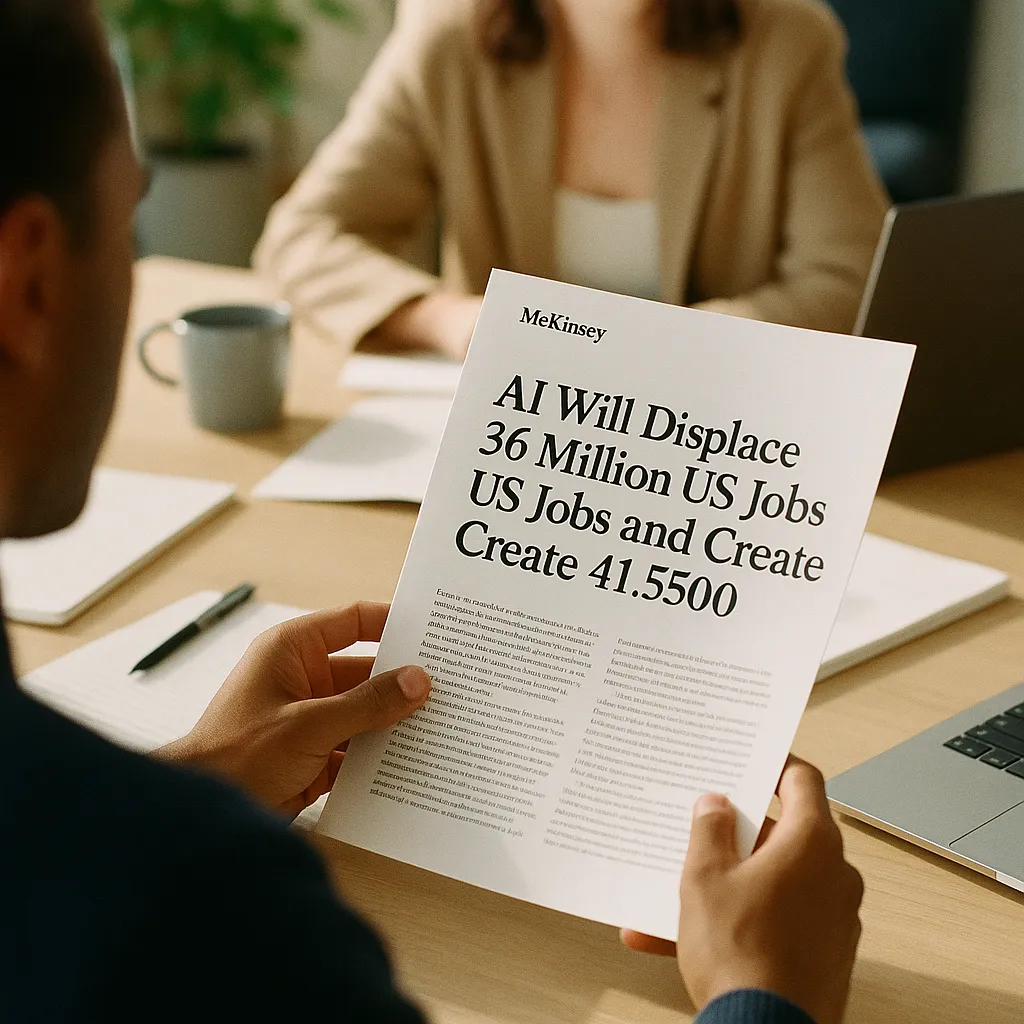
McKinsey projects AI and automation will net-create five million US jobs by 2035 — but only 1 in 7 displaced workers has a clear path to a growing occupation, and 120,000 job cuts have already cited AI in 2026 alone.
SAP is acquiring TechWolf, whose AI-powered skills graph maps employee capabilities and labor market signals, embedding it into SuccessFactors for 10,000+ enterprise customers.
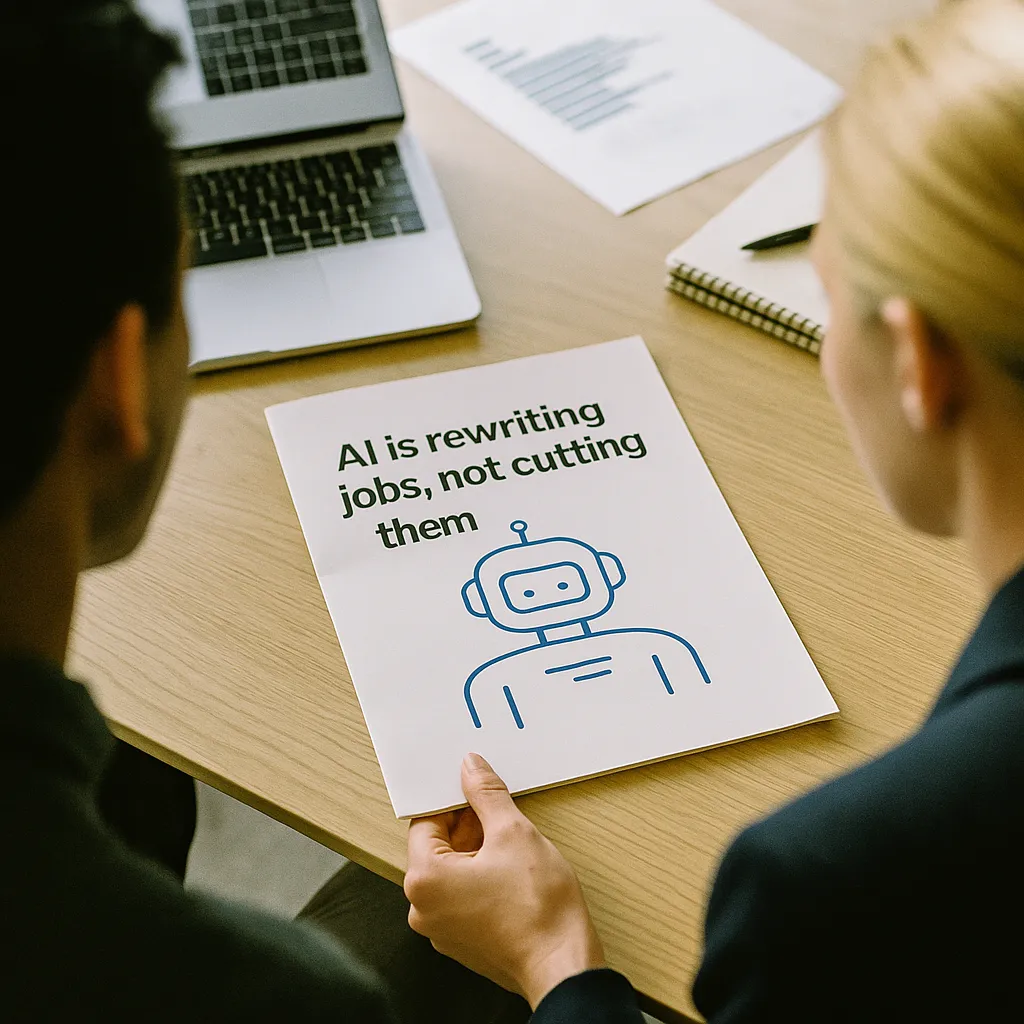
Workday's October 2026 Global Workforce Report finds AI builder skills demand jumped 51% in a year while basic prompting fell 25% — jobs are being rewritten, not eliminated.
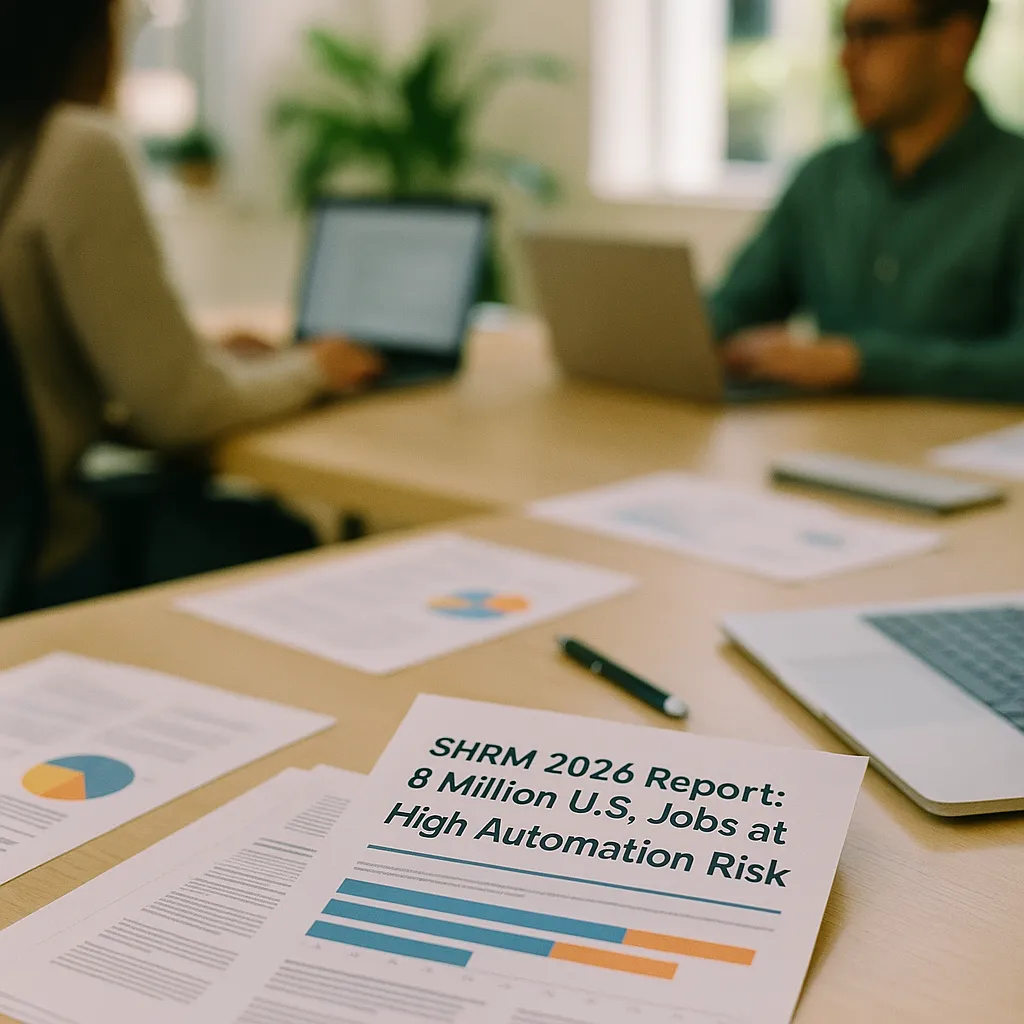
SHRM's 2026 report identifies 7.9 million U.S. jobs at high automation risk, with nearly 80% of working women in roles significantly exposed to AI displacement — versus 58% of men.
Daily AI users report 68% job security confidence; workers with limited AI access report just 14%. New research documents a growing skill fault line that risks becoming a permanent structural divide.