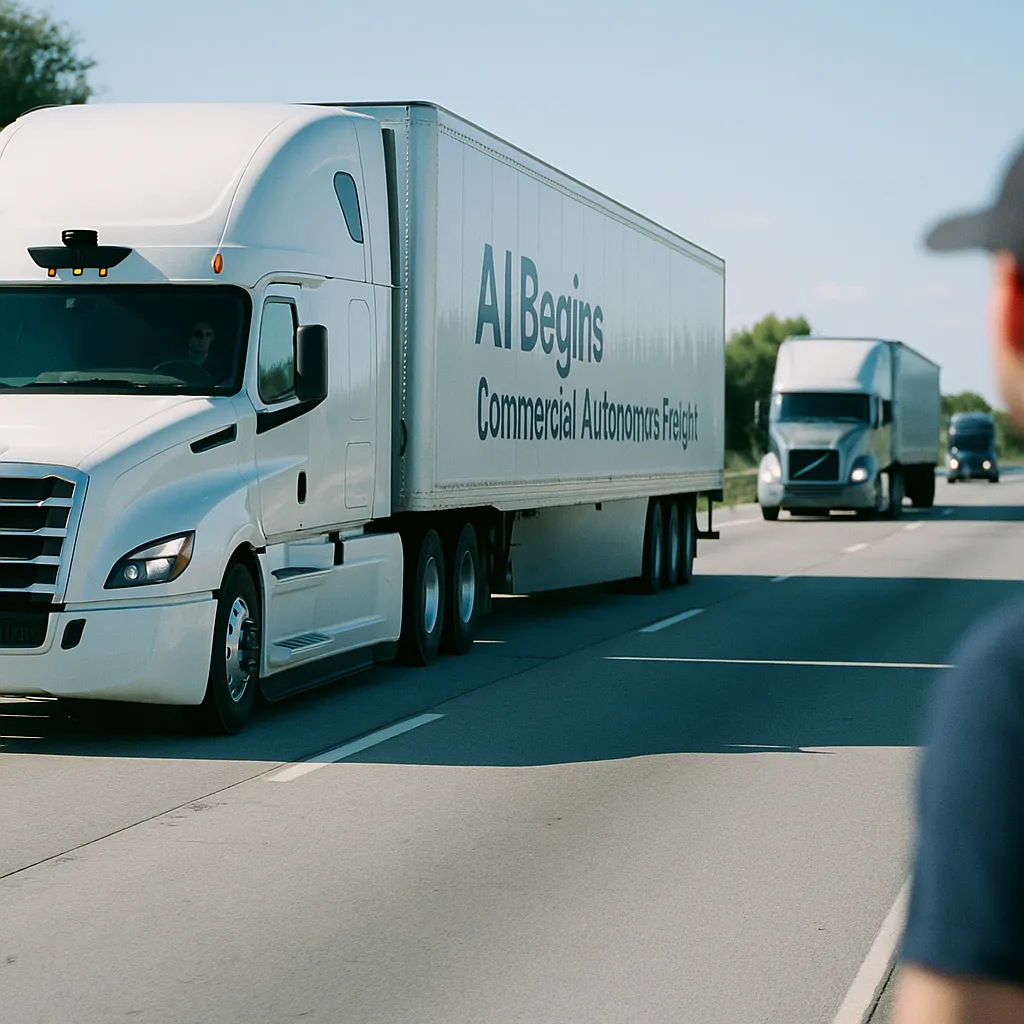
Kodiak AI is actively hauling commercial freight for Roehl Transport on the Dallas-Houston corridor — four roundtrips per week — with fully driverless highway operations targeted by end of 2026.
Kodiak AI Begins Commercial Autonomous Freight Operations With Roehl Transport on Dallas-Houston Lane
By Hector Herrera | May 10, 2026 | Transport
Kodiak AI is hauling commercial freight — not test loads, not validation runs — for Roehl Transport, one of America's largest truckload carriers. The operation is live on the Dallas-Houston corridor at four roundtrips per week, and Kodiak says fully driverless highway operations are on track before the end of 2026. That is a specific commitment on a public timeline, and the industry will be watching whether it holds.
The Details of the Roehl Partnership
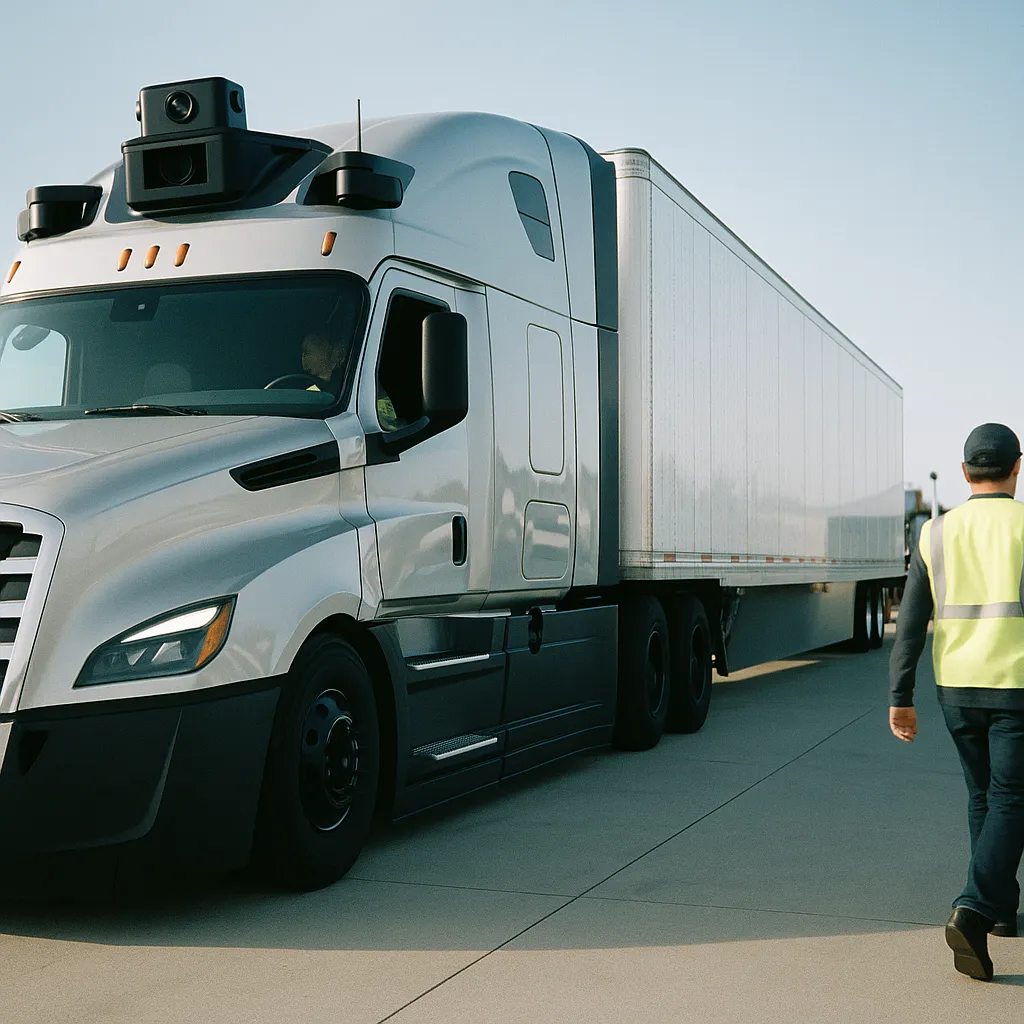
According to Kodiak's announcement, the operation involves the Kodiak Driver autonomous system running on Class 8 trucks between Dallas and Houston — one of the highest-volume freight corridors in North America, characterized by high-speed interstate driving with predictable geometry and relatively controlled conditions.
Four roundtrips per week represents a consistent commercial cadence. This is not a demonstration run timed to press coverage. It is a recurring freight operation under a carrier relationship with Roehl Transport, a company that operates roughly 7,000 trucks and has been in the business for more than 70 years.
The Kodiak Driver system is currently operating with a safety driver on board for this deployment. The company's stated timeline for removing the safety driver — "fully driverless highway runs by the end of 2026" — is the specific threshold that separates technology validation from commercial autonomy.
What Makes Dallas-Houston Significant
The Dallas-Houston lane is not chosen at random. It is approximately 240 miles of I-45, predominantly flat, well-maintained highway with clear lane markings and high traffic predictability. It is geographically favorable for autonomous operation.
Get this in your inbox.
Daily AI intelligence. Free. No spam.
But it is also a commercial artery. The Texas Triangle — Dallas, Houston, San Antonio, and Austin — accounts for some of the highest freight volume in the United States. The companies that master autonomous operations on these lanes first will have a structural cost advantage in one of the most competitive trucking markets in the country.
For Roehl Transport, the partnership is a hedge against driver availability and cost pressures that the trucking industry has experienced chronically for the past decade. Autonomous systems eliminate the hours-of-service constraints that govern human drivers, enabling continuous operation through windows that human-driven trucks cannot serve without relay handoffs.
Logging Operations and International Expansion
Kodiak's announcement includes a second notable item: the company is expanding into the logging industry with new international operations. The company did not fully detail the geography or carrier partner for the logging expansion, but the move signals that Kodiak is not limiting its autonomous system to standard commercial freight corridors.
Logging represents a materially different operating environment than interstate trucking — rural roads, variable terrain, lower speed limits, and a working environment that sits outside the controlled highway conditions where most autonomous trucking development has occurred. If Kodiak is entering logging operations, it suggests the company believes the Kodiak Driver system is adaptable beyond the use cases that defined its initial development.
Kodiak is one of several autonomous trucking companies that survived the industry consolidation of 2022-2024, a period when several well-funded competitors shut down or pivoted. The companies that remain — Kodiak, Aurora, Waabi, and a small number of others — are now in the phase where survival requires demonstrating commercial revenue, not just technology.
Aurora completed its first fully driverless commercial freight runs on the Dallas-Houston corridor in April 2024. Kodiak's announcement positions it as entering the same operational category — paid commercial freight without a mandatory safety driver being an imminent goal rather than a distant aspiration.
The commercial transition matters for the economics. A human safety driver costs between $60,000 and $80,000 per year in wages and benefits. On a lane running four roundtrips weekly, the labor cost of a safety driver is the difference between a money-losing validation program and a profit-generating operation.
What to Watch
The end-of-2026 driverless commitment is the key milestone to track. Aurora hit that milestone in 2024; Kodiak is committing to it for 2026 on a commercially active lane with a major carrier partner. Watch also for whether Roehl Transport expands the number of lanes and weekly runs as the program matures — that expansion rate will indicate whether autonomous freight is moving toward fleet-scale deployment or remaining confined to showcase corridors.
Sources: Kodiak AI via GlobeNewswire
Did this help you understand AI better?
Your feedback helps us write more useful content.
Get tomorrow's AI briefing
Join readers who start their day with NexChron. Free, daily, no spam.