PlusAI and other autonomous trucking developers are signing operational contracts with freight carriers in 2026, moving from technology demonstration to commercial deployment in a sector valued at $575.7 million.
Autonomous Trucks Are Done With Pilots. 2026 Is the Year They Sign Contracts.
By Hector Herrera | May 1, 2026 | Transportation
The autonomous trucking industry is declaring 2026 its transition year — from technology demonstration to commercial deployment. PlusAI and other leading developers are no longer describing their products as trials or proofs of concept. They are signing operational contracts with freight carriers and reporting real shipments moved without human drivers. The freight autonomy segment is currently valued at $575.7 million and is projected to reach $3.25 billion by 2035, according to Transport Topics.
This shift matters because the freight industry has been promised autonomous trucks for a decade. What is different in 2026 is that the promises are being replaced with invoices.
What Changed
Three factors converged to move autonomous trucking from demonstration to deployment this year:
Regulatory clarity. Texas, Arizona, and a handful of other states have established commercial autonomous vehicle operating frameworks that give carriers legal certainty. You cannot sign a contract for autonomous freight hauling if you do not know whether the truck is legally permitted to operate. That clarity now exists on the routes where most early deployments are concentrated — largely high-volume Sun Belt corridors with favorable weather and road conditions.
Technology maturation. The sensor fusion systems — combining lidar, radar, cameras, and HD mapping — that autonomous trucks rely on have reached reliability levels that carriers can defend to their insurance underwriters. That is a meaningful bar. Insurers are conservative. When they will write policies on autonomous freight operations, it signals genuine confidence in the technology's reliability profile.
Driver shortage economics. The American Trucking Associations has estimated a shortage of 60,000 commercial drivers with projections of 160,000 by 2030. Carriers are no longer evaluating autonomous trucks as a cost-reduction option — they are evaluating them as a supply constraint solution. When you cannot hire enough drivers to move your freight, the autonomous alternative becomes considerably more attractive.
The Numbers
Transport Topics' reporting on the sector's commercial readiness includes several figures worth tracking:
- $575.7 million — current market valuation of the freight autonomy segment
- $3.25 billion — projected segment value by 2035 (roughly 5.6x growth)
- 3+ million — shipping-related tasks completed by AI agents at logistics firm C.H. Robinson alone, eliminating repetitive manual work across its network
The C.H. Robinson figure deserves context. C.H. Robinson is one of the largest freight brokerages in the world, managing millions of shipments annually. AI agents handling three million-plus tasks within its operations is not a pilot program — it is a fundamental operational shift in how freight logistics work is performed. The agents are handling load matching, carrier communication, document processing, and exception management that previously required human dispatchers.
Get this in your inbox.
Daily AI intelligence. Free. No spam.
Who Is Deploying and Where
Current commercial autonomous trucking deployments are concentrated in specific corridors and use cases:
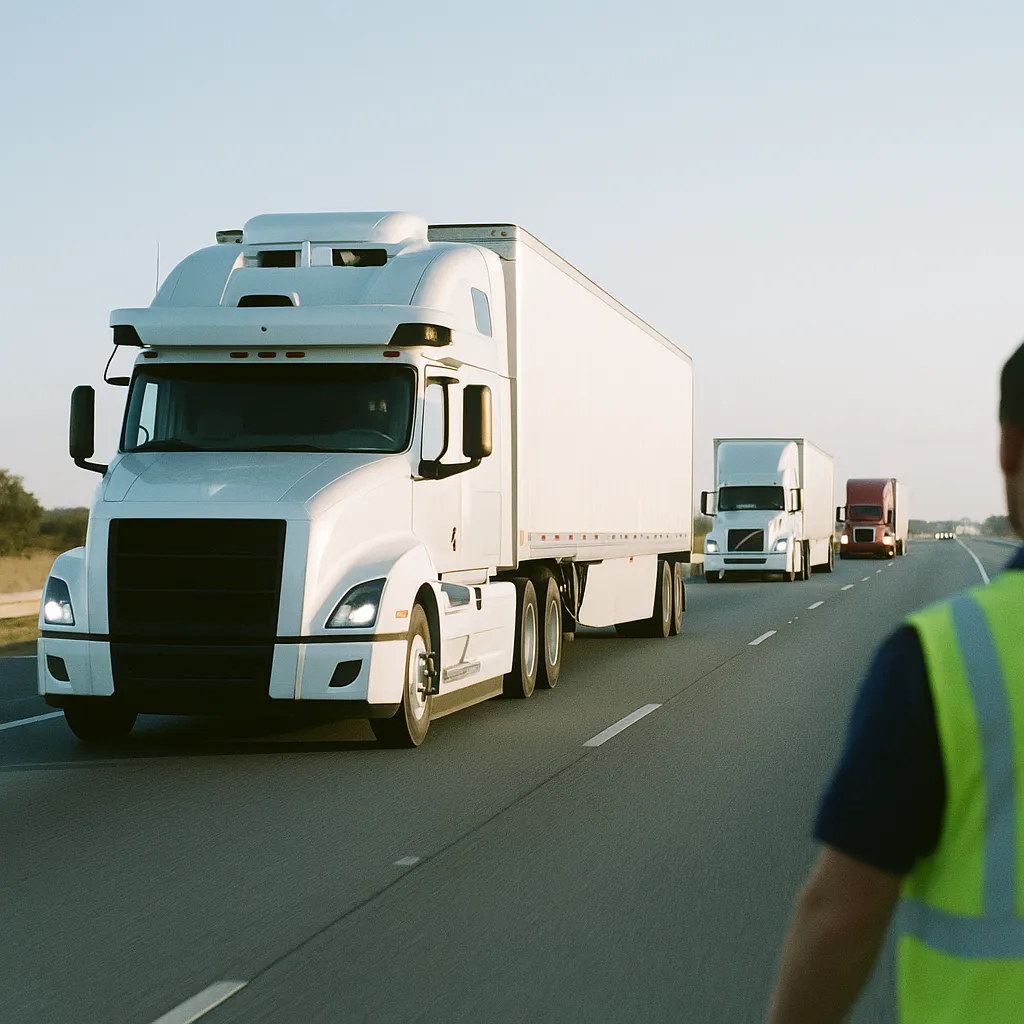
Long-haul hub-to-hub routes. The most economically compelling early use case is point-to-point trucking between major distribution hubs on interstates, particularly in the Southwest. These routes are predictable, weather is manageable, and the miles per trip are long enough to make the economics attractive even at current hardware costs.
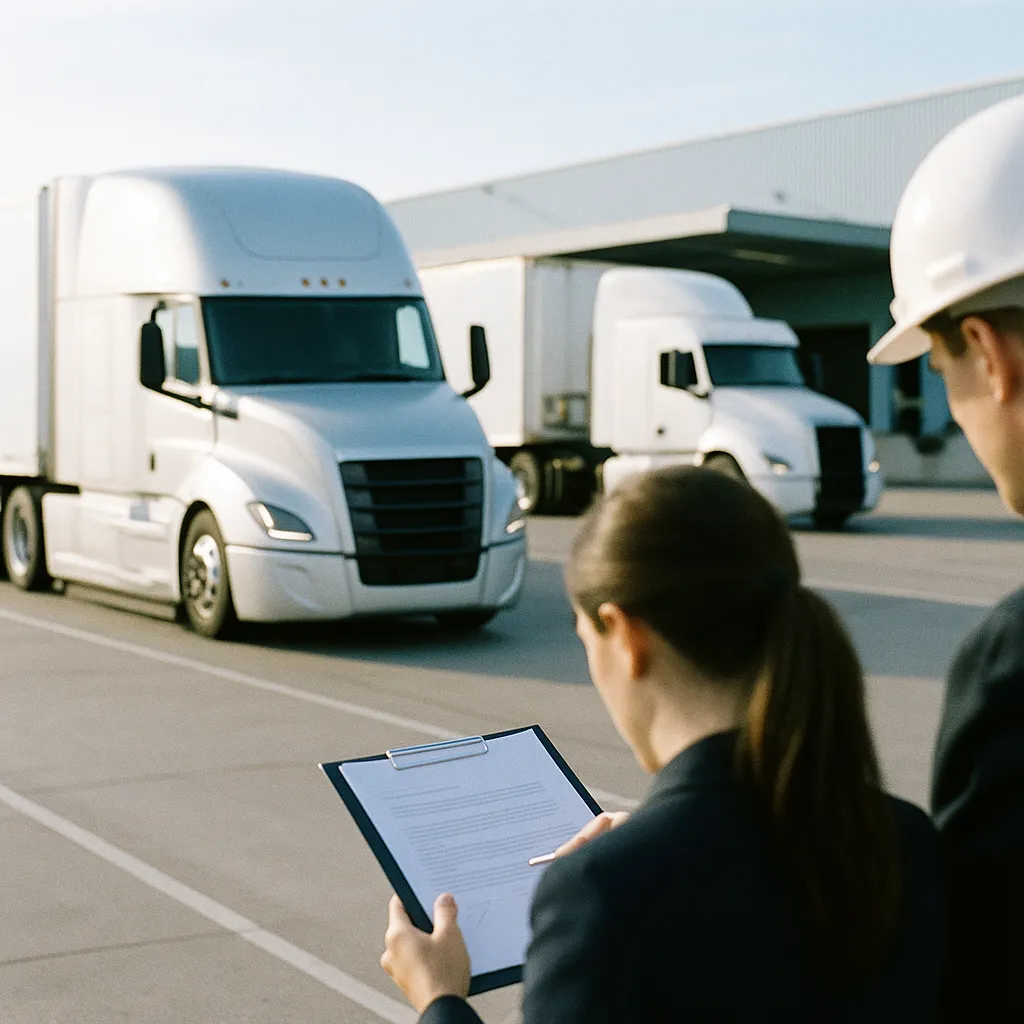
PlusAI has announced commercial agreements with freight carriers for supervised autonomous operations — a safety driver remains in the cab but is not actively driving. This is the standard deployment model for 2026. Full driverless commercial operations exist in limited geographic areas under specific permits.
Aurora Innovation completed what it described as its first fully driverless commercial freight runs on Texas highways in 2024 and has been expanding its commercial footprint. Its business model involves charging per mile rather than selling hardware, which lowers the barrier for carrier adoption.
Kodiak Robotics is similarly operating commercial routes, with a focus on building sufficient miles of autonomous operation data to satisfy insurance and regulatory requirements for broader driverless permission.
The Remaining Obstacles
Declaring 2026 a transition year does not mean the obstacles are gone.
Urban first and last mile. Every long-haul autonomous truck still needs a human driver at pickup and delivery points in urban areas where the operating environment is too complex for current autonomous systems. This creates a relay model — human driver to terminal, autonomous truck on the highway, human driver to destination — that adds operational complexity and limits labor savings.
Infrastructure dependency. Autonomous trucks operate on HD maps that must be kept current. Road construction, lane changes, and infrastructure modifications require map updates. The operational burden of maintaining accurate mapping at scale is not trivial.
Liability frameworks. When an autonomous truck is involved in an incident, existing legal frameworks were not designed to allocate liability between software developers, hardware providers, truck manufacturers, and freight carriers. Several states are working on autonomous vehicle liability statutes, but the legal landscape remains uneven.
Public trust. Consumer acceptance of autonomous commercial vehicles sharing highways with passenger cars is not guaranteed. A single high-profile incident involving an autonomous truck could trigger regulatory responses that pause deployment timelines significantly.
What to Watch
The next 12 months will reveal whether the "commercial readiness" claims of 2026 translate into meaningful revenue and route expansion. Watch specifically for:
- Driverless permit expansions beyond current limited geographic authorities
- Insurance premium data — if rates on autonomous commercial vehicles decline, it signals the risk picture is improving
- Carrier earnings calls — publicly traded freight companies will start reporting autonomous operations metrics that will be the first unfiltered look at actual economics
- Regulatory response to any incidents — the regulatory environment is the single most important variable for near-term deployment timelines
The autonomous trucking industry has been in its transition year before. 2026 has stronger evidence behind the claim than prior years. Whether it holds depends on miles driven without incident — and the policies that follow from them.
Hector Herrera covers AI in transportation and logistics for NexChron.
Did this help you understand AI better?
Your feedback helps us write more useful content.
Get tomorrow's AI briefing
Join readers who start their day with NexChron. Free, daily, no spam.