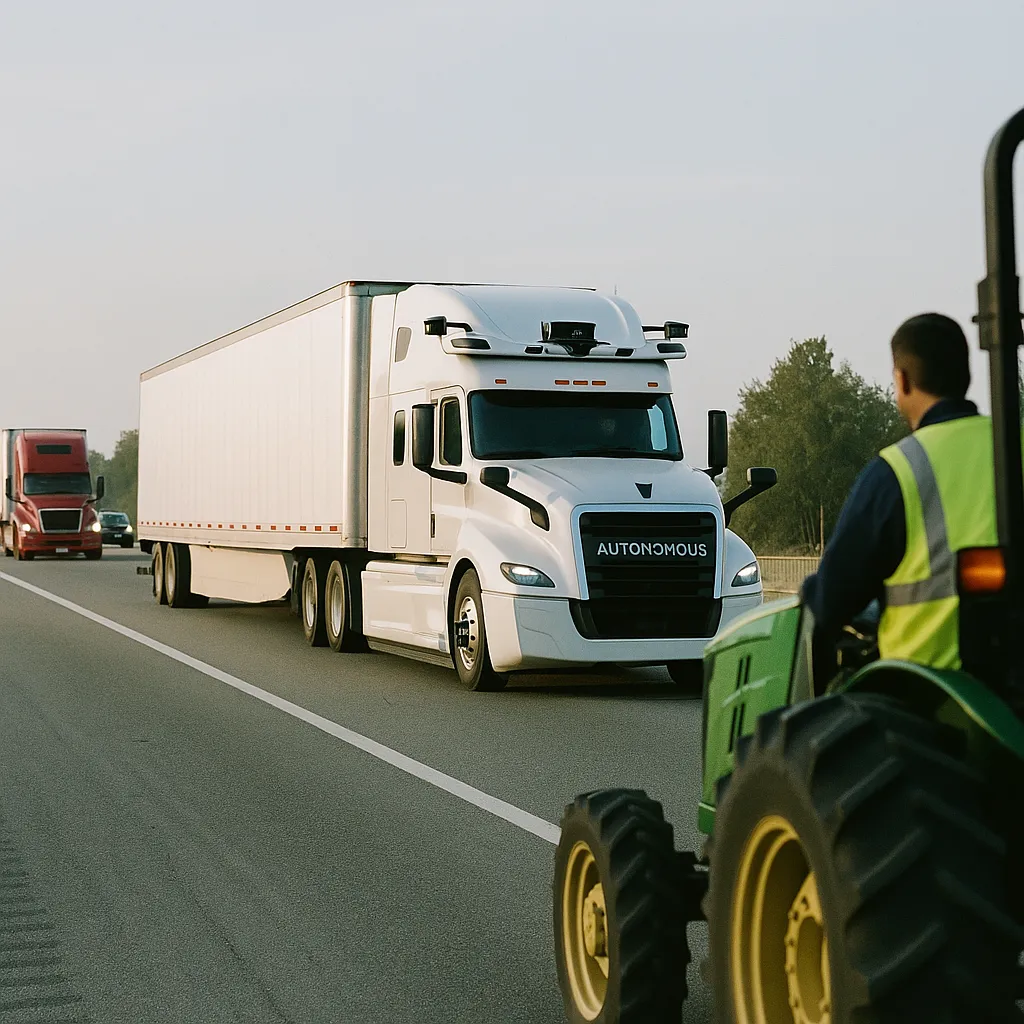
McLane Company, Berkshire Hathaway's $50 billion food distributor, is running Aurora Innovation's autonomous trucks on live freight routes across the Sun Belt — one of the largest Fortune 500 commercial autonomous vehicle commitments yet.
Berkshire's McLane Begins Commercial Autonomous Freight Runs With Aurora
By Hector Herrera | May 13, 2026 | Transport
McLane Company, the Berkshire Hathaway subsidiary that distributes food and consumer goods to some of the country's largest restaurant and retail chains, has begun running Aurora Innovation's autonomous trucks on live freight routes. The trucks are fully handling driving tasks — a human is present in the cab, but not at the controls. This is not a test. It is a commercial operation, and it represents one of the largest commitments yet from a Fortune 500 logistics operator to autonomous freight as standard supply chain infrastructure.
Why McLane's Scale Makes This Different
McLane is not a small logistics player running a proof of concept. The company generates approximately $50 billion in annual revenue distributing to restaurant chains, convenience stores, and mass-market retailers across the United States. Its freight operations span distribution centers, regional hubs, and direct-to-restaurant delivery routes that run continuously.
The routes Aurora's trucks are now running are between McLane distribution centers and restaurant customers across the U.S. Sun Belt — a geography with favorable conditions for autonomous operation: flat terrain, high-quality highway infrastructure, and relatively consistent weather. The Sun Belt is where most commercial AV operators have chosen to develop operational density, and McLane's footprint there is substantial.
What Aurora's System Actually Does
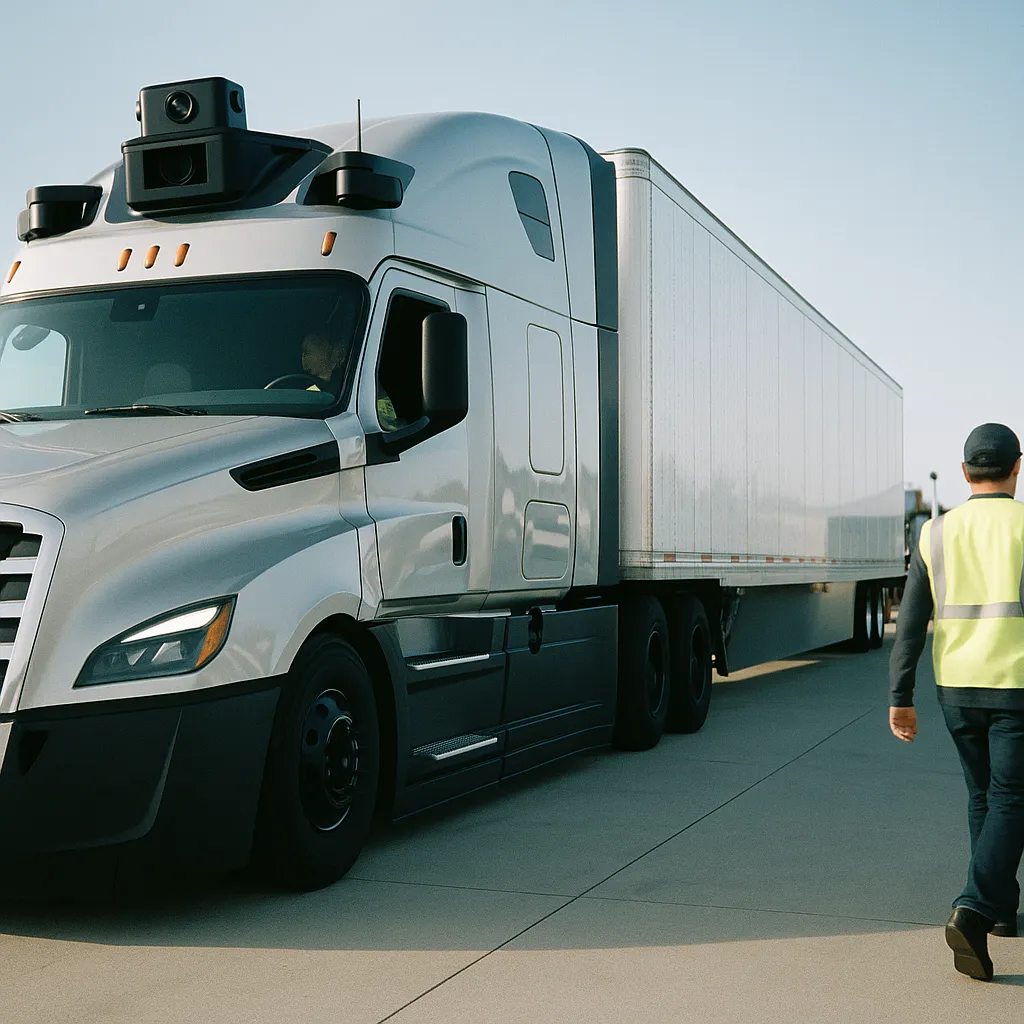
Aurora's autonomous driving system, called the Aurora Driver, is designed for Class 8 tractor-trailers — the standard long-haul freight truck. The system handles all driving tasks: highway merging, lane changes, speed management, and navigation to and from distribution centers.
Get this in your inbox.
Daily AI intelligence. Free. No spam.
A human observer rides in the cab but is not operating the vehicle. They are present for regulatory compliance in certain jurisdictions and to handle situations that require a human to exit the vehicle — inspection stops, fueling, complex terminal entry procedures. The Aurora Driver handles everything else.
Aurora has been running trucks commercially since late 2024 on routes in Texas. The McLane partnership represents a significant expansion of committed commercial volume and a meaningful shift: a Berkshire Hathaway operating company has decided autonomous freight is ready for its supply chain.
The Commercial Logic
McLane's motivation is straightforward. Long-haul freight faces a persistent driver shortage that has worsened over the past decade as the driver workforce ages and recruitment has not kept pace with demand. The American Trucking Associations estimates the industry is short more than 80,000 drivers — a figure that structural demographic trends are likely to expand, not contract, over the next decade.
Autonomous trucks do not eliminate the driver shortage, but they change the unit economics. A system running near-continuously on a defined route with consistent performance characteristics produces a different cost-per-mile calculation than a human driver subject to hours-of-service limits, fatigue variability, and market-rate wage pressure. For a $50 billion distributor optimizing thin logistics margins, that math is meaningful.
What This Signals for the Industry
McLane's commercial deployment matters as a signal beyond its own volume. Berkshire Hathaway's reputation for deliberate, evidence-based capital allocation means that Berkshire subsidiaries do not typically operate as early adopters of unproven technology. When a Berkshire company runs autonomous trucks commercially, it reflects a judgment that the technology has crossed a practical reliability threshold — not from a speculative standpoint, but from an operations standpoint.
That signal will reach other logistics operators evaluating their own AV timelines. The peer set watching McLane's deployment includes other large distributors, grocery chains with significant private fleet operations, and regional LTL (less-than-truckload) carriers weighing capital investment decisions.
What to Watch
The key metrics McLane will be tracking — and that Aurora needs to demonstrate — are operational availability (what percentage of scheduled runs complete without intervention), cost per mile versus the human-driver baseline, and safety record. Aurora has been public about its validation methodology; McLane's deployment will be one of the largest tests of whether that methodology translates to commercial-scale reliability.
Watch also for the regulatory dimension. Several states along the Sun Belt corridor have varying autonomous vehicle regulations. The commercial deployment creates both a data record and a political constituency for stable AV regulatory frameworks — something the industry has consistently advocated for at the state level.
Did this help you understand AI better?
Your feedback helps us write more useful content.
Get tomorrow's AI briefing
Join readers who start their day with NexChron. Free, daily, no spam.