Novo Nordisk Partners With OpenAI to Integrate AI Across Its Full Drug Development Pipeline
Novo Nordisk is embedding OpenAI across every stage of drug development—from discovery to manufacturing and sales—targeting full integration by end of 2026.
Top Stories
All Sections
Finance
About
20 results for "health"
Novo Nordisk is embedding OpenAI across every stage of drug development—from discovery to manufacturing and sales—targeting full integration by end of 2026.
OpenAI and Anthropic both launched dedicated clinical healthcare product lines this week, marking the moment frontier AI labs stop treating medicine as a downstream use case and start treating it as a strategic vertical with the FDA having cleared more than 1,000 AI clinical tools.
Three-quarters of US hospitals now use AI diagnostic tools that can detect tumors with 94% accuracy — but most can't bill for them. The payment model, not the technology, is now the critical bottleneck.
The Joint Commission's new Responsible Use of AI in Healthcare certification gives U.S. hospitals a formal, third-party-verified framework to demonstrate AI governance—arriving as 80% of physicians now use AI in clinical settings.
AI tools are saving clinicians the equivalent of 16 working days per year, but 70% of healthcare workers say their organizations are failing to train them on the technology they're already using.
SEARCH 2026 presents early data showing AI-assisted telehealth improving follow-up adherence and reducing readmissions in rural populations — evidence CMS is tracking as it weighs reimbursement expansion.
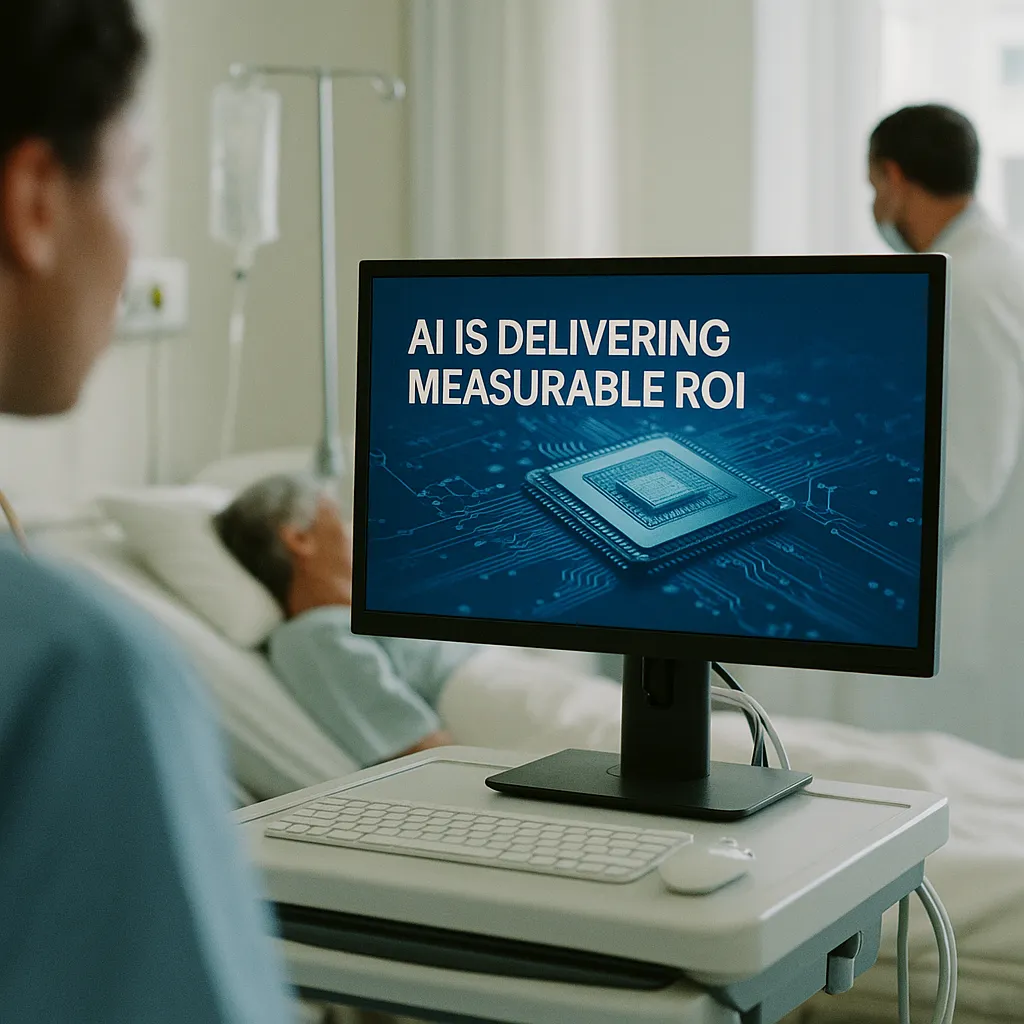
A 2026 NVIDIA survey finds AI deployments generating measurable returns across radiology, pathology, and drug discovery as clinical adoption crosses from pilots into sustained enterprise deployment.
The Trump administration is actively promoting AI clinical tools to lower healthcare costs, but physician groups and hospital networks are resisting over unresolved liability and patient safety concerns.
OpenAI cut genomics compute costs 31% with a GPT-Rosalind update and opened global research access — while launching a sponsored Biodefense program for vetted public-health and government partners.
The WHO has issued its first formal warning that AI poses serious risks to health policymaking — not just clinical care — calling for governance that preserves human accountability across the evidence-to-policy pipeline.
Mayo Clinic and Microsoft are jointly training a domain-specific frontier AI model on Mayo's clinical datasets — targeting multimodal reasoning across imaging, labs, and notes for earlier diagnosis and personalized treatment.
ASUS launched a connected AI healthcare ecosystem at Computex 2026, pairing the DuoScan handheld ultrasound and VivoWatch 6 Plus wearable with a no-code clinical AI platform that lets clinicians build agentic workflows without programming.
Anthropic has expanded Project Glasswing to 150+ organizations across 15+ countries, with Claude Mythos Preview already flagging more than 10,000 critical vulnerabilities in power, water, healthcare, and communications infrastructure.
Healthcare safety nonprofit ECRI ranked AI diagnostic technology as the number-one patient safety concern of 2026, citing over-reliance on AI tools trained on biased datasets and the absence of robust human oversight protocols.
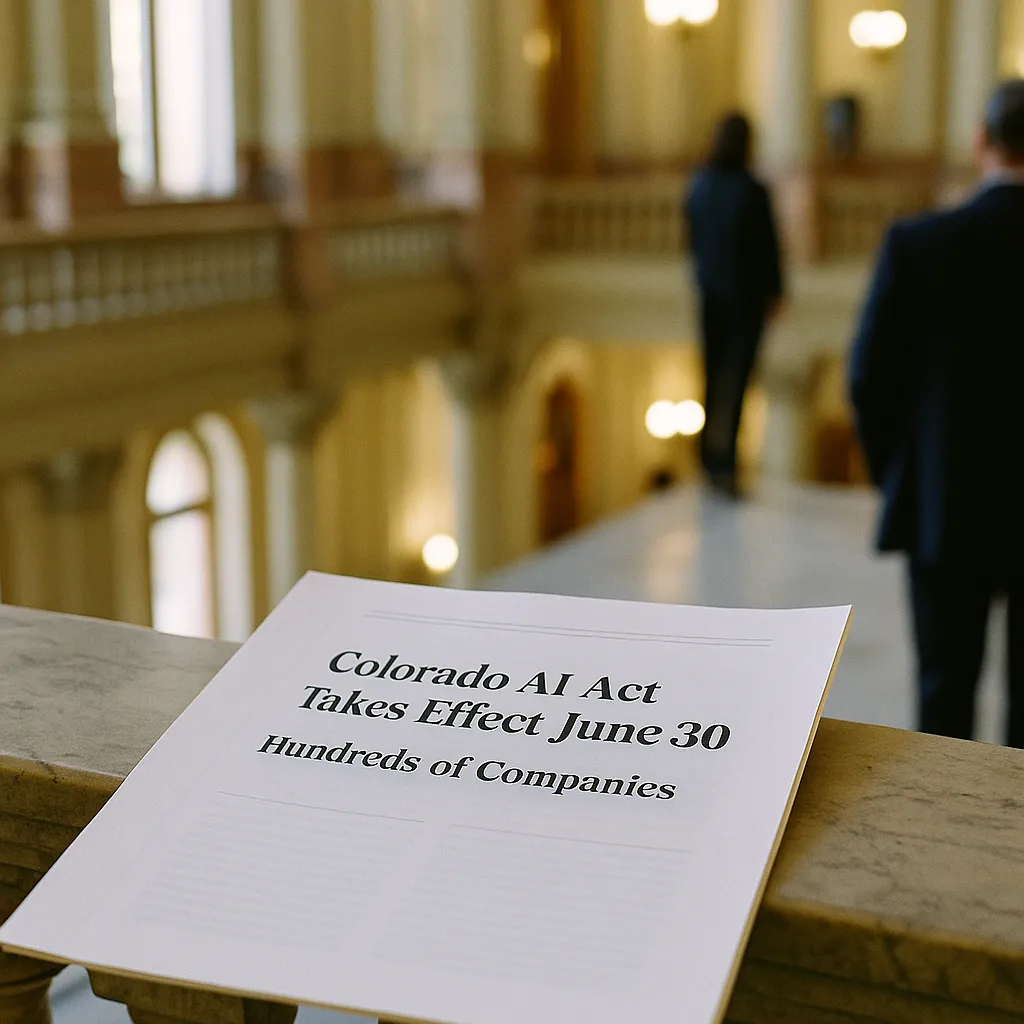
Colorado's AI Act becomes enforceable June 30, 2026 — the first US AI regulation to reach enforcement — requiring risk assessments and disclosures for any company deploying high-risk AI in employment, healthcare, finance, or housing.
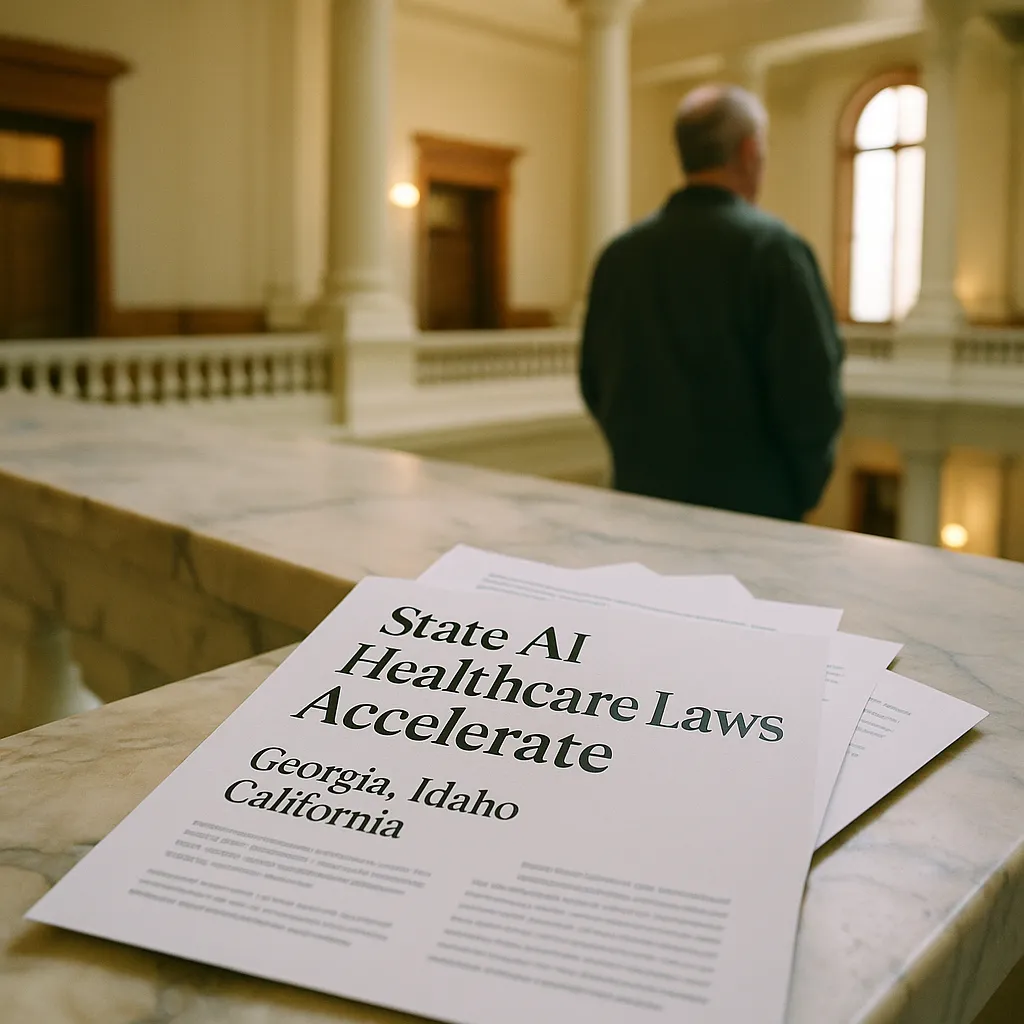
Georgia, Idaho, and California enacted new AI healthcare rules in 2026 as Congress stalls — creating compliance complexity for health systems operating across state lines.
The AMA reports 80% of U.S. physicians now use AI professionally — double the 2023 rate — as adoption outpaces governance frameworks at major health systems.
Rural and community clinicians report AI documentation tools genuinely reduce administrative burden — but raise hard questions about data privacy, security liability, and automation bias in care.
Anthropic and the Bill & Melinda Gates Foundation have announced a four-year, $200 million partnership to deploy AI tools in healthcare, agriculture, and economic development across low-income countries — the largest philanthropic-aligned commitment in Anthropic's history.
CMS selected 150 healthcare organizations for ACCESS, a 10-year program testing outcome-based payments designed around AI-driven care management—with most of the tech world unaware.