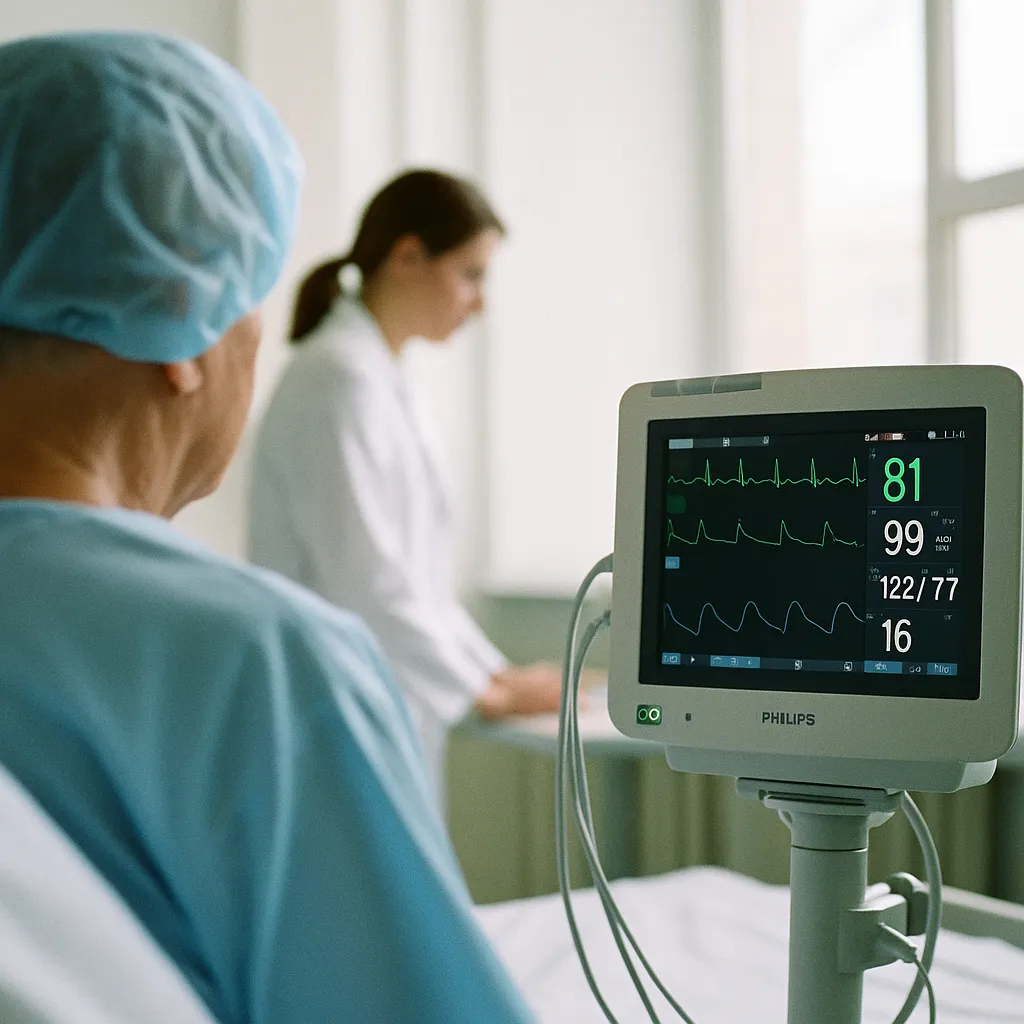
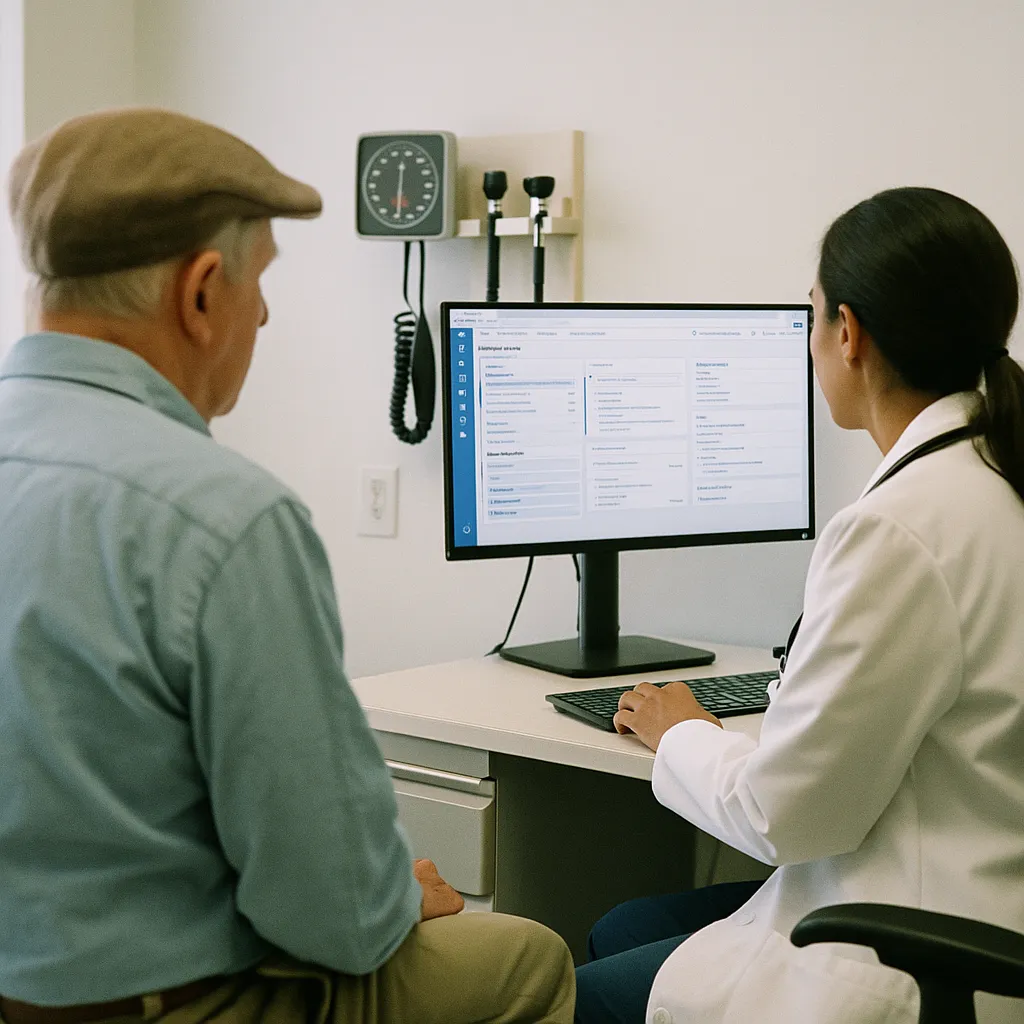
ASUS launched a connected AI healthcare ecosystem at Computex 2026, pairing the DuoScan handheld ultrasound and VivoWatch 6 Plus wearable with a no-code clinical AI platform that lets clinicians build agentic workflows without programming.
ASUS Launches AI Healthcare Ecosystem at Computex 2026: Portable Ultrasound, Smart Watch, No-Code Clinical AI
By Hector Herrera | June 4, 2026
ASUS launched a connected AI healthcare ecosystem at Computex 2026 on June 2, entering the clinical AI market with three products designed to work together: the DuoScan handheld ultrasound, the VivoWatch 6 Plus wearable, and an ASUS AI Agent platform that converts patient data from both devices into real-time clinical decision support. The launch positions ASUS — a company known primarily for PCs and laptops — as a serious hardware entrant into AI-assisted bedside medicine competing with established medical device makers.
What ASUS Announced
DuoScan: A handheld ultrasound device designed for point-of-care use outside traditional radiology settings. Ultrasound equipment has historically required trained technicians operating stationary hospital machines. Portable ultrasound has been available for several years, but ASUS is pairing its hardware with an AI interpretation layer designed to make diagnostic imaging accessible to a broader range of clinicians — including those in primary care and urgent care settings without dedicated radiology staff.
VivoWatch 6 Plus: A medical-grade wearable that continuously monitors physiological signals and feeds patient data into the ASUS AI Agent platform in real time. ASUS did not disclose the full list of tracked metrics in its launch materials.
ASUS AI Agent Platform — No-Code Clinical AI: The integration layer is the most significant element of the launch. ASUS describes the platform as a no-code system that lets clinicians build agentic workflows — automated sequences of clinical decisions triggered by patient data — without writing a single line of code. The platform converts incoming data from connected devices into real-time clinical guidance, enabling personalized care without requiring IT expertise or programming knowledge.
The "no-code" framing addresses a real barrier in healthcare AI adoption. Most clinical AI tools require either specialized technical staff to deploy or costly vendor implementations. A platform that lets a physician or clinical administrator configure agentic workflows through a visual interface rather than code could meaningfully lower the deployment threshold for smaller clinics and rural health systems that cannot afford a dedicated AI implementation team.
Get this in your inbox.
Daily AI intelligence. Free. No spam.
Why It Matters
ASUS is not the first company to combine wearables, imaging hardware, and clinical AI. Philips, GE HealthCare, and Siemens Healthineers have all built integrated clinical AI ecosystems over the past several years. The difference is the price point and distribution channel.
ASUS brings consumer-grade hardware economics to medical devices. PC and laptop manufacturing at scale produces cost structures that dedicated medical device companies cannot easily match. If ASUS can deliver clinically validated diagnostic hardware at consumer electronics price points — and connect it to an accessible AI platform — it could reach clinic segments that large medical device vendors have not effectively served: small practices, telehealth providers, rural health centers, and emerging market health systems.
The no-code platform angle also reflects a broader industry shift. The constraint in healthcare AI adoption is less often the quality of the AI model and more often deployment complexity. Enterprise EHR (electronic health record) integrations are expensive and slow. A standalone platform that runs on ASUS hardware without requiring EHR integration could move faster in specific point-of-care settings where clinicians need tools that work today, not after a 12-month IT procurement cycle.
The Competition and the Regulatory Gap
ASUS is entering a market with well-capitalized incumbents. Philips' agentic clinical AI platform launched earlier in 2026. GE HealthCare has been building AI imaging interpretation into its portable ultrasound devices for several years. Butterfly Network's iQ+ is an established handheld ultrasound with AI guidance that already has FDA clearance and clinical adoption in emergency medicine.
All three companies have decades of hospital relationships and clinical validation studies that ASUS does not yet have. That gap matters because hospital procurement teams require documented clinical evidence before deploying diagnostic tools — not Computex stage demonstrations.
Critically, ASUS's launch materials did not specify the current FDA clearance or CE marking status of the DuoScan or VivoWatch 6 Plus for clinical diagnostic use. Medical devices in the U.S. require 510(k) clearance or PMA approval before they can be marketed for clinical decision-making. Without regulatory clearance, ASUS's healthcare ecosystem is a consumer wellness product in regulatory terms, regardless of its clinical ambitions.
What to Watch
Regulatory clearance timelines will determine how fast ASUS can move from Computex announcement to clinical deployment. The company's healthcare ambitions also depend on whether it can build the clinical validation evidence that hospital procurement teams require — a process that typically takes 18–24 months from product launch to meaningful hospital penetration. The Computex launch signals intent; deployment numbers in 2027 will signal whether ASUS can navigate the regulatory and clinical validation hurdles that separate consumer health hardware from certified medical devices.
Source: ASUS Pressroom — AI-Driven Healthcare at Computex 2026
Did this help you understand AI better?
Your feedback helps us write more useful content.
Get tomorrow's AI briefing
Join readers who start their day with NexChron. Free, daily, no spam.