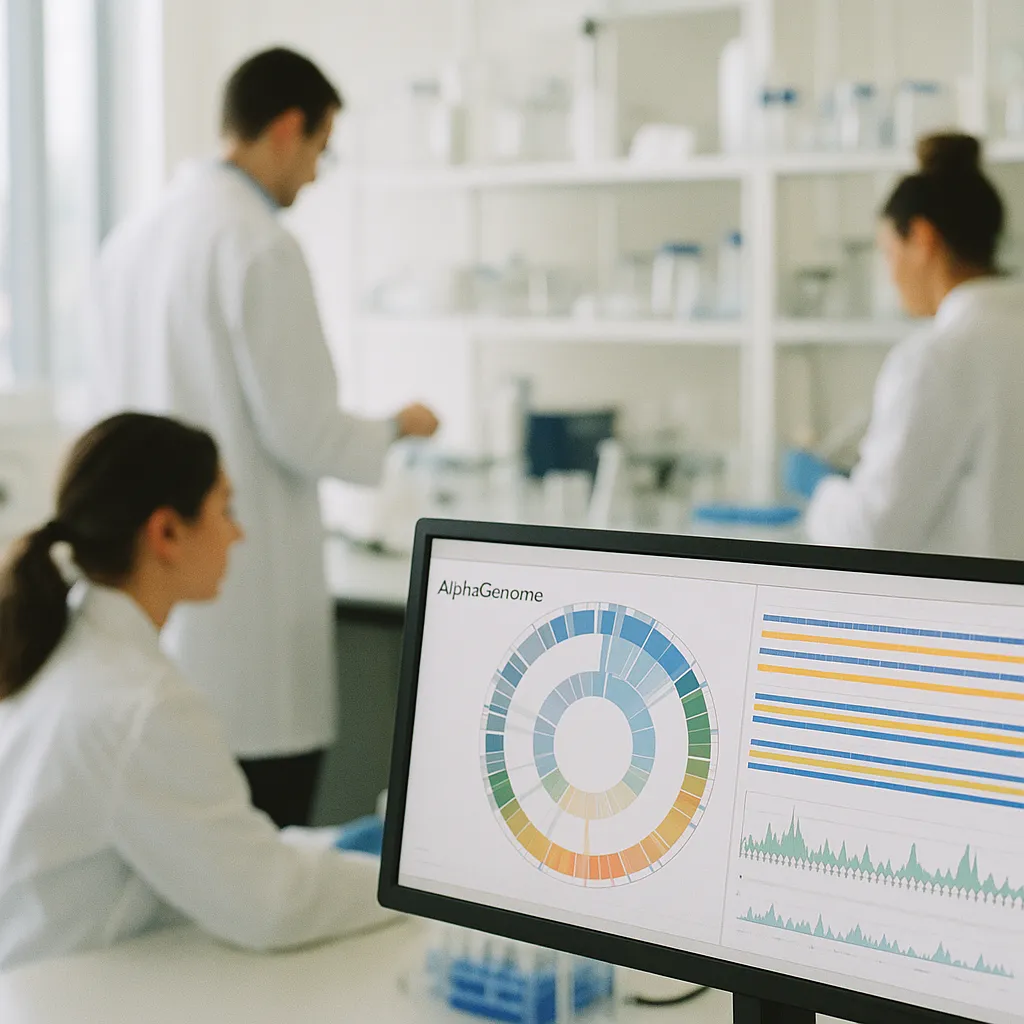
OpenAI cut genomics compute costs 31% with a GPT-Rosalind update and opened global research access — while launching a sponsored Biodefense program for vetted public-health and government partners.
OpenAI Expands GPT-Rosalind Globally, Launches Rosalind Biodefense Program
By Hector Herrera | June 4, 2026 | Science
OpenAI has rolled out a major update to GPT-Rosalind — its specialized life-sciences AI model — cutting genomics compute costs by 31% compared to GPT-5.5 and opening the research preview to eligible organizations worldwide for the first time. Alongside the expansion, OpenAI introduced the Rosalind Biodefense program, granting sponsored access to vetted developers and select U.S. government and allied public-health partners for biodefense research, epidemiological modeling, and medical countermeasure development.
Background
GPT-Rosalind is OpenAI's domain-specific model built for life-sciences applications — drug discovery, genomics analysis, and biomedical research workflows. Until now, access had been limited to a closed research preview with a select cohort of partners. The model is named after Rosalind Franklin, the crystallographer whose X-ray diffraction work was foundational to understanding DNA's double-helix structure.
What Changed
According to TechTimes, the June 4 update delivers:
Get this in your inbox.
Daily AI intelligence. Free. No spam.
- 31% lower compute cost for genomics workloads versus GPT-5.5
- Global research preview access for eligible organizations — academic labs, biotech firms, and public-health agencies can now apply
- Benchmark improvements across all tested drug-discovery and genomics benchmarks, outperforming GPT-5.5 at lower token cost
- Rosalind Biodefense program — sponsored access tier for vetted developers, U.S. government agencies, and allied public-health partners focused on biodefense, epidemiological modeling, and medical countermeasure development
The cost reduction is significant for research contexts where genomics workloads involve large sequence datasets that generate high token volumes.
Why It Matters
Drug discovery and genomics analysis are among the highest-value applications for frontier AI — and among the most compute-intensive. A 31% cost reduction doesn't just make GPT-Rosalind more affordable; it changes the calculus for smaller biotech firms and academic institutions that previously couldn't run these workloads at scale.
The Rosalind Biodefense program is a sharper signal. By explicitly targeting medical countermeasure development — the process of developing vaccines, therapeutics, and diagnostics against biological threats — OpenAI is positioning GPT-Rosalind as dual-use infrastructure for national security as well as commercial research. This mirrors moves by other frontier labs to build relationships with defense and public-health agencies before regulatory frameworks formalize those relationships.
For the biotech sector, global access to the research preview means teams outside the U.S. can now evaluate GPT-Rosalind for their drug pipelines. For public-health agencies, sponsored access under the Biodefense program lowers the barrier to experimenting with AI-assisted epidemiological modeling — a capability that took on new urgency after the COVID-19 pandemic exposed gaps in modeling speed and accuracy.
What to Watch
The Rosalind Biodefense program will face scrutiny over access controls and dual-use risks — the same genomics capabilities that accelerate drug discovery can, in the wrong hands, be misused. Watch for OpenAI to publish its vetting criteria for Biodefense program applicants and for biosecurity researchers to weigh in on whether those guardrails are sufficient.
Hector Herrera covers AI in science, health, and government for NexChron. Have a tip? hector@dandell.com
Did this help you understand AI better?
Your feedback helps us write more useful content.
Get tomorrow's AI briefing
Join readers who start their day with NexChron. Free, daily, no spam.