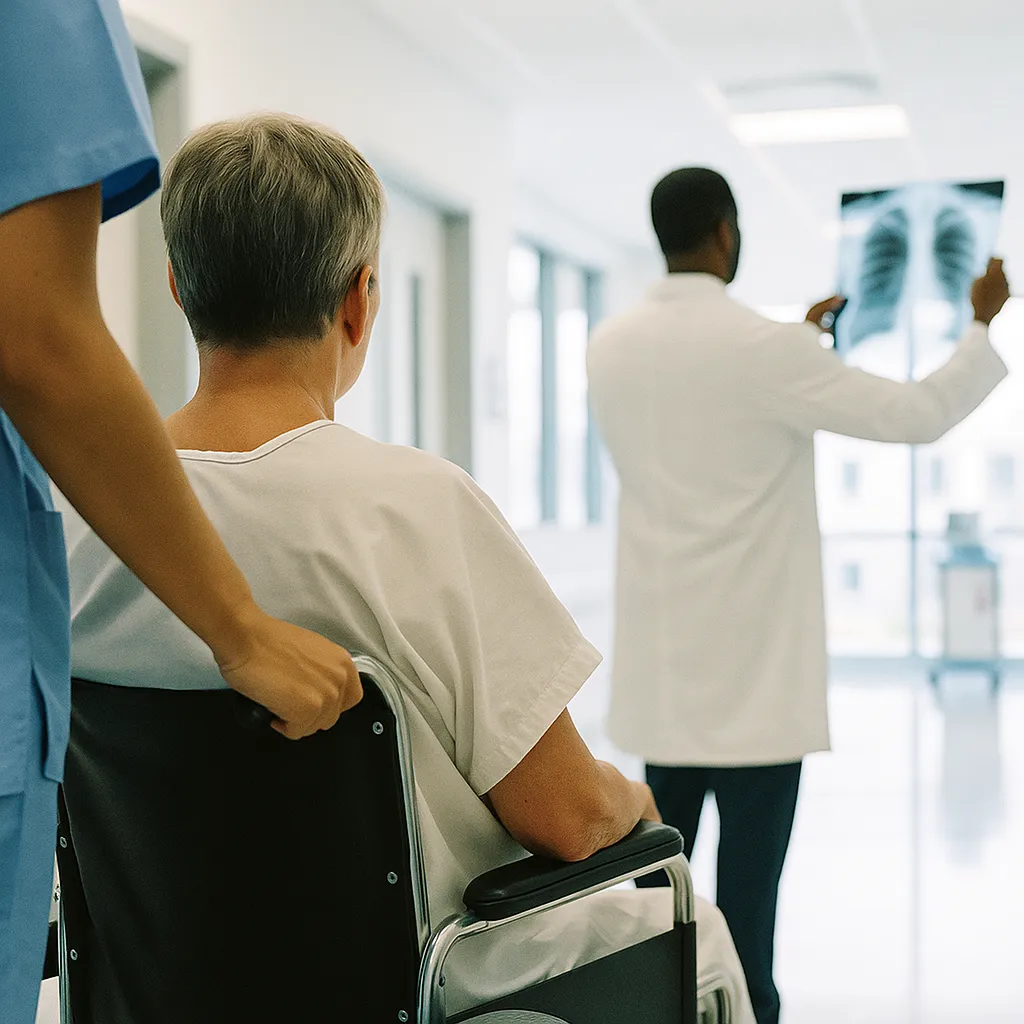
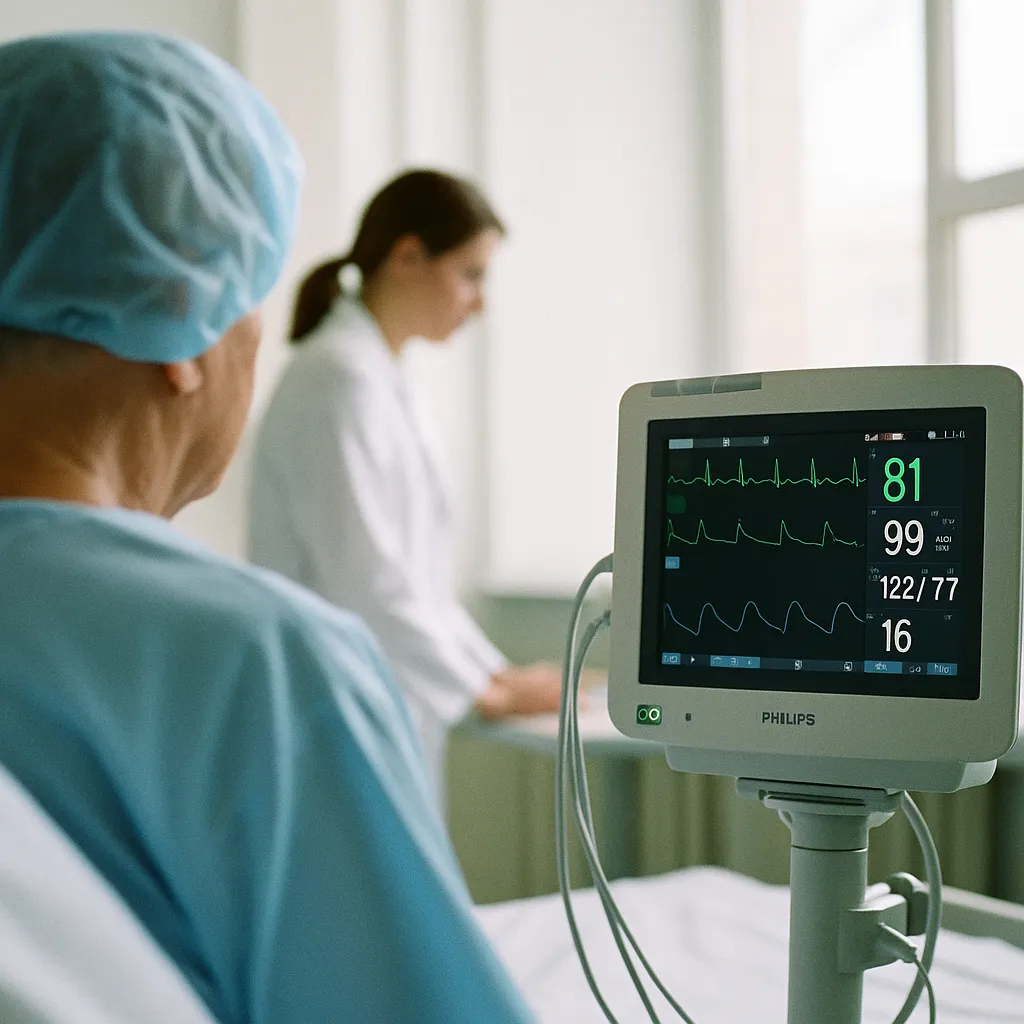
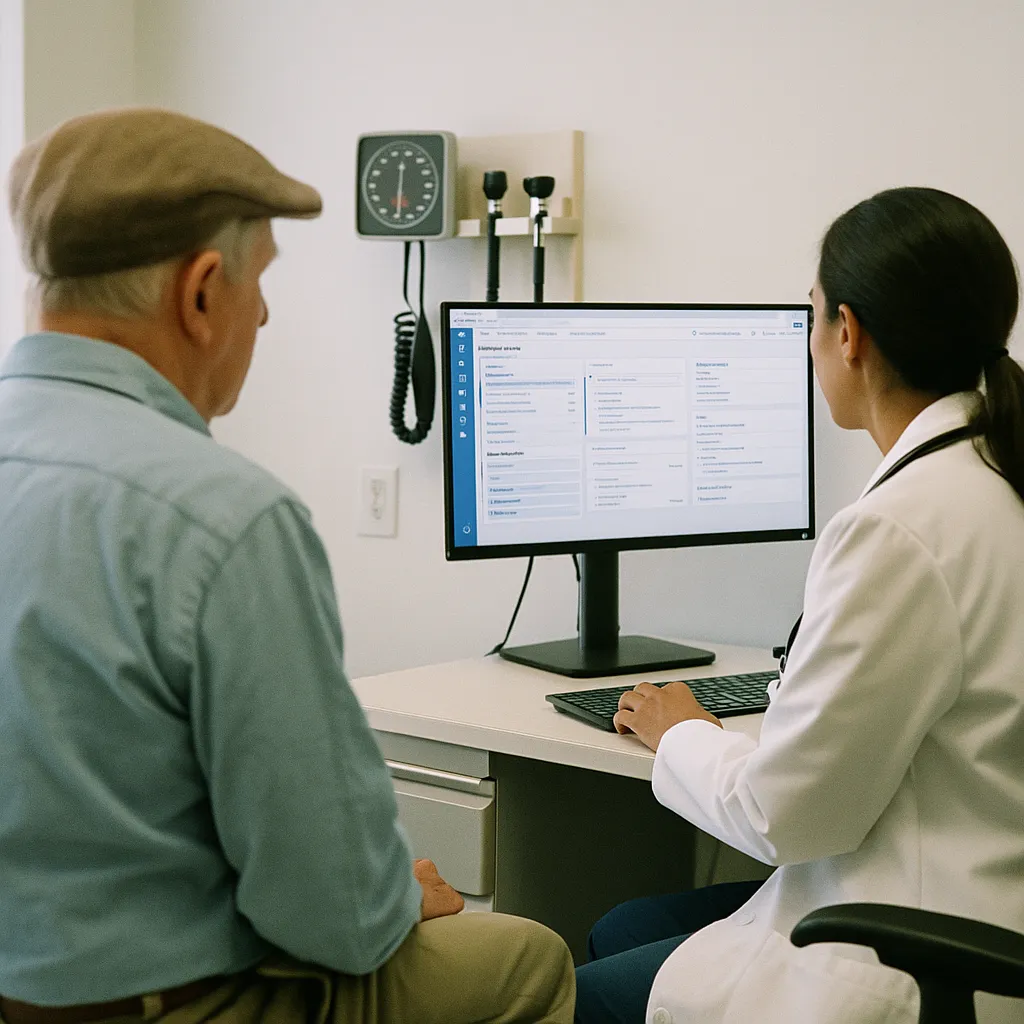
Healthcare safety nonprofit ECRI ranked AI diagnostic technology as the number-one patient safety concern of 2026, citing over-reliance on AI tools trained on biased datasets and the absence of robust human oversight protocols.
ECRI Names AI Diagnostic Errors the Top Patient Safety Risk of 2026
By Hector Herrera | June 2, 2026 | Health
Healthcare safety nonprofit ECRI has placed AI diagnostic technology at the top of its annual patient safety concern list for 2026 — the first time a software category has led the list in the organization's history. The ranking signals a shift in how the healthcare industry thinks about AI risk: the question is no longer whether AI diagnostic tools make errors, but whether clinical systems are robust enough to catch and correct those errors before they harm patients.
The distinction matters. With more than 1,000 FDA-cleared AI diagnostic tools now in clinical use and 74 percent of US hospitals deploying AI in radiology, the concern has moved from evaluating individual products to governing an embedded infrastructure.
What ECRI Found
ECRI's 2026 report identifies three specific failure modes driving the patient safety concern:
1. Dataset bias in training data.
Many FDA-cleared AI diagnostic tools were trained on patient populations that underrepresent certain demographic groups — often skewing toward patients from large urban academic medical centers. An AI radiology system trained on those populations may perform significantly less accurately when deployed in community hospitals serving different demographics. ECRI found that this gap is rarely disclosed in product marketing materials or documentation given to clinical purchasers.
2. Over-reliance by clinical staff.
As AI tools become routine, clinicians increasingly treat AI outputs as confirmation rather than a hypothesis to be tested. The critical finding in ECRI's analysis: hospitals achieving the headline 42 percent reduction in diagnostic errors with AI were those with robust human oversight protocols — not those using AI autonomously. Facilities where clinical staff reduced their own diagnostic scrutiny in proportion to AI adoption showed the worst patient outcomes. The AI didn't fail; the oversight structure around it did.
3. Alert fatigue from high false-positive rates.
Some AI diagnostic systems generate alerts at volumes that exceed clinical capacity to review them meaningfully. A radiologist receiving 200 AI-flagged findings per shift cannot review each one with the same care that prompted the AI investment in the first place. This dynamic mirrors what happened with early clinical decision support systems in the 1990s — tools designed to improve care degraded it when their alert volume outpaced human bandwidth.
Get this in your inbox.
Daily AI intelligence. Free. No spam.
The Scale of AI in Clinical Settings
The context for ECRI's concern is the pace at which AI has penetrated clinical workflows:
- 1,000+ FDA-cleared AI diagnostic tools are now in clinical use, up from fewer than 100 in 2019
- 74 percent of US hospitals have deployed AI in radiology, the highest AI penetration of any clinical specialty
- The FDA cleared more than 220 new AI medical devices in 2025 alone
- AI is now used in pathology, cardiology, ophthalmology, dermatology, and surgical planning — not just radiology
The regulatory framework hasn't kept pace. FDA clearance evaluates whether an AI device performs its stated function under controlled validation conditions — it doesn't require post-market surveillance of how the tool performs when integrated into real clinical workflows with real patient populations. A system validated on 50,000 chest X-rays from three major academic centers may perform very differently in a community hospital serving a demographically distinct population. Currently, no systematic reporting mechanism exists to surface that gap.
The Hospitals Getting It Right
ECRI's analysis is not uniformly negative. The organizations achieving the strongest diagnostic outcomes with AI share a consistent set of practices:
- Mandatory second-read protocols for high-stakes AI findings, where a human clinician must actively confirm or override before the AI output enters the patient record
- Regular calibration audits comparing AI performance against actual outcomes for their specific patient population — not relying on the vendor's validation data
- Training programs that explicitly address over-reliance, teaching clinicians to use AI as a tool that raises possibilities rather than a safety net that catches errors
- Tiered alert systems that prioritize the AI findings most likely to require immediate clinical action, reducing total alert volume
The institutions struggling most are those that deployed AI primarily to reduce radiologist or pathologist workload without redesigning the oversight structures around it. The efficiency gains were real; the safety assumptions weren't.
The Liability Picture
Several malpractice cases involving AI diagnostic errors are currently working through US courts. The central unresolved legal question: when an FDA-cleared AI tool contributes to a missed or delayed diagnosis, how is liability allocated between the AI vendor, the hospital that deployed the tool, and the clinician who relied on its output?
Legal scholars expect a significant ruling within the next 12 to 18 months that establishes a liability framework. That ruling will define the standard of care for AI deployment in high-stakes diagnostic settings more effectively than any regulatory guidance issued to date.
Hospitals that have implemented robust oversight protocols are positioning themselves ahead of that ruling. Hospitals that haven't are accumulating exposure.
What to Watch
ECRI is pressing the FDA to require post-market performance monitoring as a condition of AI device clearance — a proposal under consideration since 2024. If adopted, manufacturers would need to track and report real-world accuracy rates across diverse patient populations, not just the controlled validation metrics used for initial clearance.
The more immediate pressure is coming from state legislatures. Several states are considering bills that would require hospitals to disclose when AI tools are used in diagnostic decisions and give patients the right to request human review. California's version of that legislation advanced through committee in May. Where California goes, federal regulators often follow.
Did this help you understand AI better?
Your feedback helps us write more useful content.
Get tomorrow's AI briefing
Join readers who start their day with NexChron. Free, daily, no spam.