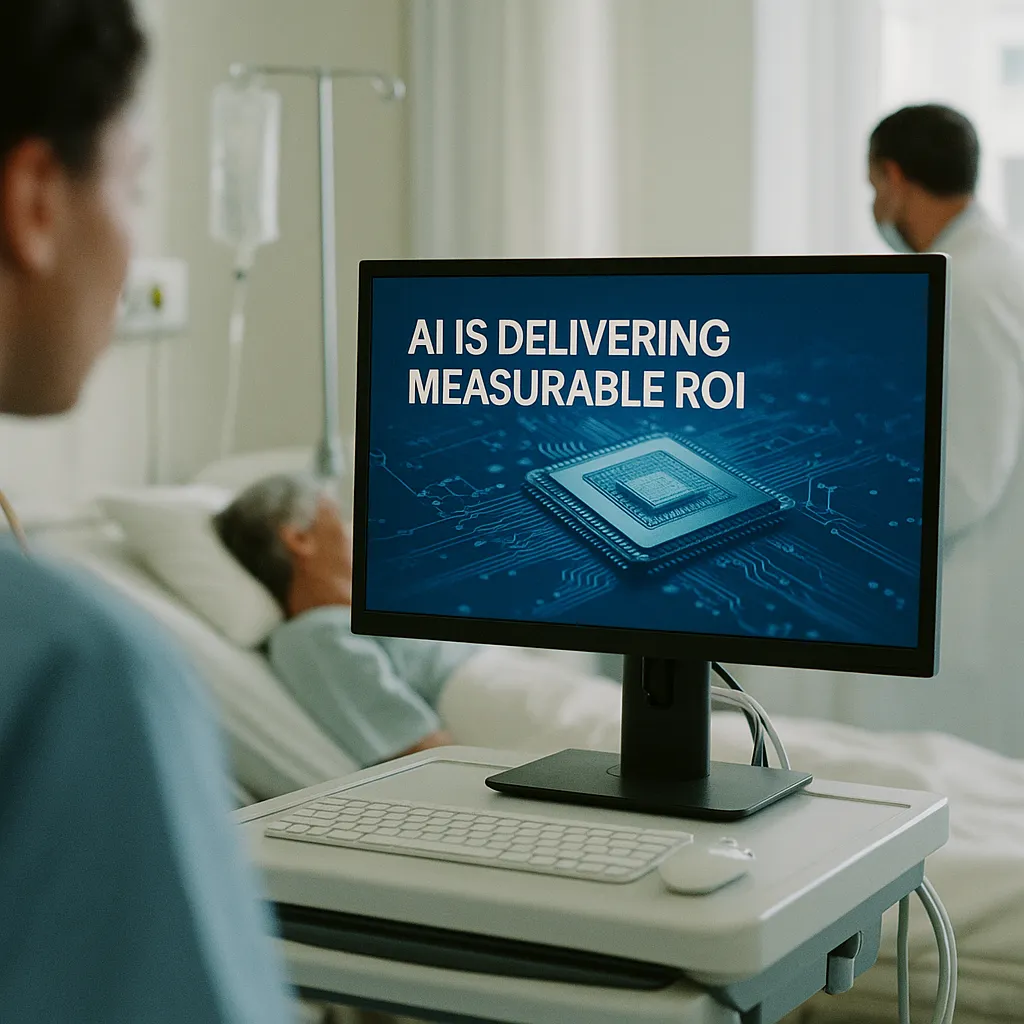
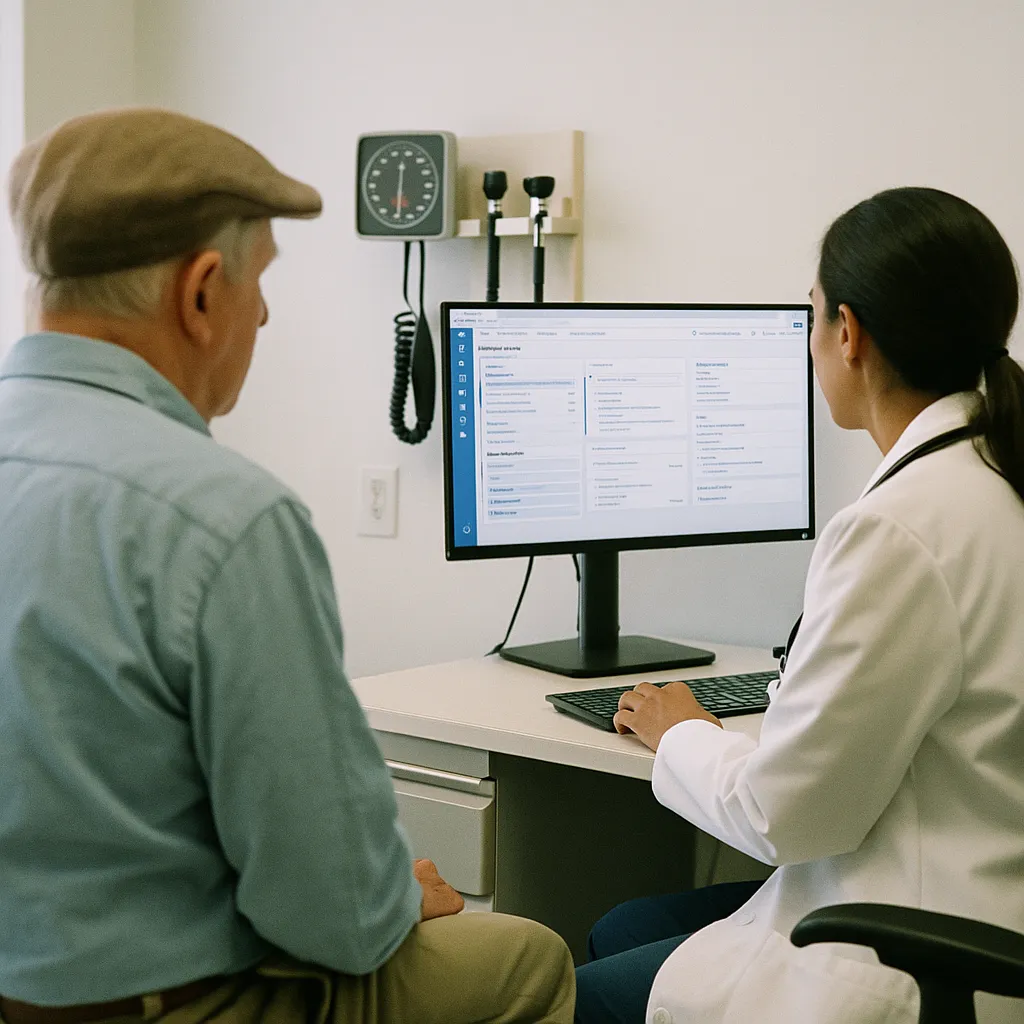
A 2026 NVIDIA survey finds AI deployments generating measurable returns across radiology, pathology, and drug discovery as clinical adoption crosses from pilots into sustained enterprise deployment.
NVIDIA Survey: AI Is Delivering Measurable ROI in Healthcare, From Radiology to Drug Discovery
By Hector Herrera | June 6, 2026 | Health
A 2026 NVIDIA survey of healthcare organizations confirms that AI deployments are generating measurable returns across radiology, pathology, and drug discovery — the clearest signal yet that clinical AI has moved from proof-of-concept to operational infrastructure. The transition matters because it shifts the question from "does this work?" to "how fast can we scale it?"
Healthcare has run more AI pilots than nearly any other industry and delivered fewer results. That pattern is breaking. The NVIDIA survey, drawn from healthcare organizations actively running AI systems across clinical workflows, finds adoption accelerating as clinical leaders report reduced diagnostic time and real cost savings — the two benchmarks hospital CFOs actually track.
What the Survey Found
The numbers are specific enough to be useful:
- 52% of patients now use AI to research health conditions before or after a clinical visit
- 77% of clinicians validate AI outputs before acting on them — a sign of cautious integration, not blind automation
- Radiology, pathology, and drug discovery workflows are the primary areas reporting measurable ROI
- Organizations report reduced diagnostic cycle times and cost savings tied to throughput, not productivity theater
The survey, published on the NVIDIA Blog, does not publish specific ROI percentages, which is typical when enterprise respondents include hospital systems bound by competitive confidentiality. The directional signal is unambiguous: healthcare AI is earning its budget line.
Where the Gains Are Coming From
Radiology is the furthest along. AI-assisted image reading tools — trained to flag anomalies in CT scans, MRIs, and X-rays — reduce the time radiologists spend on routine cases and surface high-priority findings faster. In high-volume hospital systems, that means thousands of scans reviewed more consistently with fewer bottlenecks.
Get this in your inbox.
Daily AI intelligence. Free. No spam.
Pathology is close behind. Digital pathology platforms now run AI models that identify cancer cell markers in tissue samples, reducing inter-pathologist variability — one of the oldest quality problems in the field.
Drug discovery shows the widest variance in reported ROI, which makes sense. AI's ability to model protein folding (thanks to tools like AlphaFold), screen molecular candidates, and predict clinical trial outcomes is genuinely accelerating timelines at some organizations and still stuck in research IT at others. The difference usually comes down to data quality.
What the Patient Adoption Number Means
Fifty-two percent of patients using AI to research health conditions reshapes the clinical encounter. Patients arriving with AI-generated symptom analyses, medication interactions, or treatment option summaries are better informed — and occasionally misinformed. Clinicians who aren't prepared for AI-assisted patients are already behind.
The 77% validation rate among clinicians who do use AI outputs is the right behavior. No serious clinical AI deployment treats model outputs as final decisions. The workflow is: AI surfaces findings, clinician reviews and confirms. That's the same relationship a radiologist has with a resident — AI is functioning as a capable but supervised junior colleague.
What This Means for Healthcare Organizations
The survey's enterprise deployment signal has procurement implications. Healthcare organizations still evaluating whether to run AI pilots should note that their peers have moved past that stage. The competitive question is no longer whether to adopt clinical AI but which workflows to prioritize and how to staff the transition.
Key decisions facing healthcare organizations right now:
- Which AI vendors have FDA clearance for the workflows you need — EHR integration, imaging diagnostics, clinical decision support
- How to structure clinical validation workflows — the 77% human-review rate is a feature, not a bug, and needs to be built into staffing models
- Data infrastructure: AI systems are only as good as the data they're trained on; most hospital data is fragmented across legacy systems
The survey also indirectly surfaces a labor point. Reducing diagnostic cycle time doesn't eliminate radiologist or pathologist jobs in the short run — it means the same headcount handles more volume with better throughput. That has its own workforce planning implications that clinical leaders are starting to model.
What to Watch
The next test for healthcare AI ROI is reimbursement. Payers — both private insurers and Medicare/Medicaid — have been slow to create billing codes that reflect AI-assisted diagnostic workflows. Until that changes, hospitals bear the capital cost of AI deployment while the reimbursement model assumes traditional labor inputs. The Centers for Medicare and Medicaid Services (CMS) is under growing pressure from hospital lobbies to update payment frameworks. Watch for CMS guidance on AI diagnostic reimbursement codes in the second half of 2026 — that policy decision will determine how fast the ROI signal in this survey translates into widespread adoption.
Sources: NVIDIA Blog — AI in Healthcare Survey 2026
Did this help you understand AI better?
Your feedback helps us write more useful content.
Get tomorrow's AI briefing
Join readers who start their day with NexChron. Free, daily, no spam.