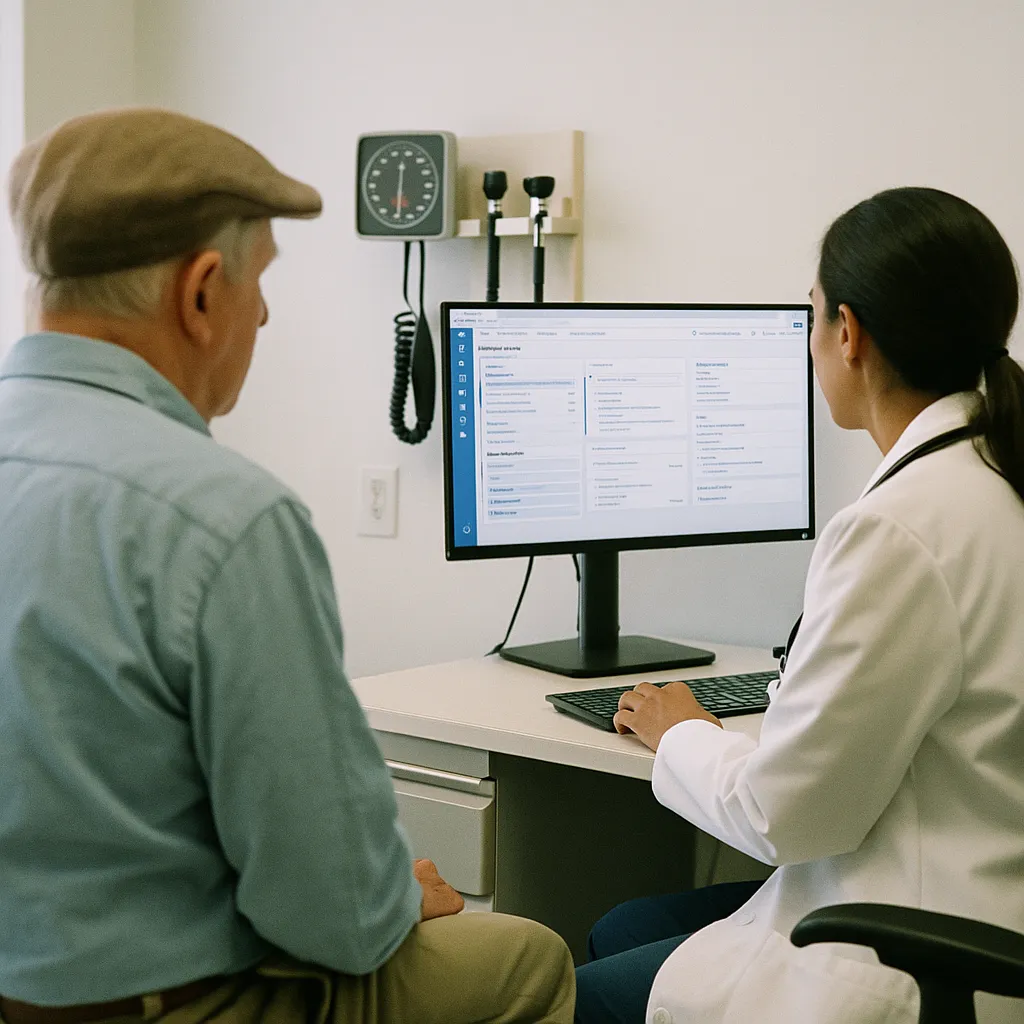
AI tools are saving clinicians the equivalent of 16 working days per year, but 70% of healthcare workers say their organizations are failing to train them on the technology they're already using.
AI Is Saving Clinicians 16 Working Days a Year — But 70% Lack Adequate Training
AI tools are already saving the average clinician the equivalent of 16 working days per year, according to Philips' 2026 Future Health Index — but a separate finding from the same study undercuts the headline: 70% of healthcare workers say the AI training at their organization is inadequate, inconsistent, or simply unavailable. The technology is arriving faster than the workforce knows how to use it safely.
That gap is the real story in what Philips calls its most significant annual health survey to date. Healthcare systems worldwide have been deploying AI at scale to address chronic understaffing and ballooning patient volumes. But deploying tools and building competency are two different investments, and most organizations are making only one of them.
What the Survey Found
Philips' 11th annual Future Health Index, released June 9, 2026, surveyed more than 2,000 healthcare professionals across 10 countries. The study spans primary care, hospital medicine, radiology, and other specialties — giving it broader applicability than single-setting research.
Key findings:
- 16 working days saved per clinician per year through current AI tool use
- 50% of respondents say they now have capacity to see eight additional patients per week
- 39% report that AI has already caught a potential medical error before it reached a patient
- 70% describe AI training at their organization as inadequate, inconsistent, or unavailable
The 16-day figure is not a projection — it reflects time savings clinicians are already experiencing from tools in active deployment today, including AI medical scribes, diagnostic support systems, and workflow automation.
Why Efficiency Gains and a 70% Training Gap Can Coexist
It seems contradictory: if training is so poor, how are clinicians saving three weeks of work per year? The answer is that basic AI tools — transcription, scheduling assistance, administrative automation — are intuitive enough to deliver time savings without deep training. They're productivity wins in the same category as learning a new keyboard shortcut.
The training gap becomes dangerous at the next level: AI tools that surface clinical recommendations, flag abnormal findings, draft care plans, or summarize patient histories. These are where errors compound and where clinician judgment must function as the error-correction layer. If clinicians haven't been trained on how these tools fail — what their error modes look like, under what conditions they hallucinate or underperform — they can't catch what they don't know to look for.
Get this in your inbox.
Daily AI intelligence. Free. No spam.
Healthcare AI failure modes are well-documented:
- Hallucination in clinical notes: AI scribing tools have surfaced incorrect diagnoses and drug dosages in draft records, some of which reached patient files before being caught
- Demographic bias: Multiple peer-reviewed studies have found AI diagnostic tools underperform on underrepresented racial and socioeconomic groups, sometimes by significant margins
- Alert fatigue amplification: AI-generated clinical flags layered on top of existing decision-support systems can numb clinician attention rather than sharpen it
The 39% who say AI has already caught a medical error is genuinely encouraging. But "errors caught" is not the same metric as "errors introduced." Untrained clinicians accepting AI outputs without scrutiny may be generating new errors while preventing old ones.
The Structural Reason Training Is Lagging
Healthcare organizations face a specific procurement and compliance lag. AI vendors ship feature updates quarterly. Hospital compliance teams — who must vet training materials before staff can use them — operate on cycles measured in months. The result is that frontline staff are frequently learning AI tools on the job, which in clinical settings means learning on patients.
There is also a resource asymmetry that deserves attention. Large academic medical centers with dedicated AI governance teams, patient safety officers, and medical informatics departments can build structured onboarding programs. Community hospitals and rural health systems — often the organizations most dependent on AI efficiency gains because they face the most severe staffing shortages — frequently lack the infrastructure to do this. The clinicians who most need the time AI saves are often the least equipped to use it safely.
The Business Case for Training Is as Strong as the Business Case for AI
Philips frames its data as an argument for scaling AI investment — and the numbers support that framing. If AI saves 16 days per clinician and a 500-person clinical staff captures that fully, the organization collectively recovers 8,000 working days annually: roughly 32 full-time equivalents. That is a meaningful budget offset against hiring.
But the math only works when time saved is productive rather than consumed by error correction and rework. Health systems that invest in structured, ongoing AI literacy programs — tied to new tool deployments, not treated as one-time onboarding — will capture those gains. Systems that treat AI training as a compliance checkbox will eventually face incidents that their malpractice carriers will price into premiums.
The 39% error-catching figure gives health systems a number to defend AI investment to boards. The 70% training gap gives them the mandate to fund the workforce development side of the equation with equal seriousness.
What to Watch
Regulatory pressure is moving in the same direction as the data. The Joint Commission and CMS are both reviewing whether existing conditions-of-participation standards adequately address AI governance in clinical settings. Several state health departments are already drafting AI literacy requirements for clinical licensing renewals. Philips' 70% figure gives regulators a documented benchmark — and a problem clearly visible enough to justify formal policy action.
Expect the next round of hospital accreditation surveys to include structured questions about AI training program existence and cadence. Health systems without documented programs will face increasing scrutiny.
Hector Herrera covers AI in healthcare and life sciences for NexChron.
Did this help you understand AI better?
Your feedback helps us write more useful content.
Get tomorrow's AI briefing
Join readers who start their day with NexChron. Free, daily, no spam.