Rural and community clinicians report AI documentation tools genuinely reduce administrative burden — but raise hard questions about data privacy, security liability, and automation bias in care.
Clinicians Say AI Sharpens Patient Focus — But Privacy and Human Role Questions Are Mounting
By Hector Herrera | May 25, 2026 | Health
Doctors and nurses at rural and community health systems are reporting that AI tools — particularly ambient documentation and AI-assisted triage — are doing exactly what they were promised: reducing the time clinicians spend on administrative tasks and returning that time to patients. But the same providers raising those benefits are also raising hard questions about data privacy, security liability, and what it means when AI recommendations start shaping clinical judgment. The gap between AI's clinical gains and the governance frameworks meant to oversee it is widening.
This is not a story about AI hype meeting reality. The tools are working. The question is whether the infrastructure around them — legal, ethical, and institutional — is ready for how fast they are being adopted.
What Clinicians Are Actually Experiencing
Cardinal News's ground-level reporting focused on rural and community health settings — not academic medical centers, where AI pilots are plentiful and well-funded. The finding is that even in resource-constrained environments, AI deployment is happening at pace, and the people using the tools are largely positive about their effect on clinical workflow.
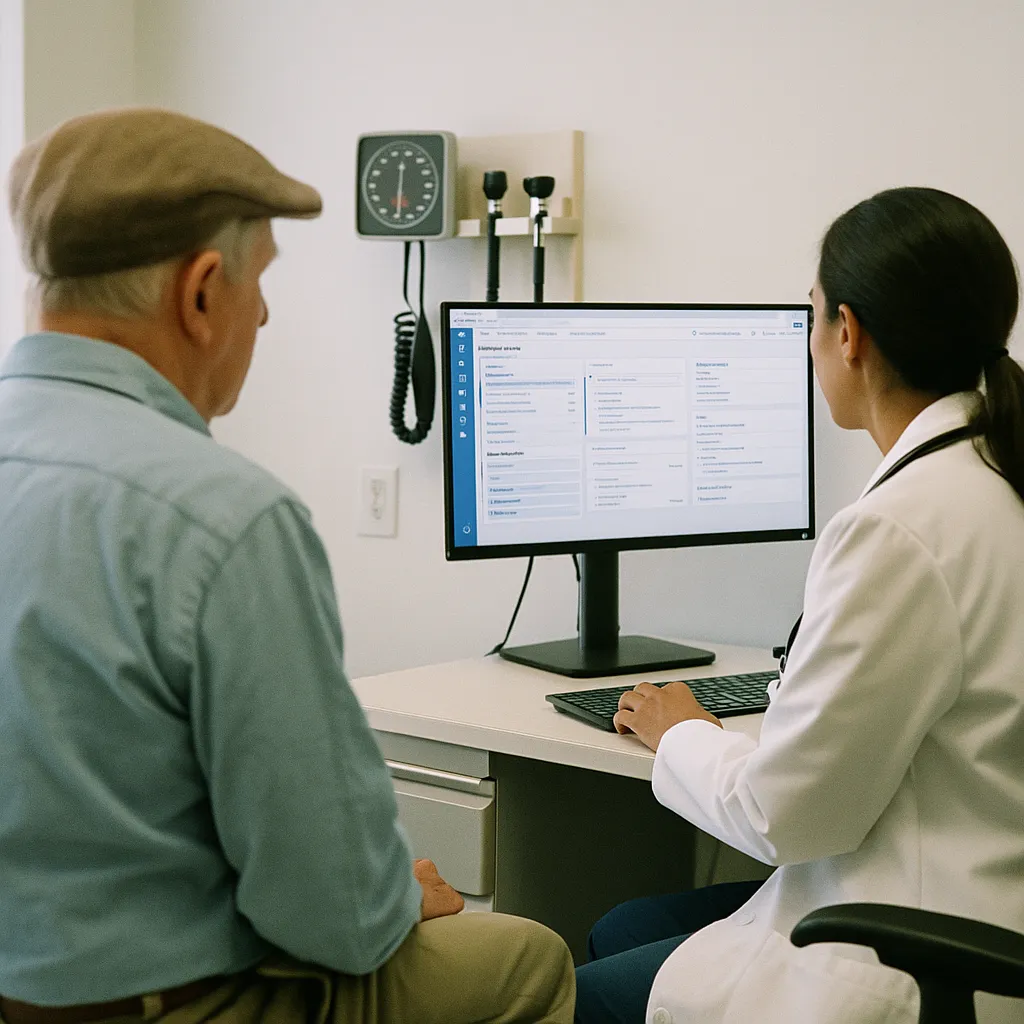
Ambient documentation — AI that listens to patient-provider conversations and automatically generates clinical notes — is the tool clinicians cite most consistently as genuinely helpful. Physicians report spending 30-50% less time on documentation after hours. That is time returned either to patient interactions or to the personal time erosion that drives clinician burnout. In primary care, where physicians routinely see 20-25 patients per day and documentation consumes evenings and weekends, the reduction is not marginal — it is structural.
AI-assisted triage — tools that analyze incoming patient information and flag priority cases or suggest diagnostic pathways — is showing up in emergency and urgent care settings. Nurses report that AI triage support helps maintain consistent screening even during high-volume shifts when cognitive fatigue would otherwise affect judgment.
The pattern across both tools: AI is handling the cognitive overhead of information organization and documentation, freeing clinician attention for the interpretive and relational work that AI cannot do.
The Privacy Problem Nobody Has Resolved
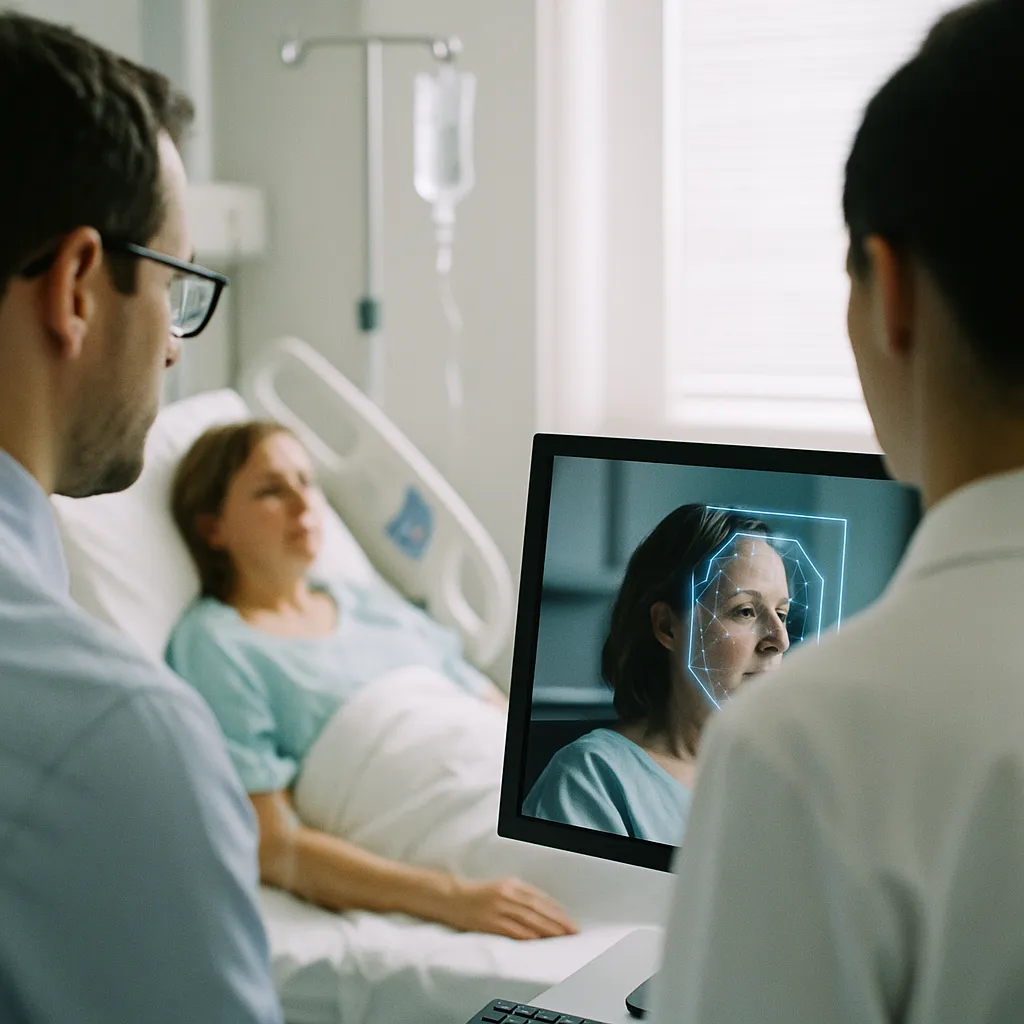
Ambient documentation works by recording clinical conversations. That means AI models are processing protected health information (PHI) — patient names, symptoms, diagnoses, medications, family histories — in real time, often in cloud environments operated by AI vendors.
The HIPAA framework, designed in 1996 and last updated in 2013, was not written for this data flow. Business Associate Agreements (BAAs) — the contracts that allow HIPAA-covered entities to share PHI with vendors — technically cover AI documentation vendors. But the BAA framework does not specify how AI vendors must handle PHI used to improve their models, what training data controls must be in place, or how a breach of ambient recording data should be handled.
Get this in your inbox.
Daily AI intelligence. Free. No spam.
Clinicians and administrators in Cardinal News's reporting specifically raised:
- Who owns the conversation recording — the patient, the provider, or the AI vendor?
- Whether AI vendors are using de-identified versions of clinical conversations for model training, and under what consent framework
- What happens to recorded data after the clinical note is generated — are recordings retained, and for how long?
- Security liability — if an ambient documentation system is breached and patient conversations are exposed, who is legally responsible and what are the damages?
None of these questions have fully resolved answers in current law. HHS's Office for Civil Rights has issued general guidance on AI and HIPAA, but nothing specific to ambient documentation, model training on PHI, or the liability allocation for AI-mediated breaches.
The Human Role Question Is Harder Than It Looks
The concern about AI's role in clinical judgment is not simply that AI might make mistakes — it is more subtle than that. It is about how AI recommendations change the way human clinicians make decisions.
Research on clinical decision support systems (CDSS) — which predate modern AI — has consistently found that when clinicians have access to a system's recommendation, they disproportionately anchor on it. Alert fatigue — the tendency to dismiss AI recommendations because they arrive too frequently — is the opposite problem that has received more attention, but both patterns exist simultaneously in different contexts.
For AI-assisted triage and diagnostic tools, the concern is automation bias: the tendency to trust an AI recommendation more than a clinician's own assessment when the two conflict. If an AI triage system consistently flags certain presentations as low-priority, a nurse who would otherwise have flagged the same patient may defer to the AI — not out of incompetence, but because the AI recommendation creates a powerful anchoring effect.
The question is not whether AI should have a role in clinical judgment. It already does, and the benefits are real. The question is whether training programs, protocols, and institutional policies are keeping pace with deployment — ensuring that clinicians understand the limitations of the specific AI tools they are using, can identify when to override AI recommendations, and are not systematically deferring judgment in ways that undermine the care AI is supposed to support.
The honest answer, based on Cardinal News's reporting and the broader evidence base, is: for most health systems, training has not kept pace with deployment. Tools are being adopted faster than the educational infrastructure that would make clinicians sophisticated users of those tools.
What Governance Frameworks Exist
The regulatory landscape for clinical AI is fragmented. The FDA regulates AI as a medical device when it meets specific criteria — software that influences clinical decision-making and poses meaningful risk to patients. Ambient documentation tools are generally not classified as medical devices because they generate notes rather than clinical recommendations. AI diagnostic tools that flag conditions or suggest diagnoses are more likely to require FDA clearance, though the agency's De Novo and 510(k) pathways are still being applied inconsistently to AI-based tools.
At the institutional level, the Joint Commission — the accrediting body for most US hospitals — is developing AI governance standards, but they are not yet finalized or enforced. Some large health systems have developed internal AI review processes, but these vary widely and are not externally audited.
The result: a clinical AI market where the tools are deployed based on vendor demonstrations and clinician satisfaction, without systematic pre-deployment evaluation of bias, failure modes, or the privacy practices of the underlying data infrastructure.
What to Watch
The HHS proposed rulemaking on AI in healthcare — signaled in early 2026 — will be the most significant near-term governance development. Watch for whether it addresses ambient documentation specifically, or focuses primarily on AI diagnostic tools. Also watch for state-level action: California, Massachusetts, and New York are each considering clinical AI transparency requirements that would mandate disclosure to patients when AI is involved in their care — a policy that would force standardization of consent and disclosure practices that currently vary by institution.
Medical disclaimer: This article discusses AI tools in healthcare settings and is intended for informational purposes. It does not constitute medical advice. Consult qualified healthcare providers for medical decisions.
Hector Herrera is the founder of Hex AI Systems and the author of NexChron.
Did this help you understand AI better?
Your feedback helps us write more useful content.
Get tomorrow's AI briefing
Join readers who start their day with NexChron. Free, daily, no spam.