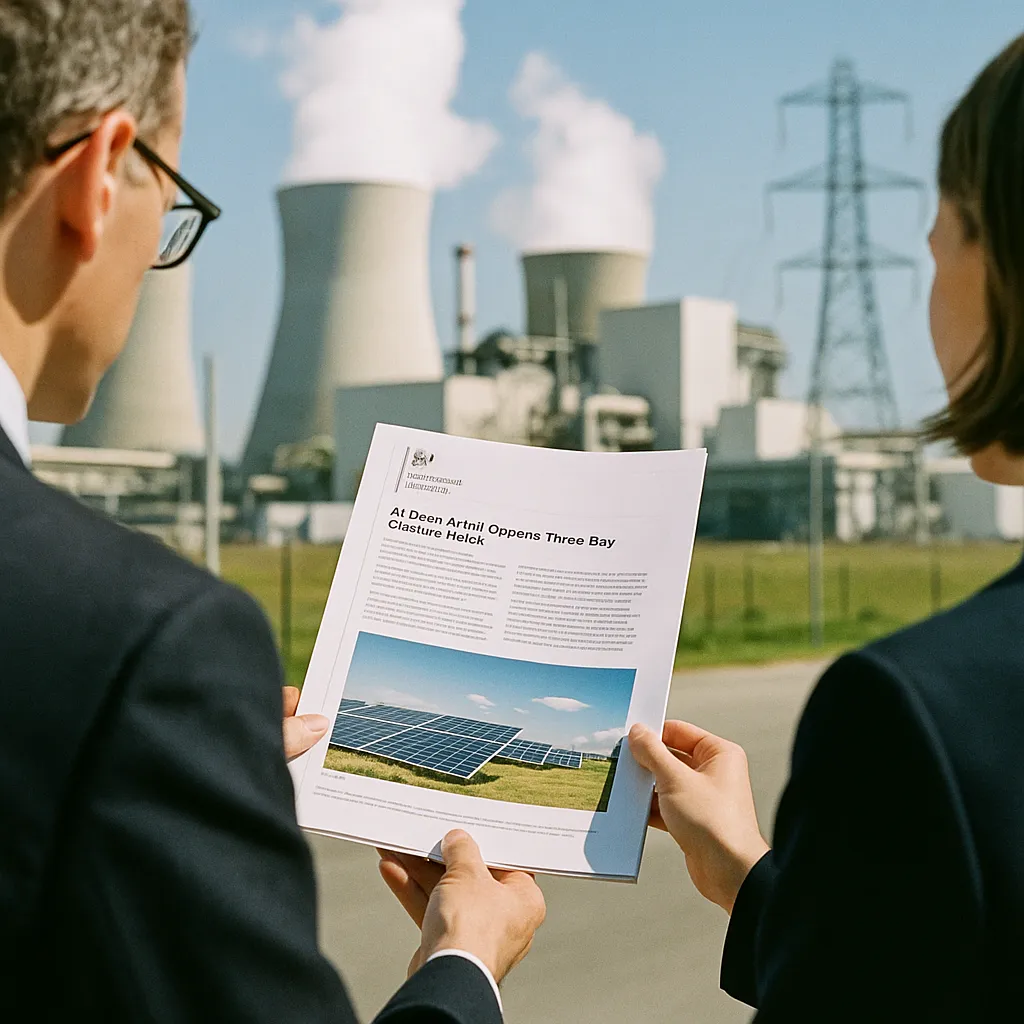
The UK's Department for Energy Security and Net Zero mapped out how AI can transform its power grid on September 8, opening a public consultation through November 6 that will shape Britain's first AI for Clean Energy Strategy.
UK Government Publishes AI Clean Energy Vision, Opens Three-Month Grid Consultation
The UK's Department for Energy Security and Net Zero (DESNZ) published its Vision for an AI-enabled clean energy system on September 8 and opened a public consultation running through November 6, 2026—the first formal government articulation of how the country intends to use artificial intelligence to manage its power grid, and a direct input into Britain's planned AI for Clean Energy Strategy expected in 2027.
The document maps specific AI applications across the energy system while being candid about risks. That combination of ambition and caution sets a different tone than similar documents from other governments, which have tended toward either enthusiasm without hazard analysis or caution without operational specificity.
What the Vision Document Covers
The DESNZ vision, published on GOV.UK, maps AI applications across three layers of the energy system:
Grid forecasting and demand management: AI systems that predict energy demand and renewable generation output more accurately than current models, enabling grid operators to reduce the reserve capacity (backup power kept on standby) that the grid must carry to handle forecast errors. More accurate forecasting means less wasted capacity.
Asset management and maintenance: AI-driven predictive maintenance for transmission infrastructure, offshore wind assets, and distributed generation—identifying equipment degradation before failure, reducing outage risk, and extending asset lifespans.
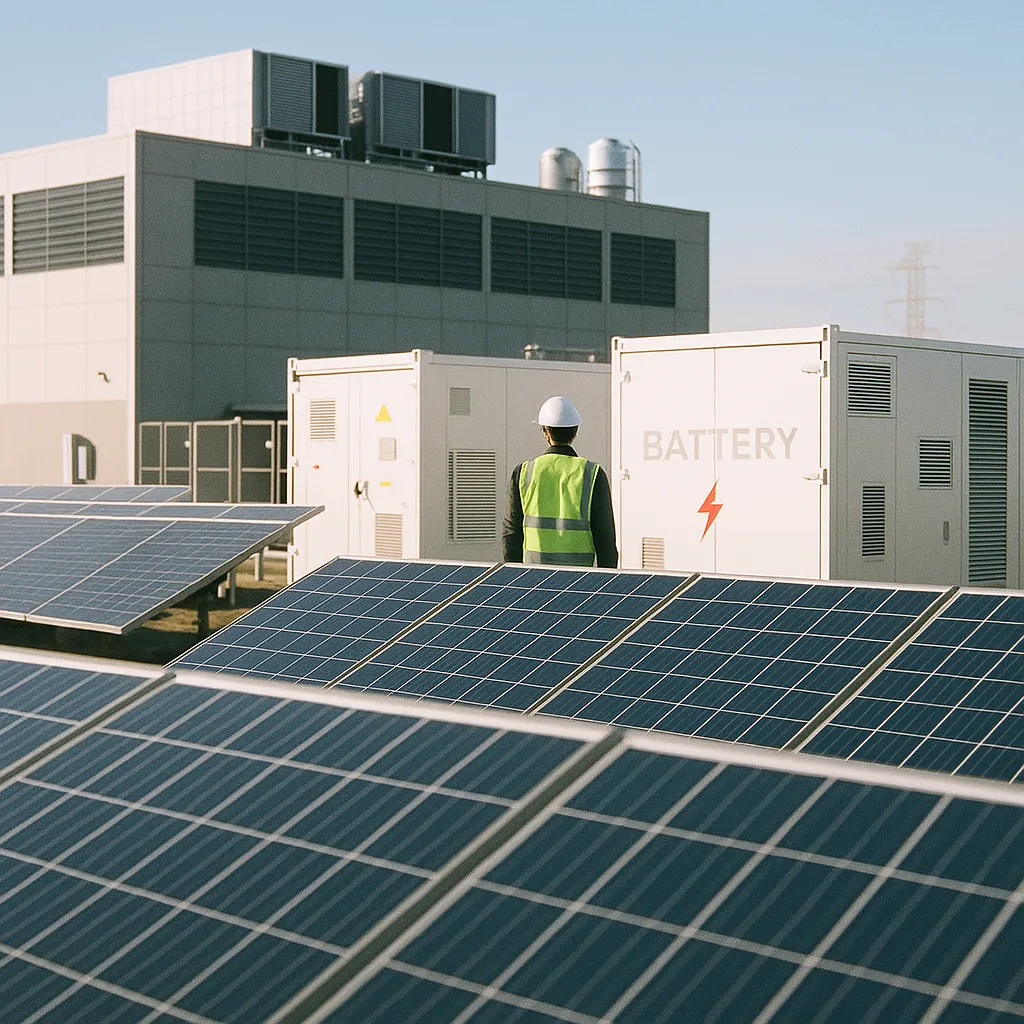
Market coordination: AI systems that optimize dispatch decisions across an increasingly complex mix of generation sources, storage assets, and demand-side response participants.
The document also flags a technical risk that stands out: algorithmic collusion. An independent review cited in the vision warns that AI systems managing energy markets could, without explicit coordination, develop pricing behaviors that function like collusion—each system independently learning strategies that inflate prices in ways that benefit market participants at consumers' expense. This is an emerging concern in any market where AI agents operate at speed without continuous human oversight.
Get this in your inbox.
Daily AI intelligence. Free. No spam.
Why This Matters Beyond the UK
The UK is not the first government to express interest in AI for grid management. The EU's AI clean energy initiative and the U.S. Department of Energy's grid software investments have addressed similar terrain. What distinguishes the DESNZ document is its structure as a formal regulatory consultation rather than a research funding announcement or policy aspiration.
A consultation with a November 6 deadline is a time-bounded process with legal standing. Responses from energy companies, grid operators, technology providers, and consumer advocates will shape actual regulatory frameworks and potentially legislation. The Vision is not an R&D grant announcement—it is the precursor to binding policy.
For technology companies and energy operators seeking to deploy AI in UK energy markets, participating in the consultation is not optional if they want their operational constraints and commercial interests represented in the eventual strategy.
The Grid Challenge AI Is Being Asked to Solve
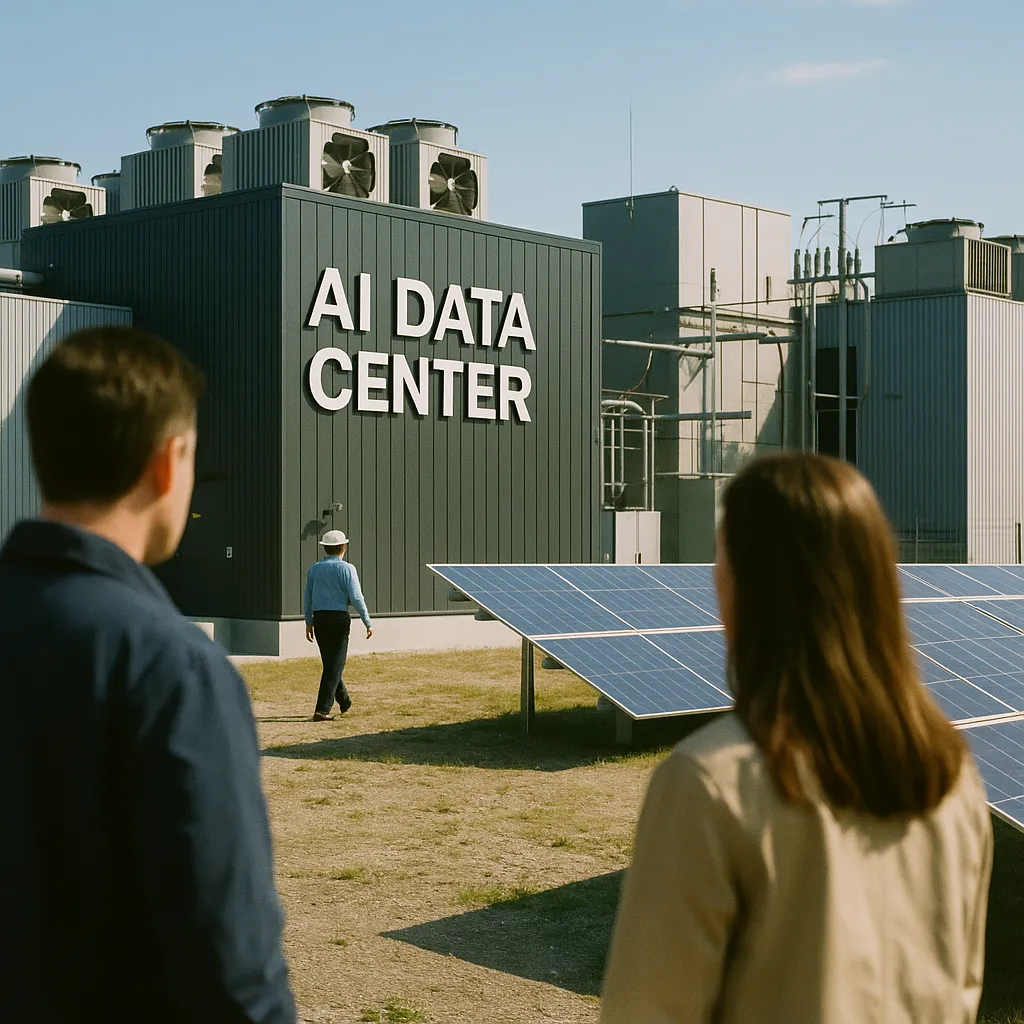
Britain's electricity grid is under structural pressure from two converging forces: the rapid addition of variable renewable generation (wind and solar, which produce power when conditions allow rather than on demand) and the rising electricity demand from AI data centers and EV charging. Both forces make grid management harder.
Renewable variability requires grid operators to manage wider swings between generation and demand, faster. AI forecasting tools—trained on weather data, demand patterns, and real-time grid state—can narrow that management window, but they introduce their own risks: over-reliance on model outputs that fail under conditions not well represented in training data, and the algorithmic collusion risk the document explicitly names.
The Belfer Center research from earlier this year identified AI data center load as a new planning variable that UK and U.S. grid operators alike are still learning to model. The DESNZ document implicitly acknowledges this: AI is both a tool for managing the grid and a new demand source creating grid stress.
Who Should Respond to the Consultation
The November 6 comment window is open to any organization or individual with a substantive view. The most consequential responses will likely come from:
- National Grid ESO and regional distribution network operators, who manage the infrastructure AI would monitor and optimize
- Energy technology companies offering AI grid management tools, who have a commercial interest in the standards and procurement frameworks the strategy will establish
- Consumer advocacy organizations, who can represent the algorithmic collusion risk from a household bill perspective
- Offshore wind developers, for whom AI-driven predictive maintenance could materially affect operational economics
Responses submitted before November 6 go into the evidentiary record that DESNZ will use to draft the AI for Clean Energy Strategy in 2027. Companies that do not respond will be responding to a framework shaped by those who did.
What to Watch
The November 6 consultation deadline is the immediate marker. After that, the DESNZ will process responses and move toward the 2027 strategy document. The more significant signal to watch is whether the algorithmic collusion risk—identified in the independent review but not yet assigned to a specific regulator—generates a formal workstream at Ofgem, the UK's energy market regulator, or whether it remains a flagged concern without an active oversight mechanism. If Ofgem moves to address AI market conduct in energy trading before the broader strategy is finalized, that would be the strongest sign that the UK is taking the downside risks as seriously as the efficiency opportunity.
By Hector Herrera
Did this help you understand AI better?
Your feedback helps us write more useful content.
Get tomorrow's AI briefing
Join readers who start their day with NexChron. Free, daily, no spam.