BloombergNEF data shows co-located solar-plus-storage investment hit a record $25 billion in H1 2026 — nearly double H2 2025 — as AI data centers race to secure reliable clean power without waiting years for grid interconnection.
Co-Located Solar-Plus-Storage Investment Hits Record $25 Billion in H1 2026 as AI Data Centers Drive Power Rush
By Hector Herrera | September 16, 2026 | Energy
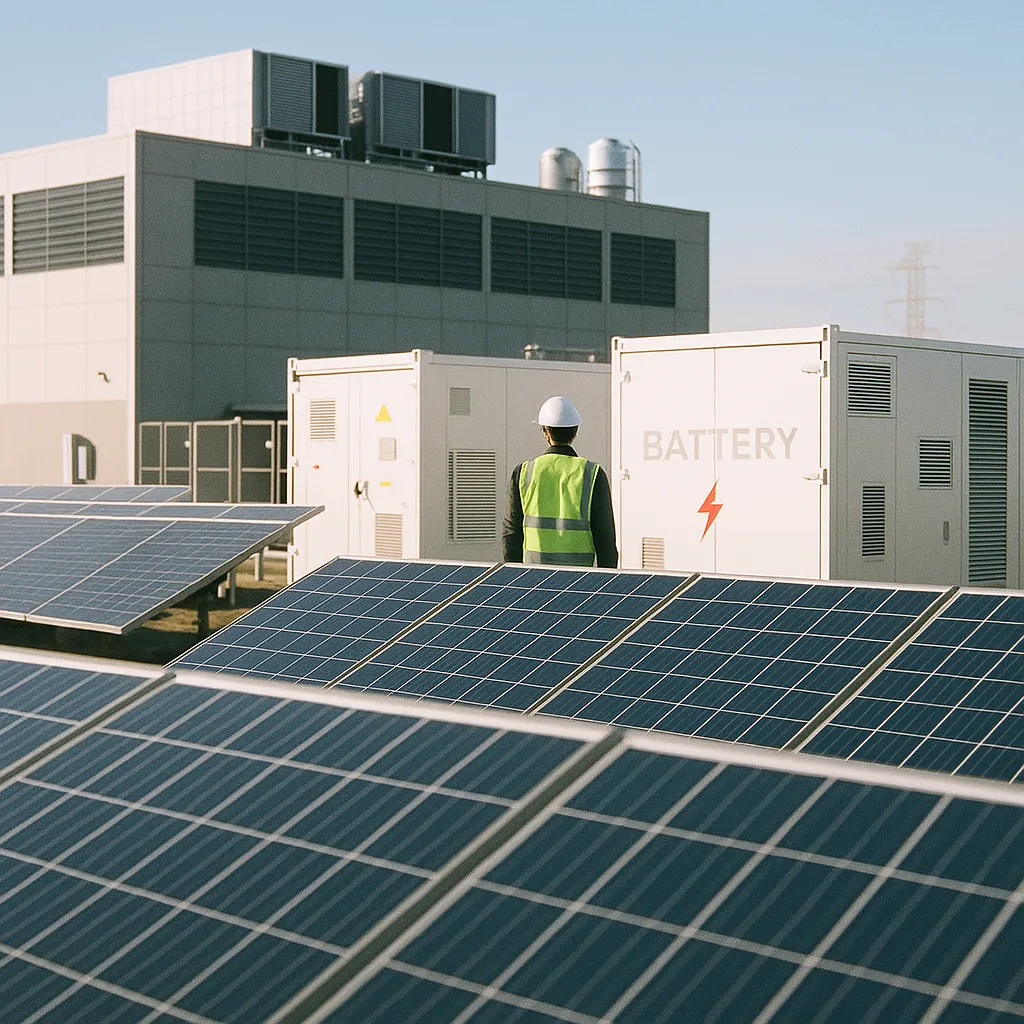
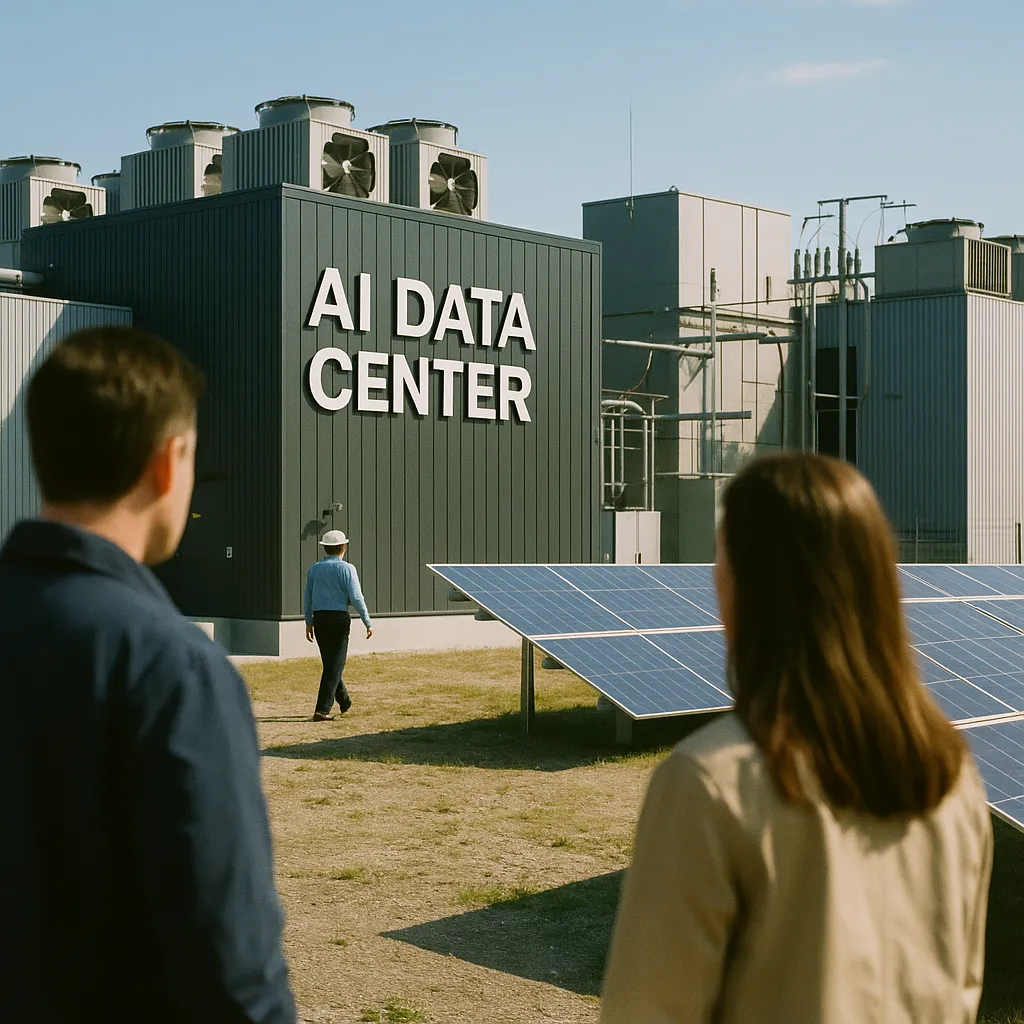
Investment in co-located solar-plus-storage projects — facilities where solar generation and battery storage are built at the same site — reached a record $25 billion in the first half of 2026, according to BloombergNEF data published by PV Magazine. That is nearly double the H2 2025 figure and three times what the same category attracted in H1 2025. The driver is not the energy transition alone: it is AI data centers that need enormous quantities of reliable power and cannot tolerate the intermittency that comes with solar generation by itself.
In roughly 24 months, co-located solar-plus-storage has gone from a niche infrastructure financing category to the dominant vehicle for powering hyperscale AI compute.
The Numbers
BloombergNEF's data:
- $25 billion in global investment in co-located solar-plus-storage, H1 2026
- ~2x H2 2025's total for the same category
- ~3x H1 2025's total
- US investment up 54% year-on-year in this category specifically
The US acceleration stands out. American hyperscalers — Microsoft, Google, Amazon, Meta — have all signed large co-located solar-plus-storage power purchase agreements in 2026. A contributing factor: federal investment tax credit deadlines under the Inflation Reduction Act create a strong incentive to reach financial close this year rather than next.
Get this in your inbox.
Daily AI intelligence. Free. No spam.
Why Storage-Backed Solar Became the Preferred Solution
AI data centers have specific power requirements that pure solar or standard grid connections often cannot reliably satisfy:
Reliability without tolerance for intermittency. A language model inference cluster running at 100 megawatts cannot absorb the power fluctuations that come from cloud cover or grid variability. A co-located battery system provides a buffer that smooths generation intermittency and protects workloads from interruption.
Speed-to-power advantage over grid interconnection. Grid interconnection queues in the US now run five to seven years in many regions — a direct result of the surge in new generation and load requests. A developer who controls a site, secures permits, and builds co-located storage can deliver stable power faster than waiting for transmission upgrades that may not arrive until the decade is nearly over.
Economics that favor this specific structure. The combination of the Investment Tax Credit (ITC) for solar and the Inflation Reduction Act's storage incentives makes co-located projects significantly cheaper on a levelized-cost basis than equivalent natural gas peaker capacity — the previous fallback for reliable on-demand power at data center scale.
The Competition for Power-Ready Sites
A secondary driver behind the record investment numbers is less visible but equally important: data center developers are racing to lock up power-ready sites before competitors do. A 200-megawatt co-located facility that can immediately power an AI training cluster is worth more than the sum of its hardware — it represents a queue position in the interconnection system that competitors cannot replicate in less than five years.
This has created an unusual market dynamic. Renewable energy developers holding fully permitted, storage-backed solar projects are receiving premium bids from data center developers who would otherwise wait years for grid connections. Some projects are being acquired before construction begins, purely for the permitted site and power rights.
What to Watch
The ITC deadline calendar will shape H2 numbers. Many projects racing to reach financial close in 2026 face construction and interconnection challenges that could push actual completions into 2027–2028. Projects that miss their tax credit windows will see financing costs rise, which could moderate the pace of new commitments. BloombergNEF's H2 2026 data — expected in early 2027 — will confirm whether the record investment rate is sustained or represents a tax-credit-driven demand spike being pulled forward from future years.
Hector Herrera covers AI infrastructure and energy systems at NexChron.
Did this help you understand AI better?
Your feedback helps us write more useful content.
Get tomorrow's AI briefing
Join readers who start their day with NexChron. Free, daily, no spam.