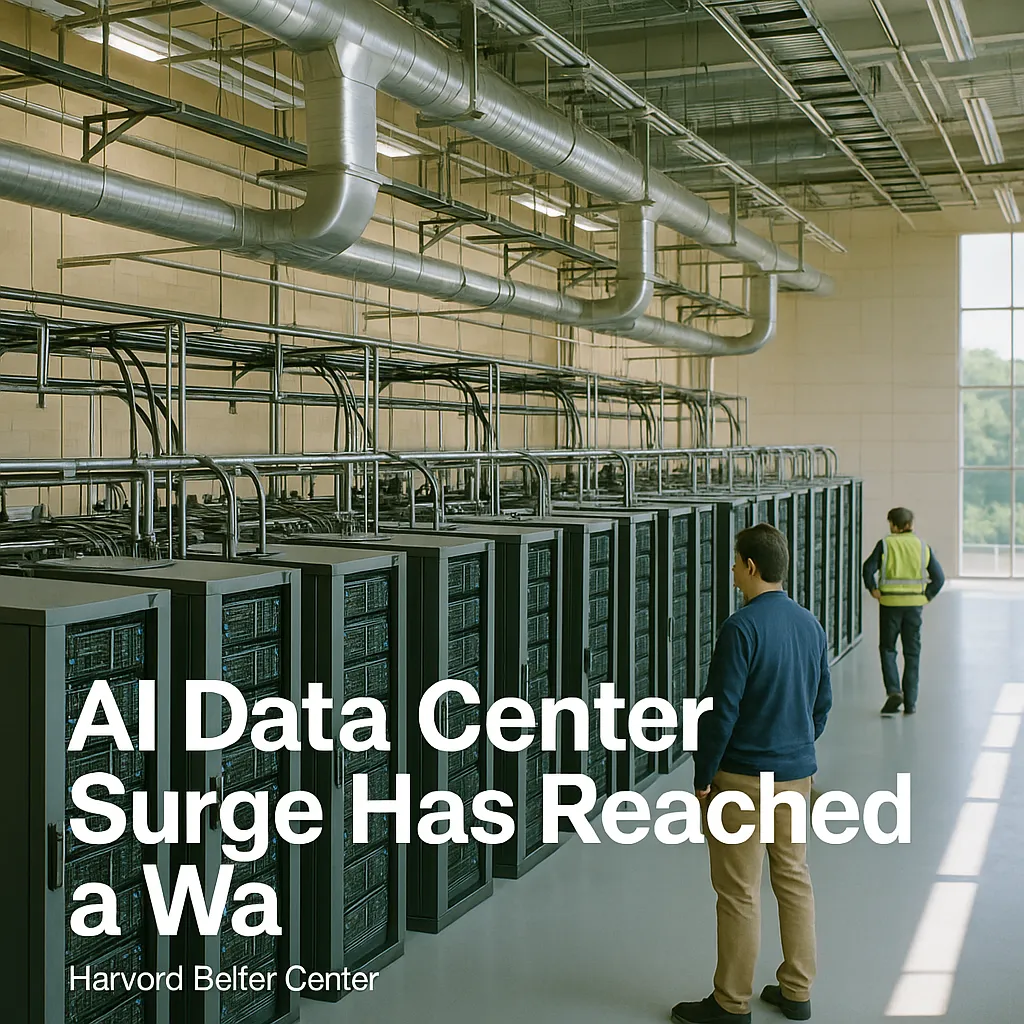
A Harvard Belfer Center analysis warns AI workloads will consume 9–11% of total U.S. electricity by 2030 and that corporate renewable pledges are structurally inadequate to prevent grid instability.
Harvard Belfer Center: AI Data Center Surge Has Reached a Watershed Moment for the U.S. Grid
By Hector Herrera | June 9, 2026 | Energy
The U.S. electric grid is approaching a stress threshold it was not designed to handle, and AI is the primary driver. A new analysis from Harvard Kennedy School's Belfer Center concludes that AI-driven data center construction has reached an inflection point that threatens grid stability across multiple U.S. regions — and that the corporate renewable energy pledges companies have offered in response are structurally inadequate to solve the problem.
The Belfer Center, which houses some of the country's most rigorous national security and infrastructure research, does not typically issue alarmist findings. When it says the grid has reached a watershed, that is language worth taking seriously.
The Demand Numbers
The core quantitative claim in the analysis is that AI workloads are on track to consume 9 to 11 percent of total U.S. electricity generation by 2030, according to the Belfer Center paper. For context, the entire manufacturing sector currently consumes approximately 23 percent. A single new category of load — AI computation — is projected to represent nearly half that share within four years.
That projection is built on current construction pipelines, publicly announced data center commitments, and AI workload growth trajectories from existing deployments. It does not require speculative acceleration scenarios; it is a relatively conservative extrapolation from observable build activity.
Several specific stress points the analysis identifies:
Get this in your inbox.
Daily AI intelligence. Free. No spam.
- PJM Interconnection (covering 13 mid-Atlantic and Midwestern states) is already facing resource adequacy concerns for peak demand periods in 2027-2028 due to data center load growth in Northern Virginia and adjacent markets.
- ERCOT (Texas) is absorbing a significant portion of new data center development, with load growth projections the analysis calls "inconsistent with existing transmission planning assumptions."
- Southeast and Mountain West regions are emerging as secondary hot spots as developers seek lower-cost land and power, in some cases moving ahead of grid infrastructure that can support them.
Why Corporate Renewable Pledges Are Not Enough
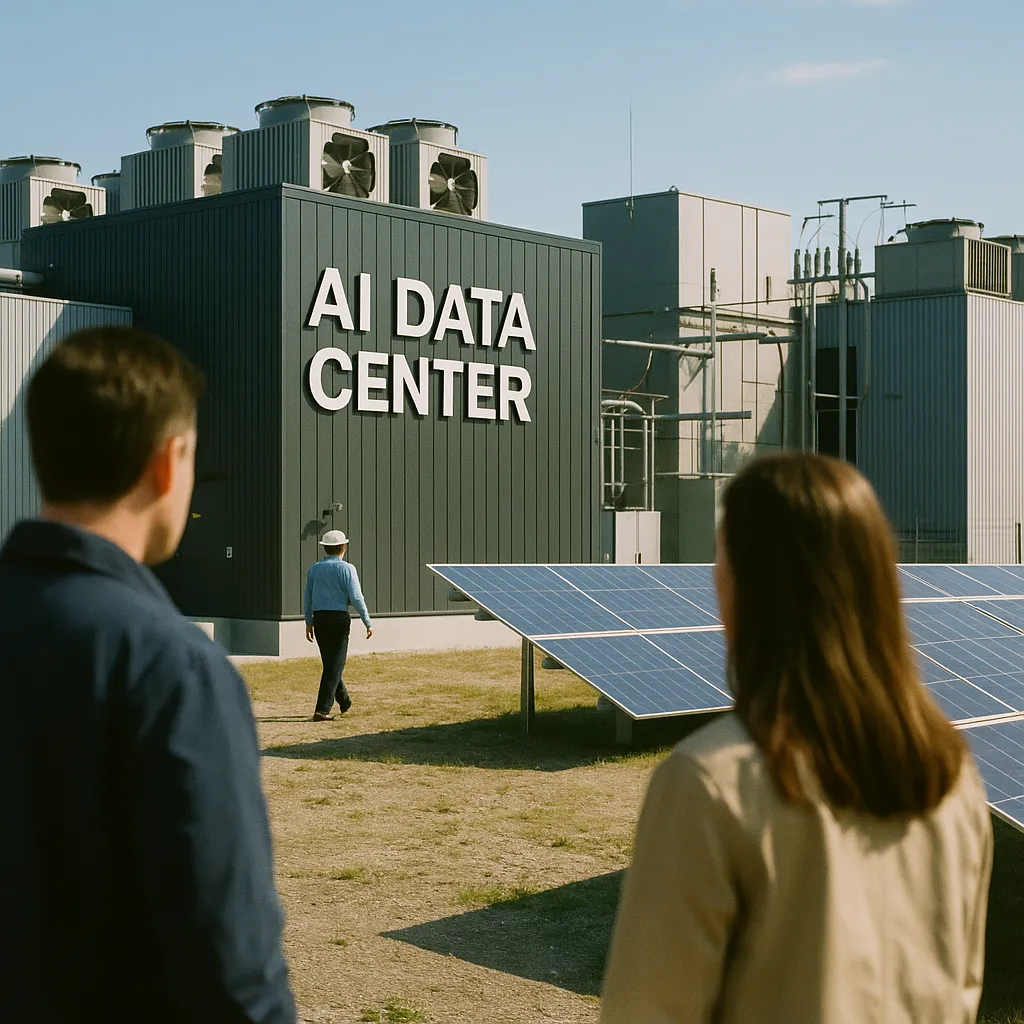
The standard corporate response to questions about AI's energy impact has been to point to renewable energy commitments: Google, Microsoft, and Amazon have all announced ambitious 100% renewable or carbon-neutral pledges. The Belfer Center paper argues these pledges address the wrong problem.
The grid stability issue is not primarily about the carbon content of electricity — it is about physical load on transmission and distribution infrastructure and peak demand timing. Renewable energy credits (RECs) and power purchase agreements (PPAs) do not add electrons to the grid when a data center needs them. They are accounting mechanisms, not physical supply.
Specifically, the analysis identifies three gaps voluntary pledges do not close:
- Transmission capacity. Getting new renewable generation to data center-dense load zones requires transmission lines that take 5-10 years to permit and build. Clean energy contracts do not accelerate that timeline.
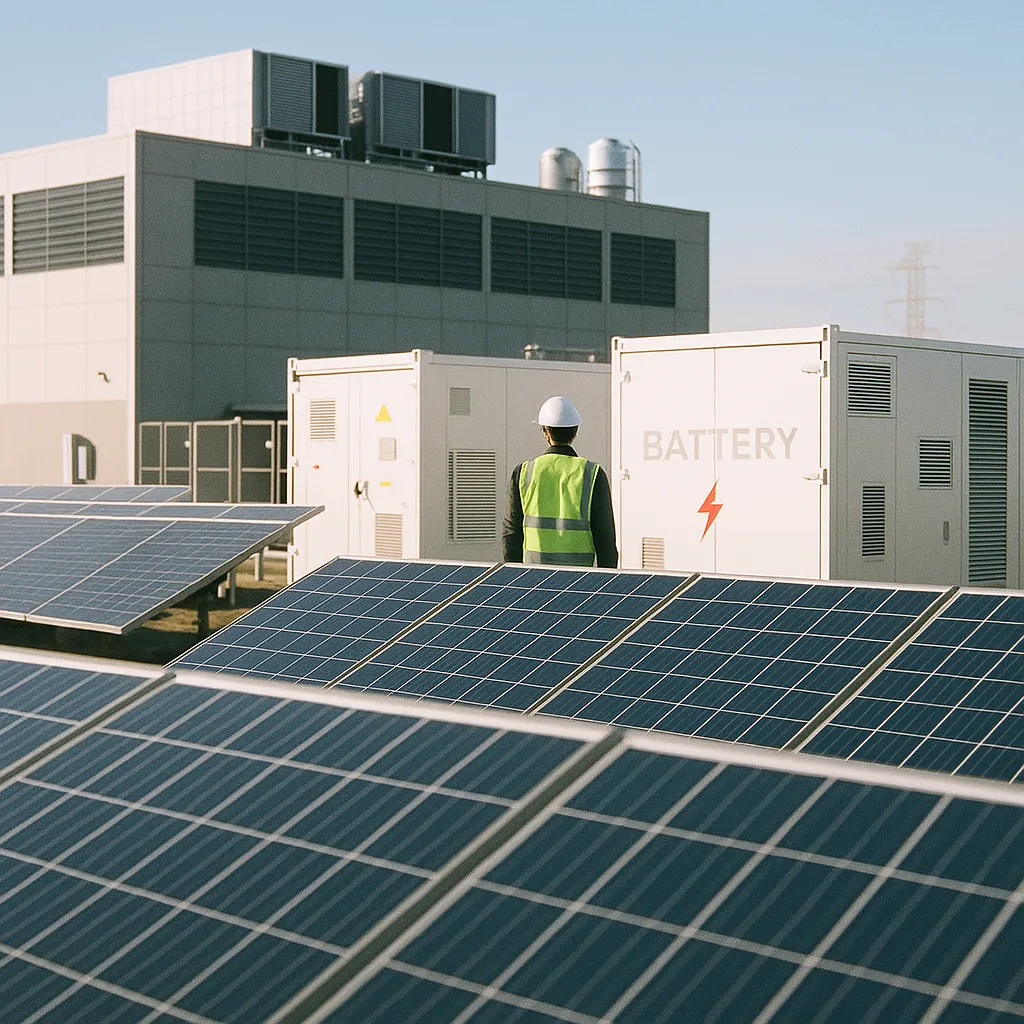
- Dispatchable backup capacity. AI inference workloads run 24/7 and cannot be interrupted. When renewable generation is unavailable, dispatchable capacity (natural gas, battery storage) must fill the gap. Current battery storage deployments are nowhere near sufficient to cover the load duration required.
- Grid interconnection queues. New generation projects — including the renewable plants backing corporate PPAs — face interconnection wait times of 3-5 years in most regions. Electricity that has not yet been built cannot power data centers that are coming online in 2026 and 2027.
What the Belfer Center Recommends
The paper calls for coordinated federal infrastructure investment at a scale the analysis says is not currently being planned. The specific recommendations include:
- Accelerated federal permitting for high-voltage transmission corridors connecting renewable generation to AI data center load zones
- FERC (Federal Energy Regulatory Commission) rulemaking requiring data centers above a certain load threshold to contribute to transmission infrastructure costs proportional to their grid impact
- Federal coordination with state utility commissions on integrated resource planning that explicitly accounts for AI load growth scenarios
- A national grid resilience investment program modeled on the infrastructure packages of the early 2020s, specifically targeted at AI-era load growth
The analysis is notably skeptical that market forces alone will produce adequate infrastructure investment on the necessary timeline, citing the structural misalignment between long-duration infrastructure investment returns and short-term data center capex decision cycles.
The Political Context
The Belfer analysis lands on the same day as President Trump's new AI executive order, which emphasizes acceleration over governance. The order does not address grid infrastructure investment — it is focused on innovation policy and federal AI procurement. The gap between the administration's accelerationist posture and the infrastructure investment the Belfer Center calls for is significant.
A federal government pushing maximum speed on AI deployment without a parallel commitment to grid infrastructure is essentially socializing the infrastructure risk while privatizing the competitive benefit. That arrangement has historically produced underinvestment.
What to Watch
PJM's capacity auction results due this summer will be the first concrete market signal of whether grid stress is pricing into power markets at the scale the Belfer analysis projects. If capacity prices spike in data center-heavy load zones, it will validate the analysis's near-term projections and potentially trigger utility commission reviews of large new load interconnection requests. Congressional response to the Belfer findings — particularly from senators representing states with significant data center buildout — will indicate whether federal infrastructure investment is politically viable in the current session.
Sources: Harvard Kennedy School Belfer Center — AI [Data Centers](/energy/ai-energy-demand-grid-numbers-2026) and the U.S. Electric Grid
Did this help you understand AI better?
Your feedback helps us write more useful content.
Get tomorrow's AI briefing
Join readers who start their day with NexChron. Free, daily, no spam.