China added 430 gigawatts of renewable energy in 2025 alone and is co-locating AI data centers in surplus clean-power zones, creating a structural electricity cost advantage over US AI infrastructure that export controls and chip restrictions cannot address.
China's Wind and Solar Expansion Could Give It a Decisive Advantage in the AI Infrastructure Race
By Hector Herrera | June 2, 2026 | Energy
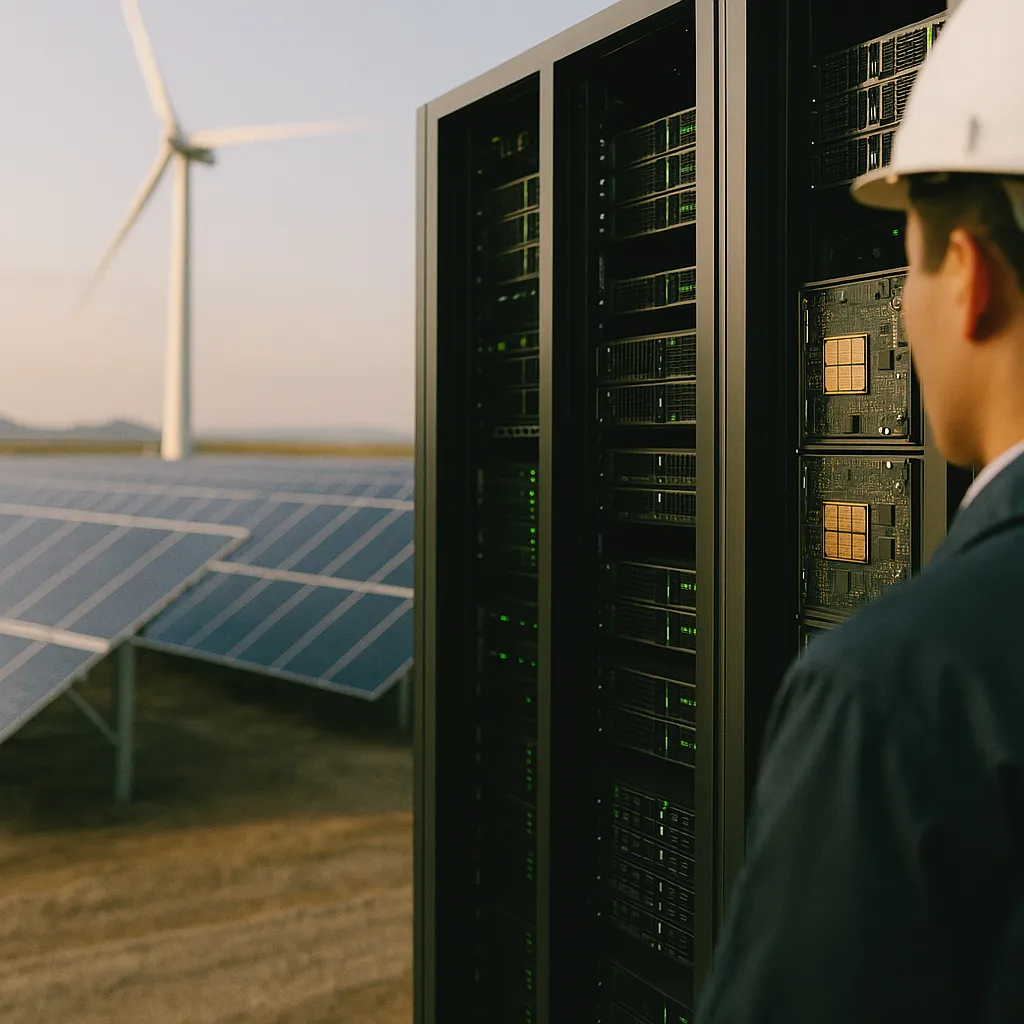
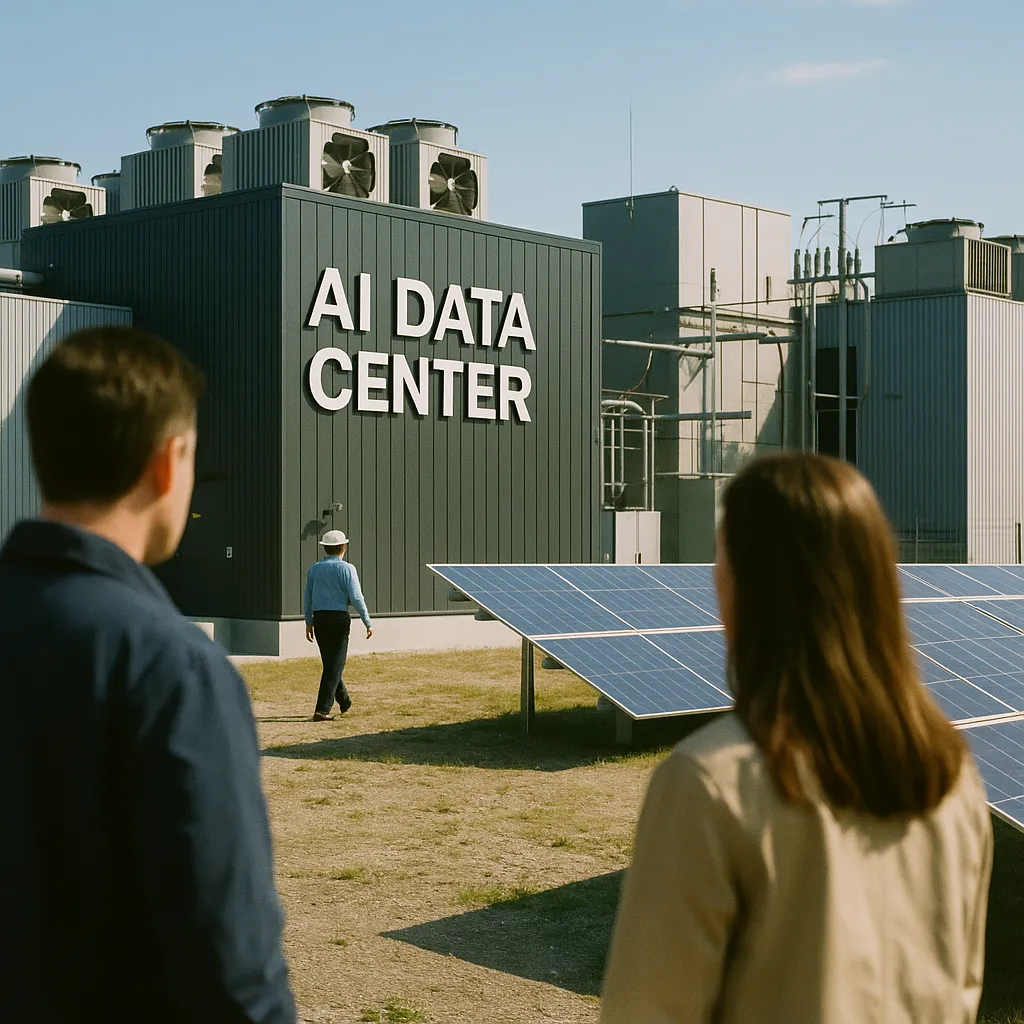
China added more than 430 gigawatts of wind and solar capacity in 2025 alone — more than half of all new renewable energy installed globally that year — and is actively co-locating AI data centers in those clean energy zones. The structural result: China's AI infrastructure may soon operate at substantially lower electricity cost than its US counterparts, independent of any advantage in chips or algorithms.
The Al Jazeera analysis frames this as a competitive dynamic that sits apart from the semiconductor sanctions, export controls, and model capability race dominating most US-China AI coverage. Those battles focus on what AI can do. The energy question determines how cheaply AI can run — and at scale, electricity cost is as strategically significant as model performance.
Why Electricity Cost Defines AI Competitiveness
Training a frontier AI model costs tens of millions of dollars in compute, and most of that compute cost is electricity. But inference — running a deployed model in response to user queries — is where electricity costs compound continuously. A model handling billions of queries per day requires constant power at data center scale. The economics of AI at scale are, in large part, the economics of electricity.
The US average commercial electricity price is approximately 12–14 cents per kilowatt-hour. Chinese industrial electricity prices, particularly in renewable-rich provinces like Inner Mongolia, Xinjiang, and Gansu, can run as low as 3–5 cents per kilowatt-hour. That gap translates directly into operating cost at data center scale.
At 100 megawatts of continuous load — a mid-sized AI facility — a 9-cent per kilowatt-hour difference represents roughly $79 million per year in operating cost advantage. China is not building one such facility; it's building dozens, co-located with surplus renewable generation that would otherwise be curtailed off the grid.
The 430 Gigawatt Number in Context
China's 2025 renewable capacity addition of 430 gigawatts is striking in context. The entire installed wind and solar capacity of the United States at the end of 2024 was approximately 390 gigawatts — meaning China added more new renewable capacity in a single year than the US has built in total since the first solar panel was connected to the American grid.
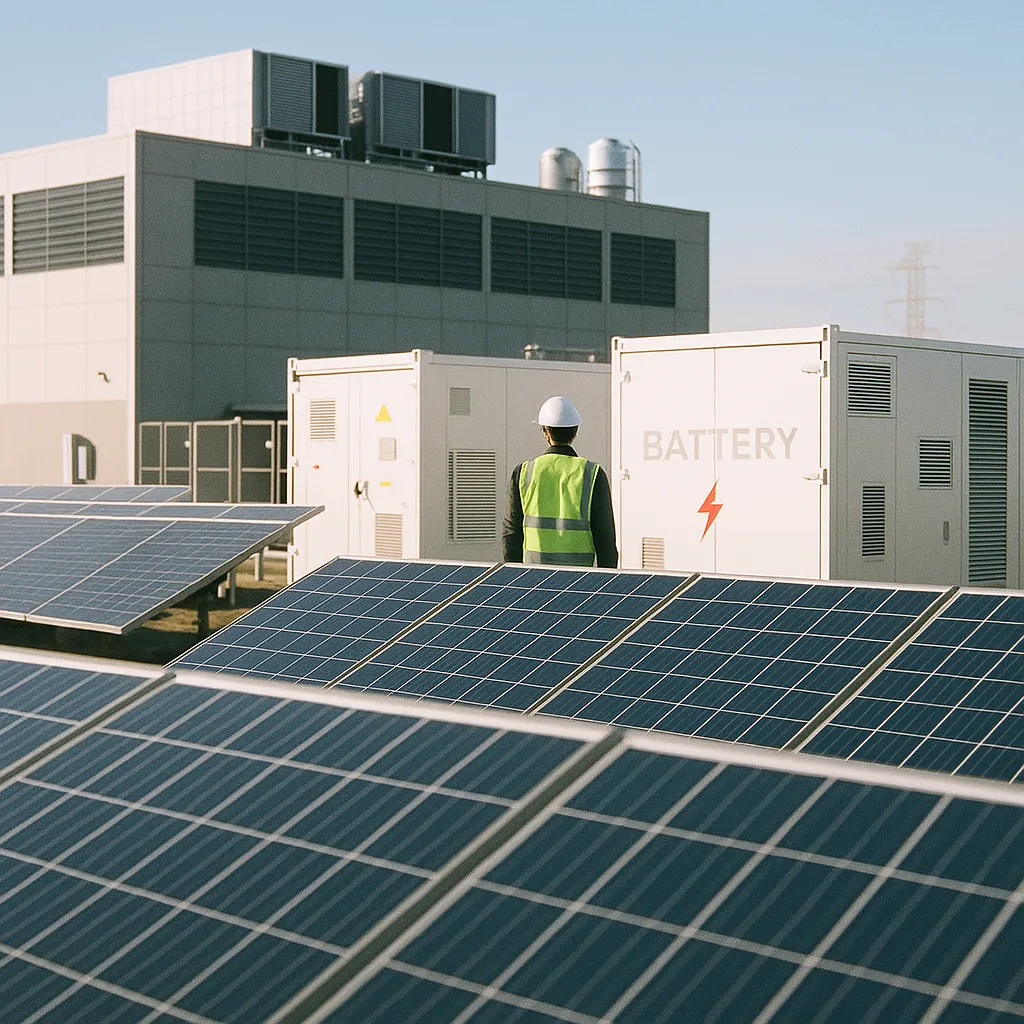
The scale of China's renewable buildout creates a structural electricity surplus in renewable zones, where generation during peak production hours exceeds local grid demand. Data centers are ideal loads for surplus power: their consumption is flexible, predictable, and continuous. China's grid planners have been deliberately routing new data center development toward these surplus zones — treating AI compute infrastructure as a strategic load that absorbs otherwise-curtailed generation.
This coordination is not accidental. China's 15th Five-Year Plan, released earlier this year, explicitly designates AI and data infrastructure as strategic industrial capacity alongside advanced manufacturing and clean energy, with government investment planning coordinated across all three sectors.
Get this in your inbox.
Daily AI intelligence. Free. No spam.
The US Grid Problem
While China co-locates compute with generation, US data center developers are navigating a grid interconnection queue that can stretch five to seven years. PJM Interconnection, which manages the electrical grid for 13 states and the District of Columbia, had a backlog of over 3,000 projects in its interconnection queue as of early 2026. New data centers requesting grid connections in high-demand regions face multi-year waits before receiving reliable power service — during which time construction may proceed but the facility sits idle.
Beyond the queue, US data center development frequently encounters community opposition based on water consumption, noise, property values, and visual impact. Maine's legislature voted to block a major AI data center project in 2025, citing local opposition — a pattern that has recurred in Virginia, Texas, and Indiana.
The current US policy direction has prioritized nuclear power and natural gas as AI electricity sources, with the Energy Department supporting new gas permitting and the White House backing nuclear plant restarts. These choices address the baseload question but do not close the electricity price gap with China's surplus renewable zones. Nuclear power costs roughly 8–12 cents per kilowatt-hour to generate; surplus renewable power in Chinese curtailment zones can run below 2 cents.
What China Still Can't Do
The energy advantage argument is important but incomplete without its limits.
Chip access remains the binding constraint on training. China's frontier model development is still limited by NVIDIA export controls that restrict access to H100 and H200-class GPUs. Domestic alternatives — Huawei's Ascend series and Biren's chips — are making measurable progress but the performance gap for training cutting-edge models remains significant. Cheap electricity doesn't accelerate model development if you can't build the compute density required for frontier training runs.
The advantage is most decisive for inference, not training. The electricity cost gap matters most when running deployed models at scale — the phase where AI products actually reach consumers. For training new frontier models, raw compute throughput matters more than operating cost. China's energy advantage compounds over the deployment lifecycle, not at the research phase.
Construction pace vs. announced targets. China has announced ambitious data center capacity targets, but construction, cooling infrastructure, and network buildout at scale have historically lagged plans. Several provinces have permitted more data center capacity than their local grids can reliably support, creating coordination problems that surplus renewable power alone doesn't resolve.
The Strategic Picture
The scenario that most concerns US AI policy analysts is not China surpassing US labs on model capability in the near term. It's a world where China deploys frontier-class AI models — even ones slightly behind the leading US models — at a fraction of the per-query operating cost, making Chinese AI services globally price-competitive in ways that don't depend on chip advantages.
If a Chinese AI service can answer the same question at one-third the electricity cost of a US counterpart, it can price globally without needing a better model. At scale, that's a platform-level economic advantage.
US policy is currently focused on restricting China's access to leading chips — the training-phase constraint. It has not articulated a clear strategy for the electricity cost gap, which is a structural, domestic problem that is slower to address than export controls and may matter more for long-term AI deployment economics.
What to Watch
The near-term signal is whether US AI companies accelerate data center development in renewable-rich jurisdictions where electricity approaches Chinese cost levels: Iceland, Norway, Canada's Quebec and British Columbia, and the US Pacific Northwest, where surplus hydroelectric power creates partial cost parity. Several hyperscalers have announced investments in these locations, but the scale remains a fraction of the planned domestic buildout.
The policy question with the most leverage is US grid interconnection reform. The Biden-era transmission expansion provisions in the Inflation Reduction Act and the current administration's permitting reform agenda both affect how quickly new renewable capacity can reach data centers. If interconnection queues can be cut from seven years to two, the electricity cost gap narrows significantly. If they can't, it widens — and the AI infrastructure race increasingly advantages the country that planned its grid for the compute era.
Did this help you understand AI better?
Your feedback helps us write more useful content.
Get tomorrow's AI briefing
Join readers who start their day with NexChron. Free, daily, no spam.