A new colocation model is placing AI data centers directly at renewable energy generation sites, bypassing multi-year grid interconnection queues and concentrating AI compute near power sources rather than population centers.
Next-Gen AI Data Centers Are Migrating to Power Sources, Bypassing Grid Queues
By Hector Herrera | September 22, 2026
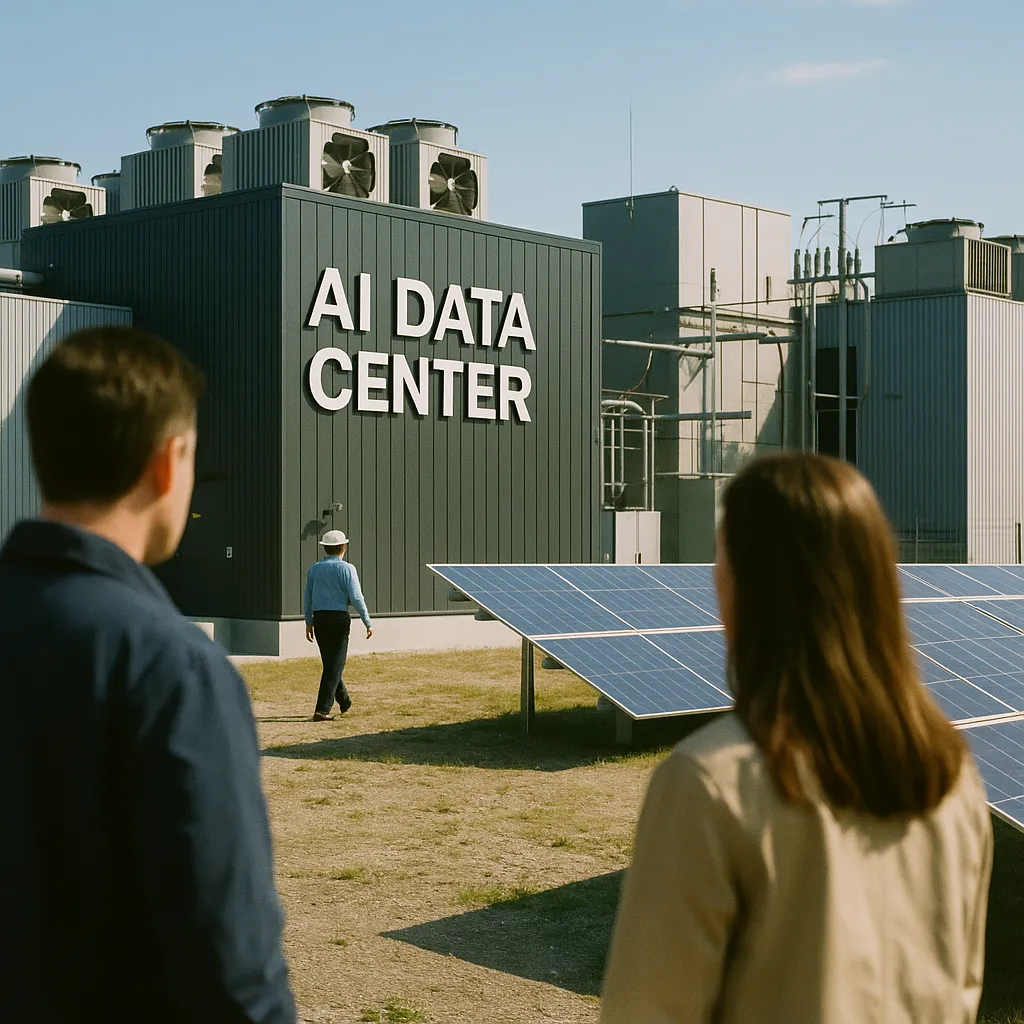
A structural shift is underway in AI infrastructure: instead of building data centers near population centers and waiting years for grid interconnection approval, hyperscale operators are co-locating AI facilities directly at energy generation sites — wind farms, solar installations, natural gas plants, and nuclear facilities. According to a GlobeNewsWire analysis published September 21, the model is being driven by a simple constraint: the grid cannot add capacity fast enough to meet AI demand, but the generation already exists.
The interconnection queue problem
For the past two years, the defining constraint on AI infrastructure expansion has not been land, capital, or chips — it has been power. Specifically, the multi-year queue to connect new large industrial loads to the transmission grid. In the United States, the average wait time for large load interconnection currently exceeds four years in many regional transmission organizations. Some developers report approval timelines stretching beyond a decade in constrained grid corridors.
AI data centers require energy certainty. A facility that cannot guarantee stable, continuous power at scale cannot make binding commitments to hyperscale customers whose GPU reservation costs run into the billions. The interconnection queue makes that certainty structurally unavailable through conventional channels.
How colocation works
The colocation model places AI compute infrastructure physically adjacent to generation assets — consuming power at the generation point rather than moving it across transmission infrastructure. This is called "behind-the-meter" connection: the data center taps the generation facility's output before it enters the grid, sidestepping the interconnection queue entirely.
The advantages compound at hyperscale:
- No interconnection queue — the facility connects directly to the generator, not to the grid
- Long-term power purchase agreements at negotiated industrial rates directly with generation owners
- Reduced transmission costs — power transported over long distances carries significant line losses and transmission charges that compound when a facility is consuming hundreds of megawatts around the clock
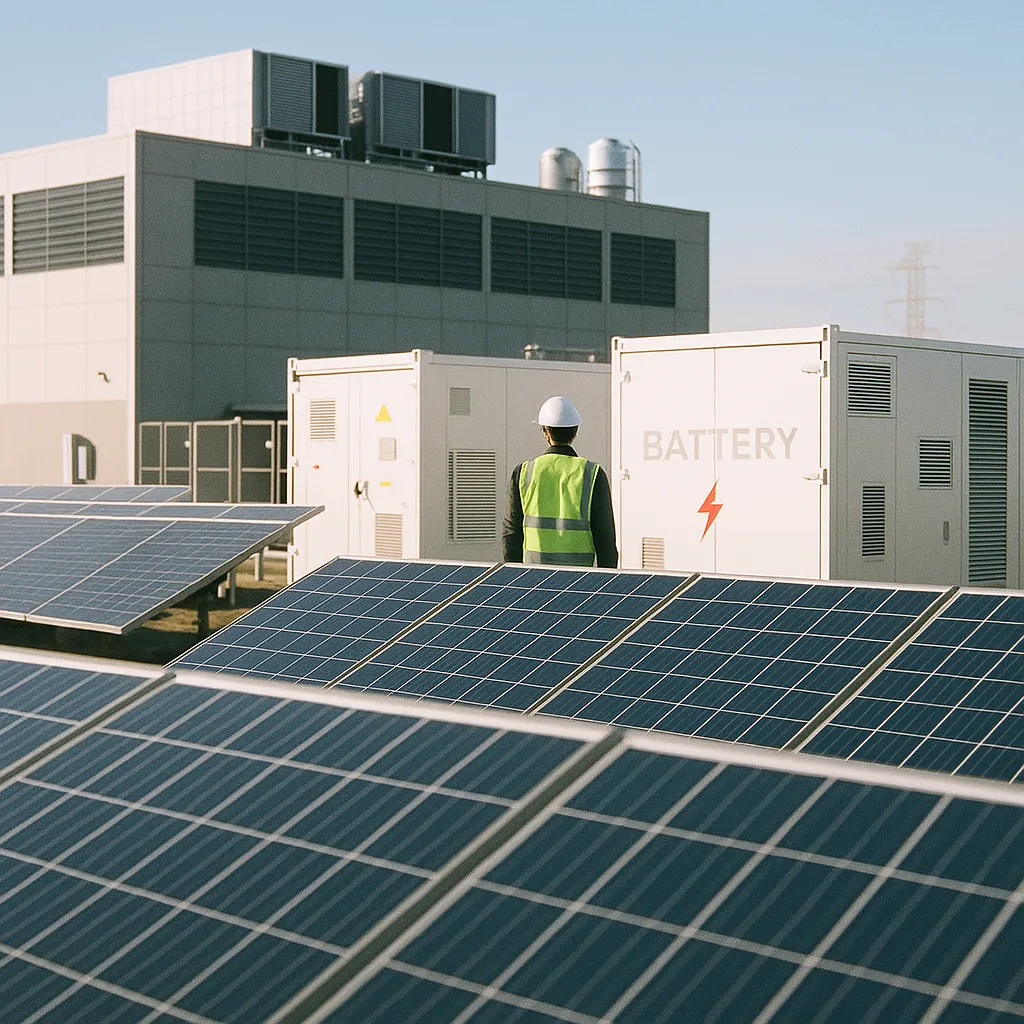
Early deployments include data centers co-located at natural gas peaker plants, solar farms with direct-connection battery buffers, and nuclear facilities, where operators can contract for firm round-the-clock baseload power that solar and wind alone cannot guarantee.
Get this in your inbox.
Daily AI intelligence. Free. No spam.
Why renewables are preferred
AI operators face sustained ESG pressure and, in some jurisdictions, regulatory requirements to demonstrate clean energy sourcing. A data center physically adjacent to a wind or solar facility can credibly claim renewable sourcing without the accounting complexity of renewable energy certificates (RECs) purchased from distant generators.
The economics also favor proximity at scale. A 500 MW solar installation in a high-irradiance corridor may generate power at a levelized cost significantly below grid retail rates — but capturing that cost advantage requires being physically present to avoid transmission charges. The colocation model is the only way to access that economics.
Where compute is moving
The colocation model decouples AI compute geography from population geography for the first time. Historically, data centers clustered near population centers — Northern Virginia, Silicon Valley, the Dallas-Fort Worth metro — because proximity to users reduced latency and access to labor markets reduced operational costs.
AI training workloads have never been latency-sensitive. AI inference workloads are increasingly tolerant of moderate latency as model-serving infrastructure improves. Both workload types can operate at wind and solar sites in the Great Plains, the Southwest, or offshore generation corridors without meaningful performance degradation.
This creates significant implications for rural communities in energy-rich, population-sparse regions. Wind corridors across the Midwest, solar installations in the Southwest, and nuclear facilities in the mid-Atlantic are now legitimate candidates for hyperscale AI infrastructure — bringing construction jobs, property tax revenue, and long-term operational employment to areas that have not historically attracted this type of investment.
The risks of the model
Stranded asset risk is real. A 1 GW data center co-located at a single solar farm is dependent on that farm's continued operation. If the generation facility decommissions, underperforms, or is acquired, the data center's power security is disrupted. Operators are managing this through diversification — contracting with multiple generation sources — and through hybrid models that maintain a small grid connection as a backstop.
Water availability adds a second constraint. AI data centers require substantial cooling infrastructure. Co-location at renewable generation sites in arid regions — the Southwest's solar corridors, for instance — may create water supply conflicts that limit deployment even at otherwise favorable sites.
What to watch
The regulatory dynamic to watch is interconnection cost-shifting. Some grid operators and state utility commissions are beginning to examine whether behind-the-meter colocation at generation sites allows large loads to avoid paying for transmission infrastructure they benefit from indirectly — essentially transferring grid maintenance costs to residential ratepayers. If regulators impose surcharges on colocation arrangements, the economics shift. If they do not, expect the model to accelerate significantly through 2027.
Watch also for repricing of traditional data center real estate near urban grid access points. If AI compute migrates to generation sites at scale, the premium attached to Northern Virginia and Silicon Valley parcels with existing grid interconnection begins to erode.
Did this help you understand AI better?
Your feedback helps us write more useful content.
Get tomorrow's AI briefing
Join readers who start their day with NexChron. Free, daily, no spam.