Europe's electricity grid faces a structural inability to meet AI data center demand, with interconnection queues stretching 3–5 years and aging cross-border infrastructure threatening both AI competitiveness and 2030 climate targets.
Europe's Power Grid Cannot Keep Pace With Exploding AI Data Center Demand
By Hector Herrera | May 7, 2026 | Vertical: Energy | Type: Vertical Article
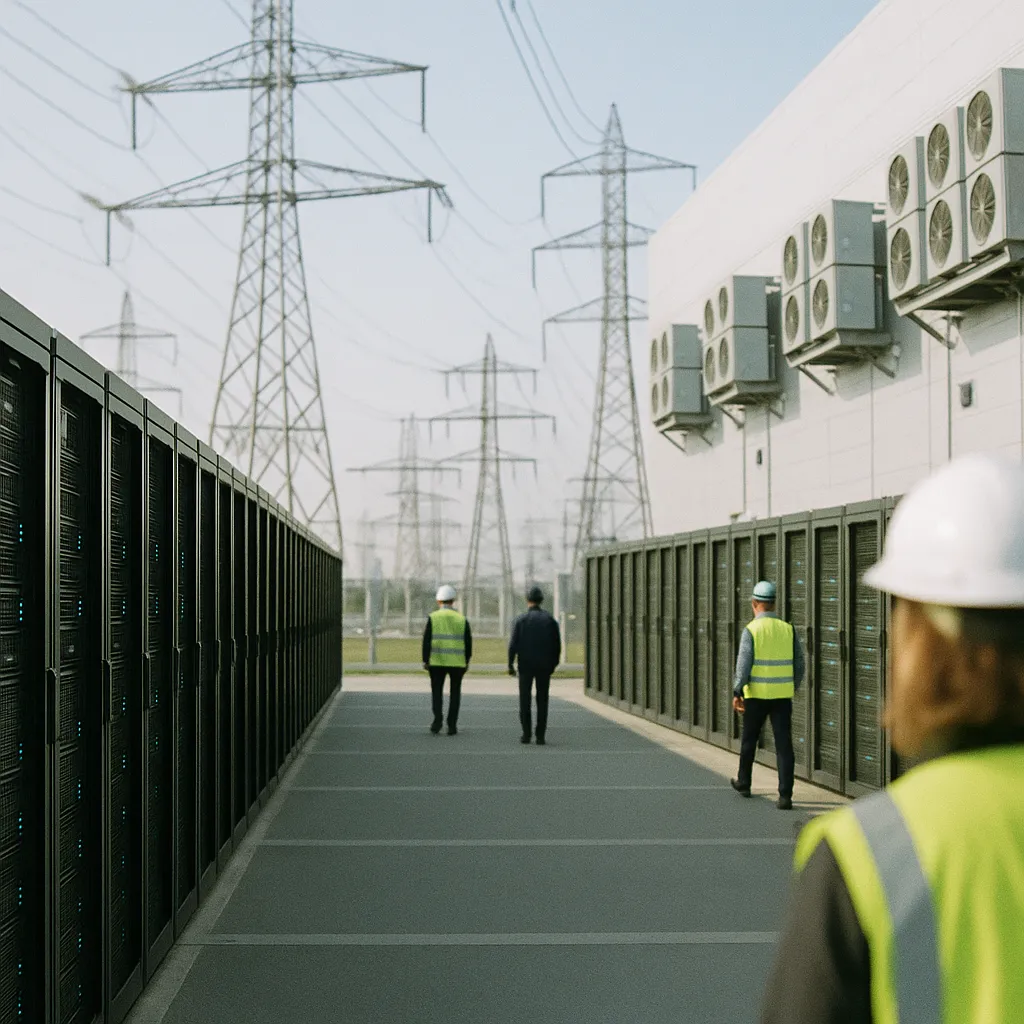
Europe's electricity grid is structurally unable to meet the power demands of the AI data centers it wants to build, and the problem has no short-term fix. A May 5 Euronews investigation finds that renewable interconnection queues stretch three to five years across member states, aging cross-border infrastructure creates fragility at continental scale, and the surge of AI compute demand is arriving simultaneously with EV adoption and heat pump rollout — three massive new electricity loads hitting the same grid at the same time.
The result threatens both Europe's AI competitiveness and its 2030 climate targets. A region that cannot deliver reliable, affordable power at scale cannot compete with the United States and China for AI infrastructure investment.
The Constraint Is Structural, Not Temporary
The grid problem is not about short-term generation capacity. It is about the infrastructure that moves and distributes power — transmission lines, substations, interconnects, and the planning and permitting systems that govern them.
In most EU member states, connecting a new large-scale power source to the grid — whether a solar farm, a wind installation, or a data center — requires working through interconnection queues that were not designed for the volume or urgency of current applications. Those queues now stretch three to five years in many countries. A data center that breaks ground today may not have grid connection confirmed until 2029 or 2030.
The aging cross-border infrastructure adds a second layer of fragility. Europe's electricity grid was built to balance supply and demand across national boundaries — but the interconnectors linking member states were designed decades ago, before the era of continent-scale renewable integration and AI compute load. Bottlenecks in the Germany-France and France-Spain interconnectors already constrain power flow during peak demand periods.
The combination — long connection queues and aging transmission — means that even if Europe builds the generation capacity, it cannot reliably deliver it where AI data centers need it.
The Three-Load Collision
What makes the AI data center problem particularly difficult is timing. Europe is simultaneously managing three new categories of electricity demand:
Get this in your inbox.
Daily AI intelligence. Free. No spam.
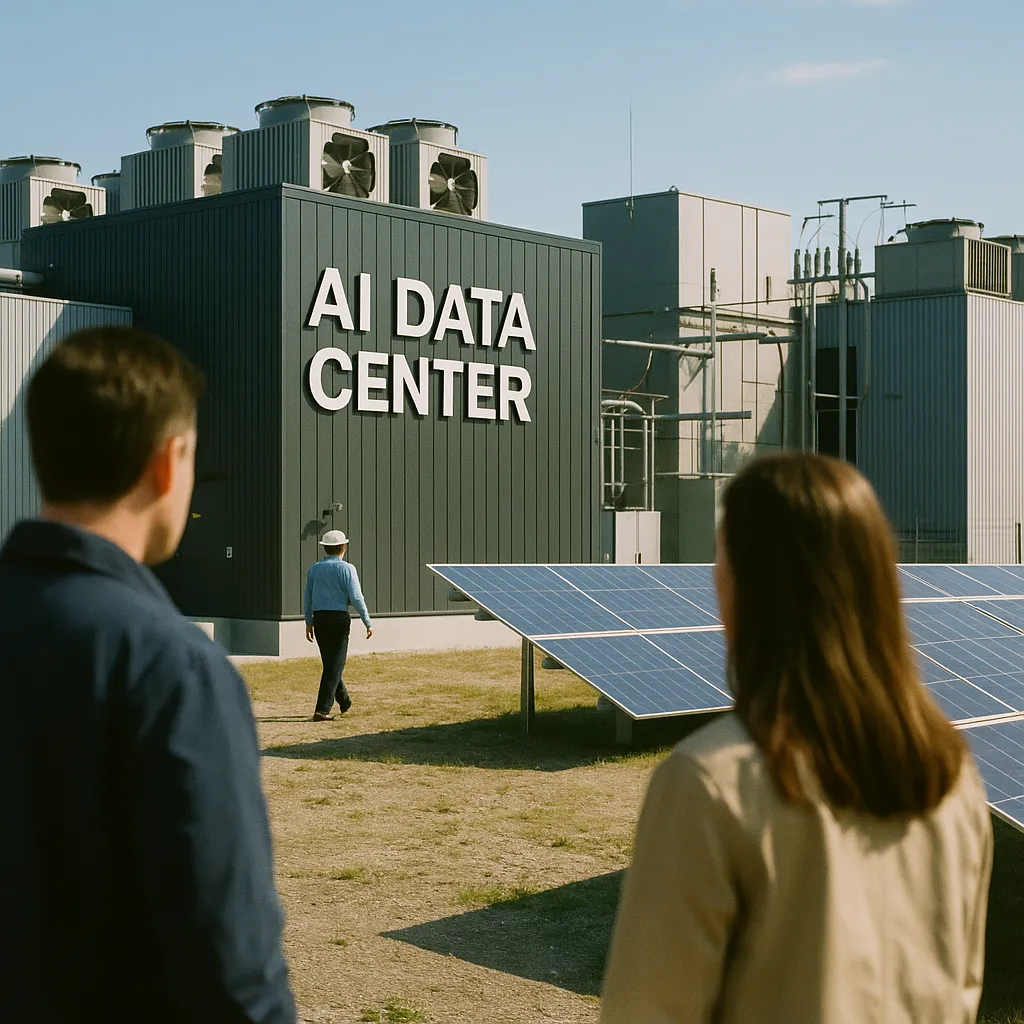
- AI data centers: Hyperscale and colocation facilities in Ireland, the Netherlands, Germany, and Nordics are requesting grid connections that collectively represent gigawatts of new baseload demand
- Electric vehicles: EV adoption is accelerating across the EU following combustion engine phase-out timelines, adding substantial new residential and commercial charging load
- Heat pumps: EU building efficiency mandates are driving heat pump installations at scale, shifting heating load from gas to electricity across millions of homes and buildings
Each of these loads is growing on its own trajectory. The grid planning and investment cycles that need to accommodate all three are running years behind the demand curve. No single load is the culprit — the problem is that three major electrification initiatives converged on the same grid in the same half-decade.
The AI Competitiveness Dimension
The power constraint is also an AI competitiveness constraint. Microsoft, Google, Amazon, and Meta have all announced European data center expansions — but those expansions require power commitments. When grid connection queues stretch to 2029, hyperscalers have a choice: wait for European grid capacity, or build in Virginia, Texas, or Singapore instead.
Ireland, which hosts a disproportionate share of EU data center capacity, is already approaching a de facto moratorium on new connections in the Dublin area, with EirGrid citing grid constraints. The Netherlands imposed data center construction restrictions in Amsterdam for the same reason in prior years.
The downstream consequence is that AI training and inference workloads that could have run on European infrastructure instead run on infrastructure subject to U.S. or Asian data governance — which affects European companies' ability to comply with GDPR and EU AI Act data localization considerations.
What Fast-Track Permitting Would Actually Require
The Euronews analysis identifies fast-track permitting reform as the only near-term lever available to European policymakers. But "fast-track permitting" is easier to say than to implement.
In practice, it means:
- Streamlined environmental review for transmission line upgrades and new substations — politically difficult because environmental review exists for good reasons
- Coordinated cross-border interconnector upgrades requiring bilateral agreements between member states with different regulatory and procurement systems
- Priority queue processing for grid connections serving AI infrastructure — which requires political decisions about which loads get priority, with implications for other industries
The EU's Electricity Market Reform and the REPowerEU plan both contain provisions aimed at accelerating renewable grid connections. Implementation is uneven and slow. The planning cycle for major transmission infrastructure in Europe runs 8-12 years from concept to operation under current conditions. Even optimistic reform scenarios don't compress that to the 2-3 years that AI infrastructure timelines require.
What This Means for the 2030 Climate Targets
The European Green Deal targets assume that electrification proceeds at pace — that EVs, heat pumps, and renewable generation integrate smoothly into an upgraded grid. The AI data center surge adds an unplanned variable to that calculation.
More electricity demand from AI data centers, on a grid that is already strained, increases the pressure to run existing fossil fuel generation longer to maintain reliability margins. Germany's continued operation of gas peaker plants and France's nuclear maintenance schedule both factor into whether the grid can absorb new demand without increasing carbon intensity.
The 2030 targets were not designed with AI compute demand as a major input. Revising those targets to reflect reality — or accelerating grid investment to meet them — is a political and financial decision that EU member states have not yet confronted directly.
What to Watch
Watch for the European Commission's response to the data center power queue problem in its upcoming Digital Infrastructure Act consultations. Also watch for whether any member state implements a formal AI data center power prioritization framework — that would be the first signal that governments are taking the trade-off between AI competitiveness and grid stability seriously enough to make explicit policy choices about it.
Did this help you understand AI better?
Your feedback helps us write more useful content.
Get tomorrow's AI briefing
Join readers who start their day with NexChron. Free, daily, no spam.