Goldman Sachs calculates AI is eliminating 16,000 U.S. jobs per month, with Gen Z workers bearing the brunt as AI automates the entry-level white-collar roles they depend on.
Goldman Sachs: AI Is Eliminating 16,000 U.S. Jobs Per Month, Gen Z Hardest Hit
By Hector Herrera | April 26, 2026 | Work
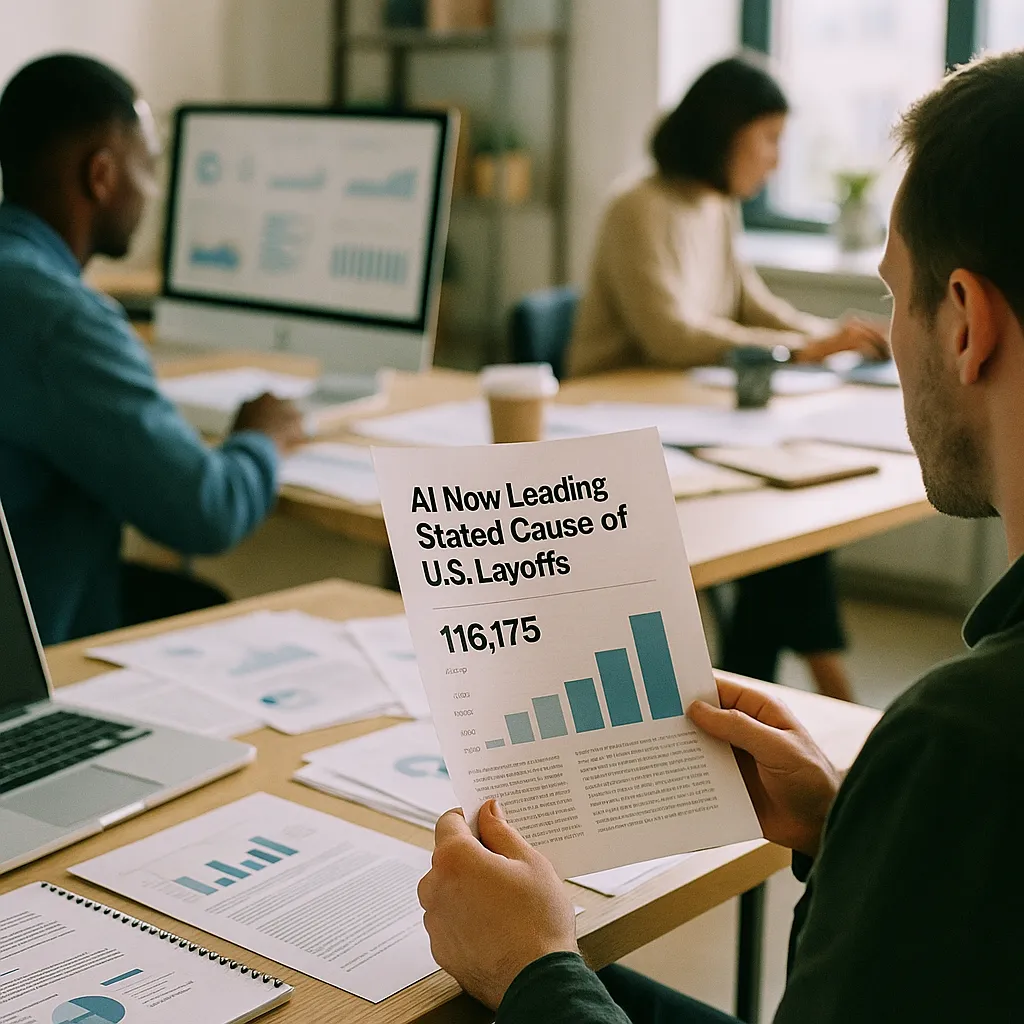
Goldman Sachs has calculated that AI is eliminating approximately 16,000 U.S. jobs per month, with Gen Z workers absorbing a disproportionate share of the losses — because they are concentrated in exactly the white-collar roles that AI automates most efficiently. The number, surfaced in a Fortune analysis published April 6, isn't a projection. It's what's happening now.
AI's share of tech-sector layoffs climbed from less than 8% in 2025 to over 20% in early 2026. That acceleration matters because tech moves first. When a displacement pattern becomes normalized in software, finance, and media, it spreads — to healthcare administration, government services, and the broader professional economy.
Why Gen Z Is in the Crosshairs
Gen Z workers — those born roughly between 1997 and 2012 — are early in their careers and overrepresented in the work that large language models handle most capably: data entry, document review, content moderation, customer support, basic coding, financial analysis support, and administrative coordination. These aren't roles AI can merely assist with. They are, increasingly, roles AI can complete end-to-end without a human in the loop.
Seniority provides some buffer. Workers with institutional knowledge, client relationships, and the judgment to navigate ambiguous high-stakes problems face a different — and generally lower — displacement risk. A 22-year-old hired to do the same task a GPT-class model now handles at a fraction of the cost does not.
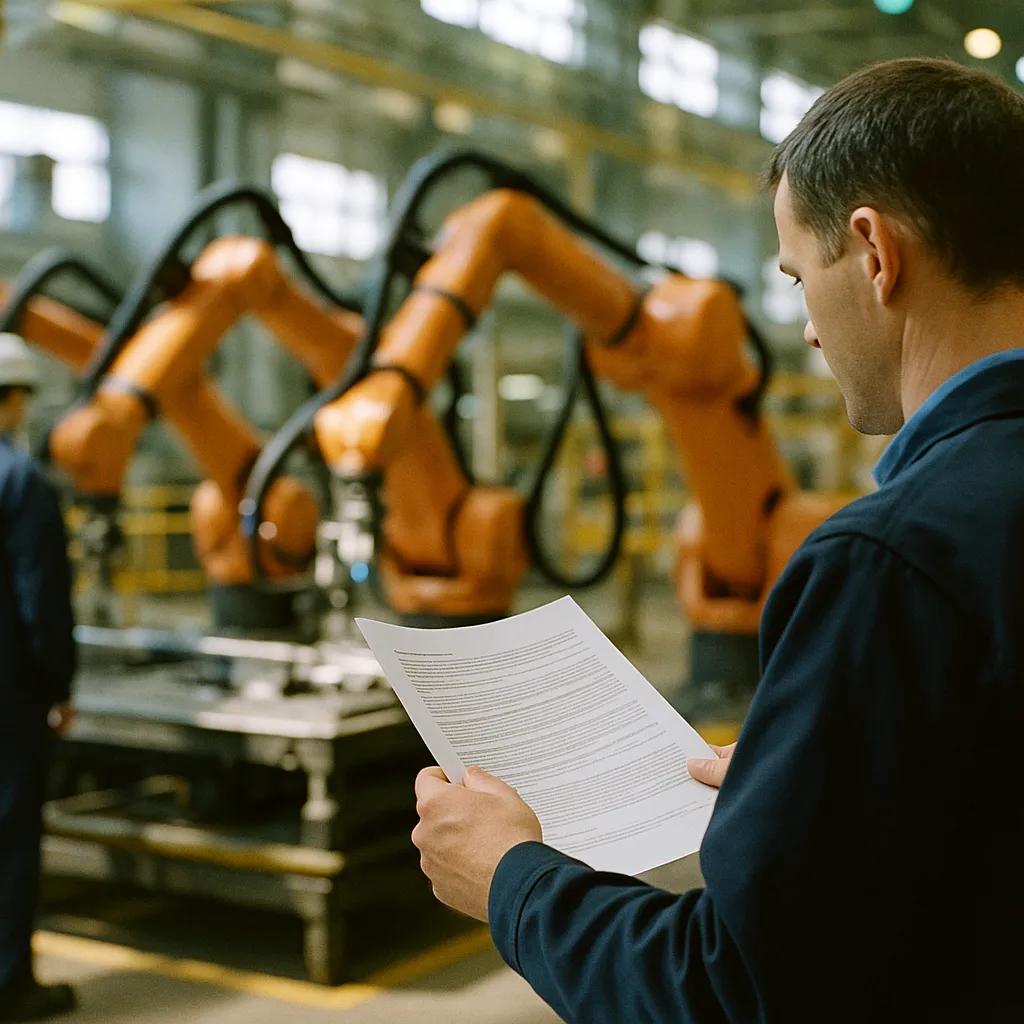
This is not a story about robots on factory floors replacing blue-collar workers. The displacement wave hitting Gen Z is happening in offices, over Slack, in the same roles that professional degrees were supposed to unlock.
The Long-Term Wage Scar
The economic damage doesn't stop at the layoff. A separate study cited in the Fortune analysis found that technology-displaced workers earn 10 percentage points less than non-displaced peers a full decade after losing their job.
Get this in your inbox.
Daily AI intelligence. Free. No spam.
That's a compounding penalty. A worker laid off at 24 who re-enters the workforce in a lower-paying role loses more than the income from the gap — they lose the trajectory that starting strong creates. Career progression is non-linear. Early displacement sets a lower baseline that is hard to recover from, regardless of subsequent effort.
The Goldman figure of 16,000 jobs per month translates to roughly 192,000 jobs per year. That number is likely an undercount. Corporate communications don't always explicitly label AI as a cause of workforce reduction. Attribution is conservative. The true pace of AI-driven displacement is almost certainly higher.
What the 20% Signal Means
When AI attribution in tech layoffs crosses 20%, it signals something beyond a cost-cutting phase — it signals a structural rewiring of what the labor market looks like in knowledge-work industries.
Historical displacement patterns from prior technology transitions — automation, offshoring, the rise of enterprise software — all followed a similar sequence: tech sector first, then financial services, then professional services, then healthcare and government. The gap between tech leading and the rest following has been shrinking with each wave.
The difference this time is the breadth of roles affected. Previous automation waves targeted narrow task categories. Generative AI disrupts entire job functions simultaneously: writing, analysis, coding support, research, customer communication. The horizontality of the disruption is what makes the current moment distinct.
What Workers and Employers Should Be Doing
For workers navigating the current market:
- Entry-level roles in data analysis, document review, administrative coordination, and content production carry the highest displacement risk
- Skills combining AI fluency with human judgment — creative direction, client relationship management, strategic problem framing — are more durable
- AI tool operation is more defensible than AI tool replacement; workers who become proficient at directing AI systems rather than competing with them are better positioned
- Don't wait for your employer to provide retraining — the workers building skills now, before displacement, will have more options than those scrambling after
For employers:
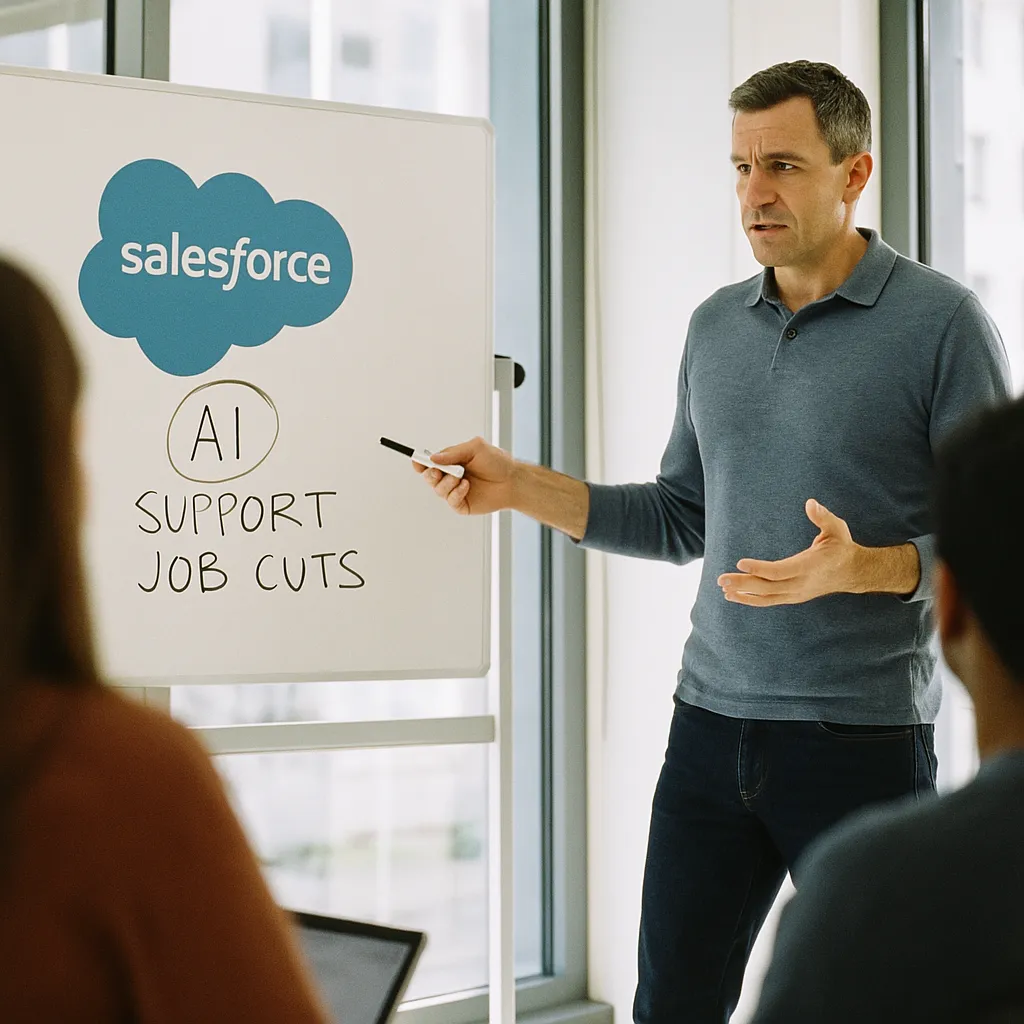
- AI-driven headcount reduction is becoming a standard earnings lever; 20% attribution in tech layoffs is a signal that this is operational strategy, not an edge case
- Companies that invest visibly in retraining and transition programs will face lower reputational and legal risk as scrutiny increases
- The displacement is concentrated among early-career workers — the same cohort critical for long-term organizational knowledge development
What to Watch
The Goldman figure will likely be revised upward as attribution methodology improves and displacement extends beyond the tech sector. Watch Q2 and Q3 2026 Bureau of Labor Statistics data for early-career unemployment trends and wage growth divergence by age cohort.
Congressional proposals for AI-transition retraining funds have been floated but not enacted. That policy gap is widening faster than it's being addressed.
Source: Fortune
Did this help you understand AI better?
Your feedback helps us write more useful content.
Get tomorrow's AI briefing
Join readers who start their day with NexChron. Free, daily, no spam.