Goldman Sachs Research projects autonomous trucks will undercut human-driven freight on cost-per-mile by 2028, falling from $8.60/mile today toward $2/mile by 2035 — backed by commercial revenue data from Aurora, Kodiak, Gatik, and Bot Auto.
The Math Is Finally Working for Autonomous Trucks — Goldman Sachs Projects Cost Parity With Human Drivers by 2028
By Hector Herrera | May 11, 2026 | Transport
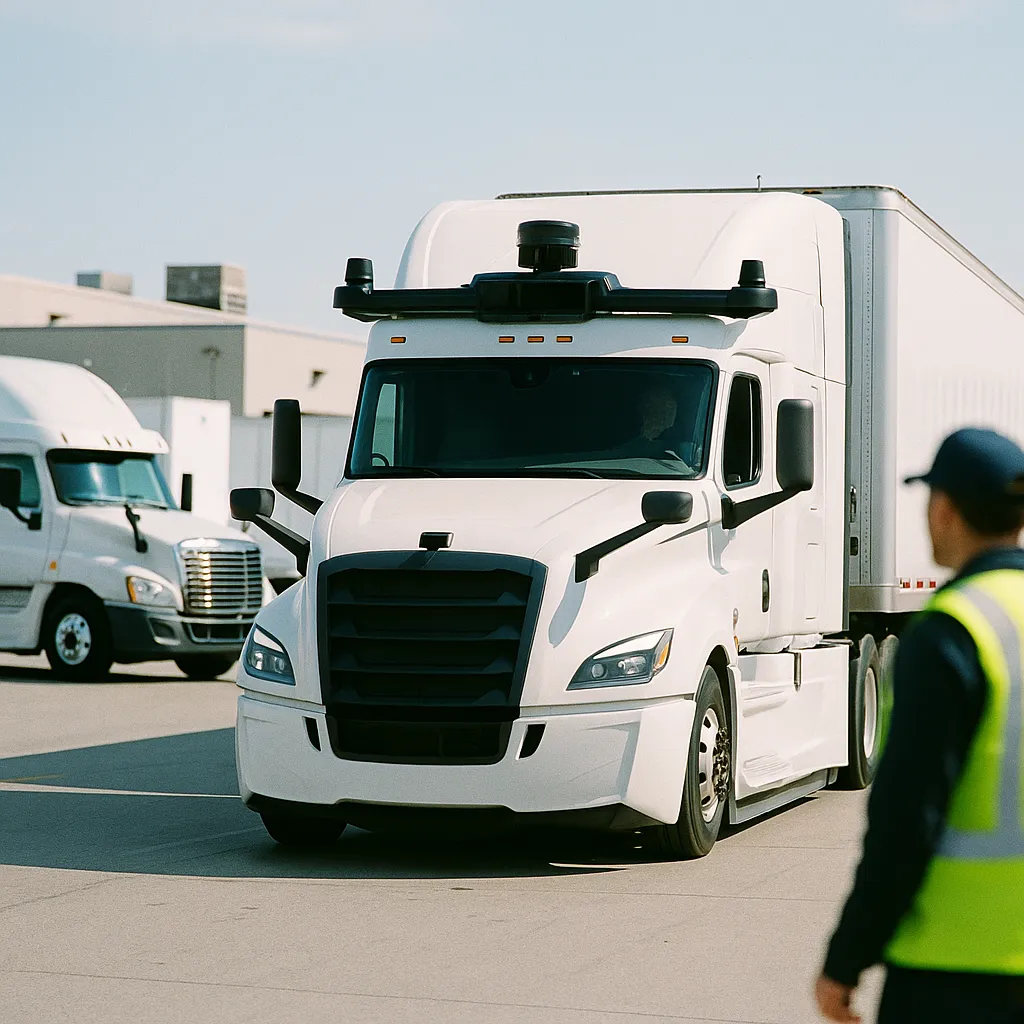
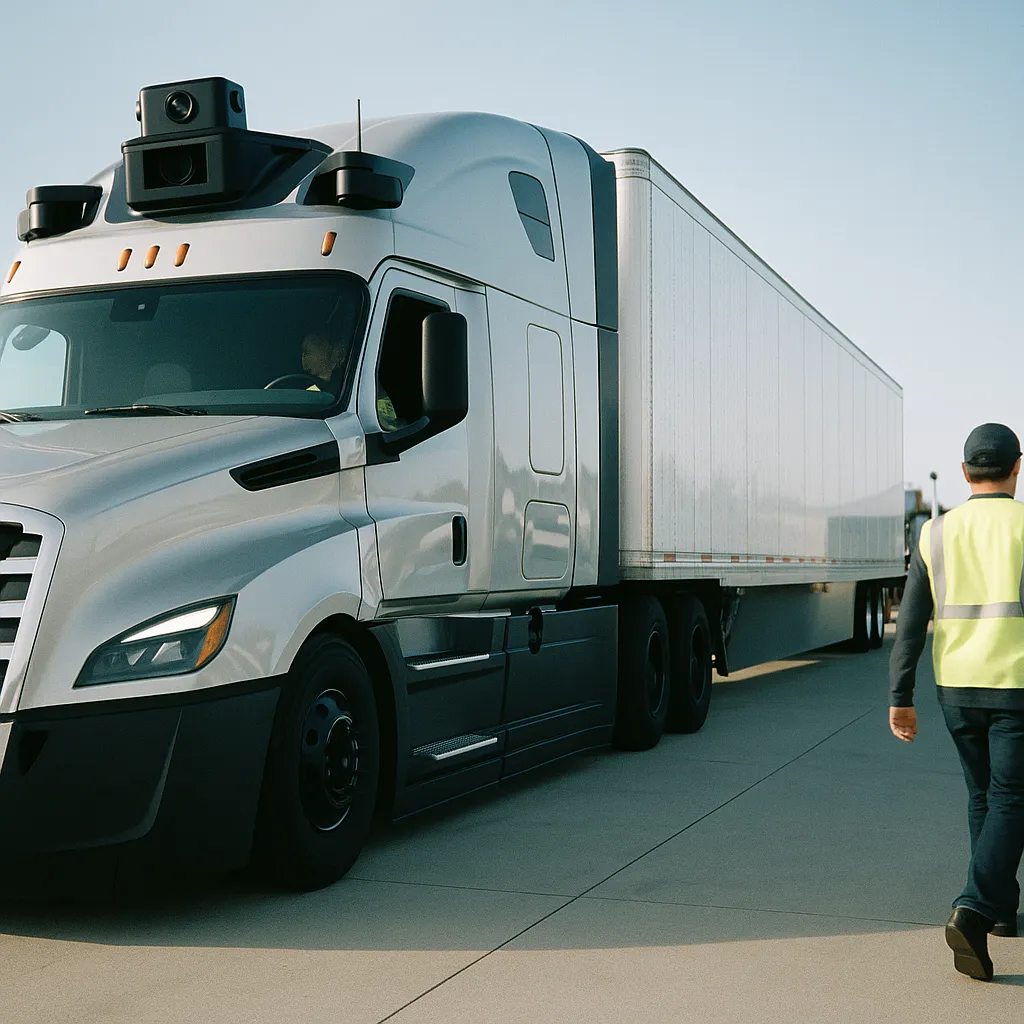
Autonomous truck unit economics have improved to the point where Goldman Sachs Research now projects AV trucks will undercut human-driven trucks on cost-per-mile by 2028. The projection is not theoretical — it is backed by commercial revenue data from Kodiak, Aurora, Gatik, and Bot Auto, companies that are no longer running pilots but billing real freight customers on fixed-lane routes today.
The industry has made cost-parity promises before. This time, the numbers are coming from actual operational deployments, not simulation models.
The Cost Curve Goldman Is Tracking
According to Axios, Goldman Sachs Research pegs the current cost of autonomous trucking at approximately $8.60 per mile — comparable to or slightly above the all-in cost of human-driven freight including driver wages, benefits, hours-of-service limits, and turnover-related inefficiencies.
The Goldman projection models that cost falling toward $2 per mile by 2035, driven by:
- Elimination of driver labor costs as human supervisors (currently required by most AV deployments) are phased out in favor of remote monitoring at scale.
- Higher asset utilization. Autonomous trucks are not constrained by 11-hour daily driving limits under federal hours-of-service rules. A truck that can run 20+ hours per day on long-haul corridors generates significantly more revenue per asset.
- Reduced accident and insurance costs as the technology matures and actuarial tables update to reflect lower crash rates on fixed commercial routes.
- Hardware cost deflation. Lidar, radar, and compute costs continue dropping; a sensor suite that cost $100,000+ in 2020 now costs roughly $10,000 in production-scale deployment.
Cost parity in 2028 means the cost per mile for an autonomous truck equals the human-driver equivalent — not that autonomous trucks are dramatically cheaper. That inflection triggers the business case that converts trucking fleets from experimental adoption to systematic replacement.
Who Is Generating Real Revenue
The commercial deployments validating the Goldman model are not all the same. They differ in route type, autonomy level, and business model — distinctions that matter for the 2028 timeline.
Kodiak Robotics operates autonomous freight on Texas highway corridors, hauling freight for shippers including PepsiCo and Werner Enterprises. Its model involves a safety driver during the current regulatory window, with remote oversight architecture designed to transition toward fully driverless operation on approved segments.
Aurora Innovation completed its first commercial driverless long-haul runs in late 2024 on the Dallas-to-Houston corridor, operating without safety drivers on open public highways. Aurora's commercial partnership with Uber Freight and Werner Enterprises provides the revenue base for its unit economics claims.
Get this in your inbox.
Daily AI intelligence. Free. No spam.
Gatik focuses on middle-mile logistics — fixed, repeated routes between distribution centers and retail stores — for customers including Walmart and Loblaw. Middle-mile is an easier autonomy problem than open-road long-haul, and Gatik has achieved driverless operation on its fixed routes earlier than long-haul competitors.
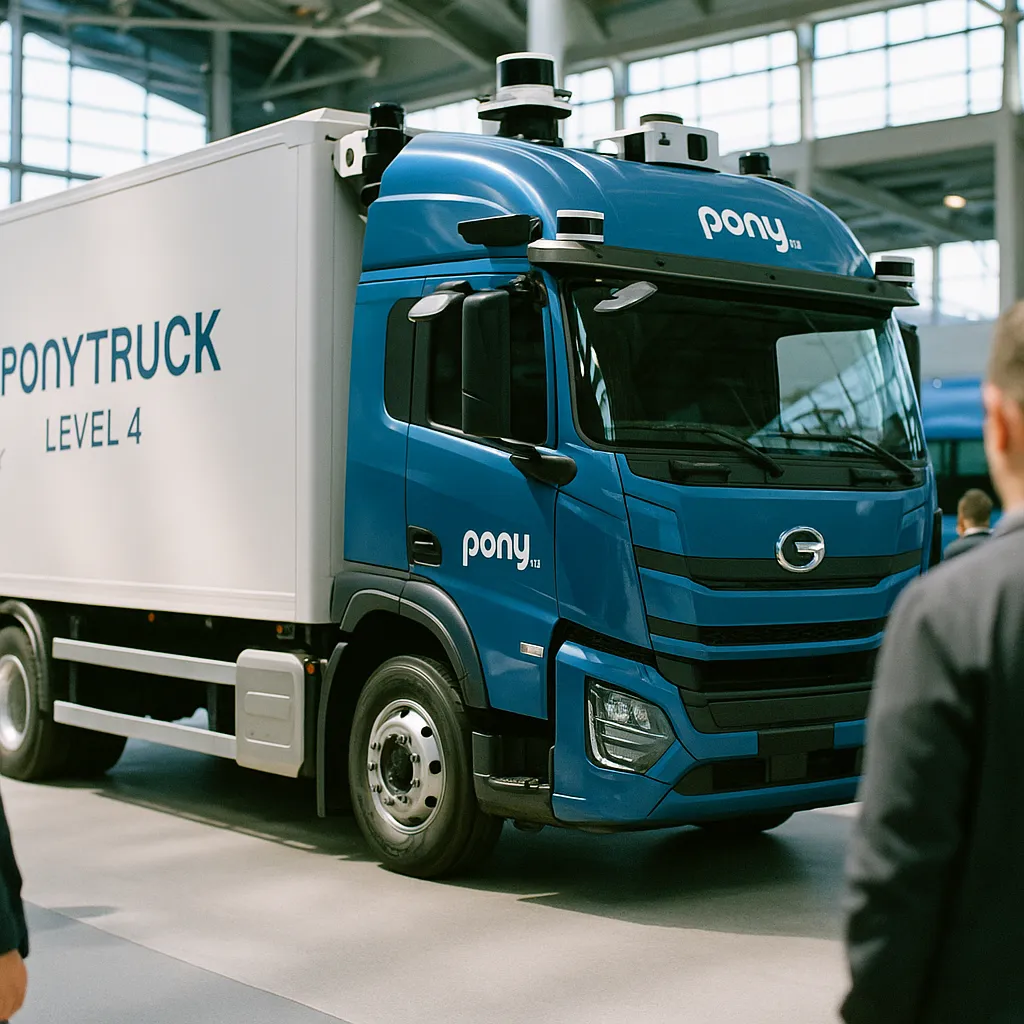
Bot Auto is the less widely reported company in the cohort, operating in Asian markets where regulatory windows for driverless commercial vehicles have opened faster than U.S. federal frameworks allow.
The Human Driver Shortage Is the Tailwind Nobody Likes to Discuss
The trucking industry's structural driver shortage makes autonomous trucks' cost projections more compelling than the raw numbers suggest. The American Trucking Associations has documented a shortfall of 60,000+ drivers that is projected to grow — caused by aging workforce demographics, challenging working conditions, and a recruiting pipeline that cannot keep pace with freight demand growth.
Autonomous trucks do not solve the driver shortage by finding new human drivers. They solve it by not needing them on specific route categories. For shippers operating fixed-lane freight between major logistics hubs, autonomous trucks offer reliability that a depleted human driver market cannot guarantee at any price.
The implication is that the competitive pressure driving autonomous truck adoption is not purely cost — it is availability. A truck that is always available, never fatigued, and never calls out sick is worth a premium over a human-driven alternative that may simply not be available on a given day.
What the 2028 Timeline Means for the Industry
Cost parity in 2028 is an inflection point, not an end state. Several conditions must hold for the timeline to materialize:
- Regulatory clearance for driverless operation on major freight corridors must expand beyond the current Texas highway windows. Federal Motor Carrier Safety Administration (FMCSA) rulemaking for commercial AV trucks has been slow; the 2028 date assumes meaningful progress.
- Insurance markets must mature. Current AV truck insurance pricing reflects thin actuarial data. If claims data from 2025-2027 commercial deployments is favorable, pricing will fall. If incidents occur that trigger liability questions about autonomous system responsibility, pricing may spike and delay adoption.
- Labor contracts and terminal agreements. Unionized freight carriers face collective bargaining constraints on deploying technology that reduces driver headcount. The Teamsters have been explicit about opposing driverless freight deployment on routes covered by union contracts.
The 2028 cost parity projection is for routes where these conditions are met. It is not a projection that 50% of U.S. trucking will be autonomous by 2028 — it is that the economic case for autonomous trucking on feasible routes will be definitively established by then.
What Shippers Should Be Evaluating Now
For companies that move freight regularly on fixed highway corridors — particularly in Texas, Arizona, and other states with permissive AV regulatory environments — the strategic question is whether to be an early partner in commercial AV deployments or a late adopter.
Early partners get preferential pricing and longer-term rate lock agreements in exchange for the data and operational experience their freight provides. Late adopters will pay market rates once cost parity is established and demand from the broader shipping market materializes.
The corridor question is central. Autonomous trucks are commercially viable today on specific, high-volume, well-mapped routes. They are not ready for the full breadth of U.S. freight routes. Shippers with large portions of their freight on qualifying corridors should be talking to AV freight providers now.
What to Watch
- Aurora's driverless expansion from the Dallas-Houston corridor to additional approved routes is the most closely watched operational metric in the sector. Each additional approved segment validates the technology and builds the dataset that supports further regulatory approval.
- FMCSA rulemaking timeline. Federal regulatory clarity on autonomous commercial vehicles has been slower than state-level progress. Any announcement of formal rulemaking for driverless freight will be a meaningful catalyst.
- Investor positioning. Goldman Sachs publishing a cost parity projection with a two-year horizon is the kind of research note that moves institutional capital toward the sector. Watch for increased investment in AV truck companies and the logistics operators building infrastructure to handle autonomous freight.
- First driverless autonomous truck accident and its legal consequences. The liability question for autonomous commercial vehicle accidents remains legally unsettled. How the first significant driverless freight incident is adjudicated will shape insurance pricing, regulatory posture, and fleet adoption decisions for years.
The math is working. The question now is whether the regulatory, legal, and labor frameworks can keep pace with it.
Source: Axios
Did this help you understand AI better?
Your feedback helps us write more useful content.
Get tomorrow's AI briefing
Join readers who start their day with NexChron. Free, daily, no spam.