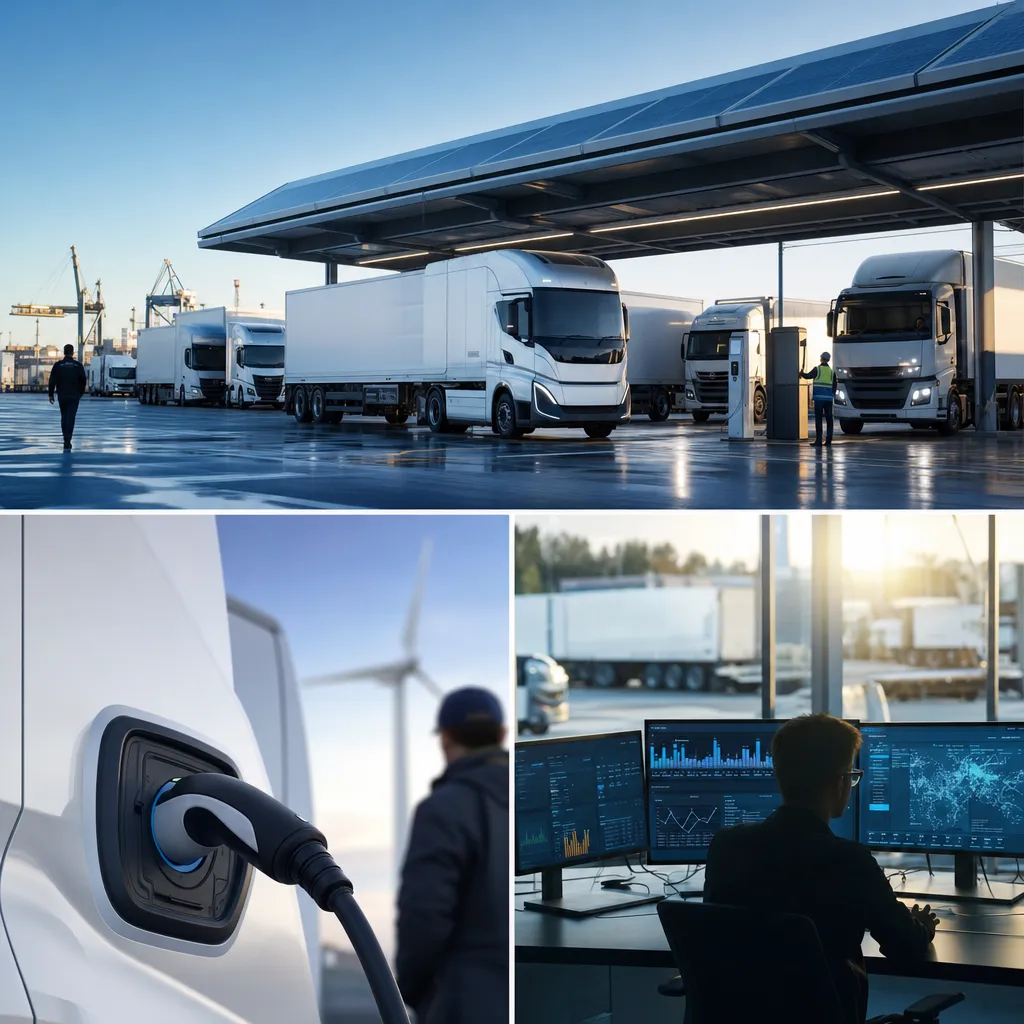
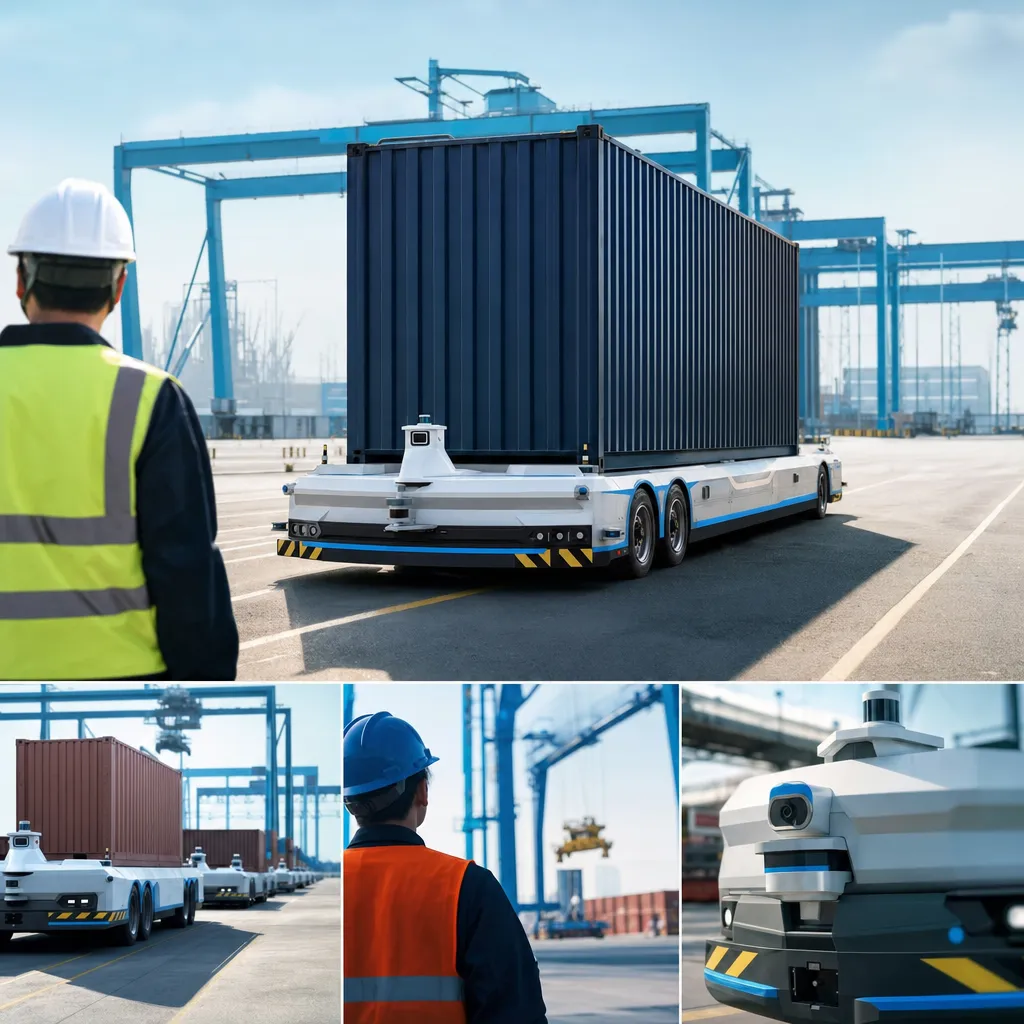
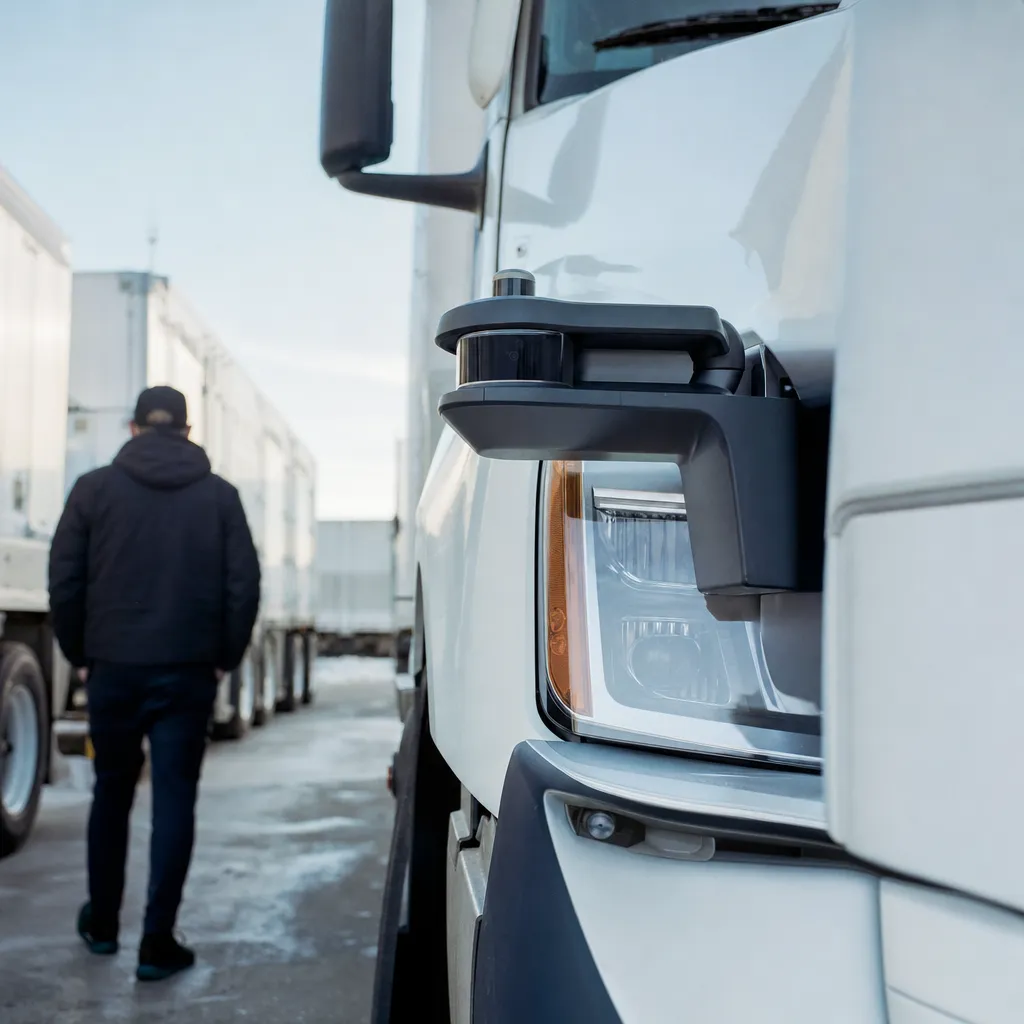
Kodiak AI and DTL Transport signed what they call the first binding commercial commitment by a long-haul carrier to operate driverless trucks in its own fleet — 75 vehicles under a Driver-as-a-Service model.
Kodiak AI and DTL Transport announced on October 28 what they describe as the first binding commercial commitment by a long-haul carrier to operate driverless trucks within its own fleet — 75 vehicles deploying under a Driver-as-a-Service model. The deal marks a genuine structural shift in how autonomous freight is being commercialized: not as a managed service operated by a robotics company, but as a fleet technology owned and operated by a carrier.
Why "fleet-owned" matters
Most autonomous trucking deployments to date have followed a managed-service model: a robotics company like Waymo Via or Aurora builds and operates the trucks, sells capacity to shippers, and retains control of the vehicle stack. Carriers are essentially customers buying seat-miles on someone else's technology. That model makes sense for early deployment — it keeps liability, maintenance, and regulatory complexity on the technology company — but it limits how deeply autonomous trucking can penetrate existing freight networks.
DTL Transport is doing something different. Under the Driver-as-a-Service structure, DTL owns the freight relationships with its customers. Kodiak supplies the autonomous driving stack as a service layer — essentially software and support that DTL licenses per truck per mile. DTL integrates that stack into its own dispatch, routing, and operations. From the shipper's perspective, they're still dealing with DTL; the truck that shows up is just driving itself.
This is significant because it means autonomous trucking is beginning to move from being a separate category of freight service to being an operational capability that existing carriers can adopt — the same way carriers adopted electronic logging devices or telematics a decade ago.
The 75-truck commitment
The 75-truck figure represents a binding commercial agreement, not a pilot or an intent to purchase. DTL has committed to integrating those vehicles into active freight operations, which means they will be moving real customer cargo on real lanes. Kodiak describes this as the first agreement of its kind — a carrier executing a fleet-scale commercial commitment rather than a proof-of-concept.
Get this in your inbox.
Daily AI intelligence. Free. No spam.
Both companies declined to specify the initial operational lanes, but Kodiak has previously focused on Sunbelt and Midwest freight corridors — Texas-to-Tennessee, Texas-to-California, and similar routes where long-haul, low-variability driving conditions favor autonomous operation. Regulatory approval for driverless operation (no safety driver in the cab) has been slower to arrive than the technology, and this deployment will likely begin with monitored remote supervision before moving to fully driverless operation.
Labor and economic context
The U.S. long-haul trucking industry faces a structural driver shortage. The American Trucking Associations estimated a shortage of more than 80,000 drivers before the 2026 cycle began, and the shortage worsened as younger workers have shown diminishing interest in the profession. At the same time, wages for experienced long-haul drivers have risen sharply — making the economics of autonomous operation increasingly favorable on high-frequency corridors.
For DTL, the deal is fundamentally about cost structure and reliability. Long-haul autonomous trucks can run continuously except for federally mandated inspection stops, don't require Hours of Service compliance breaks, and don't call in sick. On routes where load predictability is high and road conditions are manageable, the economics increasingly favor autonomous operation over human drivers.
The displacement question is real and should be stated plainly: if this model scales, fewer long-haul driver jobs exist in five years. The 75 trucks in this deal are equivalent to roughly 150 driver-equivalents assuming two-driver teams on current routes. That is not a catastrophic number. Scaled across the industry, the arithmetic is more significant.
Kodiak's position in the autonomous trucking market
Kodiak AI has differentiated itself from competitors by focusing on the retrofit-and-license model rather than building its own fleet. The company's stack is hardware-agnostic and designed to integrate into carrier operations rather than compete with them. This DTL deal validates that approach: a carrier large enough to make a 75-truck commitment, but not a hyperscaler doing a vanity pilot.
Kodiak also operates from a relatively strong regulatory position. Its driverless permitting is further along than several competitors following consolidations and shutdowns that pruned the autonomous trucking field significantly in 2024 and 2025.
What to watch
The key variable is operational lane approval for driverless (no safety driver) operation on the specific routes DTL intends to run. Remote supervision adds cost that partially offsets the driver savings. Full driverless operation on commercial lanes is the step where unit economics become unambiguously compelling. Watch for Kodiak and DTL to announce specific lane certifications — those announcements are the proof point that this commitment produces the financial results both companies are counting on.
Source: GlobeNewswire via Manila Times
Did this help you understand AI better?
Your feedback helps us write more useful content.
Get tomorrow's AI briefing
Join readers who start their day with NexChron. Free, daily, no spam.