Driverless Trucks Hit the Midwest: Kodiak AI Expands Beyond the Sun Belt
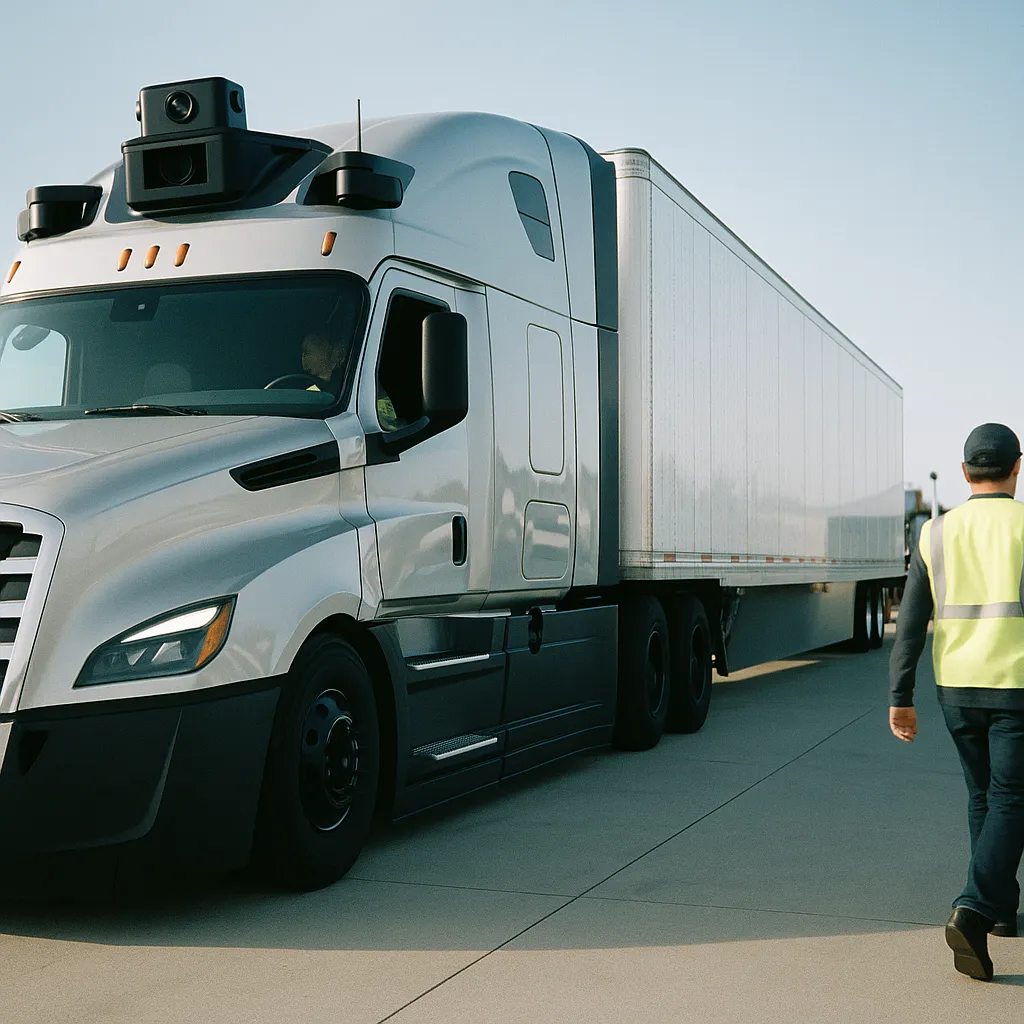
Kodiak AI deployed autonomous trucks on I-70 through Ohio and Indiana — the first driverless freight operation outside the Sun Belt and the most significant geographic proof point yet for commercial autonomous trucking.
Why this matters
Kodiak AI deployed autonomous trucks on I-70 through Ohio and Indiana — the first driverless freight operation outside the Sun Belt and the most significant geographic proof point yet for commercial autonomous trucking.
Kodiak AI completed its first autonomous trucking deployment outside the Sun Belt, running driverless trucks on Interstate 70 through Ohio and Indiana in partnership with DriveOhio and both states' transportation departments. The expansion into northern freight corridors — where winter weather, heavier traffic, and more demanding road conditions apply — is the most significant geographic proof point yet for commercial autonomous trucking.
Why Geography Matters in Autonomous Trucking
The Sun Belt — Texas, Arizona, California, Florida — has been the proving ground for most commercial autonomous vehicle deployments, and for good reason. The weather is predictable. Rain is rare. Ice and snow are essentially absent. Road surfaces are generally well-maintained and well-marked.
Deploying in Ohio and Indiana is categorically different. Interstate 70 carries some of the highest freight volumes in the United States, running through Columbus, Dayton, and Indianapolis and connecting the East Coast to the Midwest distribution hub. It also sees genuine weather: ice, snow, rain, fog, and the kind of mixed-precipitation events that challenge sensor systems and affect road surface quality.
According to FreightWaves, the deployments were completed with active support from both state transportation departments — a meaningful detail, because regulatory cooperation from states varies significantly and can gate autonomous trucking expansion faster than the technology itself.
Kodiak's Approach
Kodiak AI has focused on long-haul highway freight — specifically the truck corridors that move goods between distribution centers. This is the highest-value, most tractable use case for autonomous trucking: constant speeds, controlled access, predictable traffic patterns, and cargo profiles (pallet freight) that don't require sophisticated loading and unloading automation.
Get this in your inbox.
Daily AI intelligence. Free. No spam.
The DriveOhio partnership plugs Kodiak into Ohio's existing infrastructure for testing and validating transportation technology — including connected infrastructure like roadside sensors and V2X (vehicle-to-everything) communication systems that can help autonomous vehicles understand road conditions beyond what their onboard sensors can see.
What This Means for the Industry
Every successful Midwest deployment from any autonomous trucking company matters for the whole sector. Sun Belt deployments, while commercially real, have always carried an asterisk: the technology works here, but what about winter? Ohio and Indiana answer part of that question.
For trucking companies and freight brokers evaluating autonomous trucking as a capacity option, weather tolerance is often the gating factor in fleet adoption decisions. A technology that only works in perpetual sunshine has limited applicability to a national freight network.
For truck drivers, this expansion complicates an already uncertain labor market. Long-haul driving on major freight corridors — exactly the routes Kodiak is targeting — represents the highest-volume segment of trucking employment. The timing, scale, and pace of displacement remain genuinely uncertain, but the geographic expansion of autonomous trucking is a trend, not a one-time event.
What to Watch
Watch whether Kodiak announces specific carrier partnerships in the Midwest — that would signal the deployment has moved from a state-partnership demonstration to an active commercial freight operation. Also watch for winter weather performance data: if Kodiak publishes operational results from deployments during Ohio and Indiana's actual winter conditions, that becomes the most credible signal yet about the technology's commercial readiness for national deployment.
Hector Herrera is an AI systems architect and the founder of Hex AI Systems. He designs and runs AI systems in production and writes daily about how AI is reshaping business, government and everyday life. 20+ years building for the web. Houston, TX.