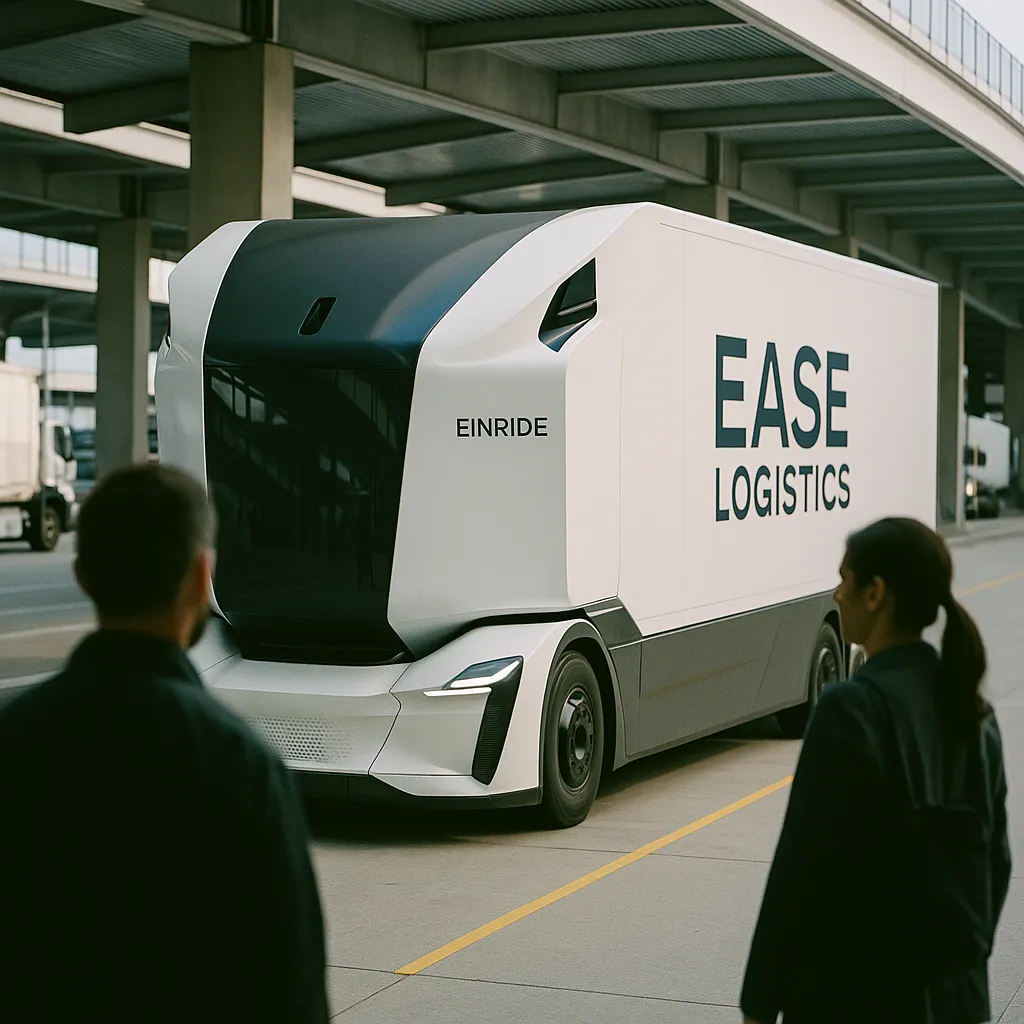
Kuehne+Nagel posted Q3 pre-tax earnings of $527M, up 53% year over year, citing AI-related air freight demand from hyperscaler customers. Revenue rose 22% to $8.97B, beating analyst estimates.
Kuehne+Nagel, one of the world's largest freight forwarding and logistics companies, posted Q3 pre-tax earnings of $527 million — a 53% increase year over year — and attributed the gain directly to AI-related demand in air freight from hyperscaler customers. Revenue rose 22% to $8.97 billion, beating analyst estimates. The result is one of the clearest financial proof points yet that AI infrastructure build-out is reshaping global freight economics in measurable, material ways.
Logistics earnings are a useful proxy for where real capital is flowing in the economy. Kuehne+Nagel's results are not about AI hype — they are about the physical movement of server hardware, networking equipment, and high-value components that hyperscalers need to build and upgrade AI data centers at speed. When a freight company's profit jumps 53% and points to AI demand as the cause, it is documenting a supply chain reality.
The Numbers
According to FreightWaves:
- Pre-tax earnings: $527 million in Q3 2026, up 53% year over year
- Revenue: $8.97 billion, up 22% year over year
- Primary driver: AI-related air freight demand from hyperscaler customers
- Beat: Results exceeded analyst consensus estimates
Air freight, rather than ocean freight, is the relevant mode here. AI server hardware — particularly high-end GPUs from Nvidia and equivalent components — is time-sensitive, high-value, and relatively small by volume. Hyperscalers competing to bring data center capacity online are willing to pay air freight premiums to move equipment faster. That demand has been a tailwind for premium logistics providers throughout 2026.
Why Air Freight Is the AI Bellwether
Ocean freight is cheap and slow. Air freight is expensive and fast. When companies choose air, they are prioritizing speed over cost — which is a signal about competitive urgency.
The AI infrastructure race among AWS, Microsoft Azure, Google Cloud, Meta, and others has created a sustained demand pattern for premium freight. These companies are not shipping servers on a normal procurement cycle; they are moving equipment as fast as they can get it. That urgency has flowed directly to freight forwarders like Kuehne+Nagel who can execute complex, time-critical logistics globally.
Get this in your inbox.
Daily AI intelligence. Free. No spam.
Several dynamics are reinforcing this demand:
GPU allocation constraints: Nvidia's high-end GPU supply has been constrained throughout 2025–2026. When a shipment becomes available, hyperscalers move it immediately — by air. Delays mean falling behind competitors in deployment timelines.
Geopolitical routing complexity: U.S.-China trade restrictions on advanced semiconductor equipment mean that some AI hardware supply chains require creative routing through third countries. This adds logistics complexity and cost — and favors global freight forwarders with the regulatory expertise to navigate it.
Data center construction velocity: Hyperscalers have announced hundreds of billions of dollars in data center commitments for 2025–2027. Building a data center quickly requires coordinating the delivery of servers, networking gear, power infrastructure, and cooling equipment across global suppliers on tight schedules. This is complex freight management, not commodity shipping.
What This Means for the Logistics Industry
Kuehne+Nagel's result will accelerate interest from logistics competitors — DHL, DB Schenker, XPO — in positioning themselves as hyperscaler-preferred freight partners. The AI infrastructure demand wave is now large enough to move the financials of a company with $8.97 billion in quarterly revenue. That is not a niche.
For logistics companies, the strategic question is whether AI demand is structural or cyclical. If hyperscalers are in a sustained build phase — and current data center commitment announcements suggest they are, through at least 2028 — then the freight tailwind is structural. If the build slows due to financing constraints, regulatory restrictions, or AI revenue shortfalls, demand could normalize rapidly.
Kuehne+Nagel's management has characterized the demand as driven by hyperscaler customers specifically, not general AI-adjacent businesses. That customer concentration is worth watching: a shift in procurement timing or strategy by a handful of major hyperscalers could swing the company's results significantly in either direction.
What to Watch
Kuehne+Nagel's Q4 earnings will test whether Q3 was peak demand or part of a sustained trend. Watch specifically for commentary on order books for the first half of 2027 — hyperscalers often provide supply chain partners with forward visibility into major hardware procurement waves. If that visibility extends into 2027 with similar intensity, it confirms the structural thesis. If it softens, it suggests Q3 was a pull-forward of demand rather than a new baseline.
Did this help you understand AI better?
Your feedback helps us write more useful content.
Get tomorrow's AI briefing
Join readers who start their day with NexChron. Free, daily, no spam.