Kodiak AI is running commercial driverless freight operations between Fresno and Los Angeles under a new California DMV permit, while simultaneously targeting the Dallas-Houston corridor for unsupervised long-haul service by year end.
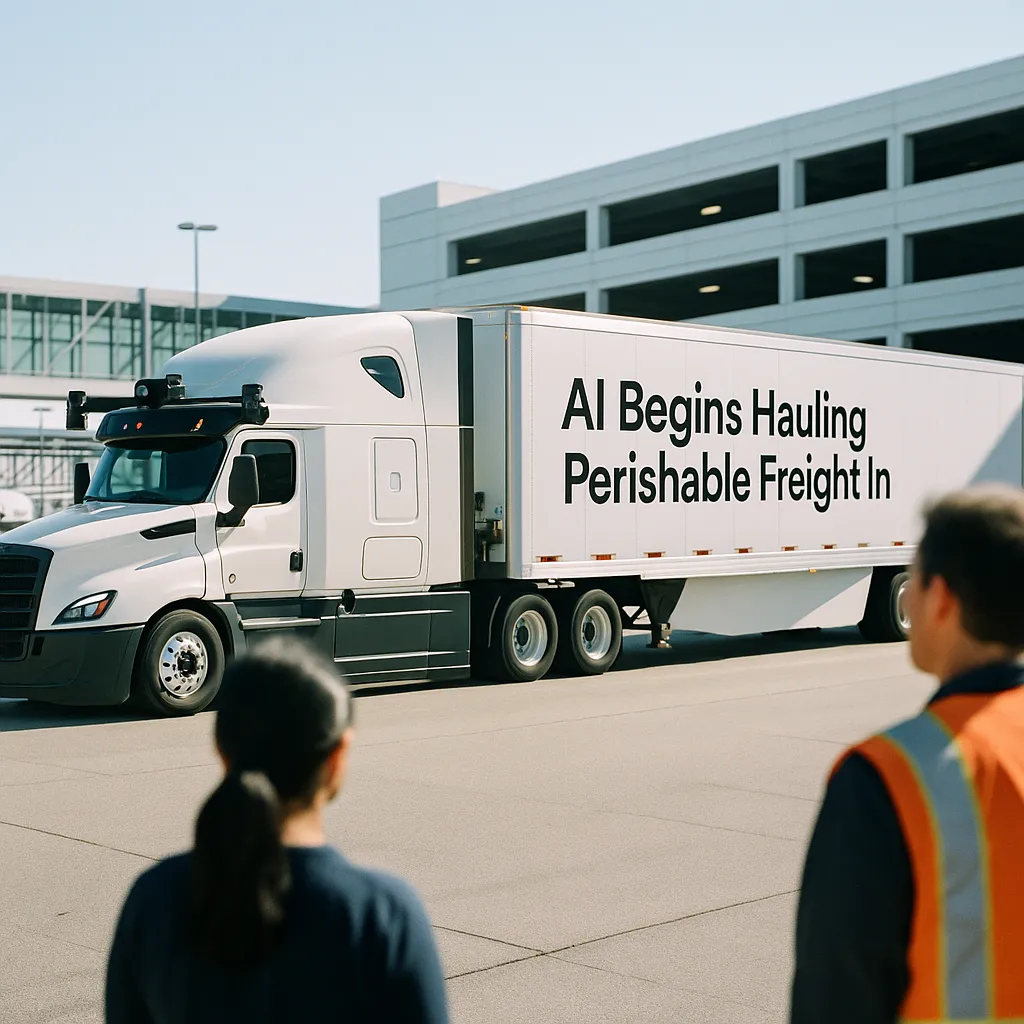
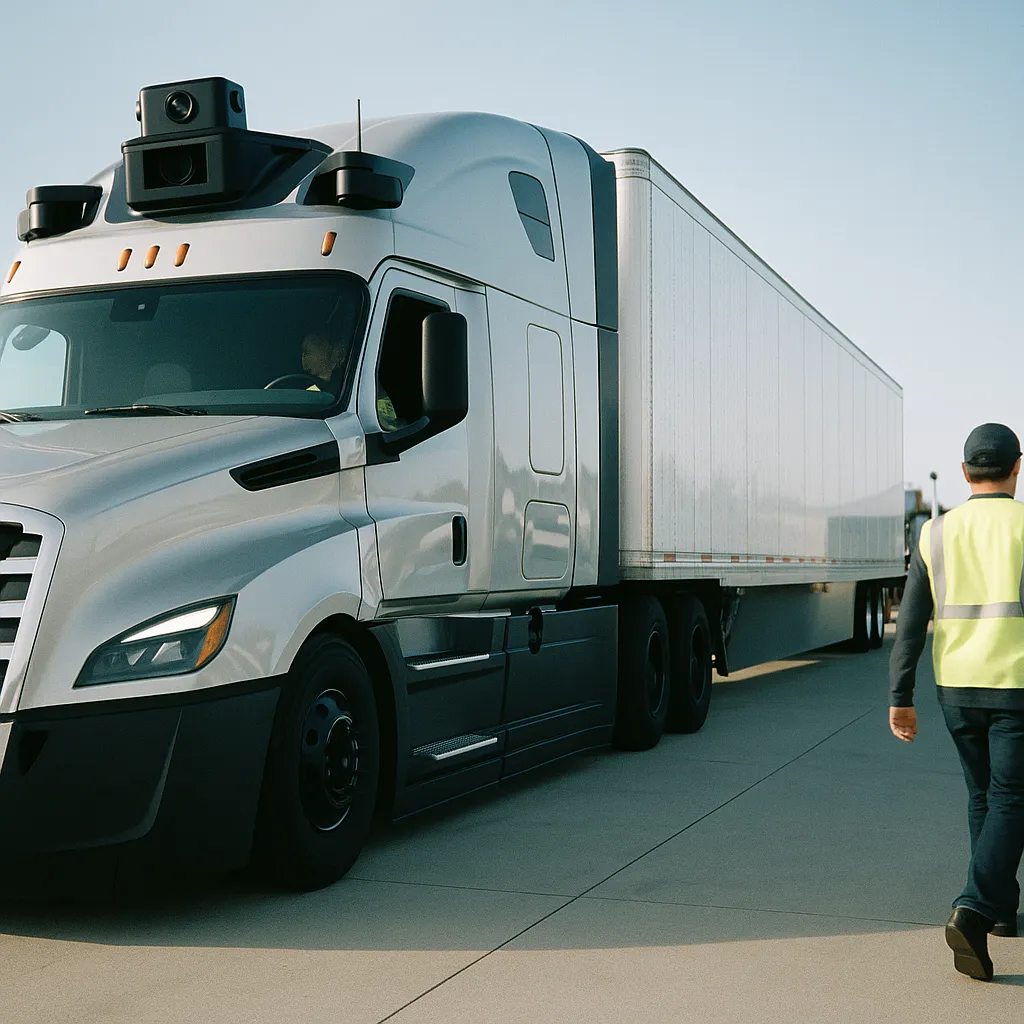
Kodiak AI is hauling perishable freight on California roads without a human driver — the first commercial driverless trucking operation in the state cleared for time-sensitive cargo. The company received a new California DMV driverless permit and immediately put it to work, running routes for DTL Transport between Fresno and Los Angeles, a 220-mile corridor through the San Joaquin Valley and into Southern California.
Self Drive News reports that the cargo type — perishables — is deliberate. Refrigerated freight on tight delivery windows is exactly the use case where removing driver fatigue, mandatory rest breaks, and shift handoffs creates direct economic value. A driverless truck does not need to stop; it runs through the night on the same schedule regardless of traffic or shift constraints.
The Two Announcements Happening Simultaneously
Kodiak made two significant moves this week:
California driverless permit: The DTL Transport contract on the Fresno-to-LA corridor is now live. This is commercial freight, not a pilot, and not supervised by a human in the vehicle. The permit required Kodiak to demonstrate to California DMV that its system meets driverless operation standards — a bar that has taken other operators years to clear.
Dallas-Houston I-45 corridor: Kodiak separately named the 219-mile I-45 corridor between Dallas and Houston as its first fully driverless long-haul lane, targeting unsupervised commercial service before the end of 2026. That corridor is one of the busiest freight routes in the United States, connecting two of the country's largest metro economies. If Kodiak hits its target date, it will be operating driverless long-haul service in two separate states by year end.
Get this in your inbox.
Daily AI intelligence. Free. No spam.
Where This Sits in the Broader Race
Autonomous trucking has been developing in parallel tracks:
- Aurora outlined a target of 30,000 driverless trucks in its fleet by 2030 at its September 23 investor day. Aurora's current operations on the Dallas-Houston corridor use supervised vehicles with safety drivers, but the company has been the most public about its commercial timelines.
- Waymo Via (Waymo's trucking arm) has been running supervised driverless freight tests in Texas but has not yet announced commercial driverless permits.
- Inceptio Technology hit 1 billion kilometers of autonomous trucking in China earlier in 2026, demonstrating what operational scale looks like at the infrastructure level.
Kodiak's California permit is significant because California has been one of the more cautious states on driverless vehicle approvals, particularly for commercial freight. Getting a permit from California DMV for unsupervised perishable freight operations is a stronger regulatory signal than permits in states with lighter oversight regimes.
What Driverless Freight Actually Changes
The trucking industry has a well-documented driver shortage — the American Trucking Associations has estimated a gap of 60,000+ drivers in recent years. But the economic case for autonomous trucking is not primarily about the driver shortage. It is about utilization.
A conventional long-haul truck can legally operate for 11 hours in a 14-hour window before a mandated 10-hour reset. A driverless truck has no such constraint. On a 219-mile corridor, that means the same asset can run multiple round trips per day versus one. For perishable freight with a narrow delivery window, the combination of consistent speed and no mandatory breaks is worth more than driver cost alone.
For shippers, the pitch is reliability: driverless trucks don't call in sick, don't get fatigued at mile 400, and don't vary in driving style. For insurers, those same properties are a risk profile question — one that hasn't been fully underwritten at commercial scale until now.
What to Watch
Watch the Fresno-LA corridor closely over the next 90 days. If Kodiak completes operations without reportable incidents, it becomes a reference deployment that will accelerate permit applications in other states. Also watch Aurora's Q4 driverless transition timeline — if two operators are running unsupervised commercial freight on the same Texas corridor by year end, 2026 closes as the year autonomous long-haul trucking crossed from demonstration to commercial reality.
Did this help you understand AI better?
Your feedback helps us write more useful content.
Get tomorrow's AI briefing
Join readers who start their day with NexChron. Free, daily, no spam.