New analysis projects autonomous truck operating costs dropping from ~$4 to ~$2.50 per mile by 2028, reaching cost parity with human drivers and accelerating fleet adoption decisions at major freight operators.
Autonomous Trucks Are on Track to Cost Less Than Human Drivers by 2028
By Hector Herrera | November 13, 2026 | Transport
The per-mile operating cost of autonomous trucks could match — and fall below — the cost of human-driven trucks by 2028. That's the finding of new industry analysis reviewed by Supply Chain Brain, which projects autonomous truck operating costs dropping from roughly $4 per mile today to approximately $2.50 per mile as technology matures and commercial fleets scale. Human-driven trucks currently operate at around $2.50-$3.00 per mile when you include driver wages, benefits, hours-of-service restrictions, and turnover costs. The crossover point is coming faster than most of the industry expected two years ago.
This isn't a distant hypothetical. Fleet operators at major freight carriers are making deployment decisions now, with 2028 economics already baked into their financial models.
The Cost Breakdown
Understanding why the cost curve is moving requires looking at what drives operating cost on each side.
Current autonomous truck cost drivers (~$4/mile):
- Hardware depreciation — lidar, radar, camera arrays, and onboard compute are expensive per unit but costs are falling rapidly as manufacturing scales
- Remote monitoring — most deployed autonomous trucks still carry a human safety operator or rely on remote teleoperation staffing for edge cases; this is a significant cost that full autonomy eliminates
- Maintenance complexity — sensor arrays and compute systems add maintenance overhead not present in conventional trucks
- Insurance premiums — insurers are still pricing uncertainty into autonomous vehicle policies; premiums will compress as safety data accumulates
Current human-driven truck cost drivers (~$2.50-$3.00/mile):
- Driver wages — median pay around $55,000-$70,000 annually, with experienced long-haul drivers earning significantly more
- Driver benefits and turnover — trucking has chronic driver shortages and high turnover; recruiting and onboarding costs are non-trivial
- Hours-of-service (HOS) limits — federal regulations cap how many consecutive hours a driver can operate, limiting asset utilization; a truck sitting at a rest stop is not generating revenue
- Driver-related incidents — roughly 94% of serious truck crashes involve human error; driver-related liability and insurance costs are substantial
The 2028 crossover happens when autonomous hardware costs fall below the ongoing cost premium of driver labor and when remote monitoring labor is eliminated or radically reduced by improved AI reliability. Neither assumption is a stretch — both are well underway.
Get this in your inbox.
Daily AI intelligence. Free. No spam.
Fleet Operators Are Already Deciding
The analysis is influencing procurement decisions in real time. Freight operators don't wait until costs cross to begin transition planning — they begin when the crossover is visible within a typical fleet asset lifecycle.
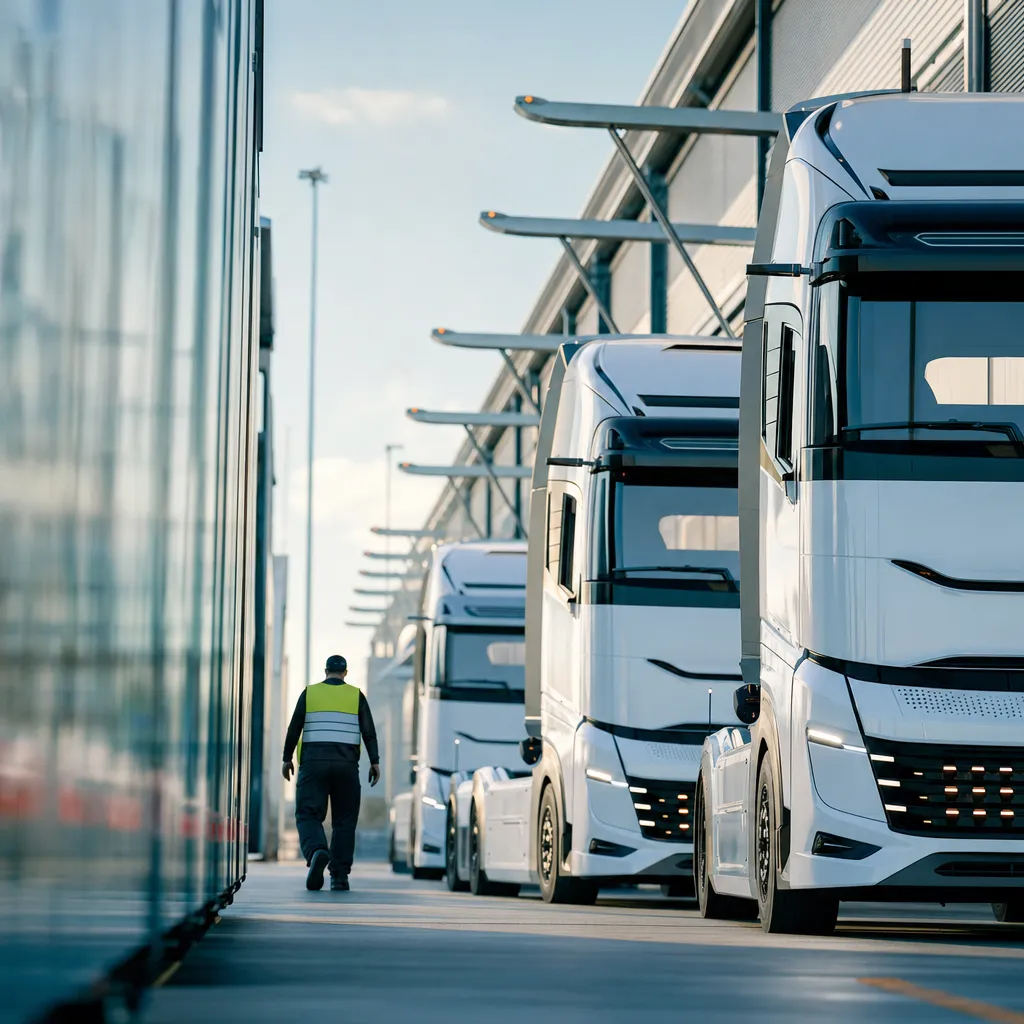
Trucking companies typically hold assets for five to seven years. A fleet operator buying trucks today that will still be running in 2030 or 2031 is making a bet on where autonomous economics land. Several large carriers are now delaying or reducing orders for new conventional long-haul trucks while they wait for autonomous platforms from Kodiak Robotics, Aurora Innovation, and Waymo Via to reach commercial scale on key freight corridors.
Shorter-haul and regional routes are more complex — urban driving, loading dock proximity, and route variability make automation harder than the long, predictable highway runs that autonomous systems have mastered first. The 2028 cost parity projection applies primarily to long-haul highway freight, not last-mile or regional delivery.
The Unresolved Problems
Cost parity projections don't eliminate the remaining technical and regulatory gaps.
Adverse weather performance remains the most cited safety concern. Autonomous systems trained primarily on clear-weather, controlled-access highways degrade in heavy rain, snow, and ice. For routes through northern states and mountain corridors, weather handling must improve significantly before full autonomy is viable year-round.
Cybersecurity vulnerability is a legitimate freight industry concern that has received less public attention than it deserves. An autonomous truck is a networked system with remote update and monitoring capabilities. The same connectivity that enables remote monitoring creates attack surfaces. A single fleet-wide software vulnerability is a materially different risk profile than a human driver error.
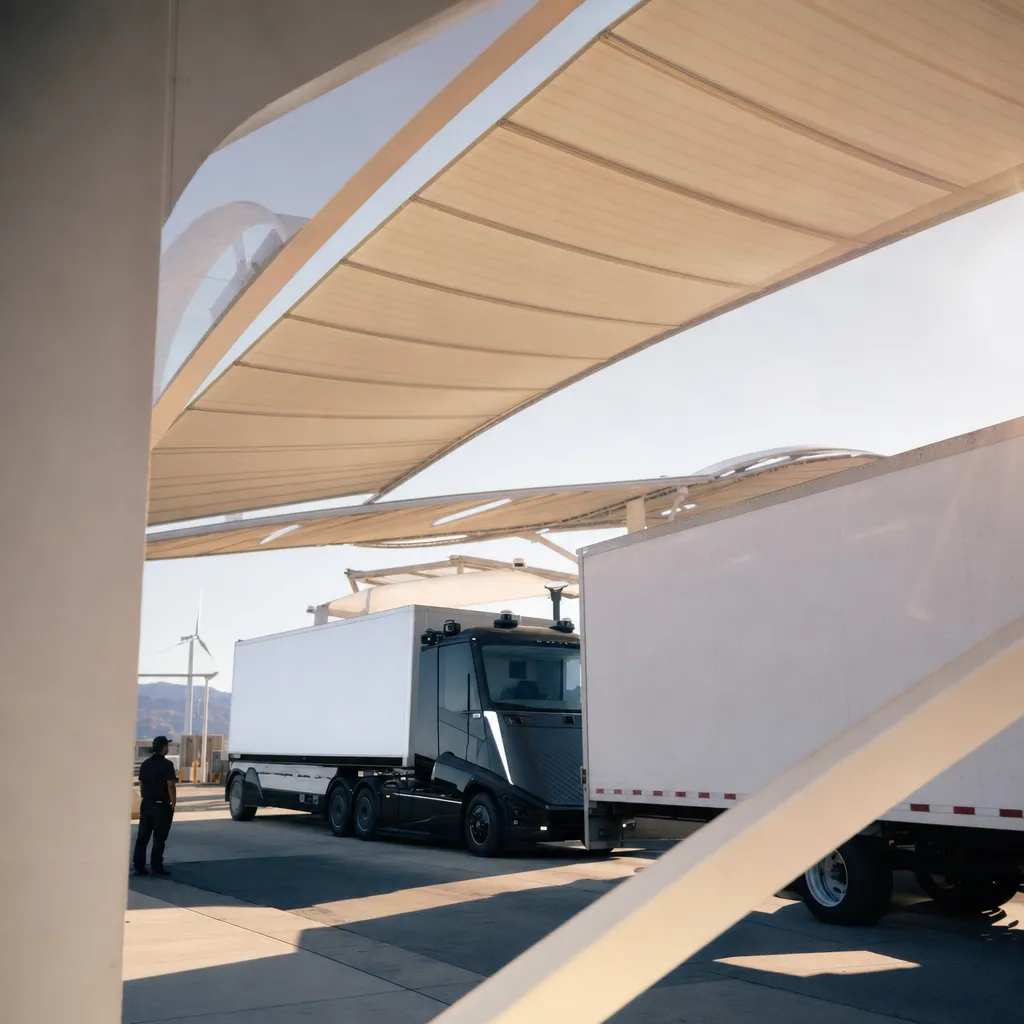
Regulatory approval for fully driverless operation (no safety driver in the cab) is not uniform across US states. Texas, Arizona, and a handful of others have created frameworks for driverless commercial operation. Many states have not. A truck running autonomously from Dallas to Los Angeles crosses multiple regulatory jurisdictions — and must comply with each of them.
Driver displacement will be one of the largest labor market disruptions of the decade if 2028 cost parity materializes at scale. The American Trucking Associations estimates approximately 3.5 million professional truck drivers currently work in the US. Even if adoption is gradual, the economic pressure on driver wages and employment will begin well before the technology achieves anything close to market saturation.
What to Watch
Watch Aurora's and Kodiak's commercial deployment announcements through 2027 — both companies are targeting commercial driverless operations on specific Texas and Sun Belt corridors as their near-term milestone. The safety data from those deployments will drive the insurance pricing changes that determine whether the 2028 cost parity projection holds. Also watch for federal driverless vehicle legislation: the AV START Act and its successors have stalled repeatedly in Congress, and without federal preemption, the state-by-state regulatory patchwork remains a deployment bottleneck.
Did this help you understand AI better?
Your feedback helps us write more useful content.
Get tomorrow's AI briefing
Join readers who start their day with NexChron. Free, daily, no spam.