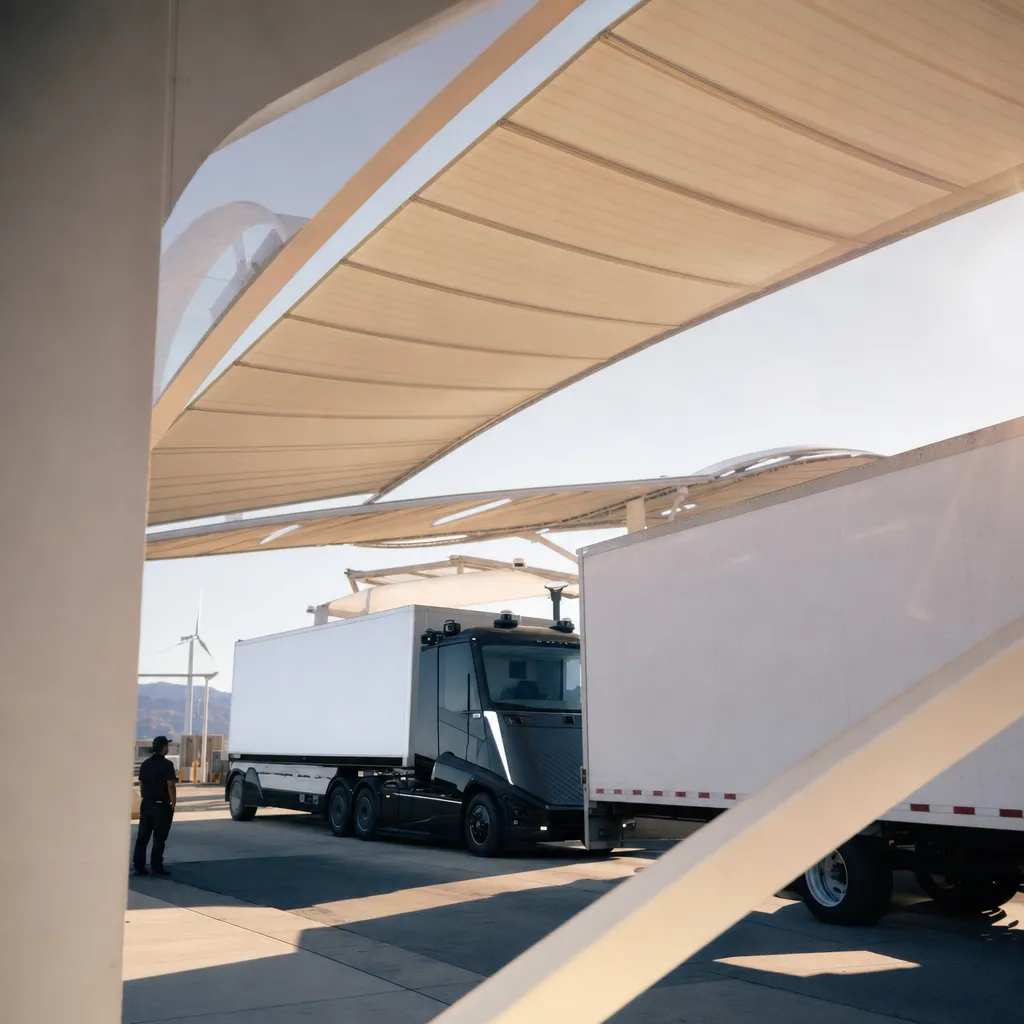
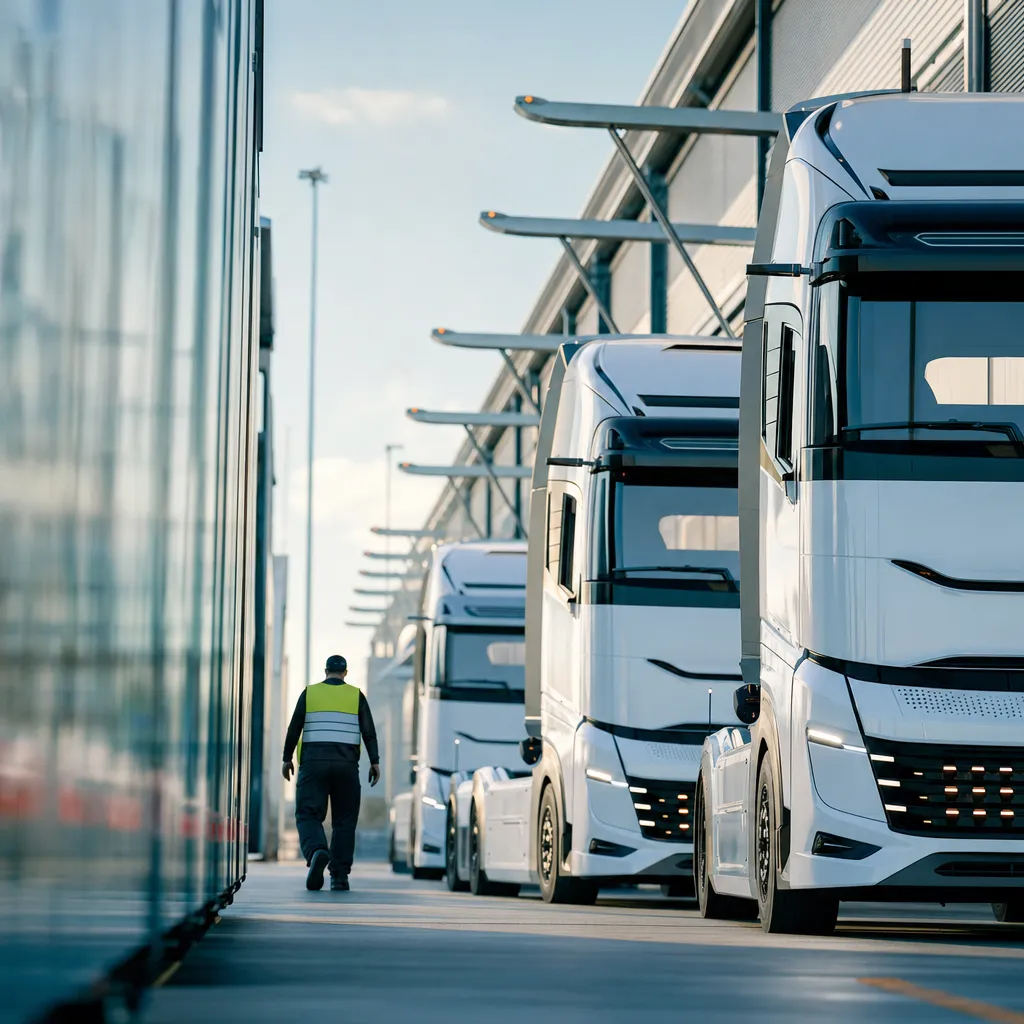
Autonomous trucking startup Bot Auto completed the first fully humanless commercial truckload delivery in the United States at under $2 per mile — approaching human freight costs with no safety driver and no remote backup.
Bot Auto has completed the first fully driverless commercial truckload delivery in the United States — no human in the cab, no remote safety backup. Supply Chain Brain reports that CEO Xiaodi Hou put the all-in operating cost at under $2 per mile. That number matters: it places autonomous freight within striking distance of human-operated long-haul trucking on the most profitable routes.
This is not a demonstration. It is a commercial operation with paying cargo.
How We Got Here
Autonomous trucking has consumed billions of dollars since at least 2015, from startups and automakers alike. Most milestones involved supervised operation: a safety driver in the seat, or a remote operator monitoring feeds and prepared to intervene. That model had a problem — safety drivers cost money, and they're the primary reason supervised autonomous trucking could never be cheaper than human trucking.
Bot Auto, founded by Xiaodi Hou — formerly Chief Technical Officer of TuSimple before that company's collapse — has been pushing toward fully unsupervised commercial operation. Hou was among the earliest engineers to argue that supervised autonomy was an indefinite holding pattern, not a business model.
What the Per Mile Figure Means
Human-operated long-haul trucking currently costs between $1.70 and $2.50 per mile on a fully loaded basis, depending on fuel, driver wages, insurance, and equipment. The wide range reflects route type, cargo, and carrier size.
Bot Auto's under-$2 figure on a commercial run — meaning cargo actually paid for it — means autonomous trucks are no longer hypothetically cost-competitive. They are currently cost-competitive on certain routes.
The safety driver alone adds $0.40 to $0.70 per mile to operating costs in supervised deployments. Eliminating that overhead is the economic mechanism that makes driverless freight viable.
Get this in your inbox.
Daily AI intelligence. Free. No spam.
According to Supply Chain Brain analysis, full market parity — where autonomous trucks can compete profitably across the full range of US long-haul routes — is projected for 2028. That is a two-year window before volume adoption among fleet operators is expected to begin in earnest.
"Fully Driverless" Is a Materially Different Milestone
A fully driverless commercial run eliminates both the cab safety driver and the remote teleoperator. The truck navigates highway, on-ramps, weigh stations, and dock approaches entirely on its own AI stack.
Earlier autonomous trucking milestones — a truck completing a route with a safety driver who never intervened, or logging 10,000 supervised miles — are fundamentally different claims. They demonstrate capability under supervision. What Bot Auto completed demonstrates capability in production without any human backup layer.
For the freight industry, this matters because the business model only works without the safety driver. Any supervised autonomous system that can't remove the human is still cheaper to run with a conventional driver.
What Fleet Operators Are Watching
Major carriers have been preparing contingency plans for autonomous disruption for several years. What none wanted was a confirmed economic case that autonomous freight was price-competitive before they had internal AI strategies in place.
That confirmation now exists.
For shippers — the companies that pay freight bills — competitive pressure on rates will initially appear on the highest-volume, most predictable lanes: interstate I-10, I-40, and similar high-throughput corridors where autonomous trucks can run reliably. Spot rates on those lanes will begin to feel downward pressure as autonomous capacity scales.
For truck drivers, the timeline of meaningful displacement remains tied to regulatory approval for broader deployment, not technology readiness. That gap is closing.
What to Watch
The Federal Motor Carrier Safety Administration's (FMCSA) rulemaking calendar is now the controlling variable — not technical capability. Technology readiness is ahead of regulatory clearance for fully driverless commercial freight at scale. The rate at which FMCSA issues operating approvals for specific autonomous systems will determine how fast Bot Auto and competitors can move from milestone runs to fleet operations.
Did this help you understand AI better?
Your feedback helps us write more useful content.
Get tomorrow's AI briefing
Join readers who start their day with NexChron. Free, daily, no spam.