China's leading autonomous trucking companies say LLM breakthroughs won't speed up commercialization timelines. Physical driving data — not model advances — is the real bottleneck.
China's Self-Driving Truck Leaders Push Back on LLM Hype: Safety Data Is the Real Bottleneck
The executives building China's most advanced autonomous trucking companies delivered a blunt message this week: rapid advances in large language models won't speed up when self-driving trucks reach commercial scale. The hard limit, they say, is physical driving data — and no AI model improvement changes that math.
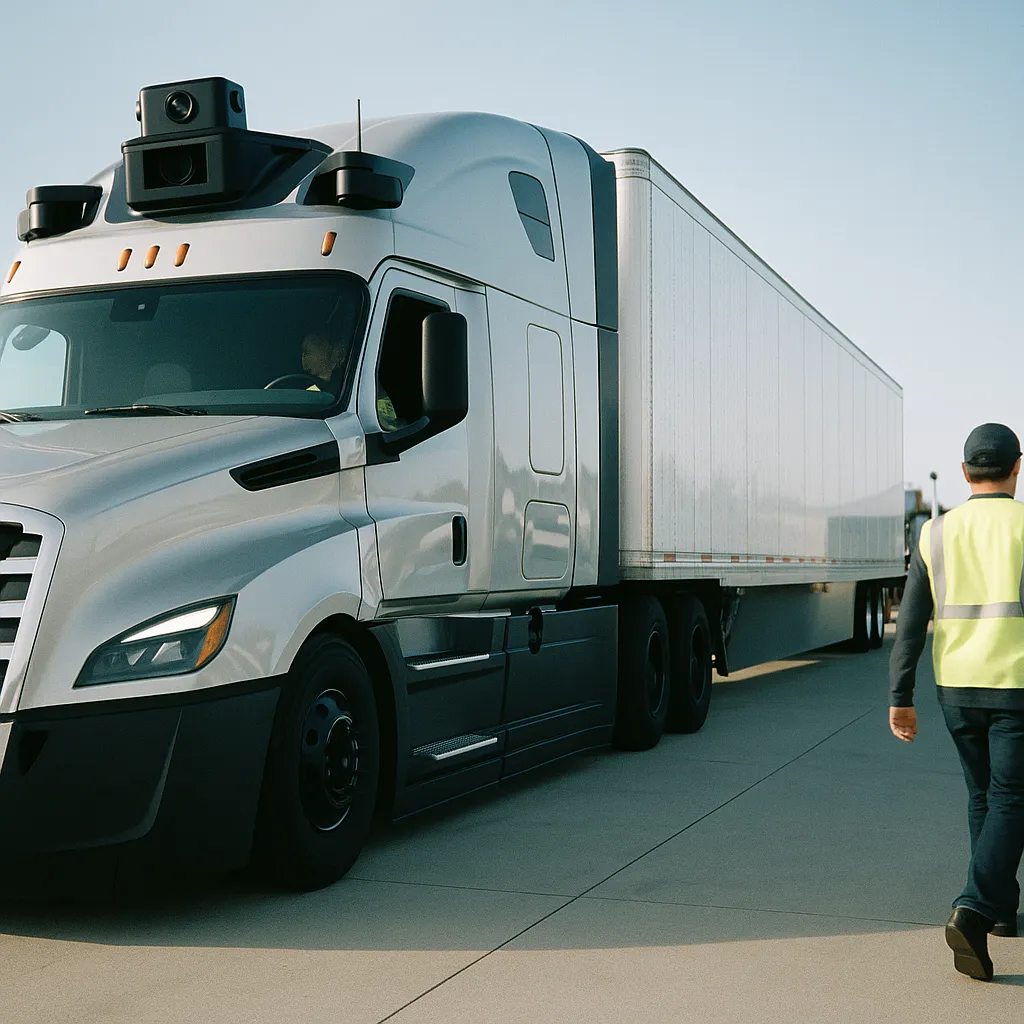
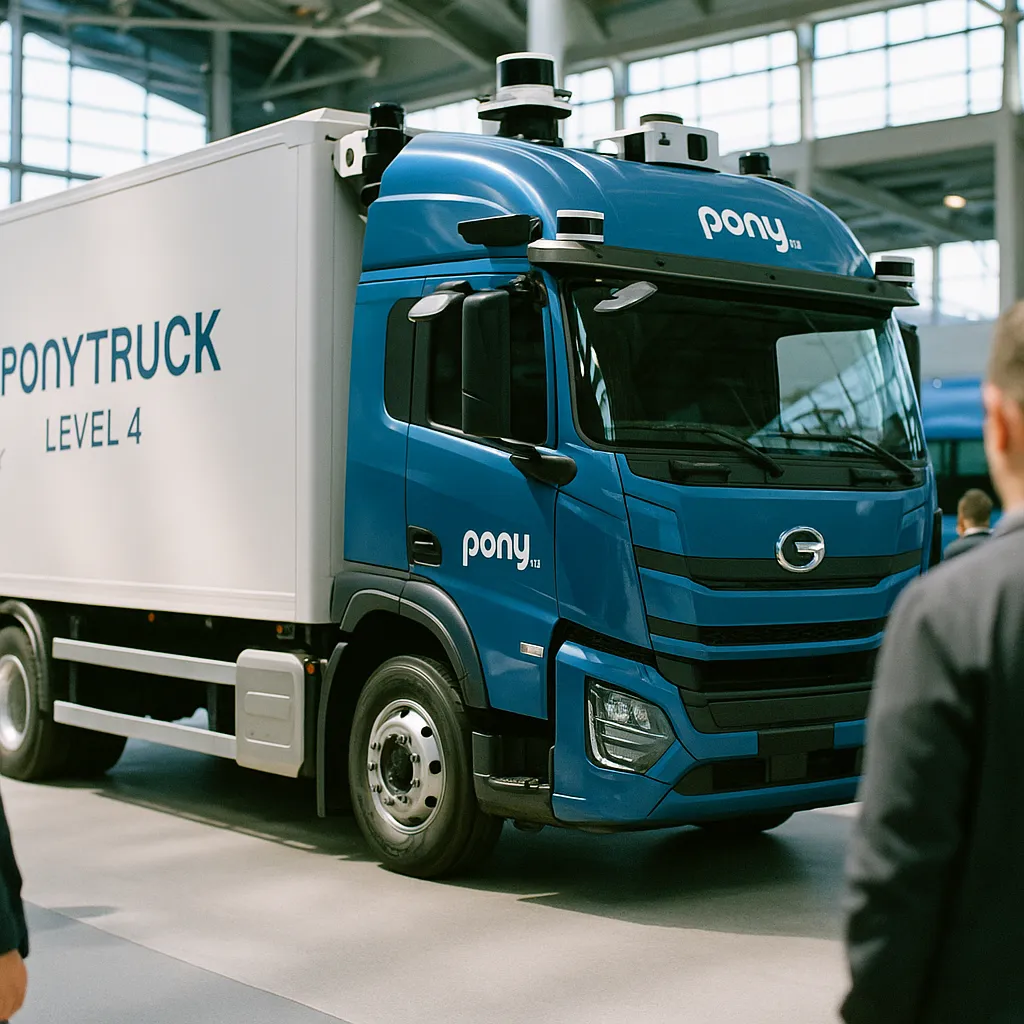
Inceptio Technology and Pony.ai, two of China's leading autonomous freight companies, made the case to CNBC that the prevailing narrative around AI breakthroughs accelerating autonomous vehicle timelines is wrong. Both companies argue the bottleneck isn't intelligence — it's accumulated real-world safety data that proves a system can operate reliably across conditions it has never encountered before.
Why LLMs Don't Move the Timeline
Large language models — the AI systems behind tools like ChatGPT — are trained on text, code, and other digital content. They're powerful for reasoning, summarizing, and generating language. But a truck navigating a fog-covered mountain highway or a construction-zone corridor requires a fundamentally different kind of intelligence: one built from millions of hours of physical driving in precisely those conditions.
Inceptio, which operates commercially in China, has logged over 700 million kilometers of autonomous truck miles. The company says it won't consider full commercialization until it has accumulated 5 billion kilometers of training and validation data. That milestone is targeted for mid-2028 — not because the underlying AI isn't advancing, but because there is no shortcut to building the safety dataset required to demonstrate reliable operation across the full range of edge cases.
The distinction is critical: LLM improvements can help a truck's cabin system understand spoken route instructions, or help planners optimize dispatch schedules. They don't substitute for the safety validation process that regulators — and responsible engineers — require before a 40-ton vehicle operates without a human in the seat.
The Data Gap Is Enormous
To put Inceptio's 5-billion-km threshold in perspective: the company has logged 700 million km of commercial autonomous miles — the largest publicly reported body of such data in existence — and considers itself 14% of the way to its own commercialization standard. That's not a pessimistic reading. It's an honest engineering assessment.
Get this in your inbox.
Daily AI intelligence. Free. No spam.
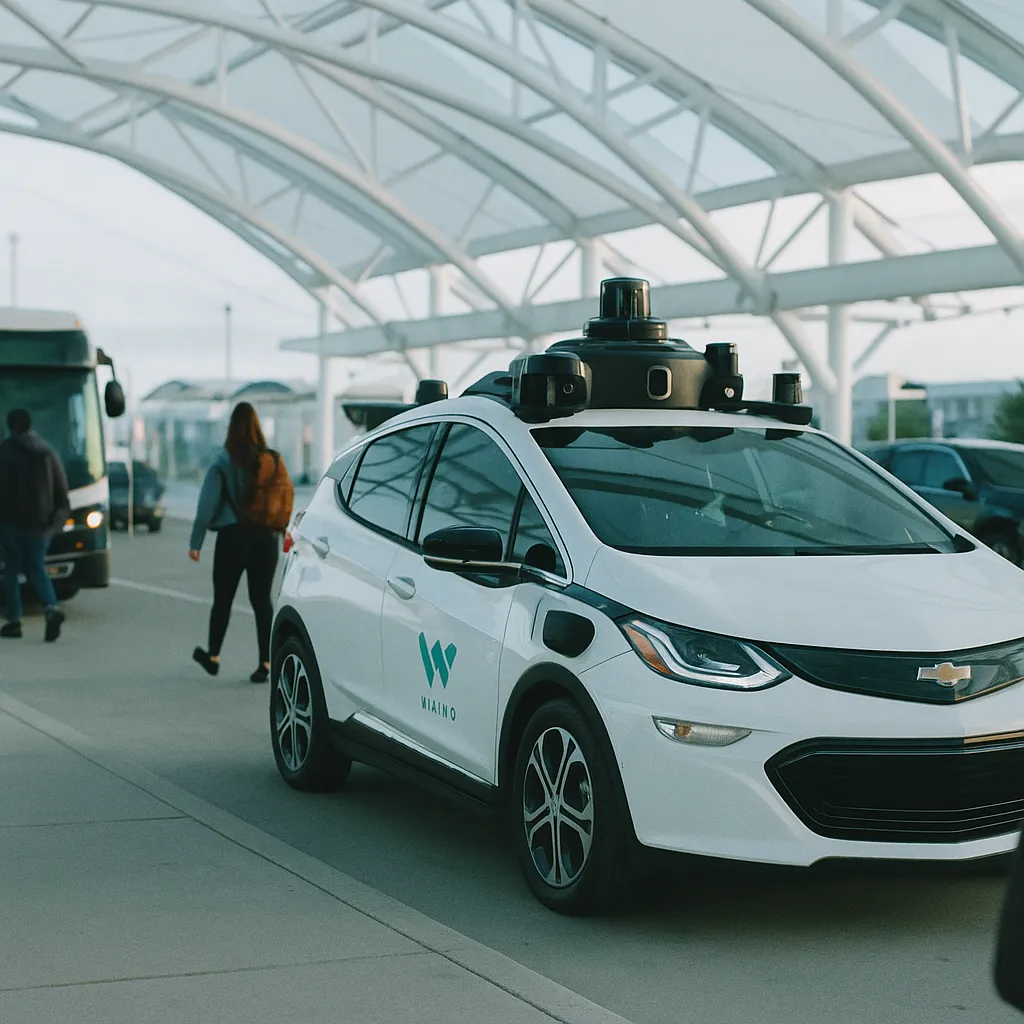
Pony.ai, which runs both robotaxi and autonomous freight programs in China, reinforced this position. Its engineers noted that Chinese regulators require demonstrated performance data across a defined set of operating conditions before granting driver-out permits at commercial scale. The regulatory framework is data-intensive by design, making it difficult for any company to accelerate deployment simply because its models improved.
This approach contrasts sharply with what U.S. companies are announcing. Aurora launched commercial driverless freight on Texas highways in 2025 and is now expanding across multiple states. Waabi announced aggressive driver-out scaling earlier this year. The divergence reflects both different regulatory environments and different definitions of "commercial-ready."
A Useful Corrective to Hype
The pushback from China's AV leaders matters because it separates two things the industry often conflates: AI capability and deployment readiness in safety-critical systems.
A model that scores at the top percentile on coding benchmarks or passes a medical licensing exam is impressive. But it does not, by that fact alone, make a truck safer on a public road. Physical AI — systems that interact with the real world at speed, with lives at stake — requires a proof standard that benchmarks don't capture.
This has direct implications for anyone evaluating autonomous trucking investments or timelines:
- AI model velocity is decoupled from AV deployment velocity. GPT-5 releasing doesn't mean trucks ship faster.
- Data moats compound. Companies with the most accumulated real-world miles have an advantage new entrants cannot close with better models alone. Inceptio's 700 million km lead represents years of irreplaceable validation data.
- Commercial operations are not mass deployment. Aurora's Texas lanes are a genuine milestone — but they're the beginning of a long validation arc, operating in relatively well-understood highway conditions. Urban environments, adverse weather, and cross-border routing add layers of complexity that require proportionally more data.
- Regulatory divergence is a real variable. U.S. state-by-state frameworks allow earlier commercial launches; China's national framework demands more evidence before expansion. Neither is obviously correct, but they produce different timelines.
The Broader Context: LLMs Are a Tool, Not a Shortcut
This reality check arrives as the autonomous vehicle sector is absorbing a wave of LLM-era enthusiasm. Researchers have demonstrated that language models can help plan driving routes, interpret traffic laws, and narrate driving decisions in natural language. These are genuinely useful capabilities.
But Inceptio and Pony.ai are making a more precise claim: the rate-limiting step in autonomous trucking commercialization is not AI reasoning quality. It is the volume and diversity of physical miles logged under real operating conditions. Until that data gap closes, better foundation models are a supporting actor — not the lead.
What to Watch
Pony.ai's U.S. IPO filing, submitted in late 2025, makes its commercialization progress a matter of public investor scrutiny. Watch Q2 2026 disclosures for cumulative km logged and any new Chinese permit expansions. In the U.S., Aurora's multi-state expansion and federal AV legislation moving through Congress will test whether American regulators adopt a rigorous data-validation model or allow faster deployment with lighter proof standards — a choice that will define the safety record of the industry for years to come.
By Hector Herrera
Did this help you understand AI better?
Your feedback helps us write more useful content.
Get tomorrow's AI briefing
Join readers who start their day with NexChron. Free, daily, no spam.