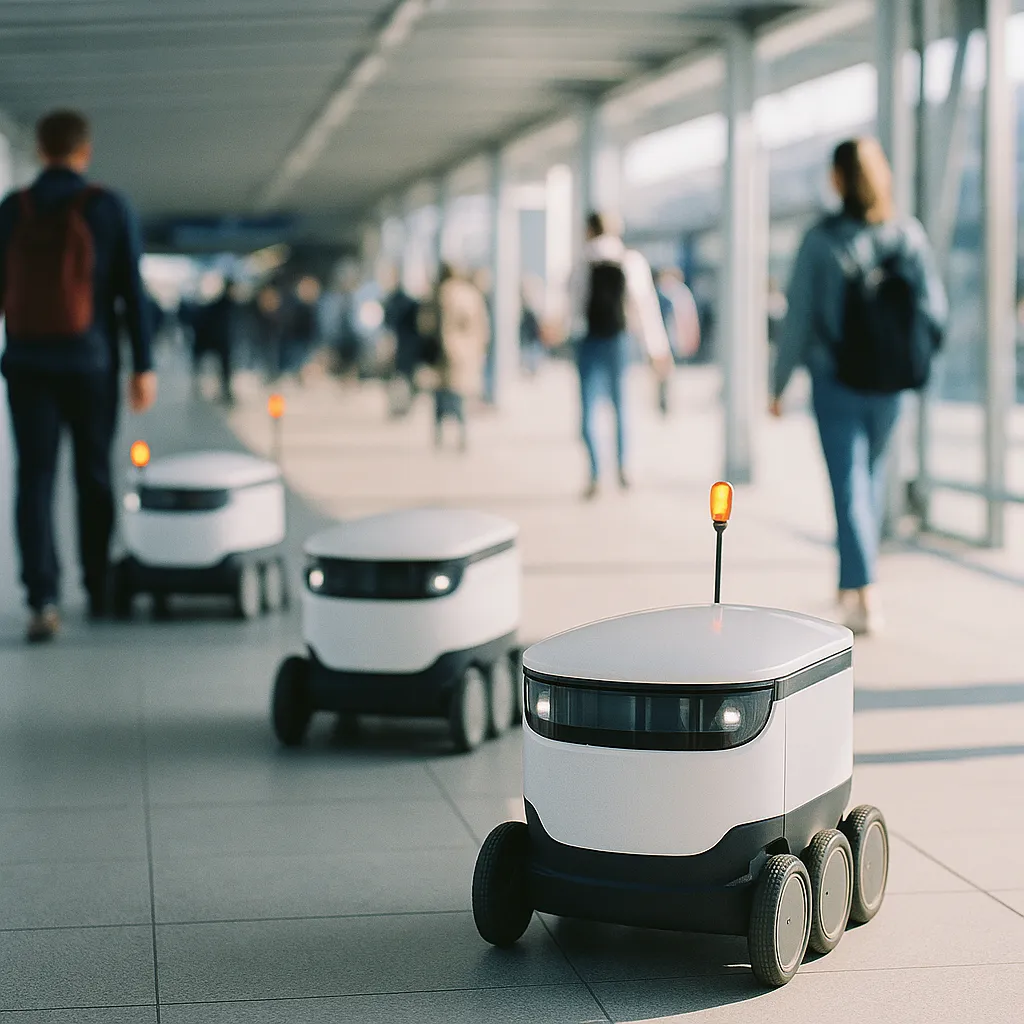
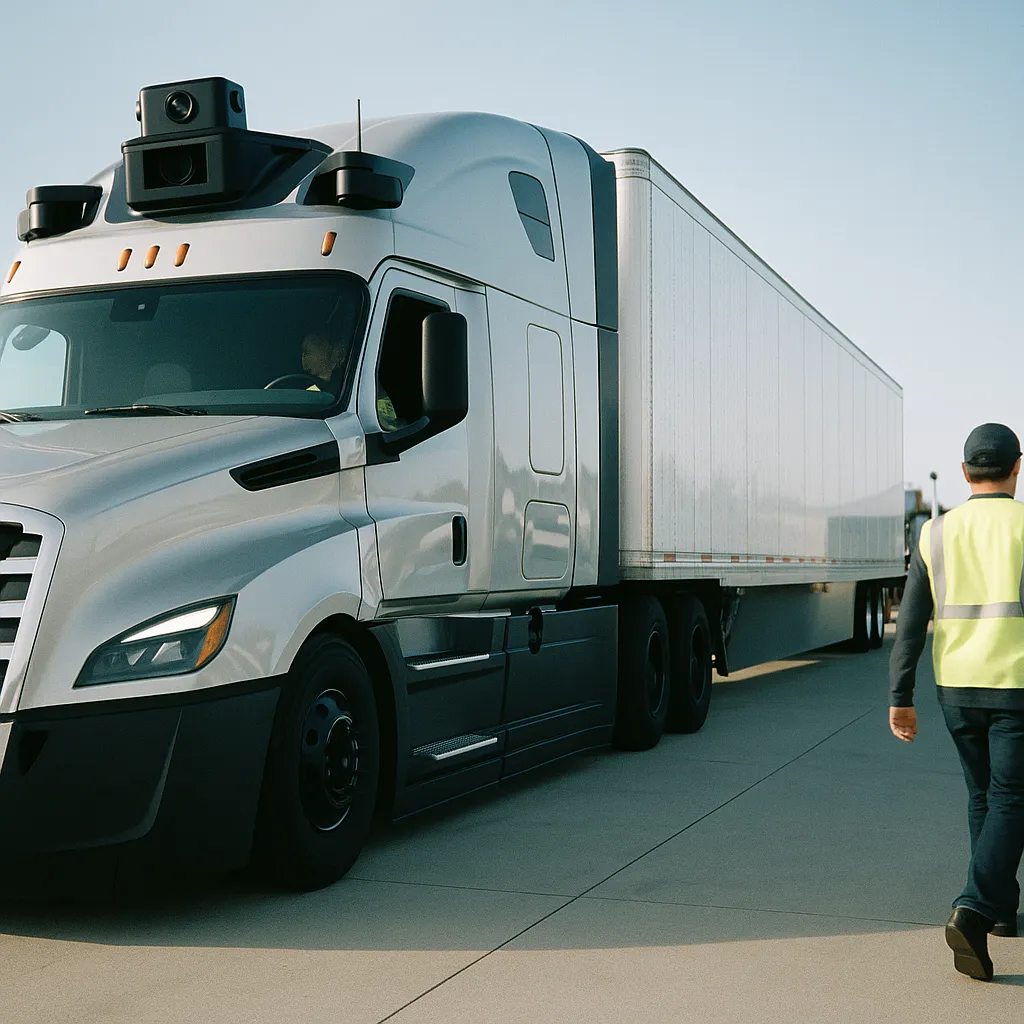
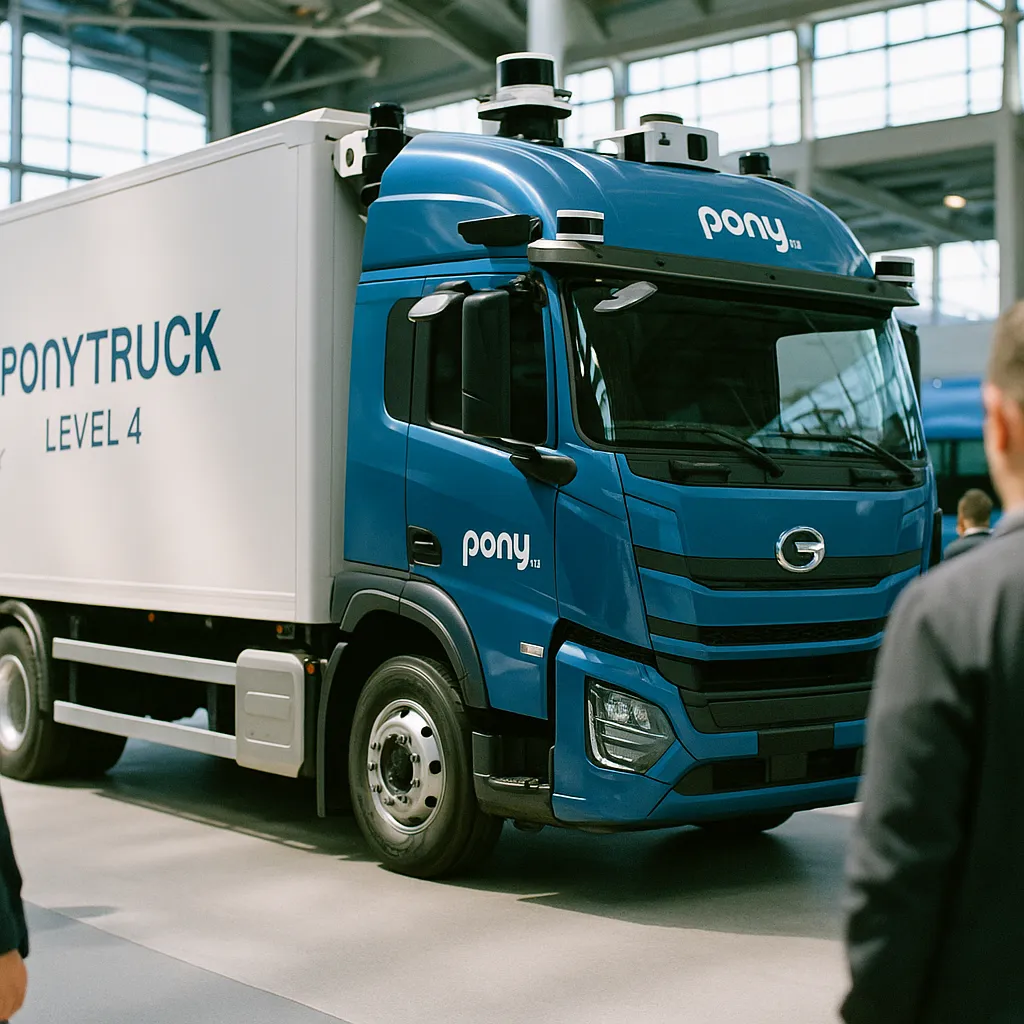
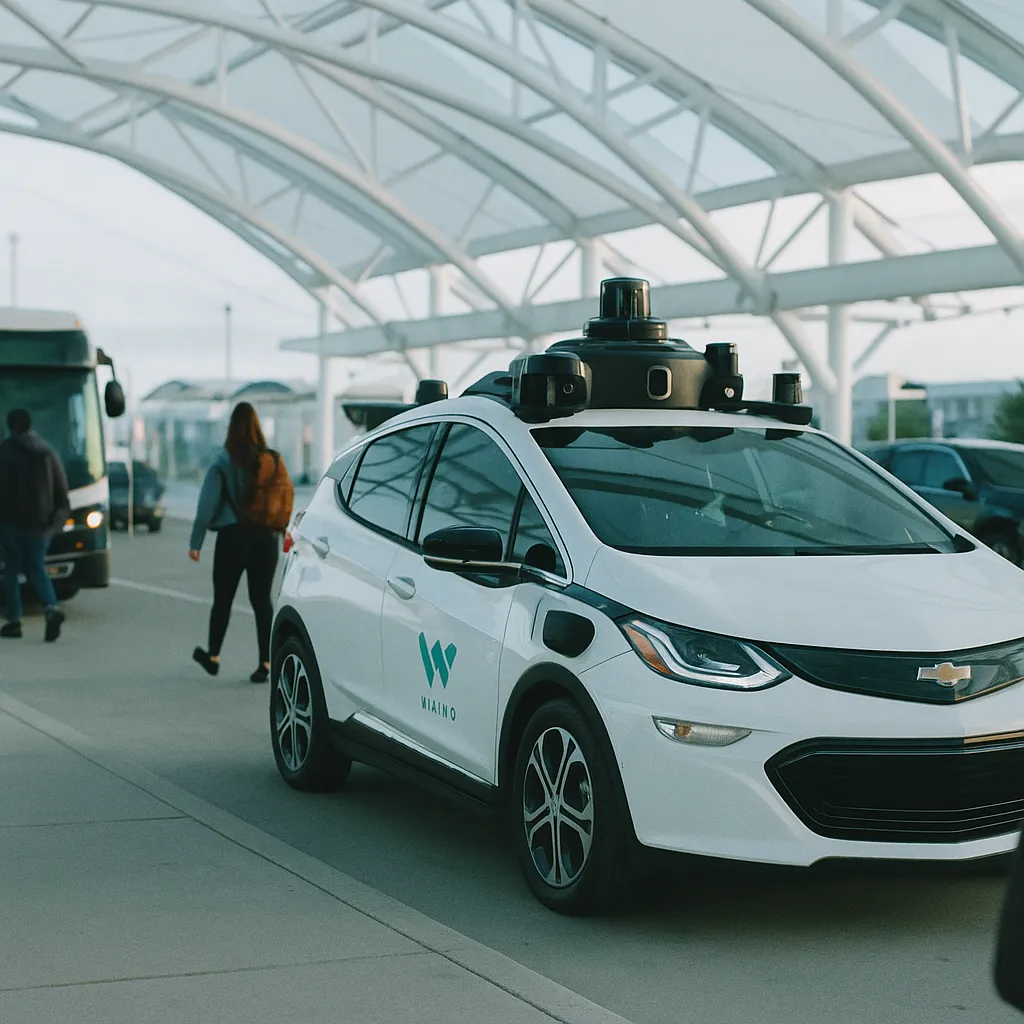
Last-mile delivery robots have matured into core logistics infrastructure, with AI-powered navigation and fleet coordination making them economically competitive with human couriers on dense urban routes.
Delivery Robots Are No Longer a Novelty. They're Infrastructure.
By Hector Herrera | April 30, 2026
Last-mile delivery robots have crossed the line from experimental technology to operational necessity, according to a new analysis from Robotics & Automation News published April 28. For logistics companies and e-commerce operators that dismissed them as publicity stunts, that shift carries real cost implications.
The analysis finds that AI-powered navigation, obstacle avoidance, and fleet coordination have matured to the point where dense urban deployment at scale is not just technically feasible — it is economically competitive with human couriers on high-density routes. That combination of technical reliability and financial viability is what converts a technology from a pilot into infrastructure.
The Last-Mile Problem Is a 0 Billion Structural Challenge
Last-mile delivery — the final leg of a package's journey from a distribution hub to a consumer's door — is the most expensive segment of the entire logistics chain. Industry estimates consistently place last-mile costs at 40–53% of total shipping costs, despite representing only a fraction of total transit distance.
The economics of that inefficiency are driven by human factors: wages, benefits, vehicle costs, parking and access fees, and the fundamental constraint that a single courier can only complete a fixed number of deliveries per hour in a given geographic zone. As same-day and sub-hour delivery expectations spread from premium services to standard offerings, the unit economics of human-courier-only last-mile operations become increasingly difficult to sustain.
Delivery robots directly address this bottleneck on the route types where it is most acute: dense urban neighborhoods, university campuses, and residential communities where delivery volume per square mile is high enough to keep robots continuously active and where operating environments are predictable enough for current AI navigation systems to function reliably.
What's Actually Driving the AI Improvement
Three specific technical capabilities have matured to enable commercial-scale deployment:
Get this in your inbox.
Daily AI intelligence. Free. No spam.
AI-powered navigation — modern delivery robots use LIDAR (light detection and ranging — a sensor that maps the environment using laser pulses), high-resolution camera arrays, and machine learning models trained on millions of real-world navigation scenarios. The result is reliable sidewalk navigation including crosswalks, construction detours, building entrances, and variable terrain that earlier rule-based systems couldn't handle.
Obstacle avoidance — current systems handle unexpected obstacles with reaction quality that earlier generations couldn't achieve. Pedestrians, cyclists, children, pets, and dynamic construction scenarios are processed in real time by trained perception models that can distinguish between a dog on a leash (temporary obstacle, wait) and a parked delivery truck (permanent obstacle, route around).
Fleet coordination AI — this is the competitive moat that distinguishes leading operators from new entrants. Individual robot performance is only part of the equation; the dispatch intelligence that routes fleets across urban grids, optimizes charging schedules, and manages incident response at scale is where the sustainable advantage lives. Companies like Starship Technologies — which has executed over 10 million autonomous deliveries — have built fleet AI systems through operational data accumulation that cannot be replicated quickly.
The Economics Work — in the Right Conditions
Operators deploying delivery robots report meaningful reductions in cost-per-delivery on high-density urban routes, along with improved delivery time consistency compared to human couriers. The consistency advantage is particularly relevant to service-level commitments: robots operate on predictable schedules unaffected by traffic unpredictability, shift changes, or the day-to-day variability inherent in human workforce management.
The conditions where delivery robots are economically superior are specific: short delivery distances (under 1 mile), high delivery density (many stops per square mile), predictable environments (established neighborhoods rather than new construction zones), and customer populations that accept contactless delivery. These conditions describe a significant and growing portion of urban e-commerce logistics.
The conditions where they are not yet competitive are equally specific: rural routes with long distances and low density, situations requiring human judgment at the door (signature collection, age verification for restricted goods), and environments with high unpredictability or insufficient mapped infrastructure.
Who's Deploying and What They're Learning
Major grocery chains, pharmacy retailers, and campus-based logistics operators are the primary early adopters. University campuses in particular have emerged as proving grounds: the geographic boundaries are defined, the customer demographic is tech-comfortable, the delivery density is high, and campus administrators can provide coordination that simplifies permitting.
The operators who have established commercial-scale deployments in defined zones are accumulating the operational experience — route optimization data, maintenance patterns, customer interaction playbooks — that will define industry practice as coverage expands. First-mover advantages in last-mile robotics are real and durable.
What to Watch
The critical next threshold is regulatory standardization. Most US municipalities still treat sidewalk delivery robots as a novel case requiring individual permitting review, which limits deployment velocity even where the technology is ready. A federal framework — or a wave of state-level standardized operating rules — would dramatically accelerate deployment timelines by eliminating city-by-city regulatory friction.
The logistics industry is actively lobbying for standardization in states where robot delivery is already commercially active: California, Virginia, Texas, and Florida have existing sidewalk robot statutes that could serve as templates. Watch for a national coalition push to standardize the rules before inconsistent municipal regulations create a patchwork that imposes the same costs as no regulation at all.
Did this help you understand AI better?
Your feedback helps us write more useful content.
Get tomorrow's AI briefing
Join readers who start their day with NexChron. Free, daily, no spam.