AI composition and production tools are now embedded across music creation, sync licensing, and distribution. The music industry has crossed its AI inflection point, and litigation is not keeping pace with adoption.
The Music Industry Has Crossed Its AI Tipping Point — And There Is No Going Back
By Hector Herrera | April 27, 2026
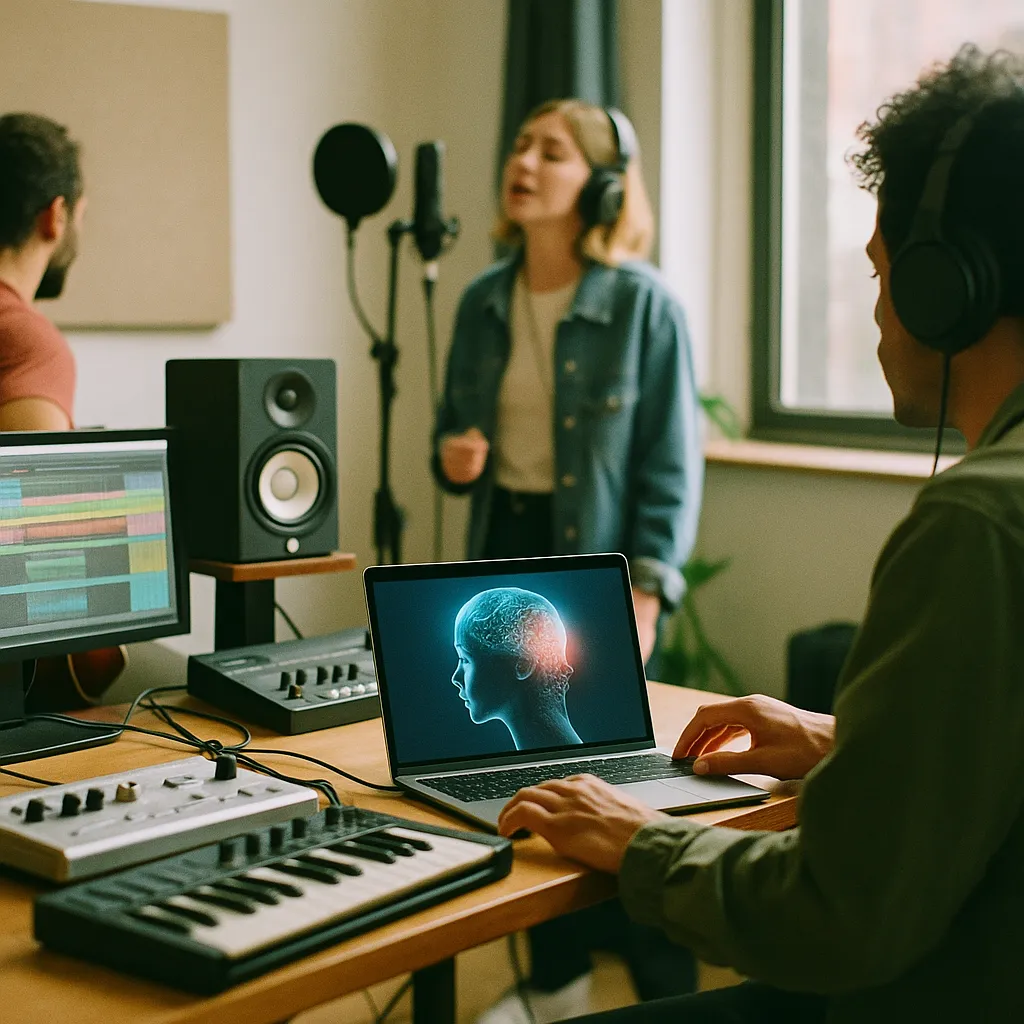
The music industry's AI inflection point has arrived, and it arrived faster than most of the business was ready for. A major Hollywood Reporter analysis published in April 2026 finds that AI composition and production tools are now embedded across creation, sync licensing, and distribution workflows — not as experiments, but as operational components of how music is made, cleared, and monetized in 2026. The litigation strategies major labels launched to slow the technology are not keeping pace with the adoption.
This is not primarily a story about AI replacing musicians. It is a story about an industry that spent three years in legal holding patterns while the technology achieved market penetration that permanently changed the negotiating dynamic.
The Tools Are Already In the Workflow
AI composition platforms — Suno, Udio, and a growing field of competitors — have accumulated users at a pace that makes major label litigation look increasingly like an attempt to fight a current rather than redirect it. Suno alone has reported tens of millions of generated tracks. The quality threshold for professionally usable AI-generated music has crossed into sync licensing territory: background music for advertising, gaming, and streaming content — markets where the cost advantage of AI-generated alternatives over traditionally licensed music is substantial.
Within professional production, the integration is different but equally consequential. Tools like LANDR, iZotope's AI mastering suite, and Splice's AI composition features are embedded in the workflows of working producers and engineers. These tools don't replace the producer — they compress time and lower the barrier for independent artists, which has historically expanded musical diversity while pressuring major label economics that depend on controlled access to professional production quality.
The Litigation Is Real, But Slow
Sony Music, Universal Music Group, and Warner Music Group have active copyright litigation against Suno and Udio, arguing that training on copyrighted recordings without license constitutes infringement. The cases are proceeding in federal court on timelines measured in years, not months.
In the meantime, Suno and Udio continue to operate, accumulate users, and improve their models. The labels' core legal theory — that the training process itself is infringing, not just the outputs — has not yet been tested at the appellate level. If courts ultimately agree, the remedy question remains entirely unresolved: retroactive damages would be enormous in dollar terms, but no court has yet ordered an AI music service to shut down or cease operating.
Get this in your inbox.
Daily AI intelligence. Free. No spam.
The more immediate impact of the litigation is on licensing negotiations. Several AI music platforms have begun approaching rights holders about retroactive licensing agreements — a tacit acknowledgment that cleaner rights frameworks serve both sides when the technology is this embedded. Universal has announced licensing framework agreements with some AI companies; the specific terms have not been fully disclosed.
Sync Licensing: The Revenue Front Line
The most concrete disruption in 2026 is in sync licensing — the fees paid to use music in film, television, advertising, and games. AI-generated music does not require sync clearance in the traditional sense: there are no sample clearances, no mechanical rights, no master recording rights issues to navigate. For budget-constrained productions that need background music, this is a significant cost and complexity advantage.
The Hollywood Reporter's analysis notes that mid-tier production budgets — reality television, online advertising, branded content — are already routinely using AI-generated music where a licensed track would previously have been placed. Top-tier sync placements carrying brand recognition from familiar recordings are not threatened in the same way. But mid-catalog licensing — a meaningful revenue stream for working musicians and publishers — is under measurable pressure from AI-generated alternatives that are faster to clear and cheaper to license.
What the Labels Are Actually Doing
The major labels are not simply litigating and waiting. Three parallel strategies are in motion:
Universal Music Group has established an AI licensing division and is negotiating opt-in frameworks where artists can license their voice, style, and catalog for AI training and generation in exchange for royalties. The model is designed to create a legitimate licensing economy rather than rely solely on courts.
Sony Music has been the most aggressive on enforcement, issuing takedown demands for AI-generated content it argues mimics specific artists' protected vocal characteristics — an argument courts have not yet clearly accepted or rejected.
Warner Music Group has invested directly in AI music companies, a bet that strategic positioning inside the technology produces better outcomes than fighting it from outside.
What This Means for Working Musicians
For artists and producers operating in 2026, the picture is genuinely complicated. The tools that accelerate production are available, accessible, and useful. The revenue streams that have historically sustained mid-career musicians — recording advances, sync fees, physical distribution margins — face pressure from AI-generated alternatives at price points labels and publishers cannot easily match.
The artists generating meaningful income in this environment are those least dependent on any single revenue stream. Live performance, direct fan relationships, brand partnerships, and production-for-hire remain human-advantaged markets. The artists most exposed are mid-catalog holders whose work is valuable for licensing but not distinctive enough to resist AI alternatives in cost-sensitive production contexts.
What to Watch
The first appellate ruling on AI music training data liability will be the most important legal precedent in this space — and that ruling is at least 18 to 24 months away. In the near term, the pace of licensing framework negotiations between labels and AI platforms matters more than the litigation calendar. If Universal's early licensing agreements establish a royalty structure that other AI platforms adopt as standard, the industry may reach a negotiated settlement that allows litigation to recede even before courts resolve the underlying legal questions. That outcome would define the economics of AI music for the next decade.
Did this help you understand AI better?
Your feedback helps us write more useful content.
Get tomorrow's AI briefing
Join readers who start their day with NexChron. Free, daily, no spam.