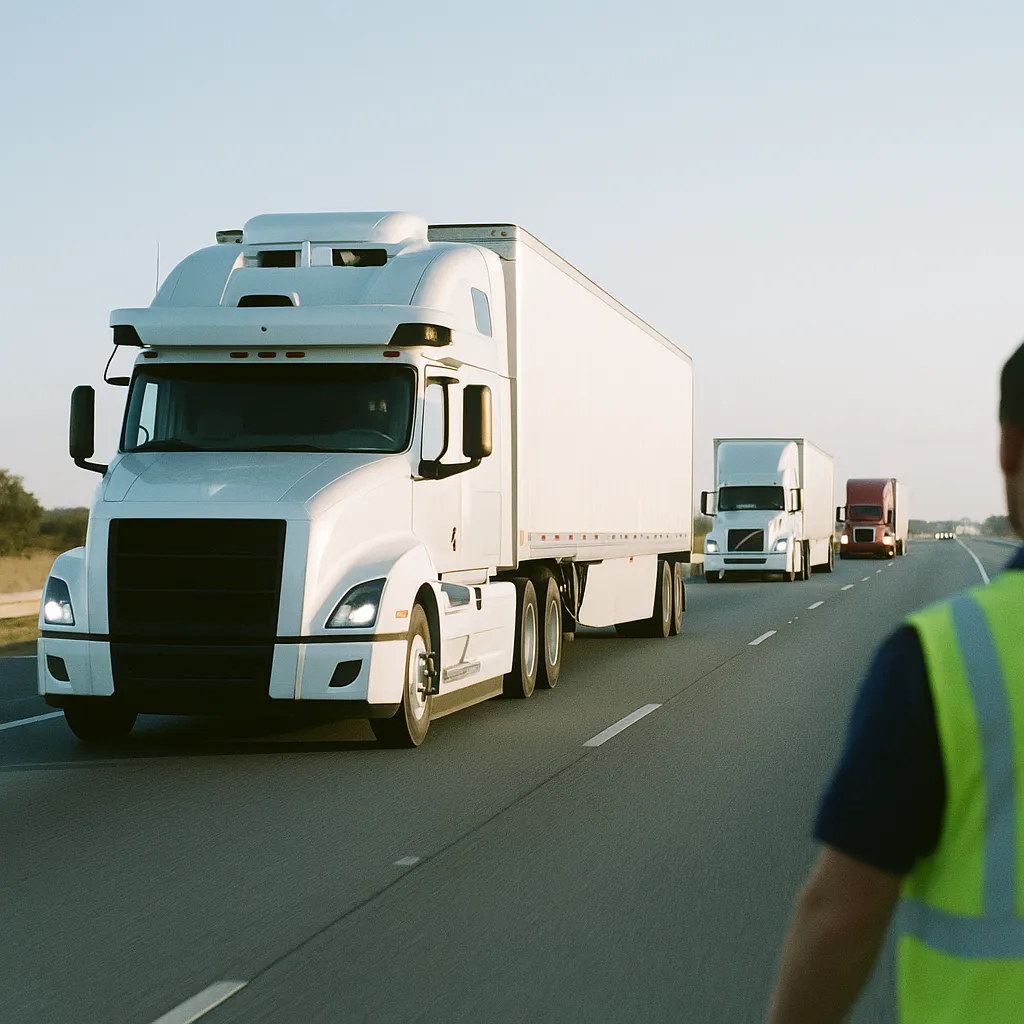
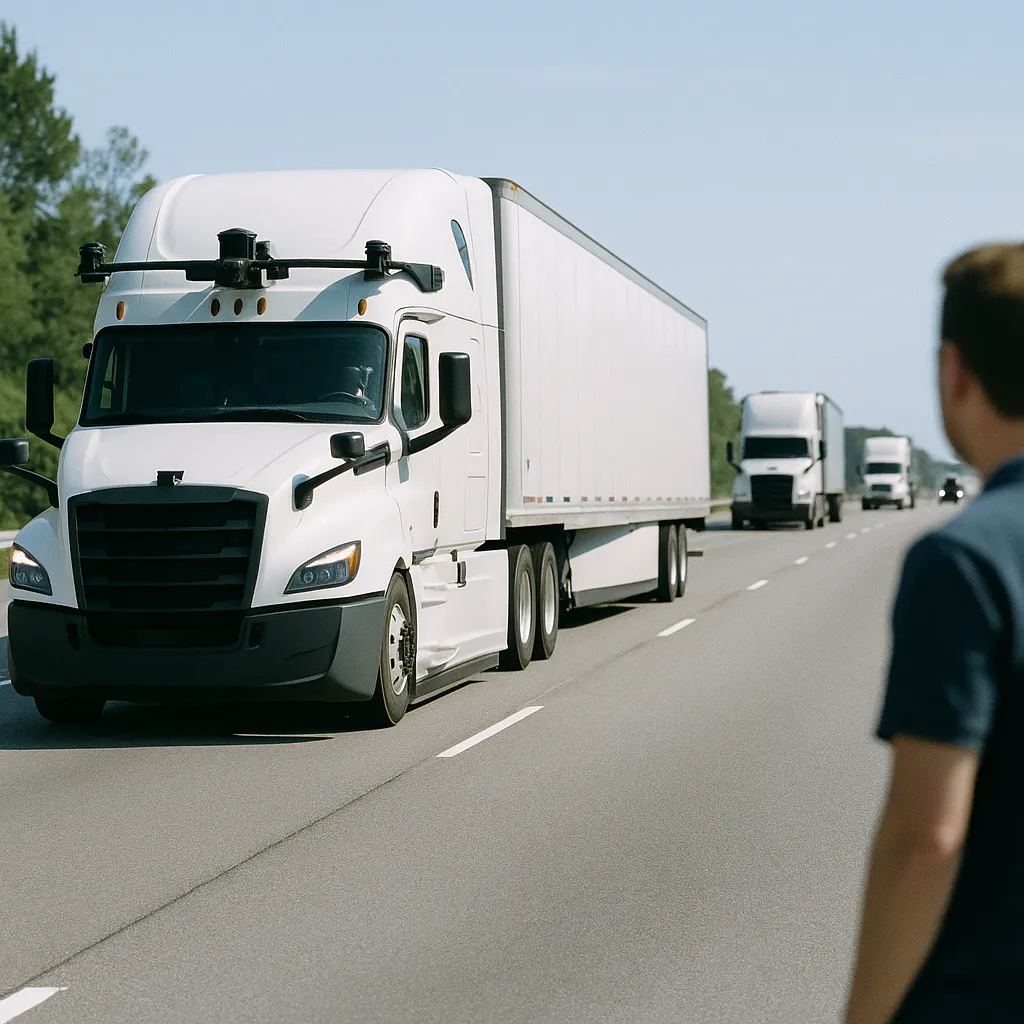
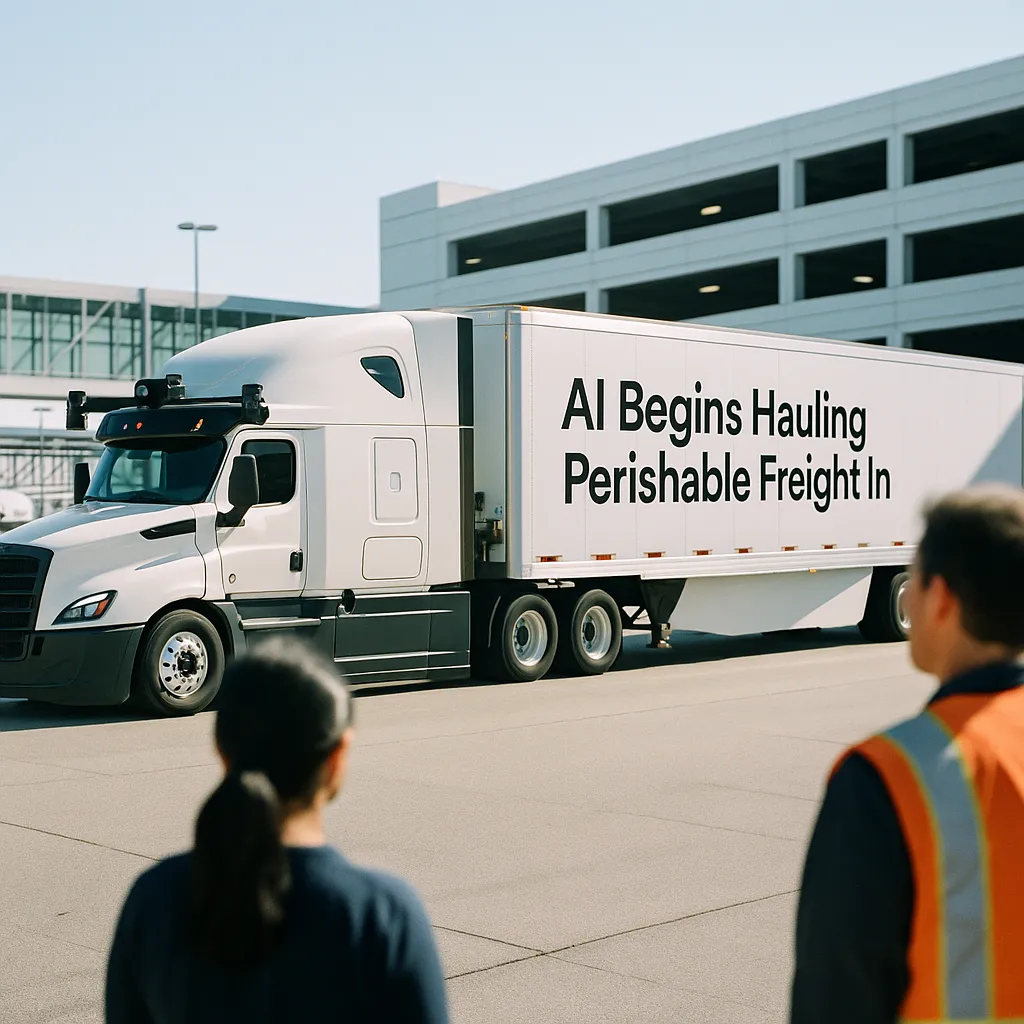
Aurora Innovation now operates 10 driverless truck routes with zero at-fault collisions; Gatik has completed 60,000 driverless orders — commercial autonomous trucking has arrived.
Two autonomous freight companies crossed into commercial scale in October 2026, and the numbers make a clear case: driverless trucking is no longer a technology demonstration. Aurora Innovation now operates 10 commercial driverless truck routes across the US Sun Belt with zero at-fault collisions. Gatik has completed more than 60,000 driverless orders across North America with $600 million in contracted revenue.
Why it matters: Autonomous trucking has been "two years away" since 2018. Route count, miles logged, safety records, and contracted revenue are the metrics that distinguish commercial operations from extended pilots — and both companies now have them.
Aurora: 10 routes, 250,000 miles, zero at-fault collisions
Aurora Innovation tripled its driverless route count since its initial commercial launch in 2025, expanding to 10 active routes across Sun Belt states — Texas, Arizona, and adjacent markets where road conditions are most favorable and regulatory environments most permissive.
The 250,000 driverless commercial miles without an at-fault collision is the headline safety metric. Safety drivers still accompany trucks during non-commercial transfer periods, but during commercial freight operations, the vehicle operates fully autonomously. No at-fault collisions over 250,000 miles is not a permanent guarantee — it's a data point the industry has been waiting for.
Aurora targets the long-haul highway segment: stretches of US interstate where conditions are predictable and the automation case is strongest. A Class 8 truck driver costs roughly $75,000–$100,000 annually in wages, benefits, and training. Highway miles are the most automatable portion of a driver's route and the highest-value portion to automate, since they represent the largest share of a cross-country haul's time.
Gatik: 60,000 orders, 0M contracted, five states plus Ontario
Gatik operates differently. Where Aurora targets long-haul highway, Gatik focuses on middle-mile freight — fixed, repetitive routes between distribution centers and retail locations. Same path, same stops, same schedule, reliably, every day.
That route structure is well-suited to current autonomous systems. AI excels in familiar, structured environments and struggles with genuinely novel situations. A distribution-center-to-store route that runs five days a week on the same road offers minimal novelty. Gatik's incident-free record across 60,000 orders reflects this design discipline: the company chose routes their systems were genuinely ready for before claiming commercial scale.
The $600 million in contracted revenue is the commercial validation that matters most. Contracted means customers — including major retailers like Walmart — have agreed to pay for future deliveries. It's not a pilot grant, a research subsidy, or a letter of intent. Gatik has signed customers who have committed to autonomous middle-mile delivery at scale.
Get this in your inbox.
Daily AI intelligence. Free. No spam.
Why 2026 is the inflection year
Driverless trucks have been in commercial testing since at least 2019. Three structural changes converged in 2025-2026 to move from extended pilot to routine operation:
Regulatory clarity. Texas, Arizona, and California all issued more explicit operational frameworks for driverless commercial freight, resolving years of ambiguity about permits for fully unoccupied autonomous commercial vehicles. Kodiak Robotics received its California driverless freight permit in late 2025; the framework it established helped accelerate permit issuance for other operators.
Commercial insurance products. Multiple major commercial insurers introduced autonomous commercial vehicle policies in 2025-2026. Self-insurance and bespoke one-off policies were the only prior options — commercially unscalable for fleet operations. Standard commercial AV insurance is a prerequisite for any operator planning to grow beyond a handful of trucks.
Reliability thresholds. Industry analysts have argued that 90-95% system reliability is insufficient for commercial freight — one unplanned disengagement per hundred miles is catastrophic for schedule-sensitive supply chains. Aurora's 250,000-mile record suggests reliability has crossed the commercial viability threshold for controlled highway environments, at least in favorable operating conditions.
The rest of the field
Aurora and Gatik are not alone. The autonomous freight space includes:
- Kodiak Robotics — California-licensed driverless freight, active on Texas and California routes
- Torc Robotics (Daimler Truck-backed) — extended testing with Freightliner trucks, commercial routes expected in 2027
- Venti Technologies — yard automation at ports and rail facilities, a different market segment
- Inceptio Technology — over 1 billion autonomous kilometers logged in China, the most deployed autonomous freight operator globally
- Waymo Via — Waymo's trucking division, still in extended testing
The sector is entering a consolidation phase. Companies that cannot demonstrate a clear path to commercial scale — active routes, contracted revenue, insurance coverage, regulatory approvals — will face investor pressure to partner or exit. The companies with live commercial routes hold a significant first-mover advantage: more operational data, deeper regulatory relationships, and signed customer contracts that competitors cannot quickly replicate.
The labor question
US trucking faces a structural driver shortage estimated at 80,000–160,000 open positions, a gap that has persisted since before the pandemic and is worsening as the average trucker age exceeds 55. In the near term, autonomous trucks don't replace drivers — they fill positions that currently go unfilled and extend the productive use of existing infrastructure.
The medium-term picture is more complex. If driverless systems prove reliable at scale and expand into additional route types, the labor implications become significant. Teamsters and other driver organizations have called for mandatory job transition programs as a condition of any regulatory expansion of driverless commercial freight operations beyond current permitted corridors.
What to watch
Aurora's next public milestones: 20 routes, 500,000 driverless miles, and — most consequentially — the first public disclosure of per-mile operating cost compared to human-driven freight. That number, if and when Aurora releases it, will directly quantify the commercial case for autonomous trucking and trigger a significant market response from carriers, shippers, and investors.
Gatik's geographic expansion: The current operational footprint is concentrated in favorable Sun Belt conditions and controlled Ontario routes. Expansion into less predictable geographies — the US northeast, Pacific coast, mountain west — will test whether the systems are ready for operational diversity beyond their current comfort zone.
Source: Transport & Logistics ME — Scaling Autonomous Trucks and Robotics to Mainstream Freight in 2026
Did this help you understand AI better?
Your feedback helps us write more useful content.
Get tomorrow's AI briefing
Join readers who start their day with NexChron. Free, daily, no spam.