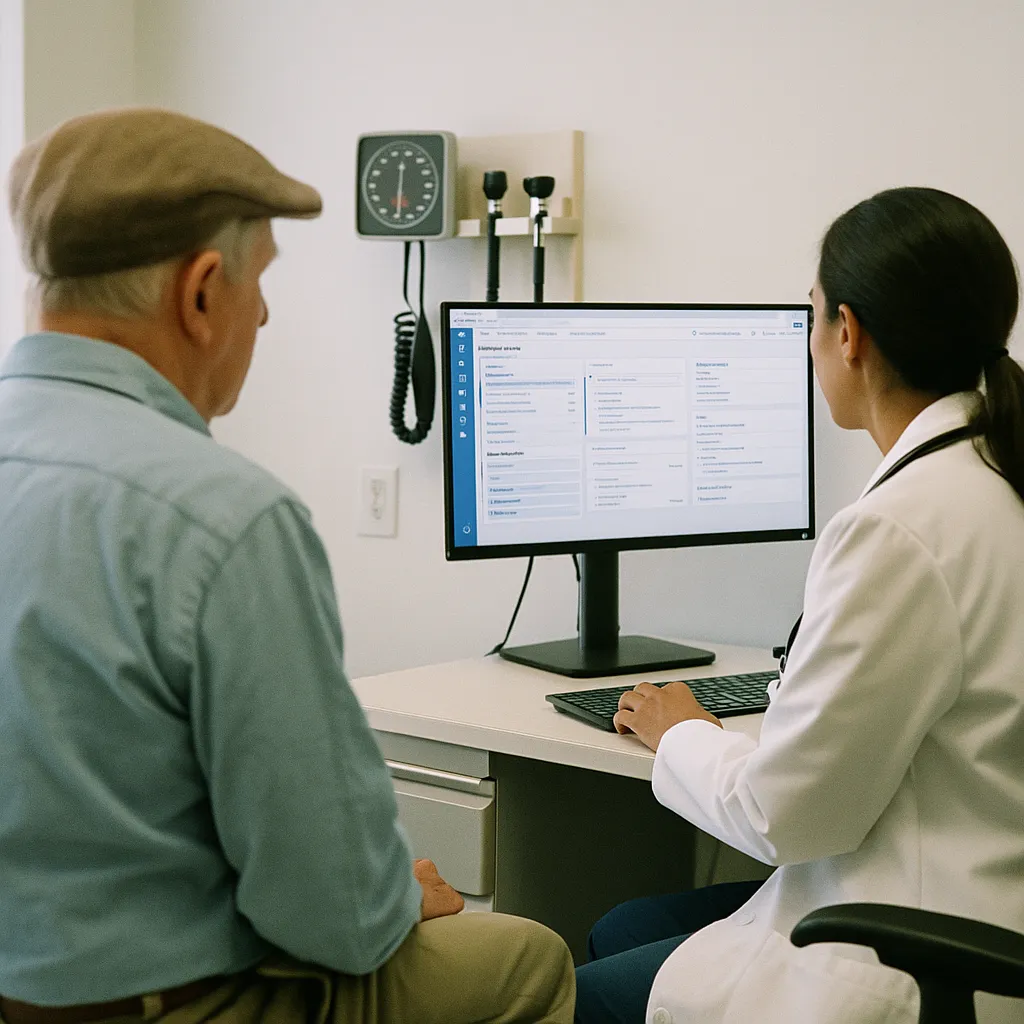
AMA: 80% of U.S. Physicians Now Use AI Professionally — Double the 2023 Rate
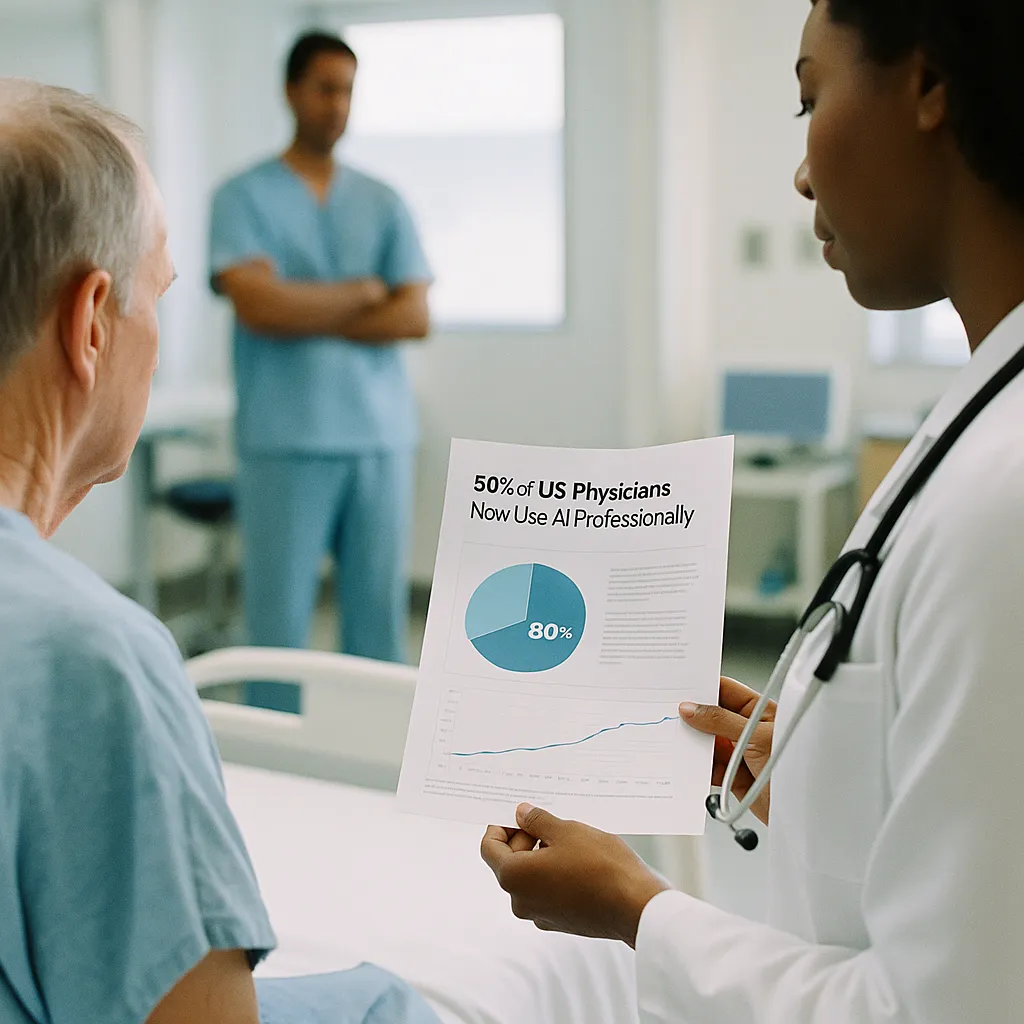
The AMA reports 80% of U.S. physicians now use AI professionally — double the 2023 rate — as adoption outpaces governance frameworks at major health systems.
Top Stories
All Sections
Finance
About
11 results for "physicians"
The AMA reports 80% of U.S. physicians now use AI professionally — double the 2023 rate — as adoption outpaces governance frameworks at major health systems.
80% of U.S. physicians now use AI in clinical workflows — double the rate from three years ago — as ambient intelligence and agentic AI emerge as the next healthcare frontier.
Nearly two-thirds of U.S. physicians consulted OpenEvidence — an AI clinical information platform — during roughly 27 million patient encounters in April 2026. Most patients were never told.
Four major U.S. health systems have embedded AI directly into clinical workflows — and the outcome data is starting to arrive. With 80% of U.S. physicians now using AI, double the 2023 rate, the AHA profiles what scaled deployment actually looks like.
Boston teaching hospitals are drafting formal AI diagnostic protocols after studies showed AI matching or outperforming ER physicians, making Massachusetts a national bellwether for clinical AI governance.
Massachusetts doctors are caught between AI tools patients bring to appointments and AI systems hospitals are deploying — and neither side is clearly in control of how those tools shape diagnosis.
AI has crossed a quiet threshold in Vermont's rural hospitals — not through institutional mandates but through physicians solving real problems with ambient documentation and diagnostic tools.
Patients share significantly less symptom detail with AI diagnostic chatbots than with human physicians, and that disclosure gap could undermine clinical accuracy regardless of how well the underlying models perform.
An OpenAI reasoning model outperformed two experienced ER physicians in a real-world test at Beth Israel Deaconess Medical Center — one of the first head-to-head comparisons conducted with live clinical data rather than curated research benchmarks.
OpenAI launched a free AI tool for verified U.S. physicians, NPs, PAs, and pharmacists — and its underlying model scored 59.0 on a clinical benchmark vs. 43.7 for human doctors with unlimited time and internet.
UnitedHealth Group projects nearly $1 billion in AI savings in 2026, but patient advocates and physicians warn the cost reductions may come through automated claim denials.