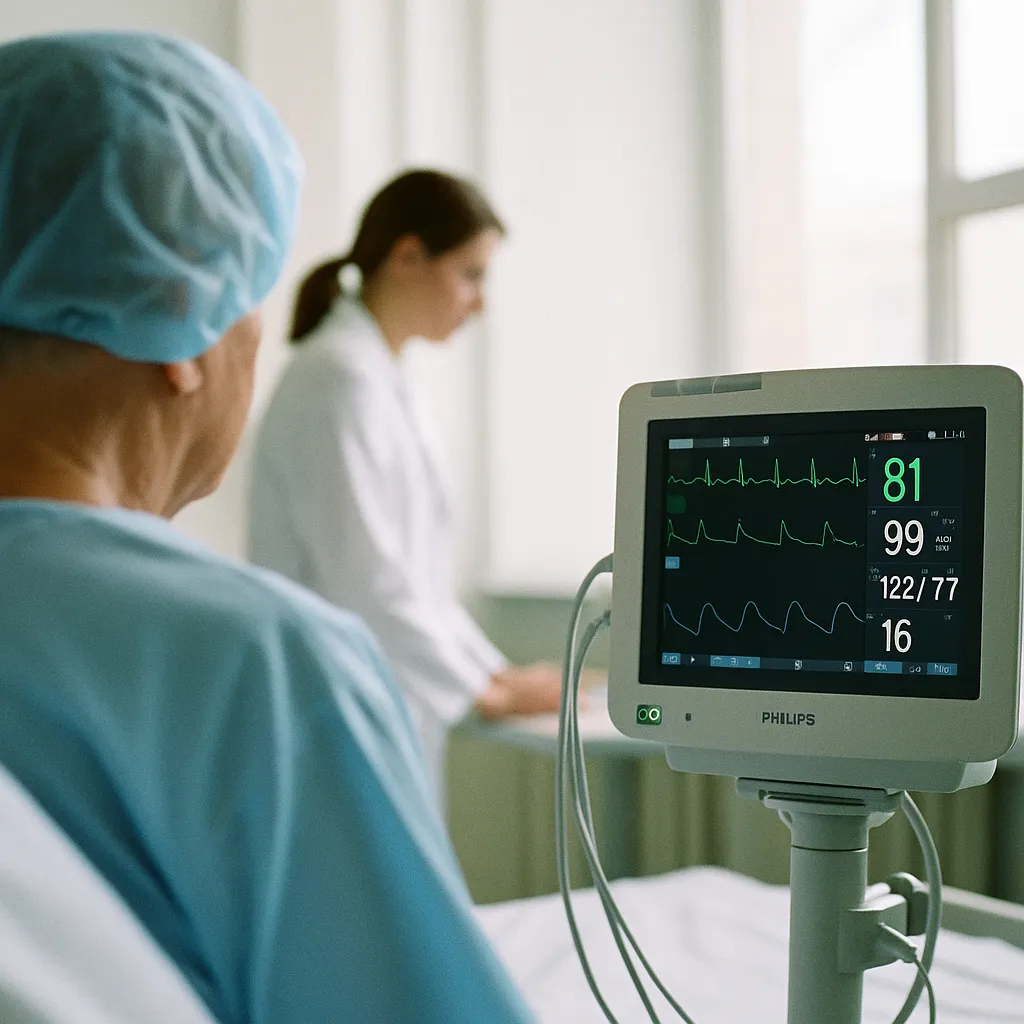
An OpenAI reasoning model outperformed two experienced ER physicians in a real-world test at Beth Israel Deaconess Medical Center — one of the first head-to-head comparisons conducted with live clinical data rather than curated research benchmarks.
OpenAI Reasoning Model Outperforms ER Physicians at Real-World Patient Diagnosis
By Hector Herrera | May 1, 2026 | Health
An OpenAI reasoning model outperformed two experienced emergency room physicians at patient diagnosis in a real-world test at Beth Israel Deaconess Medical Center — one of the first head-to-head comparisons conducted with live clinical data rather than curated research benchmarks. The finding makes a question the medical profession has been deferring impossible to keep deferring: if AI is diagnosing patients more accurately than trained physicians in actual emergency departments, what is standing between these systems and deployment?
The Study
Researchers from Harvard Medical School conducted the comparison using actual emergency department case records. NPR reported the findings as part of a broader investigation into AI's role in frontline medicine, describing it as one of the first such evaluations conducted in a live clinical environment rather than on a research-prepared dataset.
Two experienced ER physicians reviewed the same cases as the OpenAI reasoning model and made independent diagnoses. The AI model exceeded both physicians' diagnostic accuracy across the case set.
The design distinction matters considerably. Most published AI diagnostic benchmarks rely on curated datasets assembled after the fact — cases selected with confirmed outcomes, cleaned for research purposes, and stripped of the ambiguity that defines real emergency medicine. Actual ER records are different: patients who cannot accurately describe their own history, presentations that simultaneously mimic multiple conditions, and missing prior medical information. The AI outperformed physicians working under exactly those conditions.
What the Study Did and Did Not Measure
A physician managing an emergency patient is doing more than making a diagnosis. They are conducting a physical examination, monitoring real-time vitals, managing a frightened patient, and adapting instantly to new information. The study measured diagnostic accuracy on documented case records — one critical dimension of clinical work, not the entire job.
Get this in your inbox.
Daily AI intelligence. Free. No spam.
That context matters. But it does not diminish the significance of what was measured. Missed or delayed diagnoses in emergency medicine are a documented source of preventable patient harm. Getting the diagnosis right matters enormously, and the AI got it right more often than the experienced physicians.
The Liability Wall
The primary obstacle to deploying AI diagnostic tools is not accuracy. It is liability.
Under current U.S. medical malpractice law, licensed physicians bear professional responsibility for clinical decisions. An AI model has no medical license and no legal accountability in the traditional sense. When an AI-assisted diagnosis leads to patient harm, the question of who is responsible remains unresolved: the physician who accepted the recommendation, the hospital that deployed the system, or the AI company that built the model.
The FDA regulates AI as a medical device, but its existing approval pathways do not map cleanly onto real-time clinical decision support systems operating in emergency environments. Hospitals that deploy AI in diagnostic workflows are in legal gray territory — and their attorneys know it.
The Access Argument Is Getting Harder to Dismiss
The physician shortage in emergency medicine — particularly in rural and underserved areas — runs in a direction that makes this conversation more urgent. Rural emergency departments face documented staffing constraints. Smaller hospitals operate at staffing levels where a single ER physician may be simultaneously managing multiple critical cases.
If a reasoning model can exceed physician-level diagnostic accuracy in live clinical conditions, the argument for deploying it where physician access is limited becomes substantially harder to set aside as premature. That argument has always existed in principle. The difference now is that it has real-world accuracy data behind it, from an actual emergency department, not a research sandbox.
What to Watch
The FDA's ongoing work on AI medical device regulation is the key near-term policy lever. Clear liability standards and approval requirements for real-time AI clinical decision support would give hospital systems a path to deployment they currently lack. The more immediate pressure falls on hospital general counsels and medical licensing boards, who face a sharpening question: how long do institutions defer on AI diagnostic tools while accuracy evidence from live clinical environments keeps accumulating?
The Harvard-Beth Israel study is unlikely to be the last of its kind.
This article is for informational purposes only and does not constitute medical advice.
Did this help you understand AI better?
Your feedback helps us write more useful content.
Get tomorrow's AI briefing
Join readers who start their day with NexChron. Free, daily, no spam.