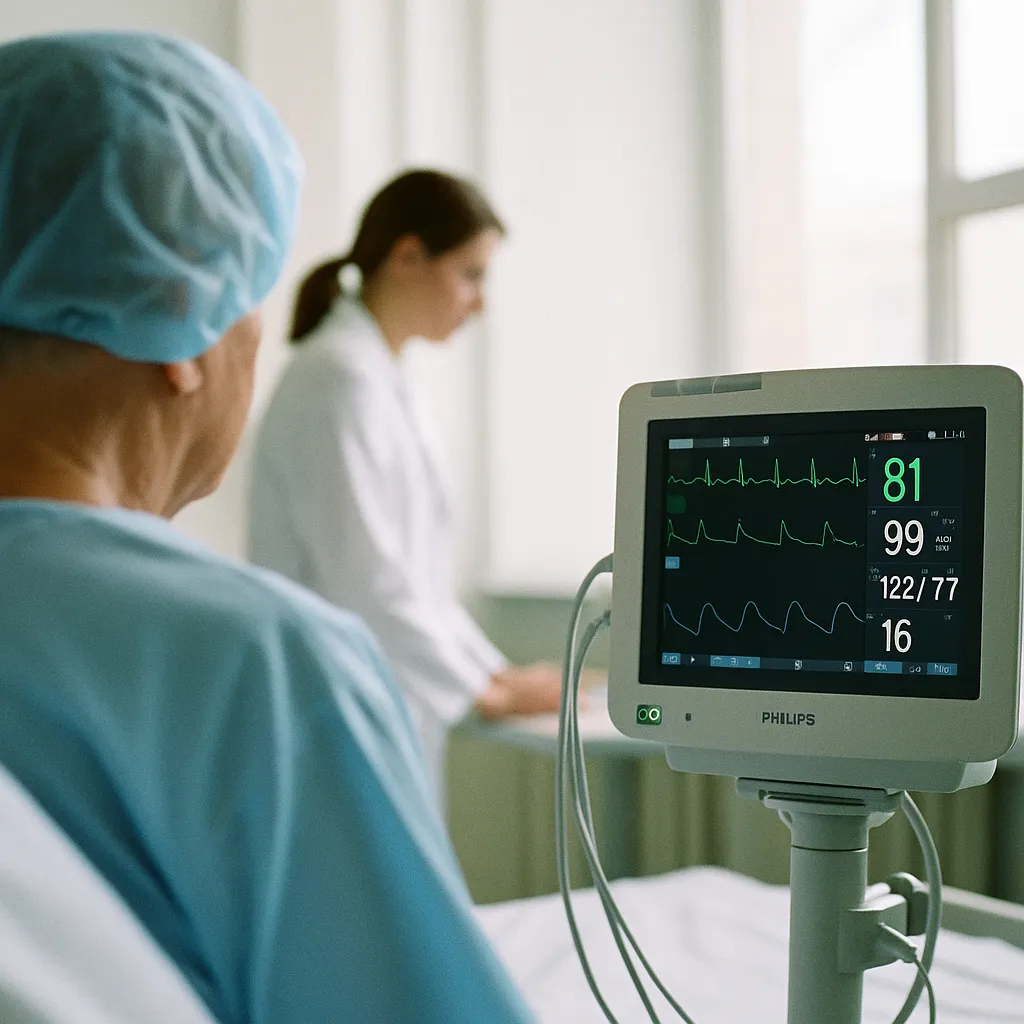
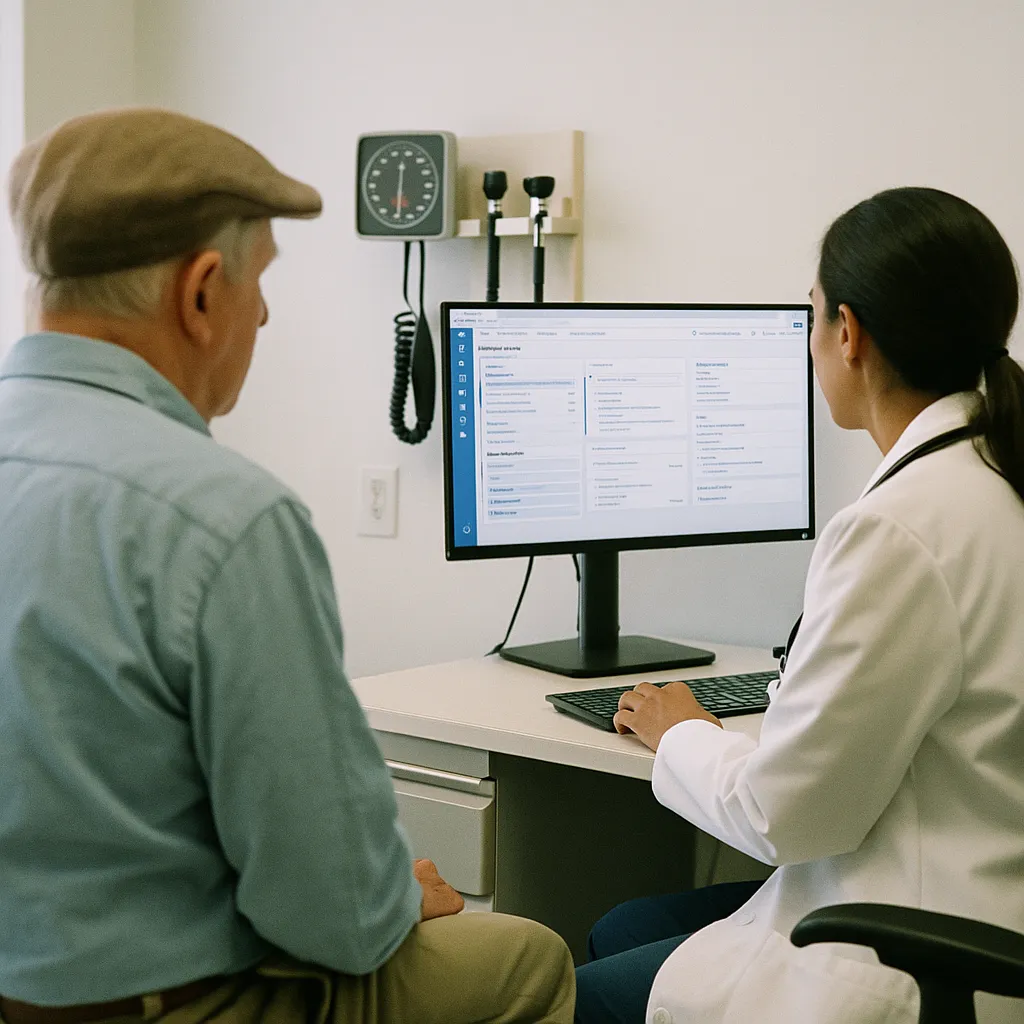
OpenAI launched a free AI tool for verified U.S. physicians, NPs, PAs, and pharmacists — and its underlying model scored 59.0 on a clinical benchmark vs. 43.7 for human doctors with unlimited time and internet.
OpenAI has launched ChatGPT for Clinicians, a free AI tool for verified U.S. healthcare providers, and published benchmark data showing the underlying model outperforms human physicians on clinical reasoning tasks. The combination of free access and superior benchmark performance makes this one of the more consequential AI launches in healthcare to date.
Background: AI and clinical practice
AI tools have been circling clinical medicine for years — from diagnostic imaging algorithms to ambient documentation assistants. What's been missing is a general-purpose clinical AI that's both trustworthy enough for patient-facing work and accessible to the average provider. Most existing tools are expensive, siloed in electronic health record (EHR) systems, or designed for narrow tasks. ChatGPT for Clinicians is positioned as a broader, free alternative.
What the tool does
According to Fierce Healthcare, ChatGPT for Clinicians is available at no cost to verified U.S. healthcare providers including:
- Physicians (MDs and DOs)
- Nurse practitioners (NPs)
- Physician assistants (PAs)
- Pharmacists
The core features include:
- Clinical documentation assistance — generating notes, summaries, and structured documentation
- Peer-reviewed medical search — access to medical literature with citations from trusted sources, not general web results
- Reusable workflow tools — templates and prompt workflows that providers can save and reuse for recurring tasks
Verification is required before access is granted — OpenAI is not offering this to unverified users claiming to be clinicians.
The benchmark: GPT-5.4 vs. human doctors
OpenAI published results on a new evaluation called HealthBench Professional, designed to test clinical reasoning across a range of medical tasks.
Get this in your inbox.
Daily AI intelligence. Free. No spam.
| Participant |
HealthBench Professional Score |
| GPT-5.4 (underlying model) |
59.0 |
| Human doctors |
43.7 |
The human score reflects physicians with unlimited time and internet access — not a rushed consult, but a deliberate attempt to answer correctly. GPT-5.4 outperformed them by roughly 35%.
A few important caveats: benchmarks measure performance on structured test questions, not real-world clinical outcomes. High benchmark scores do not automatically translate to better patient care, safer diagnoses, or fewer errors in the messiness of actual practice. OpenAI has not published peer-reviewed outcomes data from clinical deployments.
That said, a 35-point gap on a purpose-built clinical benchmark is not a rounding error. It is a signal that the model has internalized a substantial body of medical knowledge and can apply it consistently under test conditions.
International expansion
OpenAI plans to expand access internationally through the Better Evidence Network, pending local regulatory approvals. The Better Evidence Network is a global initiative focused on evidence-based medicine — partnering with it rather than doing a direct international rollout is a deliberate signal that OpenAI is trying to build credibility with the medical establishment rather than moving fast and asking forgiveness later.
What this means for healthcare
For providers: A free, capable AI assistant for documentation and clinical decision support is a meaningful change for smaller practices and providers in resource-limited settings who cannot afford enterprise EHR-integrated AI. If the tool delivers on its documentation promise alone, it could return meaningful time to clinicians.
For the healthcare AI market: Companies selling clinical AI — Nuance (Microsoft), Suki, Ambience Healthcare, Abridge — now face a free competitor backed by one of the best-capitalized AI labs in the world. Not all of them will survive that competition unchanged.
For patients: The actual patient-safety implications depend entirely on how clinicians use it. A tool that helps a physician think through a differential diagnosis more thoroughly could improve care. A tool used to shortcut clinical reasoning could harm it. OpenAI's design — positioning this as an assistant, not an autonomous decision-maker — reflects awareness of that line.
What to watch
Watch for peer-reviewed clinical outcome studies using ChatGPT for Clinicians in real deployments — that data, not benchmark scores, will determine whether this tool changes how medicine is practiced. Also watch for regulatory response: the FDA has a framework for AI/ML-based software as a medical device (SaMD), and whether ChatGPT for Clinicians triggers that review process is an open question.
Source: Fierce Healthcare
Medical disclaimer: This article is for informational purposes only and does not constitute medical advice. Clinical decisions should always be made by qualified healthcare professionals.
Did this help you understand AI better?
Your feedback helps us write more useful content.
Get tomorrow's AI briefing
Join readers who start their day with NexChron. Free, daily, no spam.