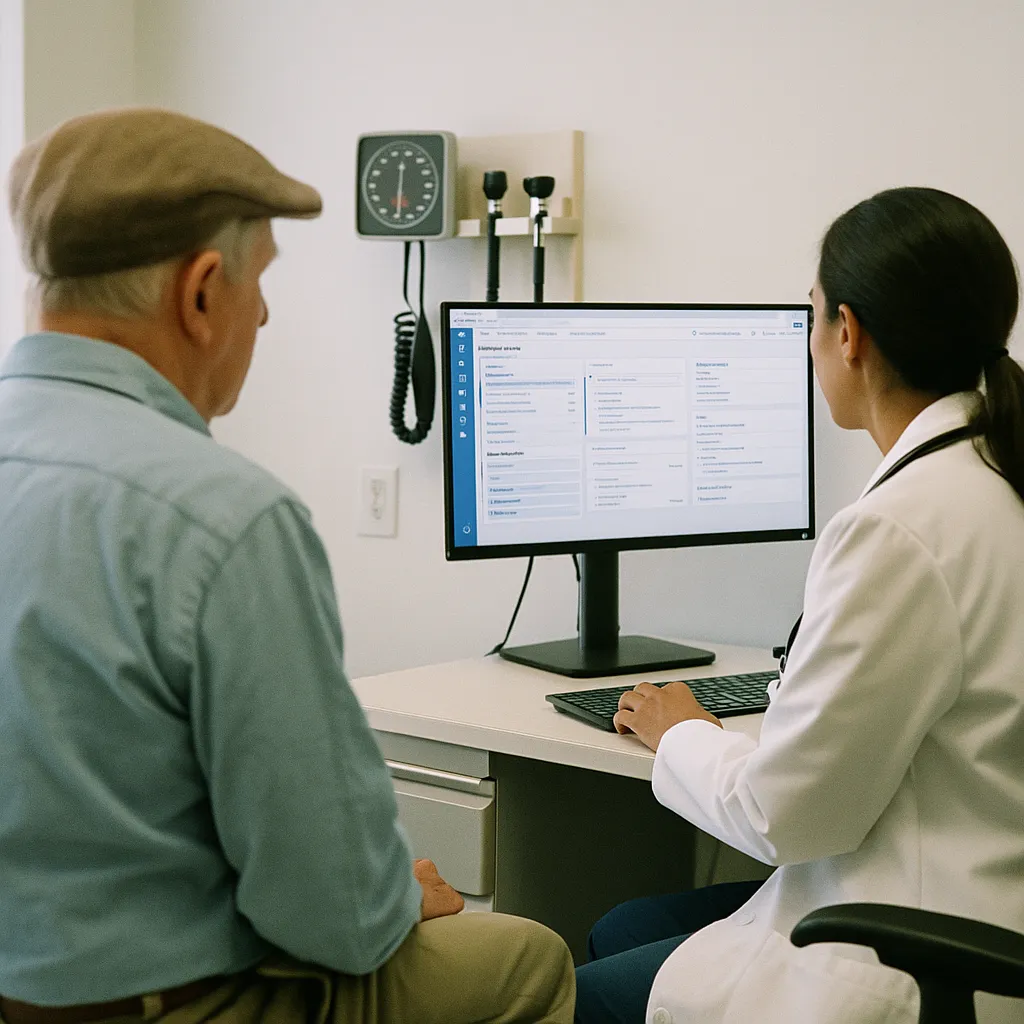
Patients share significantly less symptom detail with AI diagnostic chatbots than with human physicians, and that disclosure gap could undermine clinical accuracy regardless of how well the underlying models perform.
Patients share significantly less symptom detail with AI diagnostic chatbots than with human physicians, according to new research—and that disclosure gap could undermine clinical accuracy regardless of how well the underlying models perform. The finding reframes a core assumption in health AI: that better algorithms automatically produce better diagnoses.
What the Research Found
The study, reported by Medical Xpress, identified a consistent pattern across patient populations: when interacting with AI-powered symptom checkers and diagnostic chatbots, patients provided shorter and less detailed descriptions of their symptoms compared to conversations with human clinicians.
The gap matters because AI diagnostic models are only as accurate as the input they receive. A model trained on comprehensive symptom descriptions from clinical records will perform poorly if patients give it abbreviated, hedged, or incomplete information in real-world interactions. Algorithmic quality does not compensate for information quality.
Why Patients Withhold Information
The research points to several overlapping explanations:
Trust asymmetry. Patients have decades of experience calibrating disclosure to human doctors—knowing a physician will probe, follow up, and contextualize. That learned trust behavior has not transferred to AI systems. Many patients treat diagnostic chatbots more like search engines than clinicians.
Stigma and surveillance concerns. Patients appear more reluctant to disclose sensitive symptoms—mental health, substance use, sexual health—to an AI system, possibly because AI interactions feel more likely to be logged, stored, or reviewed in ways they do not fully control or understand.
Interface design failures. Structured chatbot inputs ("describe your main symptom in one sentence") actively suppress the kind of open, conversational disclosure that human clinicians elicit through follow-up questions, silence, and body language. The form constrains the data.
Get this in your inbox.
Daily AI intelligence. Free. No spam.
Uncertainty about AI comprehension. Some patients may simplify their input because they are unsure whether an AI can interpret nuanced or layered symptom descriptions—and so they describe only what they believe the system can handle.
The Clinical Stakes
This finding carries real diagnostic consequences. Consider a patient with chest pain who briefly mentions it to an AI chatbot but would have told a doctor about accompanying shortness of breath, jaw pain, and recent stress. The AI receives an incomplete clinical picture; its assessment reflects that incompleteness, not a model failure.
The diagnostic chain depends on full disclosure. AI systems that perform well on curated datasets may dramatically underperform in deployment if patient behavior at the point of interaction differs from the behavior that generated their training data. This is not a gap you can close with more parameters or better architecture.
Bedside Manner as an Engineering Problem
The research raises a design question that the health AI industry has largely deferred: what does bedside manner look like when the clinician is software?
Effective human physicians use deliberate conversational techniques to elicit disclosure—open-ended questions, affirming responses, strategic silence. These are not decorative social gestures; they are diagnostic tools that generate clinical data. An AI system that skips them does not just feel colder; it collects less complete information.
Some health AI developers are working on conversational architectures that mimic elicitation techniques. But the research suggests that patient perception of the interaction partner—human or machine—may be the fundamental variable, not just conversational structure. Whether patients can be induced to disclose as fully to a machine as to a trusted clinician is an open behavioral question, not just an engineering one.
What This Means for the Health AI Industry
For health systems deploying AI diagnostic tools: Disclosure gap data must be part of your clinical validation process. A model that performs at 90% accuracy on complete symptom sets from training data may perform substantially worse on the partial symptom sets patients actually provide in deployment. Validate in real interaction conditions.
For regulators: FDA guidance on AI/ML software as a medical device (SaMD) focuses heavily on model performance metrics from training datasets. This research argues that human factors testing—how patients interact with the AI interface in practice—should be part of the regulatory evidentiary standard for diagnostic AI.
For patients: Treat an AI diagnostic tool the way you would treat a form your doctor will read directly. Give it complete information. The model works only with what you provide.
What to Watch
Expect this research to accelerate two developments: investment in conversational AI health interfaces that go beyond structured symptom checkers, and growing regulatory pressure for real-world performance validation that tests AI diagnostic tools under actual deployment conditions rather than curated datasets.
The deeper question the research raises—whether patients will ever disclose as fully to an AI as to a trusted human clinician—may not have a technology solution. That possibility has significant implications for the ceiling of AI diagnostic accuracy in real-world clinical settings.
Did this help you understand AI better?
Your feedback helps us write more useful content.
Get tomorrow's AI briefing
Join readers who start their day with NexChron. Free, daily, no spam.