
Healthcare & Wellness | 3 min read

UnitedHealth's $3 Billion AI Bet Is Saving the Company Billions — and Worrying Patients

UnitedHealth Group projects nearly $1 billion in AI savings in 2026, but patient advocates and physicians warn the cost reductions may come through automated claim denials.

Hector Herrera
Hector Herrera
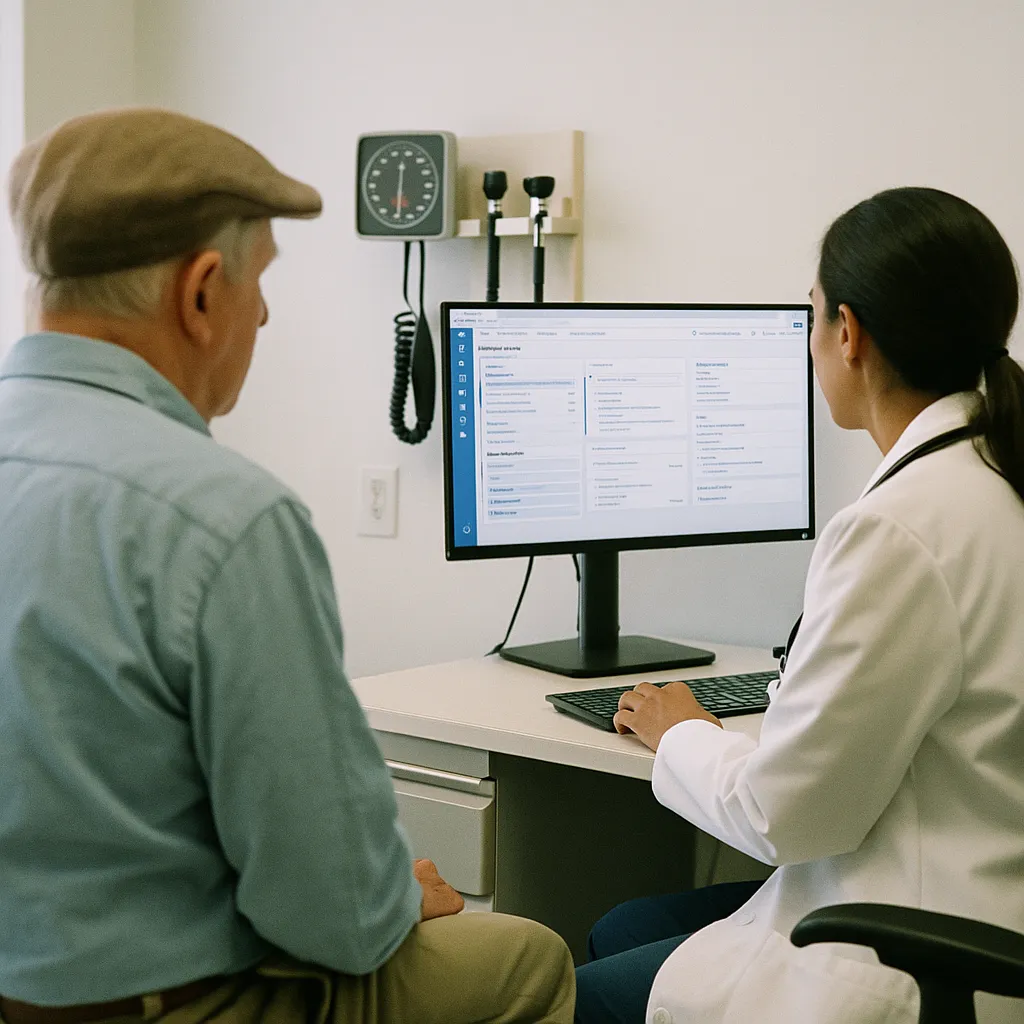
Scene in a office
Why this matters UnitedHealth Group projects nearly $1 billion in AI savings in 2026, but patient advocates and physicians warn the cost reductions may come through automated claim denials.

UnitedHealth Group projects AI will save it nearly $1 billion in 2026 alone, backed by a $3 billion total AI investment targeting back-office automation, claims processing, and clinical decision support. That's a compelling business story. The question patients and physicians are now asking — loudly — is whether the savings are coming at the cost of care.

What's Making Patients and Physicians Nervous

The Investment

According to STAT News, UnitedHealth's AI program spans three primary areas:

  • Back-office automation — processing administrative tasks that previously required human review
  • Claims processing — using AI to evaluate and adjudicate insurance claims faster
  • Clinical decision support — AI tools that assist or inform coverage decisions related to medical necessity

The $3 billion total investment spans UnitedHealth's insurance arm (UnitedHealthcare) and its health services subsidiary (Optum), which operates one of the largest collections of health data in the United States. The projected $1 billion in 2026 savings would represent one of the largest single-year returns on an AI investment disclosed by any company in any sector.

The Actual Risk

What's Making Patients and Physicians Nervous

The concern isn't that UnitedHealth is using AI — it's how AI is being used in claims decisions. Patient advocates and physicians argue that cost-driven AI deployment in claims processing creates structural pressure toward automated denials: if an AI model is trained on historical claim outcomes and optimized for payout reduction, it will systematically identify reasons to deny claims, even when care is medically appropriate.

This is not theoretical. UnitedHealth has faced significant legal and regulatory scrutiny over claim denial rates. In 2023, a ProPublica and Senate investigation found that the company's AI-driven prior authorization system, nH Predict, was denying post-acute care claims at a rate critics argued no human reviewer would have approved.

The state legislative response has been direct. Three states have passed laws explicitly prohibiting AI from serving as the sole basis for denying a health insurance claim:

  • Indiana
  • Utah
  • Washington

In each case, a human reviewer must be in the decision loop when AI recommends denial. These laws reflect a specific concern: that fully automated claim denials remove the human judgment that the insurance appeals process was designed to check.

The Actual Risk

The central tension is incentive alignment. UnitedHealth is a for-profit insurer. AI that saves $1 billion per year is being deployed in a system where every dollar saved by the insurer is a potential dollar of care denied to a patient. That dynamic doesn't make AI inherently harmful in health insurance — it means the guardrails matter enormously.

Clinical decision support AI used by physicians — suggesting diagnoses, flagging drug interactions, identifying high-risk patients — has a well-documented benefit record. Claims processing AI optimized for insurer cost reduction has a far more contested one.

The difference is who the AI is working for.

UnitedHealth's scale amplifies both the potential benefit and the potential harm. Serving roughly 50 million Americans, a systematic bias in their claims AI — even a small one — affects millions of coverage decisions.

What to Watch

Watch for federal legislation targeting AI-driven claim denials — Congress has several bills in committee that would extend the state-level prohibitions nationally. Also watch UnitedHealth's next earnings call for specifics on which business units are generating the AI savings, and whether management addresses the clinical impact question directly. If they don't, that omission will itself become a story.

Nothing in this article constitutes medical or insurance advice.

Source: STAT News

Key Takeaways

  • Back-office automation
  • Clinical decision support
  • The state legislative response has been direct.

Did this help you understand AI better?

Your feedback helps us write more useful content.

Hector Herrera

Written by

Hector Herrera

Hector Herrera is the founder of Hex AI Systems, where he builds AI-powered operations for mid-market businesses across 16 industries. He writes daily about how AI is reshaping business, government, and everyday life. 20+ years in technology. Houston, TX.

More from Hector →

Get tomorrow's AI briefing

Join readers who start their day with NexChron. Free, daily, no spam.

More from NexChron