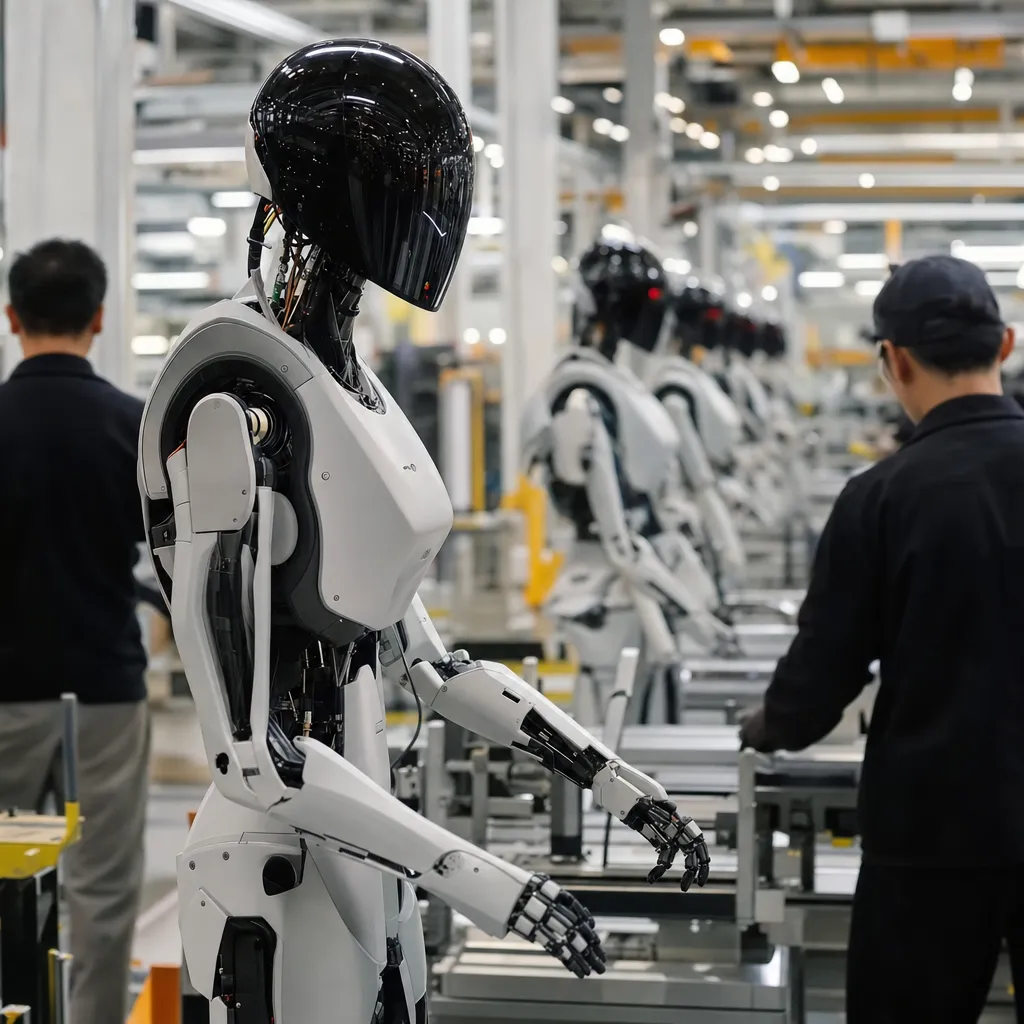
XPeng unveiled a next-generation humanoid robot and physical AI platform at AI Day 2026, positioning the Chinese automaker alongside Tesla, Boston Dynamics, and NVIDIA in the race to put bipedal robots in manufacturing environments.
XPeng Enters the Humanoid Robot Race at AI Day 2026, Targeting Its Own Factory Floors
XPeng is staging its annual AI Day event to unveil a next-generation humanoid robot and a physical AI platform it intends to deploy in its own electric vehicle production facilities. The showcase positions the Chinese automaker alongside NVIDIA, Boston Dynamics, and Tesla in the race to commercialize bipedal robots for unstructured manufacturing environments — and it signals that physical AI, once a research curiosity, has become the dominant strategic theme in Chinese automotive innovation.
What XPeng Is Showing
XPeng's AI Day is an annual event designed to demonstrate the company's AI capabilities to investors, customers, and partners. This year, two adjacent technologies take center stage:
Humanoid robotics. XPeng's robot is designed for factory-floor automation tasks — the kind of dexterous, varied manual work that rigid industrial arms handle poorly. Assembly tasks that require picking, placing, orienting, and fastening irregular parts; quality inspection that benefits from eyes-and-hands movement through production lines; material handling in spaces designed for human workers, not tracks and rails. Bipedal robots can operate in those environments without redesigning the factory around them.
Physical AI platform. Physical AI refers to the broader software and perception layer that enables machines to reason about and act in unstructured real-world environments. It's the AI that tells a robot what it's looking at, where it is, what state the environment is in, and how to manipulate objects it hasn't seen before. Building a good physical AI platform is arguably harder than building the robot itself — the hardware is manufacturable; reliable real-world perception and manipulation at production quality is not.
XPeng is presenting both as an integrated system: not just a robot body, but a robot body governed by a physical AI stack that the company developed in-house.
Why an Automaker Is Building Humanoid Robots
The logic is cleaner than it might appear.
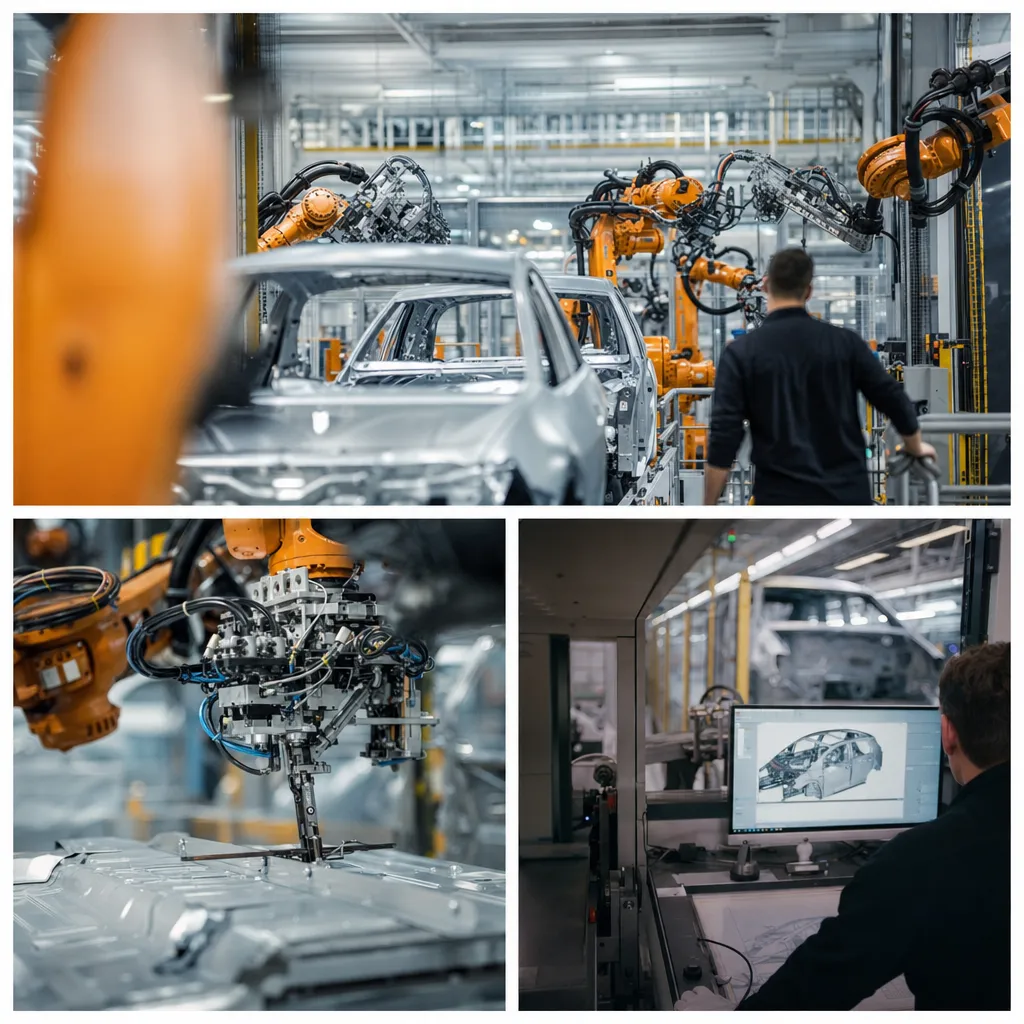
XPeng — like BYD, Nio, and Li Auto — builds vehicles with software and AI as core competitive differentiators. The company's driver assistance system (XNGP) uses a similar stack of cameras, LiDAR, and AI inference to perceive and navigate the real world. Many of the technical capabilities required for a car that drives itself in traffic are related to the capabilities required for a robot that assembles parts in a factory.
Both domains require:
- Spatial perception and 3D reasoning
- Real-time decision-making under uncertainty
- Robust handling of unexpected conditions
- Tight integration of sensor data with actuator control
XPeng isn't building robots from scratch. It's extending an existing AI and autonomy capability into a new physical form factor. That's a materially different — and cheaper — development path than a pure robotics company starting from hardware.
Get this in your inbox.
Daily AI intelligence. Free. No spam.
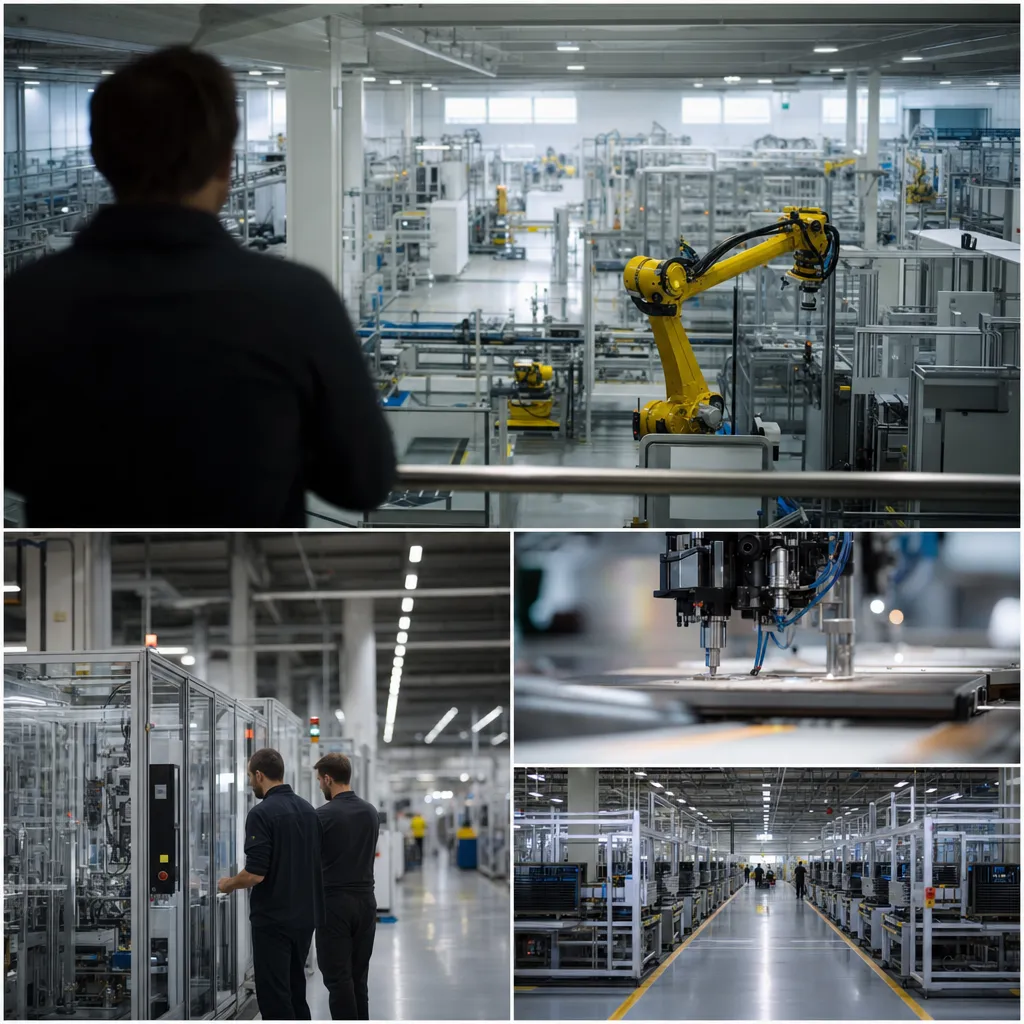
The factory deployment strategy also gives XPeng a customer it controls: itself. Rather than selling unproven robots to external manufacturing clients who need guarantees, XPeng can deploy in its own facilities, iterate in production, and build a track record before commercializing externally.
The Field XPeng Is Entering
XPeng's AI Day announcement drops into one of the most competitive development races in industrial technology.
Tesla's Optimus is the most high-profile humanoid program globally. Tesla has demonstrated Optimus performing factory tasks including battery cell placement and sorting — work in live production. CEO Elon Musk has projected Optimus production at scale by 2026-2027, with an aspirational long-term target of tens of millions of units annually.
Boston Dynamics' Atlas recently transitioned from hydraulic to fully electric actuation, dramatically improving energy efficiency and reducing maintenance complexity. Boston Dynamics is positioning Atlas for automotive manufacturing specifically, with Hyundai — its parent company — as the anchor customer.
Figure AI and Apptronik are U.S.-based startups with significant funding that are targeting automotive and logistics manufacturing. Figure's partnership with BMW and Apptronik's work with Mercedes-Benz put them directly in XPeng's target market.
Unitree and Agility Robotics are further along on specific deployment metrics — Unitree's H1 and G1 models are commercially available, and Agility's Digit is live in Amazon warehouses.
NVIDIA occupies a platform role rather than a product role: its GR00T foundation model and Jetson Orin hardware are becoming the AI and compute infrastructure layer for many humanoid robot programs, including potentially XPeng's.
What XPeng is competing for is not a single customer contract. It's a position in a market that many forecasters project to be worth hundreds of billions of dollars by 2035 — the market for general-purpose robots that can do physical work in environments designed for humans.
China's Strategic Context
XPeng's announcement reflects a deliberate national strategy, not just one company's product decision. China's Ministry of Industry and Information Technology has explicitly targeted humanoid robots as a strategic industry, with goals to establish domestic production capacity and global competitiveness by 2027. Multiple Chinese automakers — BYD, Chery, and Geely alongside XPeng — have humanoid robot programs in various stages of development.
The overlap between China's EV industry (where it now leads globally in production volume) and humanoid robotics is not accidental. Both sectors require:
- Large-scale hardware manufacturing capability
- Advanced battery technology
- AI and sensor integration
- Government support and procurement as early customer
Chinese automakers have all four. They're applying their EV manufacturing and AI experience to robots in a way that Western automotive companies haven't matched yet.
Physical AI — specifically, robots that can perceive and act in unstructured environments — is now the organizing concept for Chinese automotive AI strategy. The race to build the perception stack that makes useful humanoid robots possible is, in some important ways, the same race as the one to build the full-autonomy stack for self-driving vehicles. XPeng is competing in both.
What to Watch
The specifics XPeng reveals at AI Day — dexterity benchmarks, cycle times for specific tasks, details on the physical AI software stack, and the deployment timeline for its own factories — will determine whether this is a credible entry into the humanoid market or a demonstration that runs ahead of production reality. Watch also for any announcements about external commercial availability: whether XPeng intends to sell robots to other manufacturers or keep the technology in-house. And track how NVIDIA positions its GR00T platform in relation to XPeng's physical AI stack — partnership or competition there will reveal a lot about where XPeng sits in the emerging physical AI ecosystem.
By Hector Herrera
Did this help you understand AI better?
Your feedback helps us write more useful content.
Get tomorrow's AI briefing
Join readers who start their day with NexChron. Free, daily, no spam.