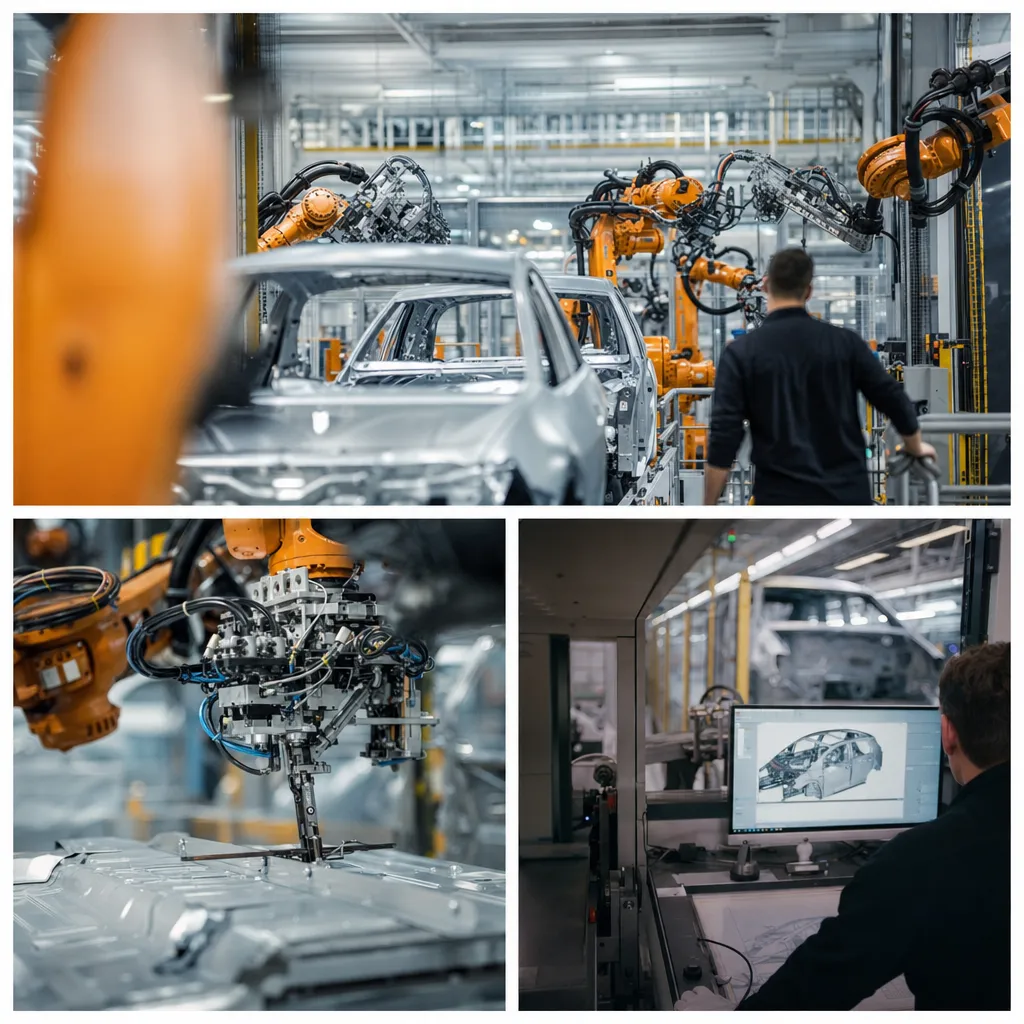
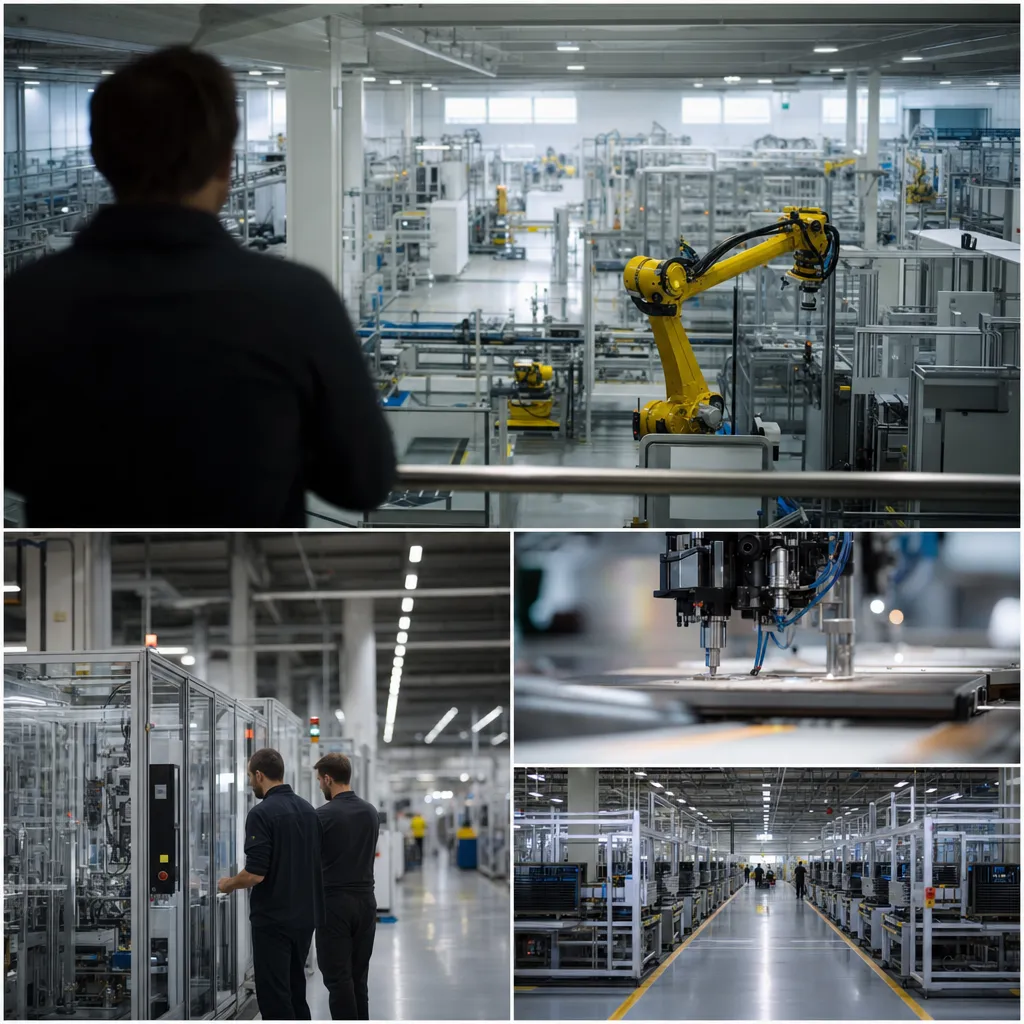
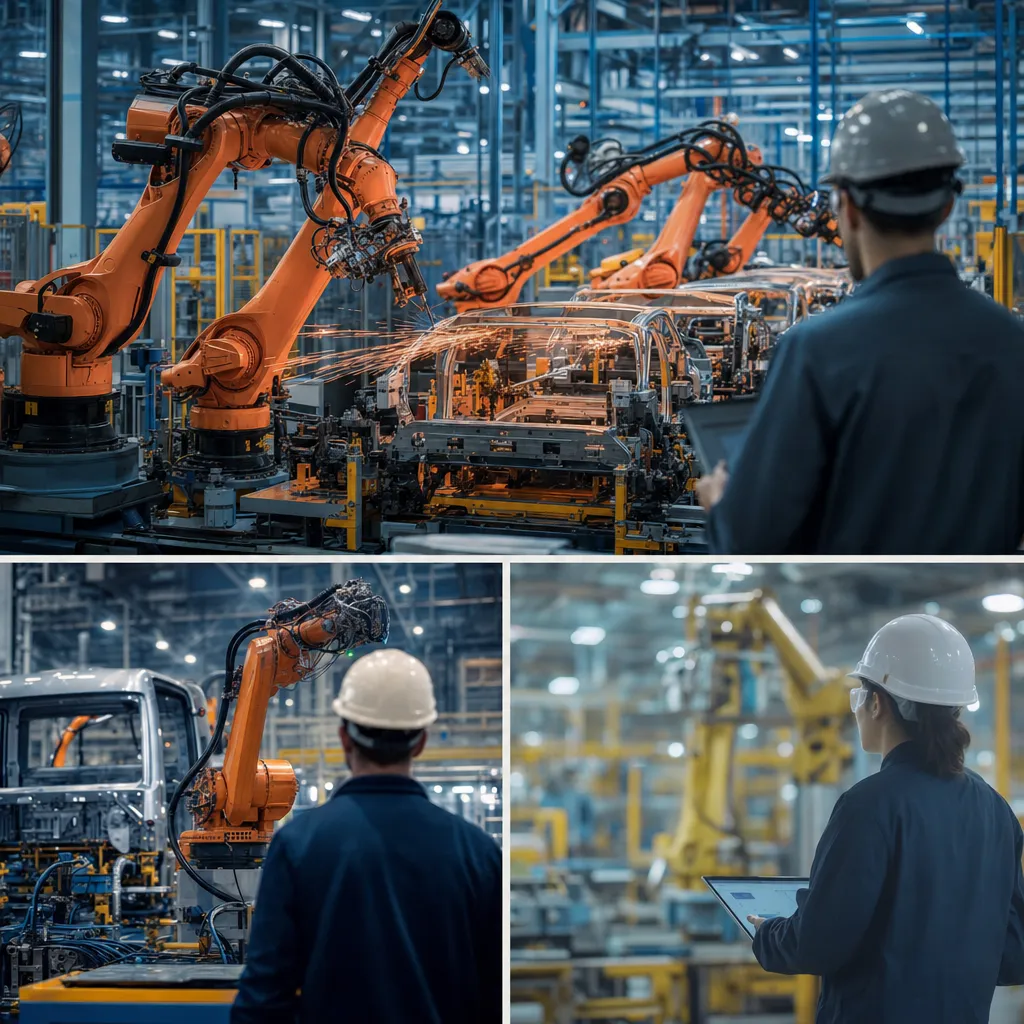
Europe's industrial giants are moving AI and digital twin systems from pilot programs into core production workflows, with Siemens, Mercedes-Benz, Audi, and VW all reporting active rollouts.
Europe's largest industrial manufacturers are moving AI and digital twin systems from pilot programs into core production workflows, with Siemens, Mercedes-Benz, Audi, and Volkswagen all reporting active rollouts as of late November 2026. The shift signals that AI-driven manufacturing has crossed the threshold from experiment to operation — and the competitive pressure is building fast.
A new industry report from Robotics and Automation News confirms that Europe's industrial giants are substantially expanding their commitments to AI, simulation, and digital twin systems across engineering and factory operations. The wave coincides with North American robot orders jumping 25% year-over-year in Q3 2026, suggesting this is a coordinated global push rather than a regional trend.
What Digital Twins Actually Do
A digital twin is a virtual replica of a physical system — in manufacturing, that might model an assembly line, a specific machine, or an entire plant. Engineers use digital twins to simulate changes before making them in the real world: test a new production sequence virtually, catch failures before they happen in steel and aluminum.
AI systems work alongside these twins to do what humans can't do alone at speed: flag quality defects in real time, predict equipment failures before they occur, and compress design iteration cycles that previously took months. The combination of digital twin fidelity and AI pattern recognition is what makes these systems genuinely useful rather than expensive novelties.
Who Is Doing What
Siemens is expanding digital twin deployments across both engineering and production, citing faster design cycles and better coordination between its software division (which makes the simulation tools) and its industrial customers. Siemens occupies an unusual position here — it both sells these systems and uses them in its own factories.
Mercedes-Benz has active AI rollouts focused on quality control and predictive maintenance. In auto manufacturing, unplanned downtime on a final assembly line can cost millions per hour; predictive AI that flags a bearing about to fail before it fails has obvious ROI.
Get this in your inbox.
Daily AI intelligence. Free. No spam.
Audi is using AI to accelerate design iteration for complex components, particularly for the kind of geometry-intensive parts that electric vehicles demand more of than combustion-era designs.
Volkswagen Group, the parent company of Audi, is integrating AI into production planning — optimizing scheduling, parts flow, and line balancing across a factory network that spans dozens of countries.
Why This Wave Is Different
Previous waves of automation — robotic assembly arms, early machine vision — required enormous capital investment and years of integration work. AI-augmented digital twins are different in one important way: they can be layered onto existing infrastructure without replacing everything beneath them.
A manufacturer can deploy a camera-based quality monitoring system on an existing line without rebuilding the line. That lower barrier to deployment is partly why adoption is accelerating.
The numbers that matter:
- Quality defect catch rates improve significantly when AI monitors 100% of production rather than statistical samples
- Predictive maintenance cuts unplanned downtime, which at scale translates directly to revenue
- Design cycle compression — from months to weeks for iteration — matters most during platform launches
- 25% jump in North American robot orders in Q3 2026 signals this is not a European-only phenomenon
What This Means for the Supply Chain
The challenge isn't just what happens inside Siemens or Mercedes. The real complexity is in the tier-1 and tier-2 suppliers who feed those factories.
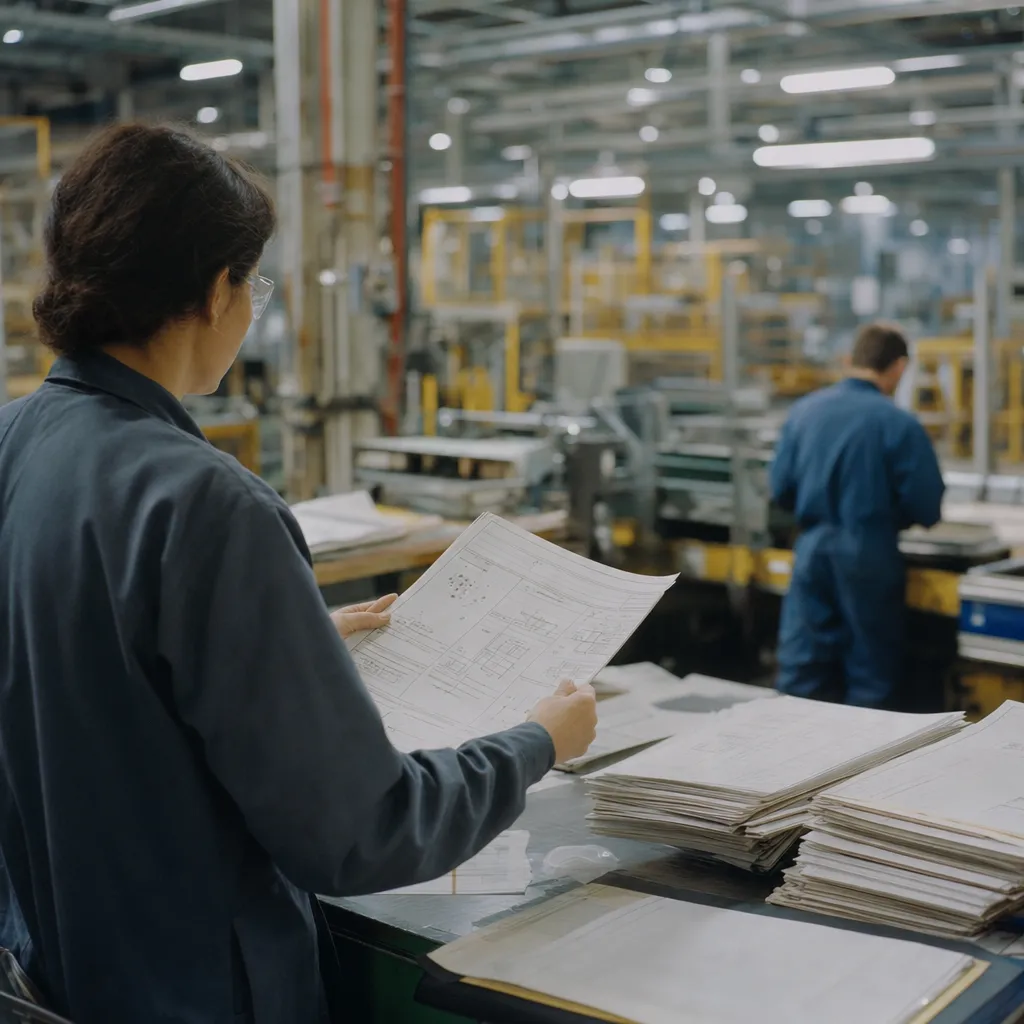
When a major OEM requires that production data flow seamlessly into their digital twin, suppliers face a choice: invest in AI-compatible systems or lose the contract. That pressure is now working its way down the supply chain, forcing small and mid-sized manufacturers — many of which still run on paper-based processes — to digitize faster than they might choose to on their own.
For workers, the near-term reality is that AI takes over repetitive monitoring tasks. The longer-term picture is more complicated: skilled technical roles that can configure, interpret, and correct AI systems are growing. The retraining gap between those two ends of the workforce is real and large.
What to Watch
Whether this wave extends meaningfully to tier-2 and tier-3 suppliers is the question that determines how broadly this transformation lands. And as European manufacturers run increasingly AI-intensive digital twin systems, the energy cost of that compute — already a pressure point given European electricity prices — becomes a constraint that doesn't appear in the product demo.
Did this help you understand AI better?
Your feedback helps us write more useful content.
Get tomorrow's AI briefing
Join readers who start their day with NexChron. Free, daily, no spam.