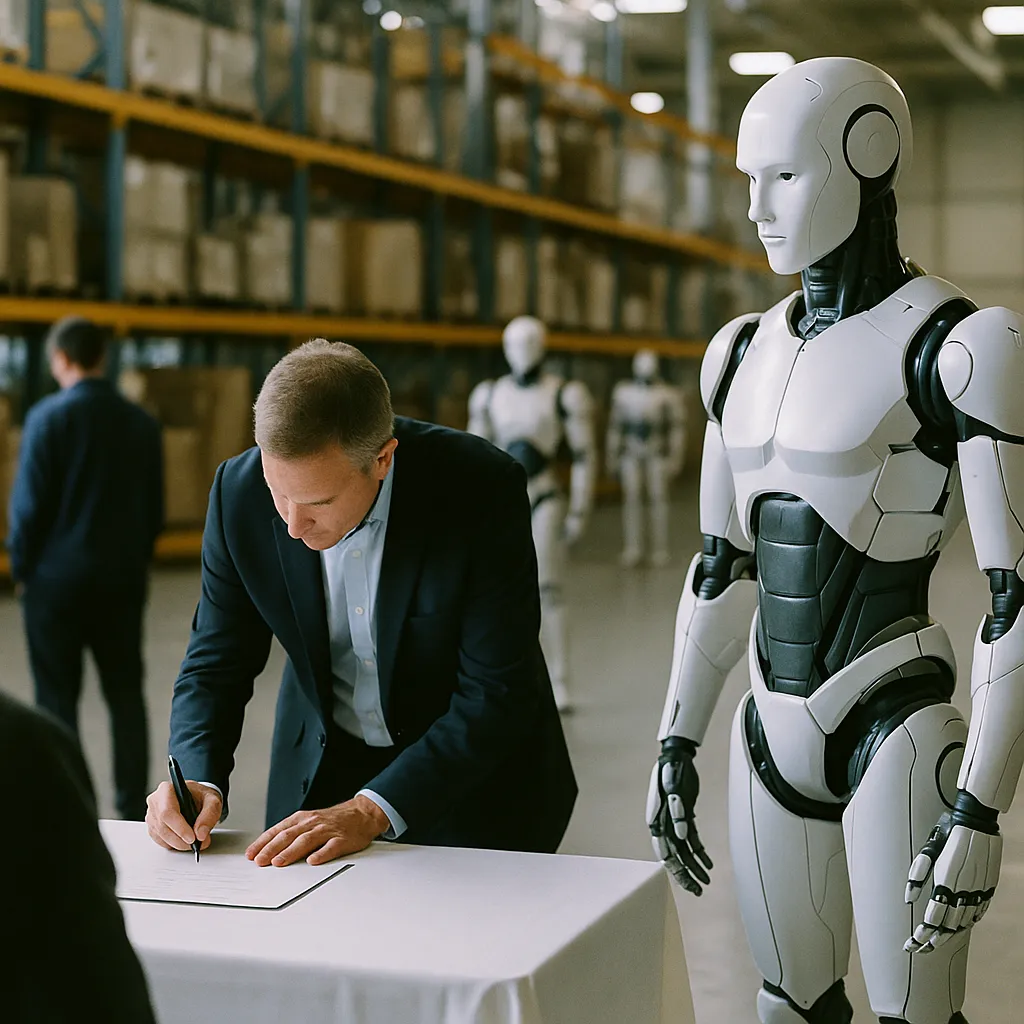
British AI robotics company Humanoid has signed a binding contract — the largest committed humanoid deployment deal disclosed to date — to place up to 2,000 wheeled humanoid robots across Schaeffler's global manufacturing sites by 2032.
A Robotics Firm Just Signed the Largest Committed Humanoid Deployment Contract in History
British AI robotics company Humanoid has signed a phased binding agreement with industrial supplier Schaeffler to deploy between 1,000 and 2,000 wheeled humanoid robots across Schaeffler's global manufacturing sites by 2032. This is not a pilot program. The contract includes performance and uptime guarantees — terms that represent a level of commercial commitment the humanoid robotics industry has not previously demonstrated at this scale.
The deal, reported by Memeburn, is significant because it converts what has been a category dominated by highly publicized demonstrations and cautious trials into a binding, accountable, multi-year industrial deployment. Schaeffler manufactures precision components for automotive, aerospace, and industrial applications across more than 100 manufacturing sites globally. Putting 2,000 AI-native robots into that environment — at a firm with genuine industrial standards for uptime and quality — is a different proposition than a warehouse pilot.
What "Wheeled Humanoid" Means in Practice
Humanoid robots come in two primary form factors: fully bipedal (two-legged walking) and wheeled (mobile base with a humanoid upper body). Bipedal robots like Boston Dynamics' Atlas and Agility Robotics' Digit generate more media attention, but wheeled designs are generally more practical for industrial deployment today — they are mechanically simpler, more stable on factory floors, and consume less power per hour of operation.
The Humanoid-Schaeffler robots are wheeled, which reflects an engineering priority: reliability over spectacle. Schaeffler is not buying a demonstration asset; it is buying a production tool that must operate consistently across manufacturing environments where downtime has real financial consequences. The inclusion of uptime guarantees in the contract is the contractual expression of that expectation.
The "humanoid" upper-body design matters because it allows the robot to operate in workspaces built for humans — reaching the same heights, manipulating the same controls, working alongside human operators without requiring facility modifications. This is the central economic argument for humanoid over purpose-built fixed automation: the environment doesn't change, only the worker does.
The AI-Native Distinction
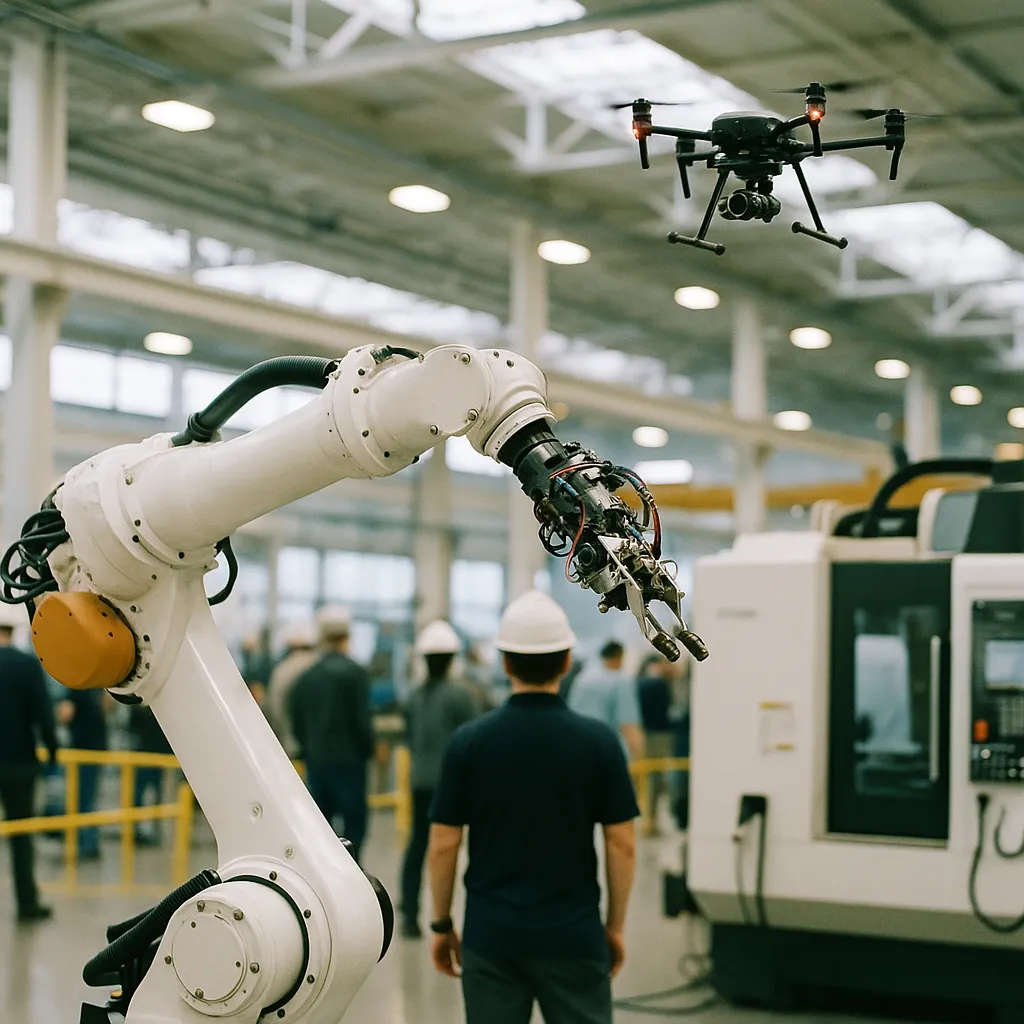
What separates current-generation humanoid robots from earlier industrial automation is how they are trained and retrained. Traditional industrial robots are programmed: a specific arm performs a specific motion on a specific part, and changing the task requires re-engineering the motion sequence and often replacing tooling.
Get this in your inbox.
Daily AI intelligence. Free. No spam.
AI-native robots are trained: they learn tasks through demonstration and reinforcement, and can be retrained for new tasks through software updates rather than hardware changes. The Humanoid system is described as capable of learning new tasks across Schaeffler's various manufacturing contexts without requiring hardware swaps.
This matters for Schaeffler because the company serves multiple industries with frequent product line changes. Automotive manufacturers change models; aerospace suppliers work to specification; industrial applications evolve. A robot workforce that can be retrained in software to match those changes has fundamentally different economics than one that must be physically reconfigured or replaced.
What This Signals for Manufacturing AI
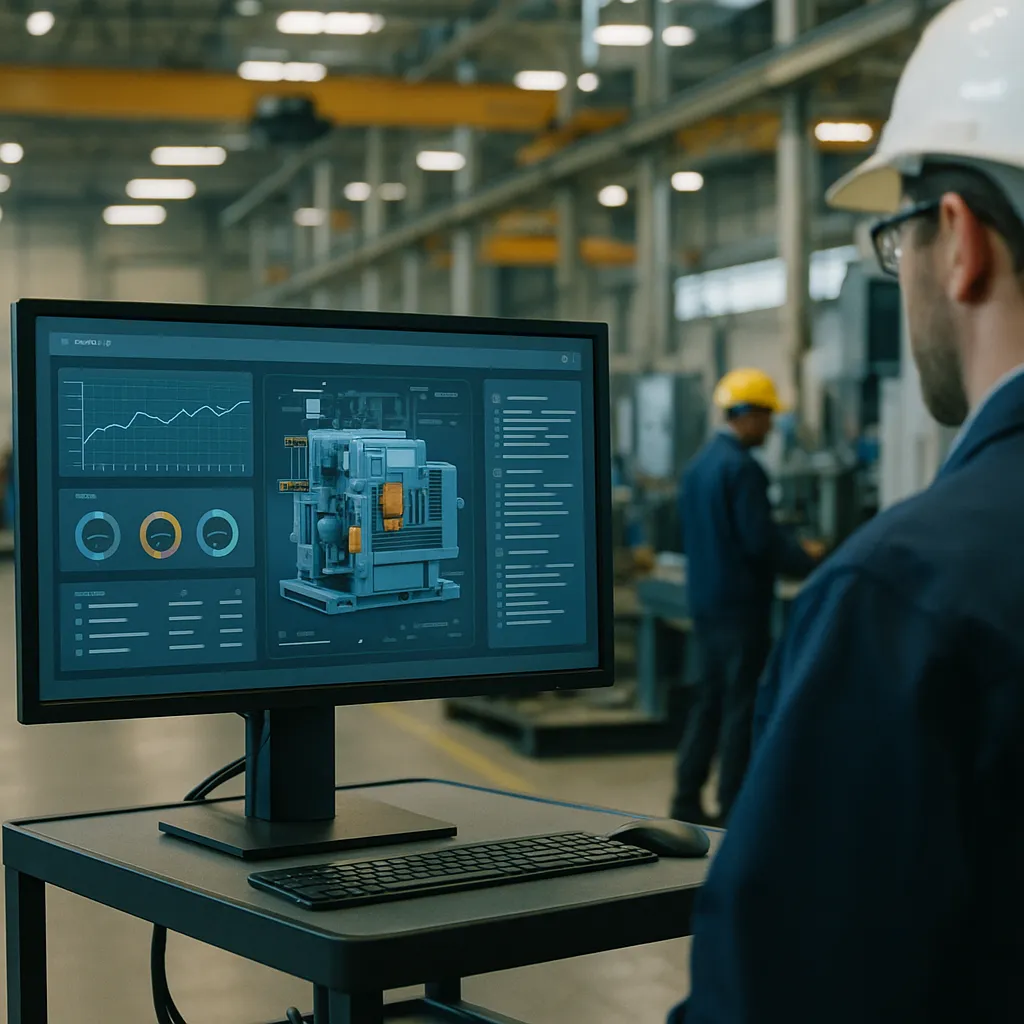
The Humanoid-Schaeffler contract is not happening in isolation. It lands in a manufacturing sector where AI adoption has been accelerating across planning, quality control, predictive maintenance, and supply chain management — but where physical AI (robots with AI-native control systems) has lagged behind software AI deployments.
The lag has been driven by reliability concerns. Manufacturers learned expensive lessons with previous generations of automation: systems that work in controlled conditions fail in real production environments. The inclusion of performance guarantees in the Humanoid contract is a direct response to that concern — Humanoid is essentially underwriting its own claims about reliability.
Industry context: Tesla, BMW, Mercedes-Benz, and Foxconn have all disclosed humanoid robot trials in their manufacturing environments in the past 18 months. None of those has yet converted to a binding commercial deployment at the scale of the Humanoid-Schaeffler agreement. If Schaeffler's deployment performs to contract terms, it will provide the industry's most credible real-world data set for evaluating humanoid deployment economics.
Labor Implications
The Humanoid-Schaeffler announcement does not include specific projections about workforce impact, but the numbers imply significant changes. Schaeffler employs approximately 80,000 people globally across its manufacturing operations. A deployment of 2,000 robots — even accounting for the support roles that robot deployments create — represents a meaningful shift in the labor composition of those sites.
Schaeffler's manufacturing operations are concentrated in Germany, the United States, China, Romania, and India. Labor market implications will vary significantly by country: German works councils have co-determination rights that require consultation on major workforce changes, while other jurisdictions have fewer structural protections. How Schaeffler navigates this across its global footprint will be closely watched.
What to Watch
The phased structure of the agreement means initial deployments are likely in 2026-2027, with the full 1,000-2,000 unit target reached by 2032. Watch for Schaeffler's operational reports for references to robot performance data — if uptime guarantees are being met, it will validate Humanoid's commercial claims and likely accelerate similar deals with other industrial manufacturers. Also watch for competitor responses: if Humanoid can execute at scale, it raises the urgency for firms like Figure AI, Apptronik, and 1X Technologies to produce comparable commercial commitments rather than continued demonstration programs.
By Hector Herrera | NexChron | June 5, 2026
Did this help you understand AI better?
Your feedback helps us write more useful content.
Get tomorrow's AI briefing
Join readers who start their day with NexChron. Free, daily, no spam.