Anthropic's first dedicated vertical product ships with 17 task-specific AI skills for quoting, quality, maintenance, and supply sourcing — integrating with Autodesk, Infor, Microsoft 365, and Oracle, while deliberately keeping humans in the decision loop.
Anthropic launched Claude for Manufacturing on November 12-13, its first dedicated vertical product. The release ships with 17 task-specific AI skills covering the work manufacturing professionals actually do: generating quotes, running quality investigations, compiling production reports, diagnosing maintenance issues, and sourcing from suppliers. It's a notable strategic move — and its timing, mid-IPO roadshow, is not coincidental.
Claude for Manufacturing integrates directly with software that manufacturing operations already run: Autodesk Fusion for product design and engineering, Infor for ERP and operations management, Microsoft 365 for communications and documentation, and Oracle NetSuite for finance and supply chain. For the operations teams targeted — estimators, quality engineers, maintenance technicians, buyers — the pitch is an AI that works inside existing tools rather than requiring a new platform.
The 17 Skills
Anthropic hasn't published the complete list publicly, but Manufacturing AUTOMATION categorizes the skills across five functional areas:
Quoting — generating and reviewing cost estimates, pulling bill-of-materials (BOM) data into quote documents, flagging scope assumptions before they become cost overruns.
Quality investigations — analyzing defect reports, correlating failures with process parameters, drafting corrective action reports (CARs) in the format quality management systems expect.
Production reporting — summarizing shift data, flagging anomalies in throughput and downtime figures, preparing handoff documents between shifts and departments.
Maintenance diagnosis — interpreting sensor data and maintenance logs, suggesting probable failure causes, recommending service schedules based on equipment history.
Supply sourcing — evaluating supplier options against specifications, drafting requests for quotation (RFQs), summarizing lead time and pricing data for buyer decisions.
Get this in your inbox.
Daily AI intelligence. Free. No spam.
Each skill is a configured Claude model with domain-specific context, connected to relevant data sources through the platform integrations. The skills aren't generic chat interfaces — they're purpose-built task completers for specific roles.
What It Won't Do — On Purpose
The most revealing design decision in Claude for Manufacturing is what it explicitly doesn't do: Claude doesn't write directly to systems of record or control equipment.
It assists human workers. A quality engineer reviews Claude's analysis of a defect pattern and decides how to respond. A maintenance technician reads Claude's diagnosis and chooses the repair approach. Claude generates a supplier RFQ draft; a buyer reviews and sends it. The human makes the decision; Claude prepares the work.
This boundary is simultaneously a safety posture, a legal shield, and a sales strategy. In manufacturing, writing bad data to an ERP or triggering an incorrect maintenance command has real, expensive downstream consequences. Anthropic is positioning Claude as a decision-support tool, not an autonomous operator — which makes it substantially easier to deploy without requiring organizations to redesign accountability workflows or navigate industrial safety certification processes.
The IPO timing makes this positioning more explicit. Anthropic is currently on its roadshow at a valuation that depends on demonstrating safe, responsible AI deployment at scale. A manufacturing product that keeps humans in every decision loop is a credible demonstration of that thesis to both enterprise customers and investors who want AI upside without liability exposure.
Who It's For
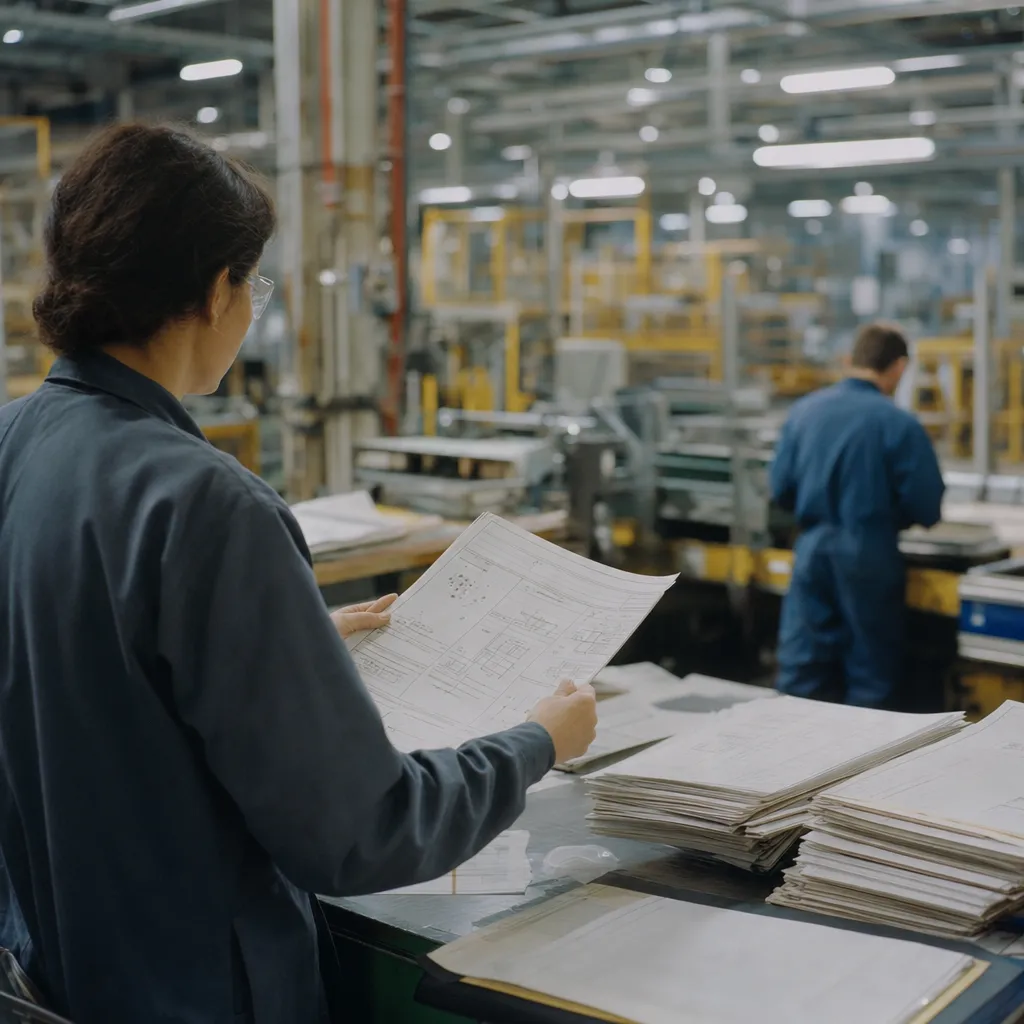
The four target personas — estimators, quality engineers, maintenance technicians, buyers — represent operational roles that have been underserved by enterprise AI tools. Most AI deployments in manufacturing have targeted data scientists and process engineers. Claude for Manufacturing goes after the people who do the daily documentation work: the estimator building quotes in spreadsheets, the quality engineer writing CAR documents manually, the buyer searching supplier databases by hand.
These are high-frequency, documentation-heavy roles where AI assistance can deliver consistent productivity gains without requiring users to change how they fundamentally work. The integration with Autodesk, Infor, Microsoft 365, and Oracle ensures Claude meets them in existing workflows rather than asking them to adopt a new tool and learn a new interface.
Manufacturing has historically been one of the harder sectors for enterprise AI adoption. The combination of legacy systems, safety requirements, and highly variable processes has slowed deployment. The ERP integrations in Claude for Manufacturing are a direct attempt to lower that barrier — if the AI is already connected to Infor or Oracle, the data handoff doesn't require a new integration project.
The Vertical Product Strategy
Claude for Manufacturing is Anthropic's first move into purpose-built vertical AI products. The 17-skill launch is a proof of concept as much as a product: can Anthropic build domain-specific AI tools that hold up against the precision requirements of industrial workflows?
The competitive field is real. Microsoft has been building Copilot for Manufacturing capabilities into Dynamics 365 and Azure IoT. SAP and Oracle have been embedding AI into their own ERP and manufacturing platforms. Anthropic is entering a space where the incumbents have deep integrations and long customer relationships.
The differentiation Anthropic is betting on is Claude's underlying reasoning capability. Manufacturing problems — especially quality investigations and maintenance diagnosis — often involve correlating data across multiple sources, identifying non-obvious failure modes, and generating explanations that technicians can act on without additional training. That's exactly the kind of reasoning task where Claude's architecture has shown consistent advantages over tool-call-heavy alternatives.
What to watch: Adoption data from manufacturing deployments in Q1 2027 will reveal whether the 17 skills cover actual pain points or need significant tuning based on real-world use. Watch also for competitive responses from Microsoft's Copilot for Manufacturing team, which is building in the same integration stack.
Did this help you understand AI better?
Your feedback helps us write more useful content.
Get tomorrow's AI briefing
Join readers who start their day with NexChron. Free, daily, no spam.