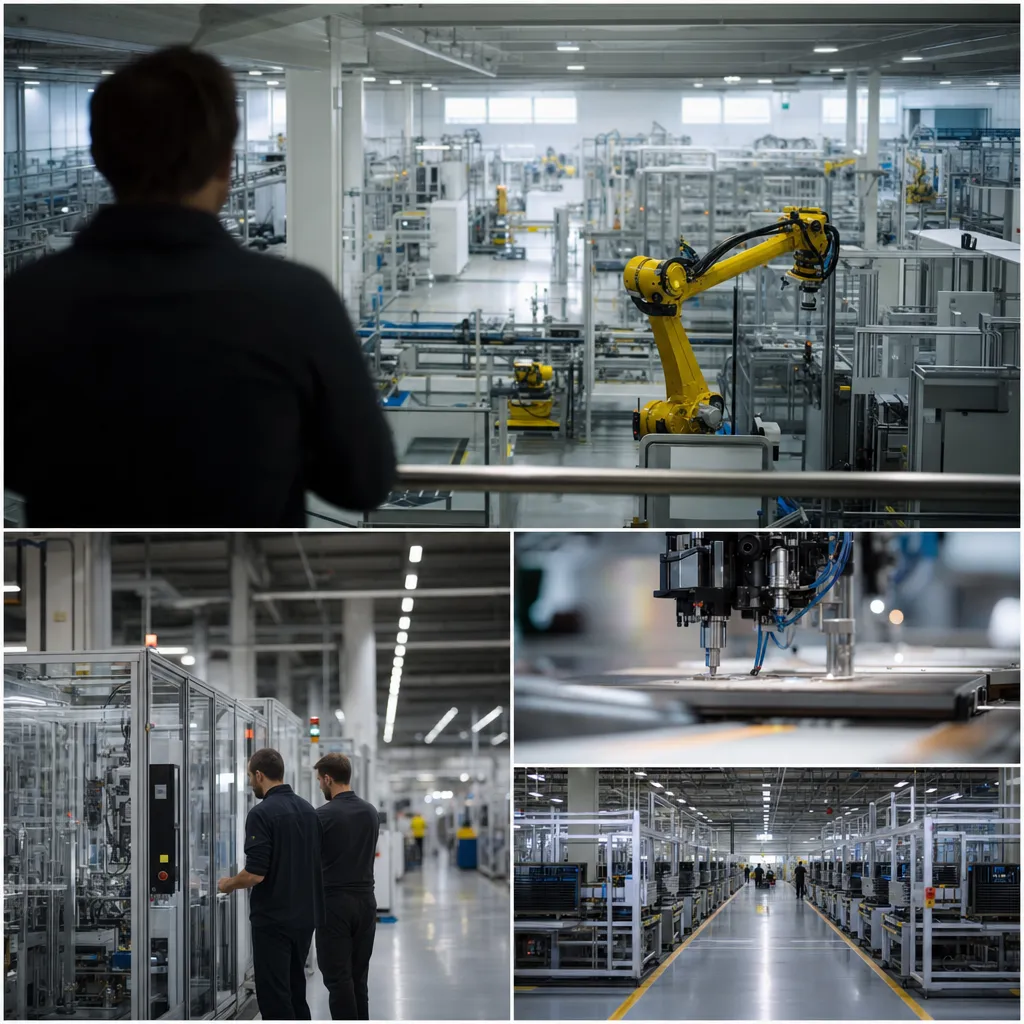
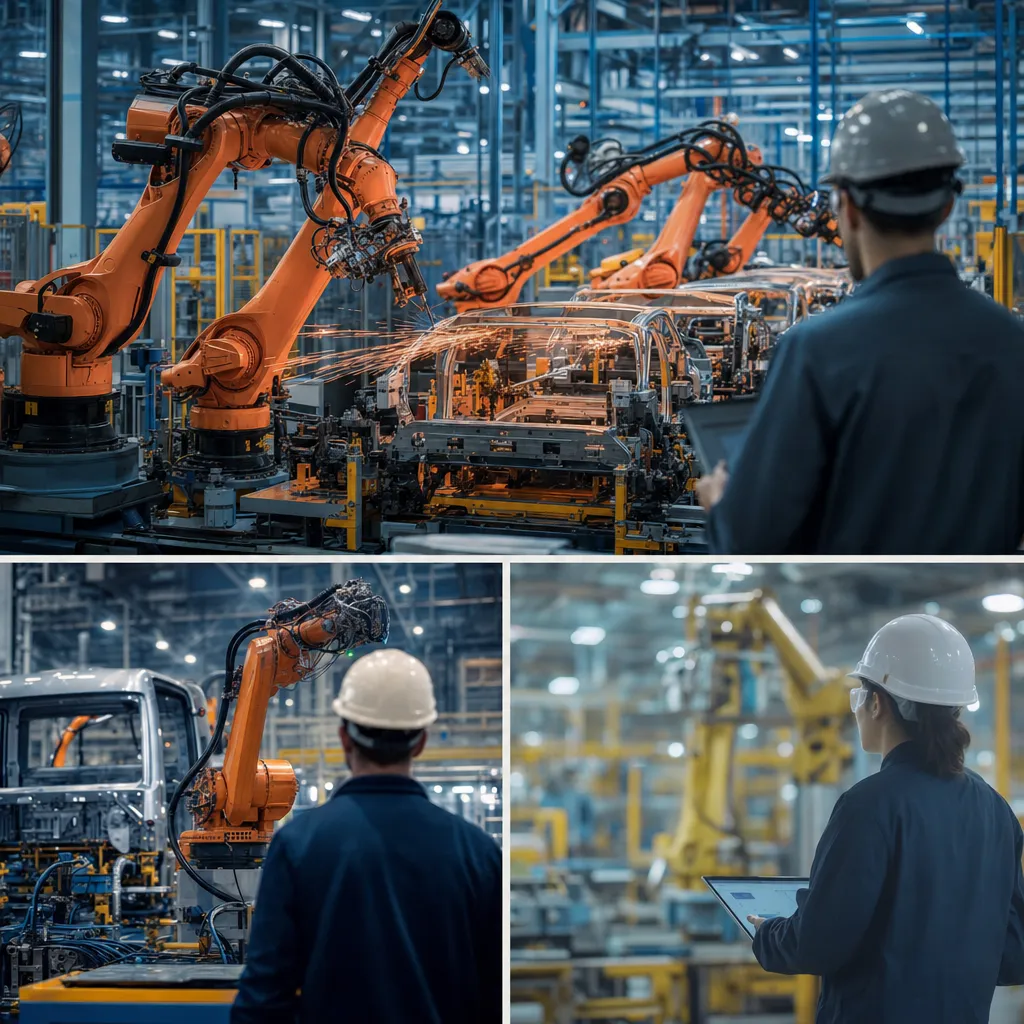
Genesis AI closed Europe's largest-ever robotics Series A at a $3.5 billion valuation, targeting AI-powered automation for automotive and logistics assembly lines.
French Startup Genesis AI Raises $500M at $3.5B Valuation for Industrial Robotics
Genesis AI, a French industrial robotics company, has closed a $500 million Series A funding round at a $3.5 billion valuation — one of Europe's largest-ever robotics raises. The company builds AI-powered robotic systems for automotive and logistics assembly lines. The raise signals that institutional investors remain committed to physical AI manufacturing technology even as broader tech market conditions remain cautious.
The European Physical AI Bet
European industrial robotics investment has historically flowed to established incumbents: ABB, KUKA, Fanuc. These companies dominate factory floors worldwide with traditional industrial automation — precise, reliable, but rigid.
What's new about Genesis AI — and the reason for the valuation — is the AI layer. Traditional industrial robots execute programmed sequences reliably but struggle when the environment changes even slightly: a differently oriented component, a variation in part tolerance, an unexpected obstacle on the line. Programming them for new tasks requires specialized engineers and significant time, making them poorly suited for the high-mix, variable-demand environments that modern manufacturing increasingly requires.
AI-powered robotic systems learn from observation and adapt to variation. A system that can be retrained for a new assembly task in days rather than weeks changes the economics of manufacturing automation. That's the market Genesis AI is targeting.
A Series A at This Scale
The $3.5 billion Series A valuation is unusual. Series A rounds — typically the first institutional funding after seed — almost never reach this level. That Genesis AI closed this amount at this stage suggests the company has unusually advanced technology and commercial traction, or that investors are placing a large early bet on market position in what they expect to be a winner-take-most industrial AI market.
Both can be true simultaneously. Industrial robotics has significant data network effects: the more deployment data a system accumulates across different manufacturing environments, the better its models perform. Customers tend to standardize on fewer vendors, and switching costs are high once a system is embedded in a production line. Being well-capitalized early creates competitive advantages that compound over time.
Get this in your inbox.
Daily AI intelligence. Free. No spam.
According to Ayoka Systems' manufacturing briefing, the round closed November 17, targeting automotive and logistics assembly deployment across European manufacturing facilities.
Part of a Broader Physical AI Surge
Genesis AI's raise is part of a week when physical AI attracted concentrated capital across multiple industries:
- Bedrock Robotics (US) raised $600 million for autonomous AI excavators for construction
- Nvidia's GROOT physical AI platform continues expanding across manufacturing and logistics environments
- Multiple humanoid robotics companies have reported growing commercial commitments from automotive and electronics manufacturers
The common thesis: AI has crossed a capability threshold where it can operate reliably in unstructured physical environments. Factory floors are messy in ways that required human judgment to navigate. AI systems are now handling enough of that variability to run unsupervised on production equipment with commercially acceptable error rates.
For investors, the bet is that the software AI wave created enormous value but had limited defensibility — foundation models are increasingly commoditized. Physical AI, where the data moats are built through deployment in real-world environments, may be more defensible.
What This Means for European Industrial Policy
For European industrial competitiveness, the raise matters beyond Genesis AI itself. Europe has watched US and Chinese AI companies dominate the previous wave of AI development — foundation models, application software, consumer AI. A European physical AI robotics company raising at $3.5 billion signals that the continent can compete in the next wave, where the defensible value is in the intersection of AI and physical systems, not just software.
The EU's strategic interest in maintaining manufacturing competitiveness — particularly in automotive, aerospace, and industrial equipment sectors where European companies have historically strong positions — aligns directly with what Genesis AI is building. Expect the company to become a reference point in European AI industrial policy discussions heading into 2027.
What to Watch
Genesis AI's ability to convert the investment into commercial scale over the next 18 to 24 months will determine whether the valuation holds. Key metrics: how many major automotive customers convert from pilots to full production deployments, and whether the logistics application generates recurring, scalable revenue at market rates.
Competitive pressure is real. US competitors including Covariant and Machina Labs target similar applications with similar technology. Japanese players like Fanuc are acquiring AI capabilities aggressively. Nvidia's physical AI investments create a potential platform play that could disrupt pure-play robotics companies.
For manufacturing customers evaluating robotics investments, the abundance of well-funded AI robotics options accelerates capability development and drives prices toward adoption economics faster than any single dominant player would allow. The industrial robotics market is being reset by AI. Genesis AI just bet $500 million — and so did its investors — that it can be one of the companies doing the resetting.
Did this help you understand AI better?
Your feedback helps us write more useful content.
Get tomorrow's AI briefing
Join readers who start their day with NexChron. Free, daily, no spam.