At Hannover Messe 2026, NVIDIA and manufacturing partners including Siemens demonstrated physical AI and humanoid robots operating on real, active production floors — the clearest signal yet that industrial AI has crossed from showcase to operational deployment.
NVIDIA and Partners Debut Physical AI and Humanoid Robots in Live Factory Demos at Hannover Messe
By Hector Herrera | April 21, 2026
At Hannover Messe 2026 — the world's largest industrial trade show — NVIDIA and a group of manufacturing partners are demonstrating physical AI operating on real, active production floors. Not in controlled lab environments. Not in purpose-built demo spaces. On working factory floors, with actual manufacturing processes running. For an industry that has watched AI announcements for years without proof of genuine deployment, this week's demonstrations represent a meaningful threshold.
The exhibition runs April 20–24 in Hannover, Germany. NVIDIA published the full partner lineup and demonstration details on its blog.
What Is Actually Being Demonstrated
The demonstrations cover two categories: AI-powered digital twins and real-time simulation, and humanoid robots completing autonomous logistics tasks on production floors.
Digital twins and simulation:
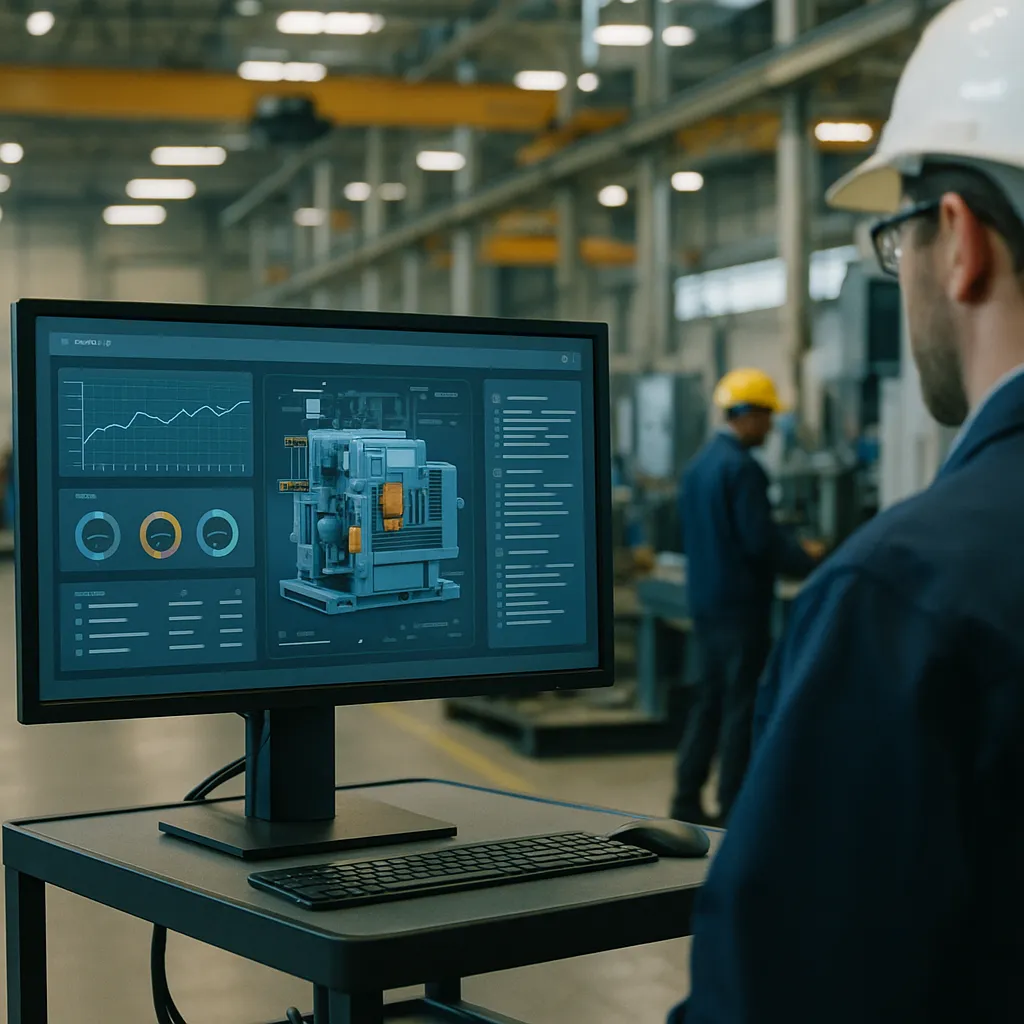
NVIDIA's manufacturing partners — including Siemens and SAP — are showcasing AI-powered digital twins. A digital twin is a virtual replica of a physical factory environment used for simulation, optimization, and planning. These AI-enhanced systems enable manufacturers to test process changes, model equipment failures, and optimize production flows before touching the physical line.
Humanoid robots on active floors:
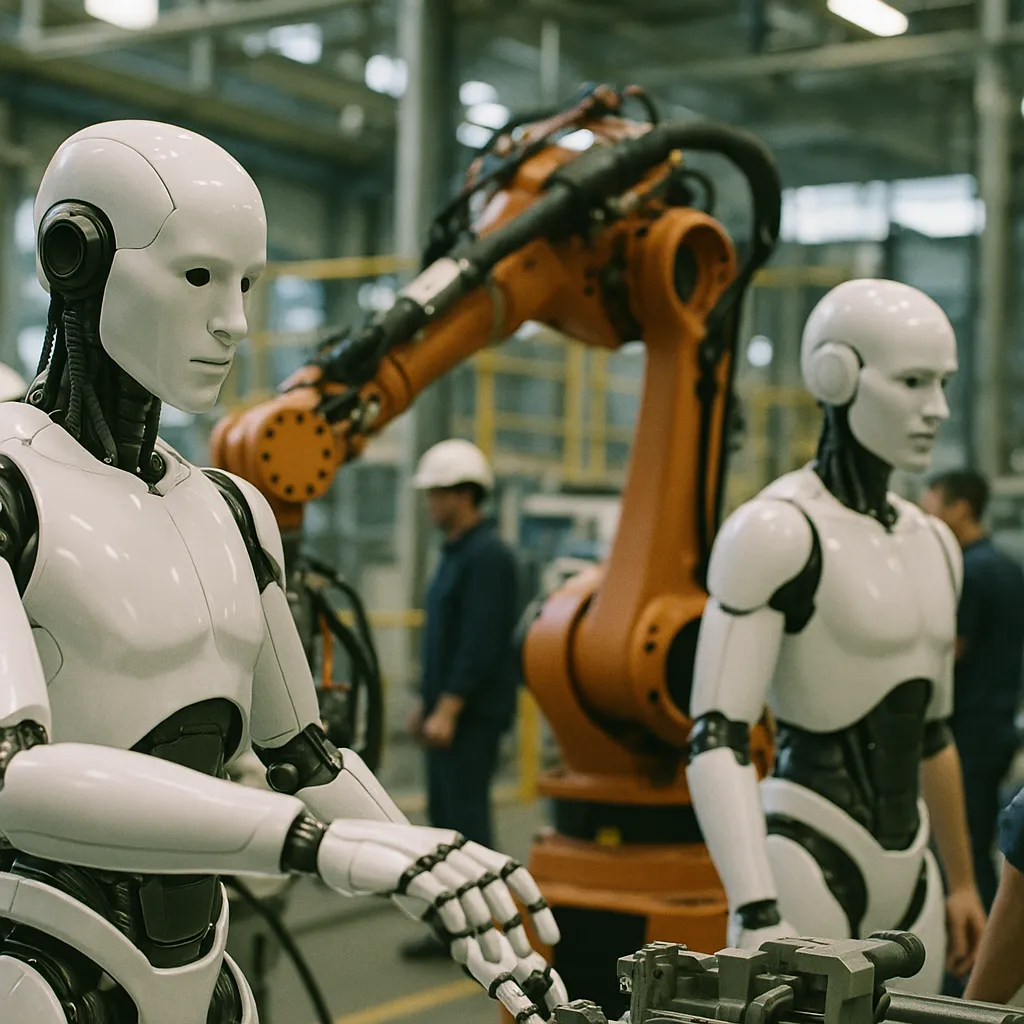
The headline demonstration is Siemens' Erlangen electronics manufacturing plant, where the HMND 01 humanoid robot — built by Agile Robots — completed its first proof-of-concept task in a real manufacturing environment. The robot performed autonomous logistics operations on an active production floor, marking the first deployment of this specific system outside a controlled test setting.
Key participants at Hannover Messe 2026:
- NVIDIA — AI compute infrastructure, Omniverse simulation platform
- Siemens — industrial automation integration, Erlangen plant demonstration host
- SAP — enterprise software connectivity with physical AI systems
- Agile Robots — HMND 01 humanoid robot hardware manufacturer
Physical AI: What It Means and Why It's Harder
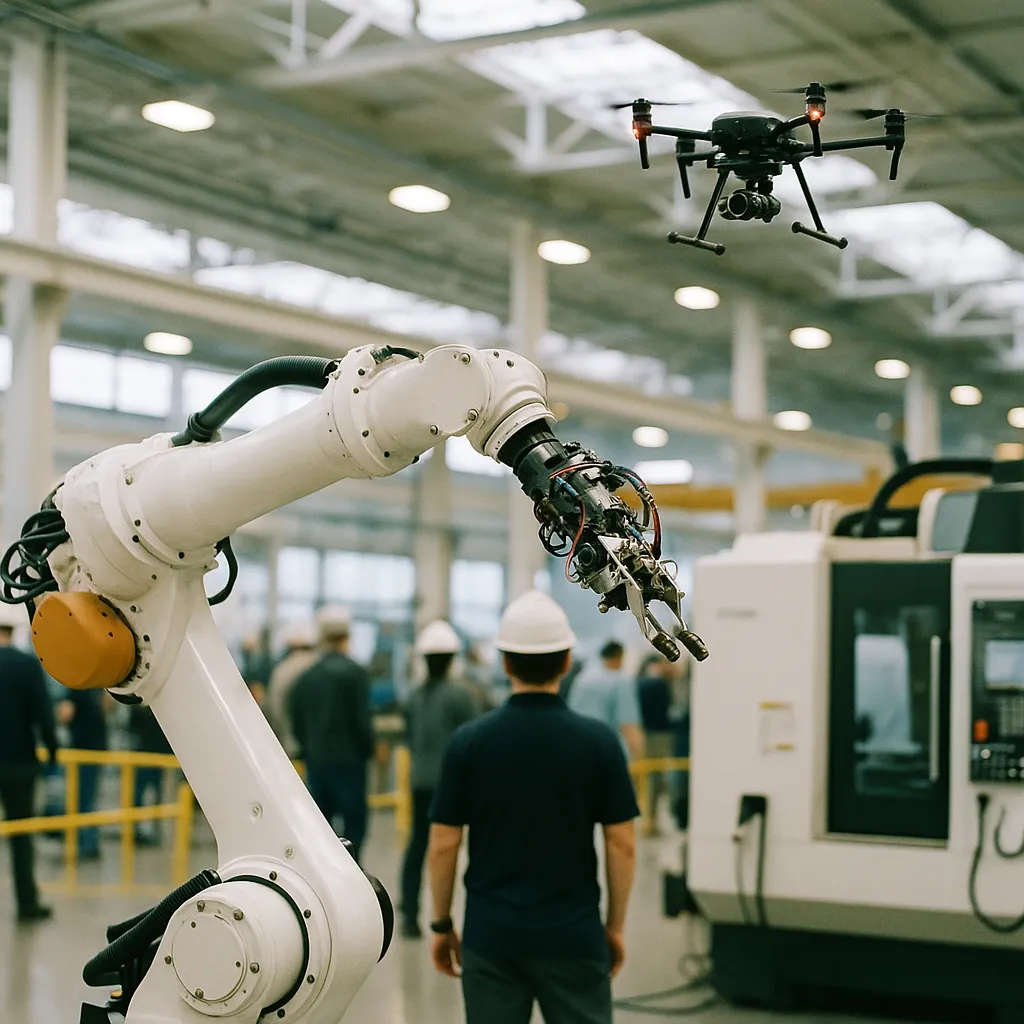
Physical AI refers to AI systems that perceive and act in the physical world — as opposed to AI that processes text, images, or data on screens. It encompasses humanoid robots, industrial arms, autonomous vehicles, and sensor-driven factory systems.
Get this in your inbox.
Daily AI intelligence. Free. No spam.
The distinction matters because physical AI operates under fundamentally higher stakes than software AI. A language model that makes a mistake produces wrong text. A robot that makes a mistake can damage equipment, disrupt a production line, or injure workers. The tolerance for error is orders of magnitude lower — and the validation requirements before production deployment are correspondingly higher.
NVIDIA's role in physical AI is infrastructure, not hardware. The company provides the compute platform (GPUs), the simulation environment (Omniverse), and increasingly the AI models that enable robots to perceive and navigate physical environments. NVIDIA does not manufacture robots — it builds the platform that robot makers train and run their systems on. That positioning is deliberate: infrastructure providers benefit regardless of which robot manufacturer wins the hardware competition.
Why This Week Matters
Industrial trade shows have featured AI and robotics announcements for years. What makes Hannover Messe 2026 different is the combination of scale, live operation, and production-floor context.
Previous demonstrations of humanoid robots in manufacturing settings were typically choreographed in isolated test environments with curated conditions. Siemens' Erlangen demonstration is notable precisely because it occurred on an active electronics production floor — a dynamic, unpredictable environment where robot performance is not choreographed and conditions are not controlled.
The timing also reflects a genuine sector inflection. Physical AI and robotics companies have spent the past two years moving from lab prototypes to pre-production pilots. Hannover Messe 2026 represents the next step: validating systems in genuine operational contexts that carry real production risk.
Impact on Manufacturing
Large manufacturers: The demonstration validates that physical AI deployment timelines are real. Companies with the scale to absorb integration costs — Siemens, BMW, Volkswagen, BASF — now have concrete proof-of-concept data to inform their own automation roadmaps for 2027 and beyond.
Mid-market manufacturers: The critical question is when the technology's cost and integration complexity drop to a point accessible to a 200-person facility. Current physical AI deployments require significant engineering investment. That threshold has not been reached yet.
Factory workers: Humanoid robots handling logistics — moving parts, managing bin inventory, handling repetitive physical operations — directly substitute for roles that workers currently perform. These are not hypothetical future labor impacts; they are happening at Siemens' Erlangen facility this week.
Robot manufacturers: Agile Robots' HMND 01 completing an unscripted task on a live production floor at a Siemens plant is the kind of proof-of-concept that unlocks enterprise sales conversations. Expect the commercial pipeline for industrial humanoids to accelerate materially following Hannover.
What to Watch
Demonstrations prove feasibility — they do not prove scale. The question following Hannover Messe is deployment velocity: how quickly do these installations expand from pilot to multi-site production deployment? If Siemens announces a commitment to deploy HMND 01 across multiple facilities in H2 2026, or if SAP announces physical AI integration into its standard manufacturing ERP offerings, those signals would indicate the technology has genuinely crossed from showcase to standard industrial practice.
By Hector Herrera | NexChron.com
Did this help you understand AI better?
Your feedback helps us write more useful content.
Get tomorrow's AI briefing
Join readers who start their day with NexChron. Free, daily, no spam.