A Marketplace investigation finds Tesla has roughly 12 robotaxis in active Austin service — a number that exposes the widening gap between Elon Musk's commercial expansion claims and what's actually on the road.
Tesla Has Only About 12 Robotaxis Running in Austin Despite Musk's Commercial Promises
By Hector Herrera | May 5, 2026 | Transport
Tesla has approximately 12 robotaxis in active service in Austin, Texas — not the hundreds implied by Elon Musk's repeated expansion promises — according to a Marketplace investigation published this week. The gap between the number on the road and what Tesla's public communications have suggested is widening the credibility problem for the autonomous vehicle sector as a whole.
The AV industry has been here before. Promises outrun deployment by years, reporters dig into the actual operational footprint, and the resulting coverage damages public and investor confidence in ways that are hard to recover. What makes the Tesla situation different is the scale of the gap — and Musk's personal involvement in projecting timelines that bear no relationship to what's actually running.
What Marketplace Found
The Marketplace investigation documented Tesla's Austin robotaxi presence through rider accounts, public observation, and available permit filings. The findings:
- Approximately 12 vehicles are in active robotaxi service in Austin as of early May 2026
- The fleet operates in a geofenced service area with constraints not disclosed in Musk's public presentations
- Musk has publicly described plans to expand robotaxi service to "dozens of states" by end of 2026 — a timeline the current operational reality makes implausible
- The vehicles in operation do not represent a commercially scaled service; they are consistent with an extended pilot or regulatory demonstration program
Tesla has not publicly corrected or contextualized its deployment timelines despite the documented gap between promises and operations.
The Timeline Problem
Musk's autonomous vehicle promises have a documented history. In 2016, he projected fully self-driving capability within two years. In 2019, he said Tesla would have one million robotaxis on the road by 2020. In 2023, he promised Cybertruck deliveries and robotaxi service would both arrive by 2024. The pattern is consistent: aggressive near-term projections, delayed delivery, revised projections.
This isn't unique to Tesla. The AV industry broadly has struggled with the last 10% problem — autonomous systems perform well in controlled conditions and well-mapped routes but hit reliability walls when encountering novel edge cases: unusual road markings, unexpected pedestrian behavior, construction zones, severe weather. Each of these requires either massive additional training data, hardware improvements, or geofencing that limits commercial viability.
The technical challenge Tesla faces is that its approach — relying on vision-only systems using cameras without LiDAR (a laser-based depth sensing technology) — is unconventional among AV developers. Most competitors use LiDAR alongside cameras for redundancy and depth accuracy. Tesla bet that camera data processed by neural networks would prove sufficient. The jury is still out on whether that bet pays off.
Get this in your inbox.
Daily AI intelligence. Free. No spam.
Why 12 Matters
Twelve robotaxis in a single city is not a commercial product. It is a pilot. The distinction matters because:
Investor exposure — Tesla's stock price has incorporated significant autonomous vehicle value for years. The valuation models that justify Tesla's premium over traditional automakers rely heavily on robotaxi revenue projections. A pilot of 12 vehicles in one city in 2026 against a projected multi-state rollout is a material gap that investors and analysts need to account for.
Regulatory credibility — State transportation regulators calibrate their AV permitting frameworks partly based on what commercial applicants claim they can do. Repeated gaps between stated capability and demonstrated deployment erode the trust that makes regulators willing to expand operational zones.
Sector credibility — Every Tesla overpromise makes it harder for AV developers with more conservative communications — Waymo, Cruise's reboot, Zoox — to be taken seriously when they project deployment timelines. The market has learned to discount AV promises.
Who Is Delivering
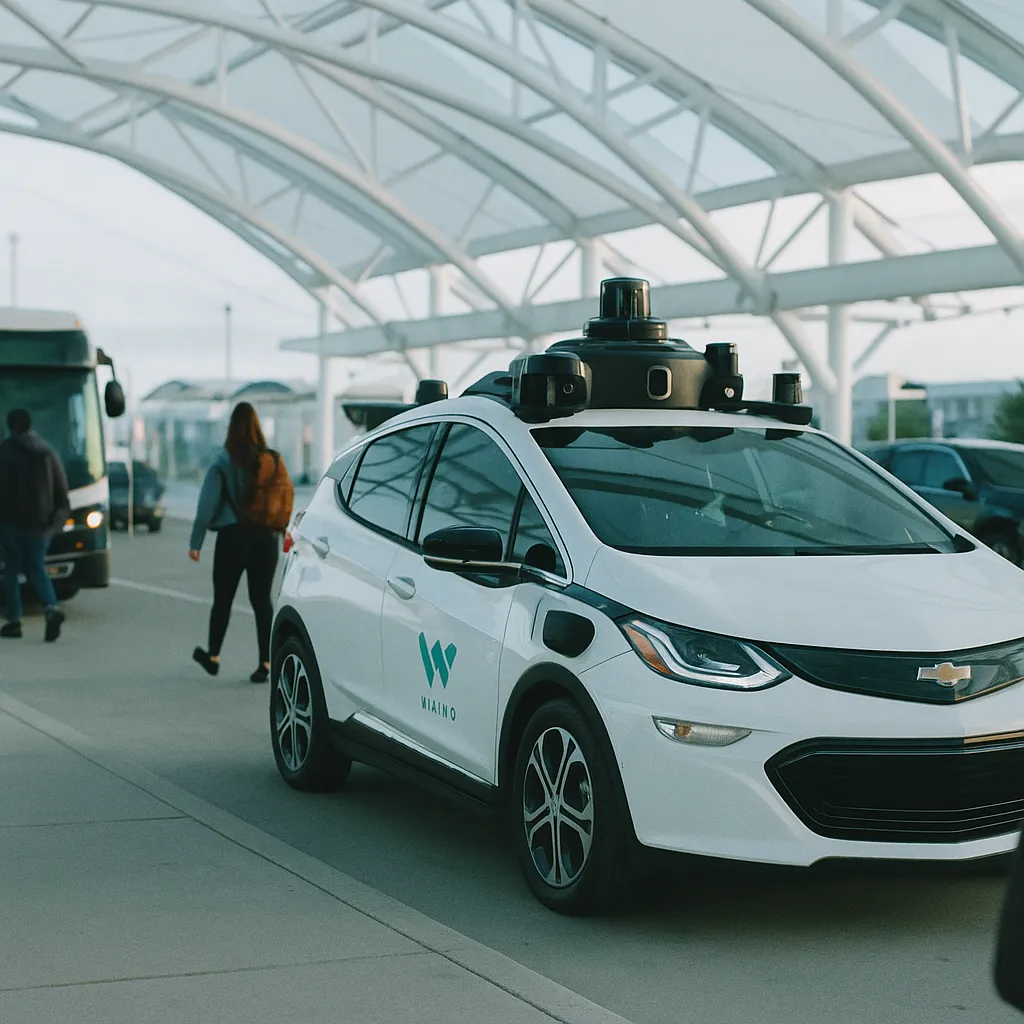
While Tesla's gap between promise and delivery is large, Waymo — Alphabet's AV subsidiary — has demonstrated genuine commercial scale. Waymo is operating fully driverless paid rides in San Francisco, Phoenix, and Los Angeles, with a stated target of 100,000 trips per week in 2026. The operational profile is different from Tesla's approach: Waymo uses LiDAR, operates in more strictly geofenced areas, and has spent far longer in public testing before commercial launch.
The Waymo comparison is instructive not because Waymo has solved the problem — it operates in favorable climates with extensively mapped roads — but because it shows that the last 10% problem is conquerable with sufficient capital, time, and engineering discipline. Tesla's approach of promising commercial scale before demonstrating pilot reliability runs counter to how Waymo has built regulatory and public trust.
What to Watch
Two near-term signals matter most:
-
Texas transportation authority permit filings — If Tesla's Austin fleet is genuinely preparing for expansion, permit applications should precede it. Watch public filings with TxDMV and the Austin Transportation Department.
-
Q2 2026 earnings — Tesla's earnings call in late July or early August will face direct analyst questions about robotaxi revenue. Actual booked ride revenue (not projection, not "planned capacity") will tell you whether the 12-vehicle Austin operation is generating any commercial return or is purely a demonstration program.
The AV revolution is real. The timeline has always been the question. For Tesla specifically, the gap between public statements and operational reality has grown large enough that it now deserves its own accounting.
Source: Marketplace — Will the autonomous vehicle revolution ever come?
Did this help you understand AI better?
Your feedback helps us write more useful content.
Get tomorrow's AI briefing
Join readers who start their day with NexChron. Free, daily, no spam.