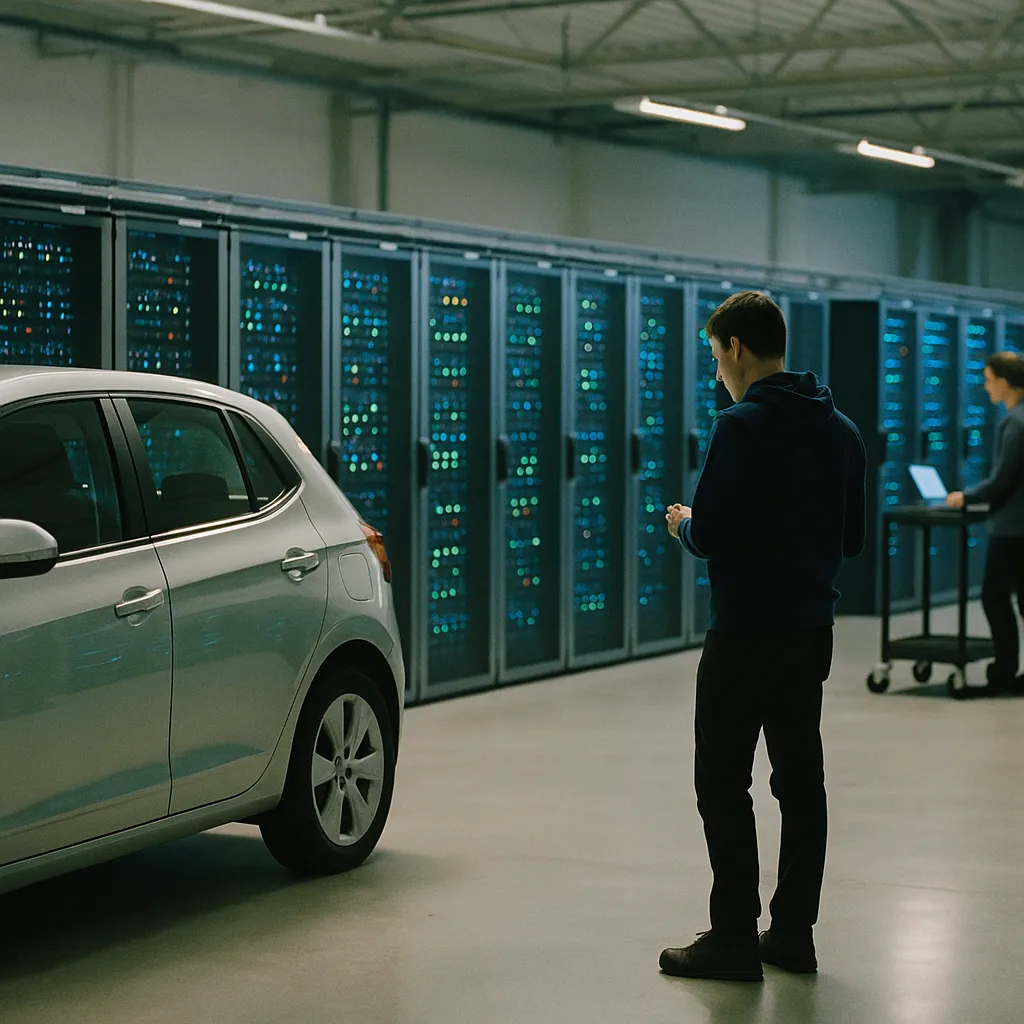
NVIDIA joined Ericsson, Nokia, T-Mobile, and nine other global telcos to commit to building 6G on AI-native open platforms — a decision that will shape wireless infrastructure for the 2030s.
NVIDIA and 12 Global Telcos Commit to Build 6G on AI-Native Open Platforms
By Hector Herrera | June 3, 2026 | Telecom
NVIDIA and a coalition of twelve global telecommunications companies announced a joint commitment on June 2, 2026 to architect the next generation of wireless networks — 6G — on AI-native, open, and secure platforms. The announcement includes Ericsson, Nokia, Deutsche Telekom, BT Group, SK Telecom, T-Mobile, SoftBank, and Cisco, spanning every major carrier region and equipment tier, and aligns with a June 2026 checkpoint in the 3GPP Release 21 specification timeline for 6G candidate technologies.
This is not a research collaboration or a pilot agreement. It is an industry-level architectural commitment — a declaration that 6G will be designed from the ground up for AI, not retrofitted to support it after the radio standards are already set.
What "AI-Native" Actually Means
Every cellular generation since 1G has added capabilities on top of a fundamentally human-engineered radio architecture. 5G introduced network slicing and edge computing but was largely retrofitted with AI as an optimization layer after the core standards were set. 6G, as this coalition envisions it, would embed AI decision-making directly into the network's core functions:
- Resource allocation: Dynamically reallocating spectrum in real time based on predicted demand patterns, rather than following static rules set by human engineers
- Interference management: Continuously adjusting to environmental conditions across millions of devices simultaneously
- Beamforming: Steering antenna signals using environmental modeling rather than pre-set parameters
- Security: Detecting intrusion attempts and rerouting traffic faster than any human-managed system can respond
An AI-native network does not use AI as a tool. The network itself is an inference system, with AI embedded in its decision loops at the physical layer.
The Open Platform Bet
The "open" in the coalition's commitment refers to the O-RAN (Open Radio Access Network) framework — a technical standard that disaggregates the hardware and software components of radio networks, allowing operators to mix and match equipment from different vendors rather than being locked into proprietary integrated systems.
Get this in your inbox.
Daily AI intelligence. Free. No spam.
The current 5G market is dominated by Ericsson and Nokia on infrastructure, with Huawei still holding significant market share outside the US and Europe. An open platform architecture for 6G would theoretically allow new entrants — including software-defined networking companies, cloud providers, and AI infrastructure vendors — to compete for components of the network stack that are currently controlled by two or three vendors.
NVIDIA's participation in this coalition is directly tied to that architectural bet. If AI inference is embedded in the network's core functions, and if that inference runs on GPU compute, NVIDIA becomes infrastructure for telecommunications in a way it is not today. A successful open AI-native 6G architecture would create a new GPU market inside every carrier's radio network.
Who Is in the Coalition
The twelve telcos represent a deliberate cross-section of the global carrier market:
- Ericsson and Nokia — the two largest Western 5G infrastructure vendors; their participation signals that the equipment side of the market is aligned with this design direction
- Deutsche Telekom and BT Group — European carrier leadership representing the EU and UK markets
- SK Telecom — South Korea, which has historically led in early-generation mobile deployment
- T-Mobile — the US carrier market
- SoftBank — Japan, and a significant global investment portfolio in AI and telecom infrastructure
- Cisco — enterprise networking and security expertise that matters when "AI-native" also means "securable at scale"
A coalition of this breadth does not produce research papers. It produces standards submissions, procurement commitments, and vendor selection decisions that shape what gets built.
The Timeline and Why Now
6G commercial deployment is not expected before 2030 at the earliest, with formal standardization maturing around 2028-2029. The June 2026 3GPP Release 21 checkpoint is an early architecture definition phase — the equivalent of agreeing on what problem you are solving before committing to how you will solve it.
The decisions made at this stage have a long shadow. The architectural choices embedded in 6G standards determine what silicon gets designed, what software stacks get built, and which companies are positioned to supply equipment when carriers begin deployment at scale. Aligning now — at the architecture definition stage — is how you ensure your preferred approach ends up in the standard, rather than fighting to insert it after the draft is already circulated.
The timing also reflects a geopolitical dynamic. China's major vendors — Huawei and ZTE — are simultaneously developing their own 6G proposals. The Western coalition's announcement establishes an alternative design center that can compete in the 3GPP standards process, where technical proposals from organized coalitions carry more weight than proposals from individual companies.
What to Watch
Watch for formal 3GPP submission documents from coalition members in the coming months — these will translate the high-level commitment into specific technical proposals that standards bodies can evaluate. Watch whether Chinese vendors respond with competing AI-native 6G proposals that diverge from this coalition's open-platform approach; the 6G standards process is also a geopolitical contest. And watch NVIDIA's quarterly earnings for any disclosures about telecom infrastructure revenue — if AI-native 6G moves from commitment to procurement, it will show up in NVIDIA's data center segment before it shows up in carrier press releases.
Did this help you understand AI better?
Your feedback helps us write more useful content.
Get tomorrow's AI briefing
Join readers who start their day with NexChron. Free, daily, no spam.