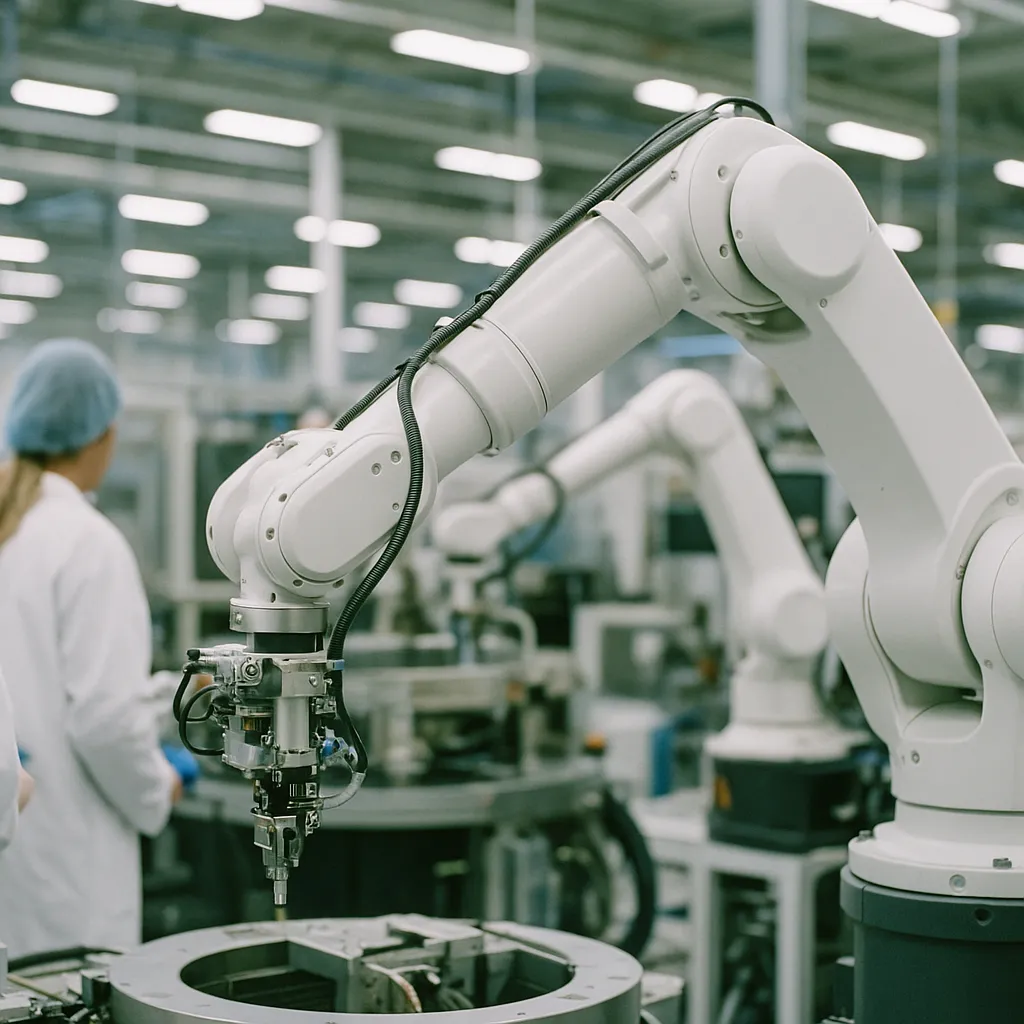
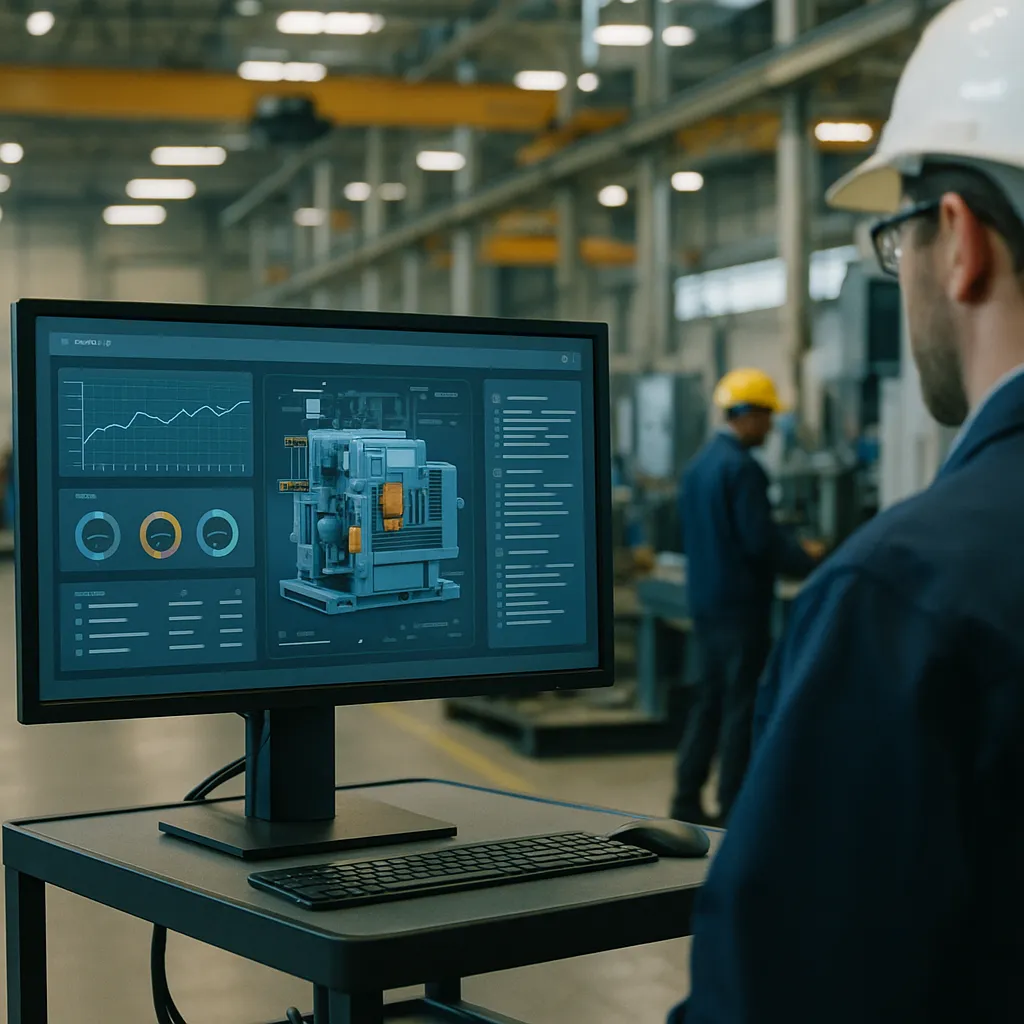
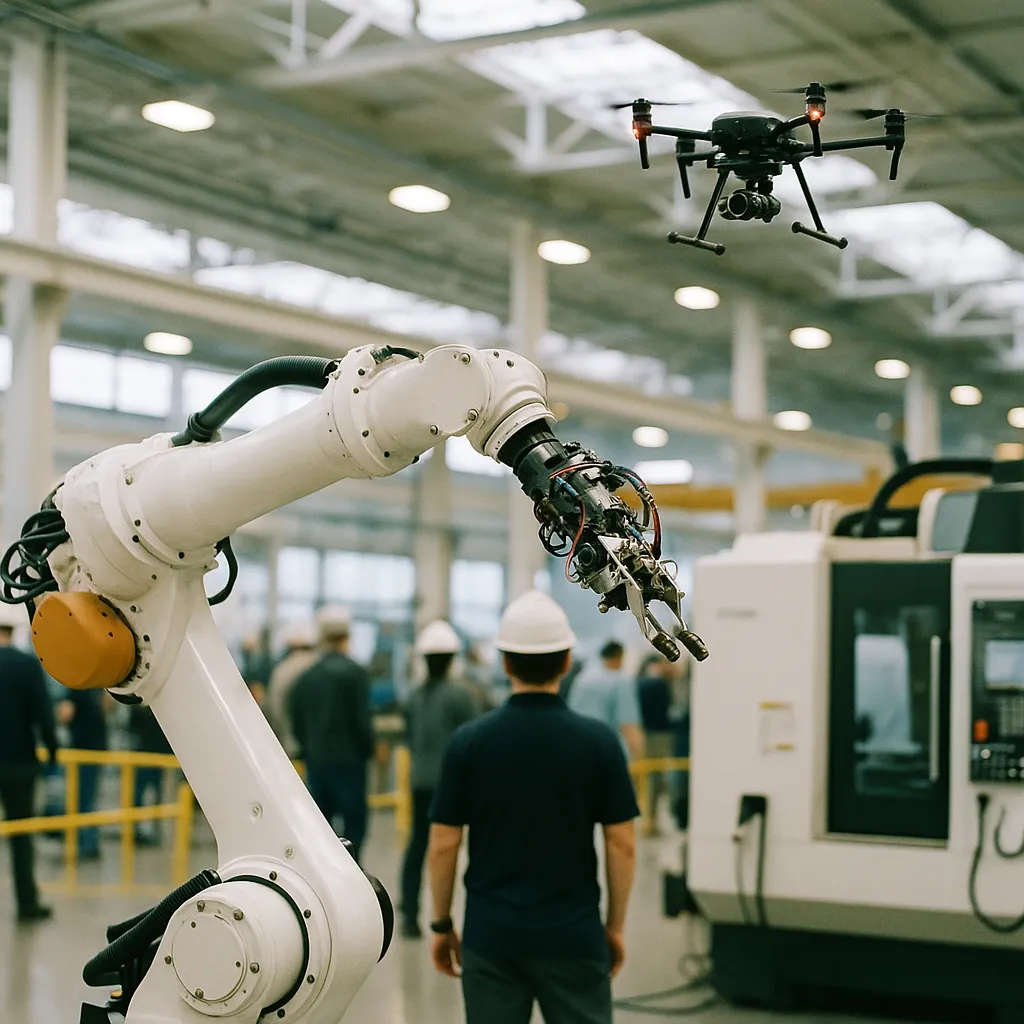
NVIDIA has assembled a coalition of U.S. manufacturers committing to deploy AI-powered factories on its physical AI stack, positioning itself as the infrastructure layer beneath the robotics transformation reshaping American factory floors.
NVIDIA Rallies U.S. Manufacturers Around Physical AI Reindustrialization
NVIDIA has assembled a coalition of U.S. manufacturers and robotics companies committing to deploy AI-powered factories built on its physical AI software stack, positioning itself as the infrastructure layer beneath the automation transformation reshaping factory floors. The announcement — framed explicitly as a reindustrialization push for American manufacturing — spans automotive, defense, and electronics sectors, and arrives as factory robot deployment intent hits levels the industry hadn't projected until later in the decade.
The timing reflects a genuine shift in manufacturing investment posture. NVIDIA's own 2026 industrial data shows that 13% of manufacturers now report active intent to deploy humanoid robots in factory environments within their planning horizon — a figure that was in the low single digits two years ago. Coalition commitments don't build factories, but coordinated vendor-customer alignment around a common platform is how industrial technology transitions typically move from pilot to production.
The Physical AI Stack NVIDIA Is Centering
NVIDIA's physical AI announcement centers on three products it has been developing for industrial deployment:
NVIDIA Cosmos is a world foundation model — an AI trained on physical environments that generates synthetic training data for robots and autonomous machines. The practical value: training robots for factory tasks normally requires enormous volumes of real-world data from physical trials, which is slow and expensive. Cosmos lets developers generate millions of simulated physical scenarios, dramatically compressing the training cycle.
NVIDIA Isaac is the robotics development platform — the software layer for simulation, deployment, and management of robotic systems in production environments. It sits between the AI models and the physical robots, handling the engineering integration that makes AI usable on actual factory equipment.
NVIDIA IGX Thor is the industrial edge AI computer — the hardware that runs inference at the point of action on the factory floor, designed with functional safety certification for environments where errors have physical consequences.
Together these three layers form a complete stack: train in simulation (Cosmos), develop and manage (Isaac), run on-site (IGX Thor). A manufacturer that adopts all three becomes dependent on NVIDIA for every layer of its factory AI infrastructure.
Get this in your inbox.
Daily AI intelligence. Free. No spam.
Why the Coalition Architecture Matters
NVIDIA's move here is less about individual product announcements — these products have been shipping — and more about the coalition structure itself.
The company that defines the standard simulation environment, the robotics middleware, and the industrial edge compute before competitors can establish their own platform effectively owns the AI stack that every robot on the participating factory floor runs on. That is a significant leverage position in a market that is just beginning to decide what "AI-native manufacturing" means.
This is the same playbook that established NVIDIA's data center dominance: seed the training and inference infrastructure before the workloads are fully defined, then become structurally embedded as the workloads scale. Applied to physical AI, the target is every robot, autonomous vehicle, and AI-driven inspection system in every factory that doesn't want to build its own stack from scratch.
For manufacturers, the coalition offer is straightforward: reduced integration risk. Rather than assembling AI factory infrastructure from components built to different standards by different vendors, participating companies get a coherent stack backed by a single company's support and roadmap.
The Reindustrialization Framing
NVIDIA's explicit "reindustrialization of American manufacturing" language is deliberate positioning, not incidental. It aligns with bipartisan policy interest in domestic manufacturing capacity and maps onto current administration emphasis on U.S. technology leadership. Whether tariff pressure on imported goods, infrastructure investment legislation, or domestic content requirements advance through Congress, the political environment is favorable to capital expenditure on domestic automated manufacturing.
The economic argument runs parallel: labor shortages and rising wages in manufacturing are making automation increasingly cost-competitive against traditional headcount. The additional claim that AI-native automation — robots that learn from operational data and improve over time — offers something that previous generations of rigid industrial automation couldn't deliver is the central pitch for why this cycle is different.
Both arguments together — political tailwind plus economic inevitability — are designed to move manufacturers from "we're evaluating this" to "we're committing capital now."
What to Watch
Announcements are not deployments. The metric that matters is whether coalition commitments convert to capital expenditure in 2026 and 2027. Watch for participating manufacturers to discuss specific factory AI investment timelines in Q3 and Q4 2026 earnings calls — that's where CFOs attach numbers to strategic commitments.
NVIDIA's own manufacturing AI revenue line will be the most direct leading indicator. If physical AI is generating meaningful contract revenue rather than just partnership agreements by year-end, the coalition has traction. If the numbers don't move, the announcement was positioning, not a market turn.
By Hector Herrera | Source: NVIDIA Newsroom
Did this help you understand AI better?
Your feedback helps us write more useful content.
Get tomorrow's AI briefing
Join readers who start their day with NexChron. Free, daily, no spam.