Manufacturer interest in large language models doubled to 35% in a single year, and humanoid robot demand hit 13% for the first time — two signals mapping the labor and productivity pressures reshaping the factory floor.
Manufacturer AI Adoption Report: LLM Interest Doubles, Humanoid Robot Demand Hits 13%
Manufacturer interest in large language models jumped from 16% to 35% in a single year, and 13% of manufacturers now report interest in humanoid robots for the first time — according to the 2026 State of Industrial AI Report from Automation.com. Both figures represent inflection points in how factories are thinking about intelligence on the production floor.
The doubling of LLM interest is a productivity story. The emergence of humanoid robot demand is a labor story. Together, they map the two pressures shaping U.S. manufacturing in 2026.
Why LLM Adoption Is Accelerating in Factories
Manufacturing has traditionally lagged software and financial services in AI adoption for structural reasons: safety certification requirements for production systems, decades-old legacy equipment that predates digital connectivity, union agreements that constrain technology deployment timelines, and floor environments where model errors carry physical consequences — not just business ones.
The shift toward LLMs started not on the production line but in two adjacent areas: workforce training and equipment diagnostics.
Training use cases are straightforward. LLM-powered tools answer worker questions about equipment operation, safety procedures, and quality standards in natural language — replacing static manuals that nobody reads and reducing the institutional knowledge loss that follows high workforce turnover. A manufacturer that loses an experienced technician no longer loses twenty years of process knowledge encoded only in that person's head. The knowledge becomes queryable.
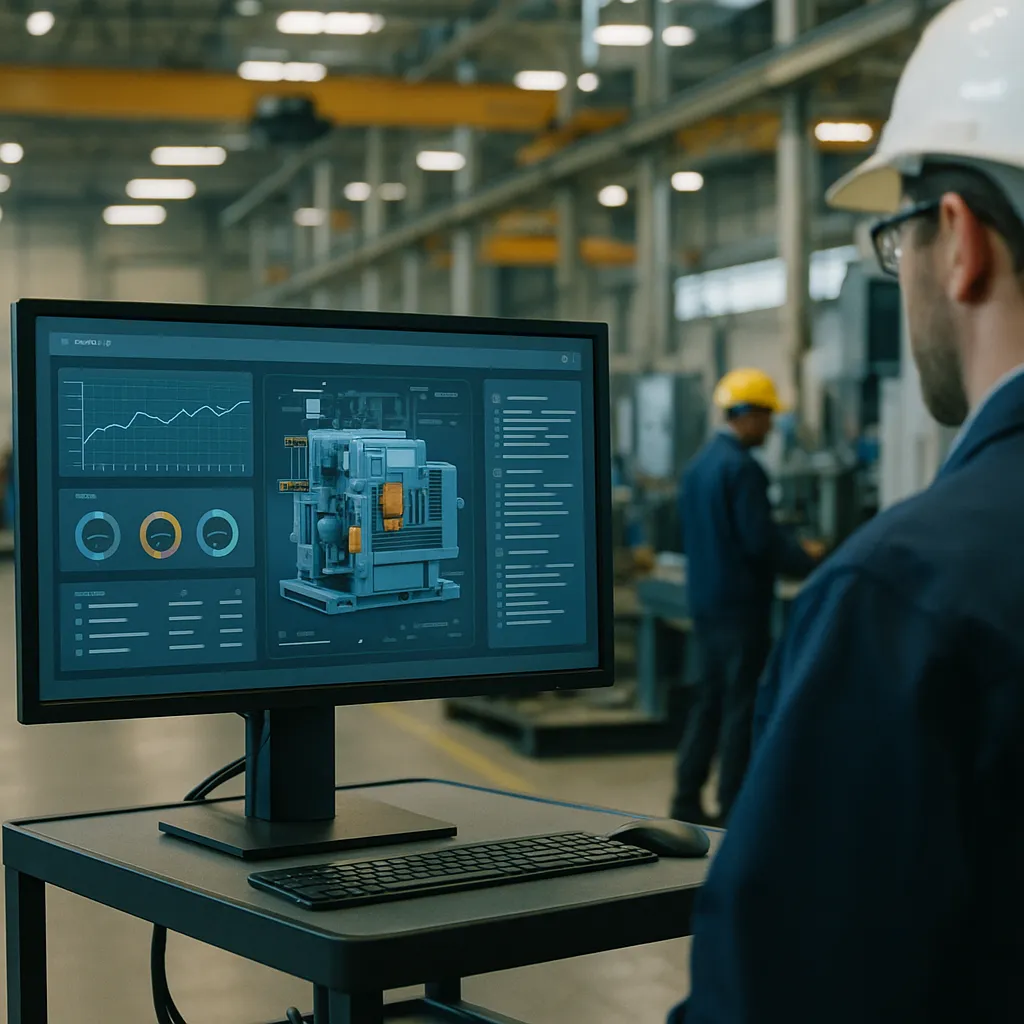
Diagnostic use cases are technically more complex but potentially more valuable. AI systems that continuously monitor equipment sensor data and surface anomalies in natural language — explaining not just that a bearing is likely to fail but why, and what the failure mode history suggests about root cause — are reducing unplanned downtime in early commercial deployments.
The jump from 16% to 35% LLM interest per the Automation.com report reflects manufacturers who saw these results in peer facilities and moved from watching to planning. The next 12 months will move a significant fraction of those planners into active deployment.
The Humanoid Robot Signal
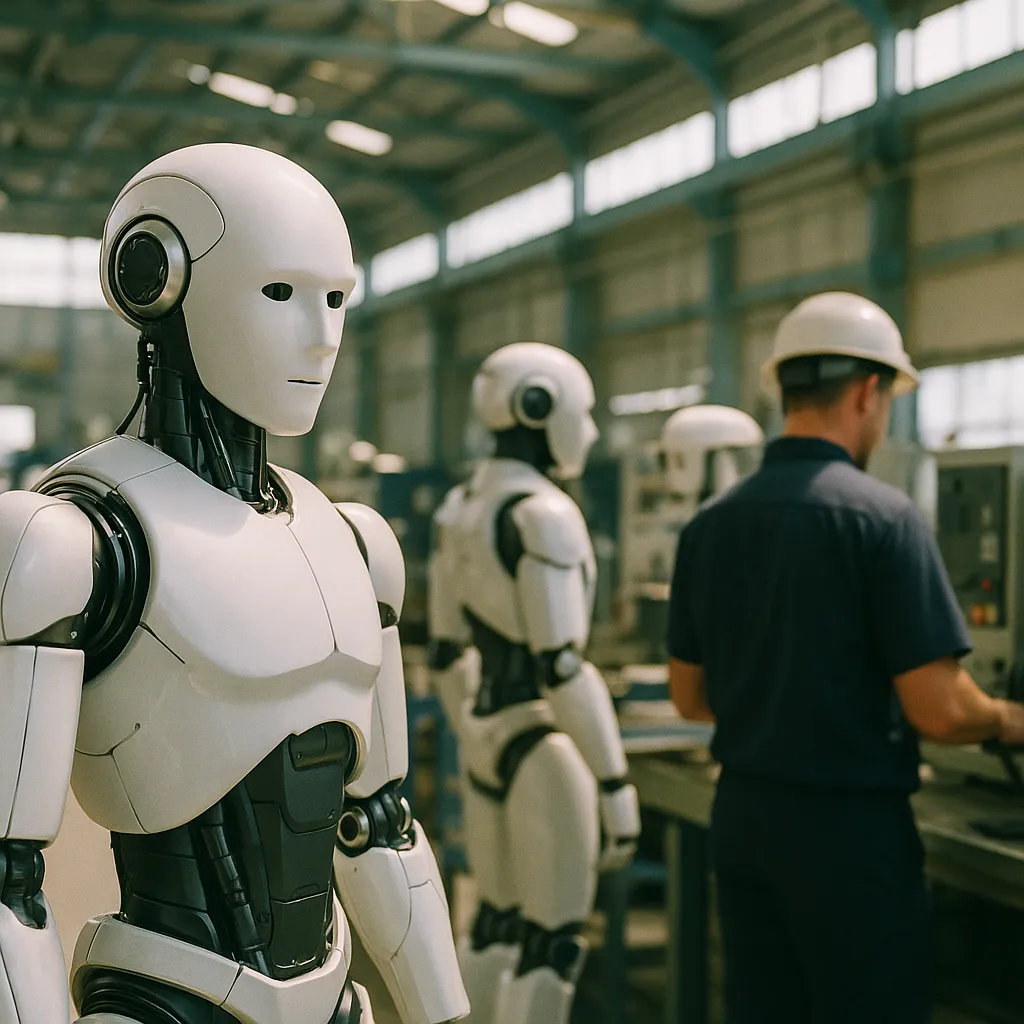
The 13% humanoid interest figure requires context to interpret correctly. Most manufacturers don't have a humanoid robot purchase order in place. The figure represents planning intent and budget horizon, not immediate procurement.
But it's significant for a specific structural reason: most factories were designed for human workers. Floor layouts, aisle widths, workstation heights, tool storage configurations, and material handling systems all assume a bipedal human operator moving through spaces designed for human ergonomics.
Get this in your inbox.
Daily AI intelligence. Free. No spam.
Wheeled or fixed-arm industrial robots require facility modifications — lowered workstations, widened clearances, added navigation infrastructure — that can cost nearly as much as the robots themselves. In many older facilities, the retrofit cost makes the economics marginal.
Humanoid robots fit the existing physical environment. They can use the same tools, navigate the same aisles, handle irregular objects that current human workers handle, and operate workstations without modification. For facility managers doing long-term capital planning, that distinction matters enormously.
The labor shortage context amplifies this calculation. Manufacturing has faced a structural skilled worker deficit that predates the AI wave — the Bureau of Labor Statistics projects over 2 million unfilled manufacturing positions through 2030. For facility managers looking at a decade of worker scarcity, a robot that fits the existing floor plan without a major retrofit isn't a futuristic concept. It's a capital allocation decision competing with a hiring plan that may not deliver.
Companies including Figure AI, Apptronik (acquired by Samsung), and Agility Robotics (owned by Amazon) are the primary commercial players. None are at manufacturing scale yet. But the 13% interest figure means the sales pipelines are real and the evaluation conversations are happening at the plant manager level, not just in R&D.
What This Means for Manufacturing Strategy
The combination of LLM adoption and humanoid robot interest points toward a specific factory vision: human workers handling complex judgment calls and relationship-intensive work, LLMs managing knowledge transfer and predictive diagnostics, humanoid robots handling physical repetition and material movement.
That's not a near-term reality for most facilities. But the planning horizon has shortened significantly from where it was 18 months ago. Three specific implications for manufacturing leadership:
Start the data infrastructure now. LLM-powered diagnostics require clean, labeled sensor data. Machines not currently generating structured telemetry need to be instrumented before the software is worth deploying. That infrastructure work takes six to twelve months and can be started independently of any AI software selection.
Run humanoid robot evaluations in bounded environments. Warehouse receiving, quality inspection staging, and end-of-line packing are lower-risk starting points than complex assembly. Several manufacturers are running evaluation units in exactly these settings, and the learnings from bounded deployments will inform broader rollout decisions in 2027 and 2028.
Address AI in new labor agreements proactively. Union contracts signed today will govern technology deployment for the next three to five years. Vague AI provisions get contested later. Specific, negotiated frameworks for how AI tools are introduced, how affected workers are notified, and what retraining obligations apply reduce future friction significantly.
What to Watch
Figure AI and Apptronik commercial announcements in the second half of 2026 will test whether the 13% humanoid interest converts to purchase orders. Both companies have indicated they are moving from pre-production to limited commercial runs this year.
LLM diagnostic deployments at major auto manufacturers — Ford, GM, and Toyota have all announced factory AI initiatives — will produce the reference case studies that accelerate broader adoption. A verified, quantified unplanned-downtime reduction from a major automaker changes the calculus for every supplier and peer facility watching.
The 2026 report reflects an industry in transition. The 2027 version will reflect one already transformed.
By Hector Herrera
Did this help you understand AI better?
Your feedback helps us write more useful content.
Get tomorrow's AI briefing
Join readers who start their day with NexChron. Free, daily, no spam.