45% of manufacturers have live IIoT connectivity; manufacturer interest in large language models jumped from 16% to 35% in one year. The three-technology convergence of AI, IoT, and robotics is now operational infrastructure, not a roadmap item.
AI, IoT, and Robotics Convergence Moves From Factory Pilots to Daily Operations
By Hector Herrera | May 13, 2026 | Manufacturing
The convergence of artificial intelligence, the Industrial Internet of Things (IIoT), and robotics in manufacturing is no longer a technology roadmap item — it is operational infrastructure. New industry data shows 45% of manufacturers now have live IIoT connectivity on at least some equipment, manufacturer interest in large language models jumped from 16% in 2025 to 35% in 2026, and AI-driven vision systems are now fast enough to operate directly inside production stations rather than in separate quality control cells downstream.
Three Technologies That Are Now One System
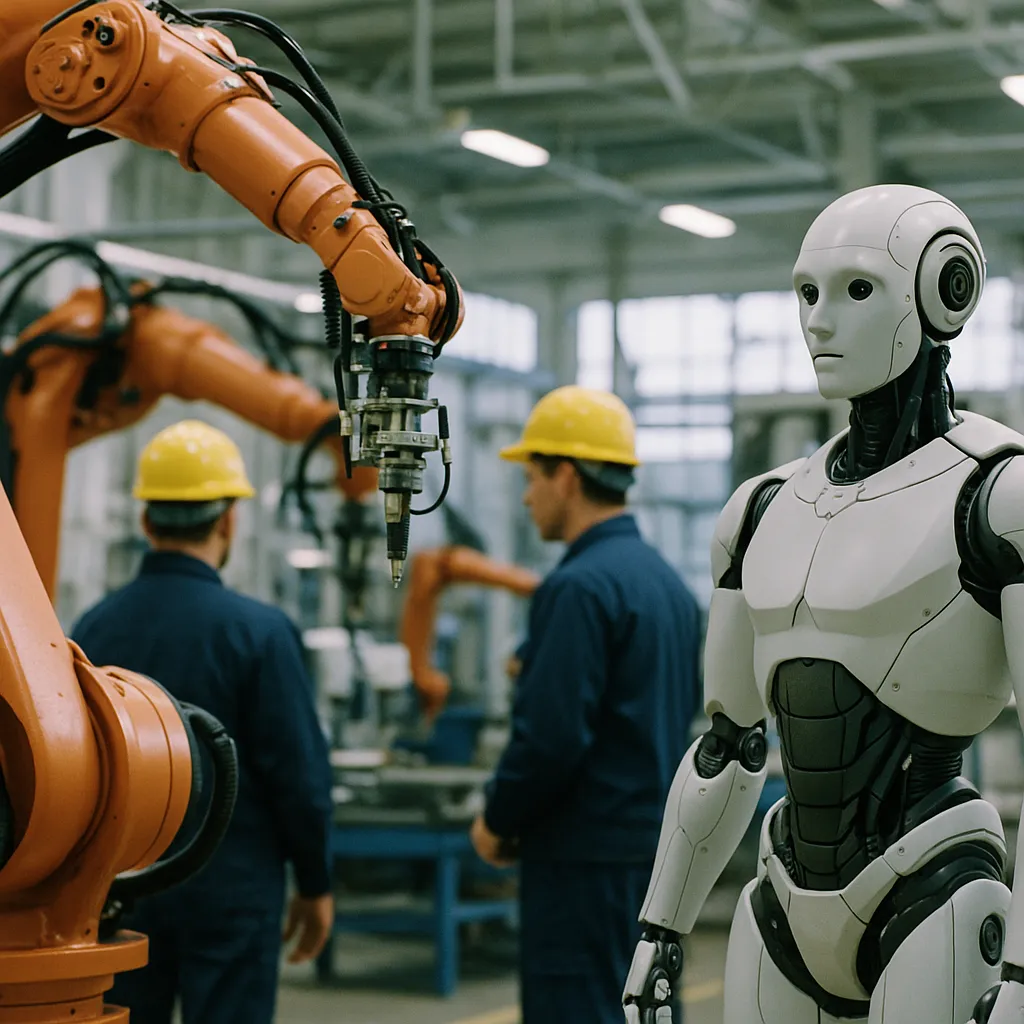
For most of the past decade, AI, IoT, and robotics were adopted as separate initiatives inside manufacturing companies. A plant might deploy IoT sensors for predictive maintenance, robotic arms for repetitive assembly tasks, and AI software for demand forecasting — all independently, often from different vendors, with different integration layers and different data infrastructures.
According to recent industry analysis, that separation is collapsing. The three technologies are now being designed and deployed as integrated systems — where sensor data from IoT-connected equipment feeds AI models that optimize robot behavior in real time, and where robot performance data feeds back to refine IoT monitoring thresholds and AI predictive models.
The convergence produces capabilities that none of the three technologies delivers independently.
What the Data Shows
IIoT adoption: 45% of manufacturers report live connectivity on at least some production equipment. This is the data foundation — without connected equipment, AI models have nothing to train on and nothing to optimize in real time. The 45% figure also means 55% of manufacturers still have substantial connectivity gaps.
Get this in your inbox.
Daily AI intelligence. Free. No spam.
LLM adoption interest: Manufacturer interest in large language models jumped from 16% in 2025 to 35% in 2026 — more than doubling in a single year. This captures intent and active evaluation as well as deployment, but the pace of increase reflects a shift from skepticism about whether LLMs belong in industrial environments to active investigation of where they fit.
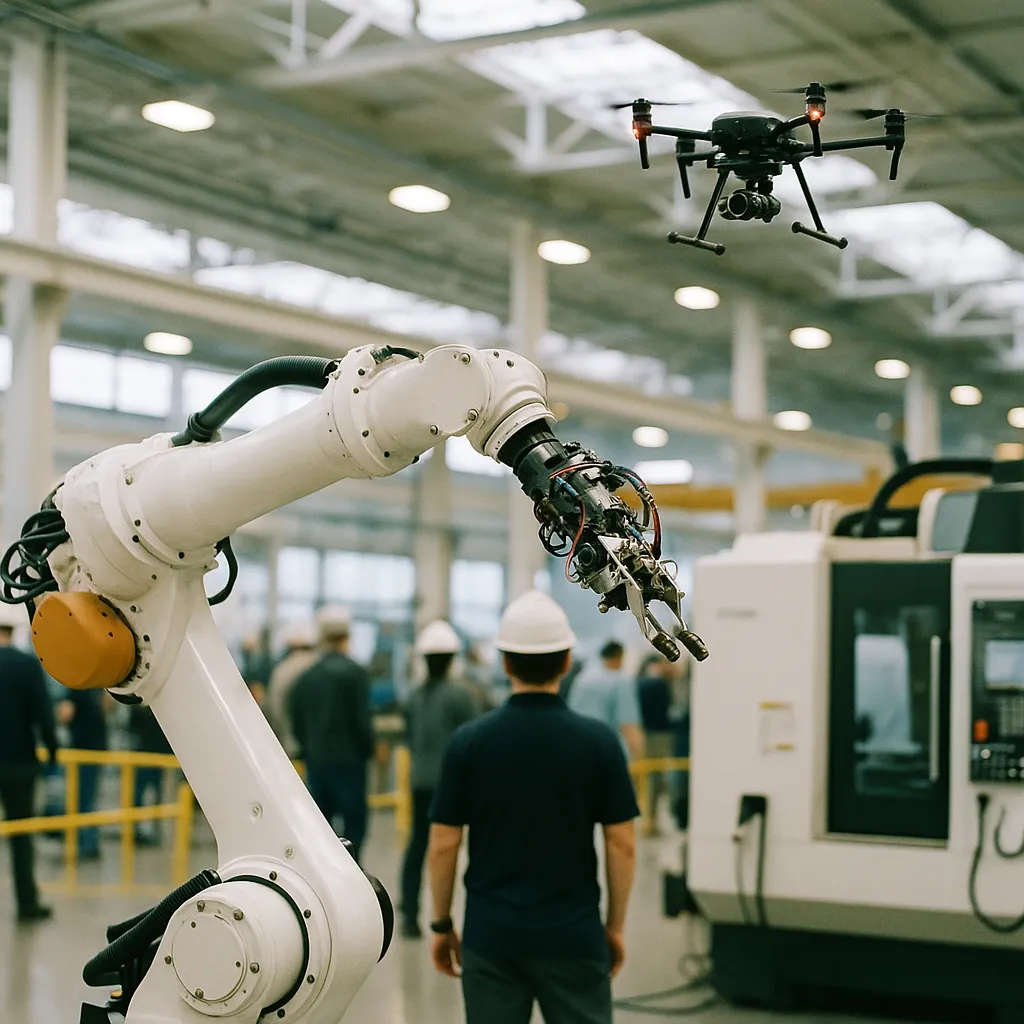
Vision system integration: AI-driven visual inspection systems have improved enough in processing speed that they can now be embedded directly in production stations, checking components and assemblies in real time rather than routing products to separate quality inspection cells at the end of a production line. This changes both quality yield rates and production line design economics.
Digital Twins Have Left the Pilot Phase
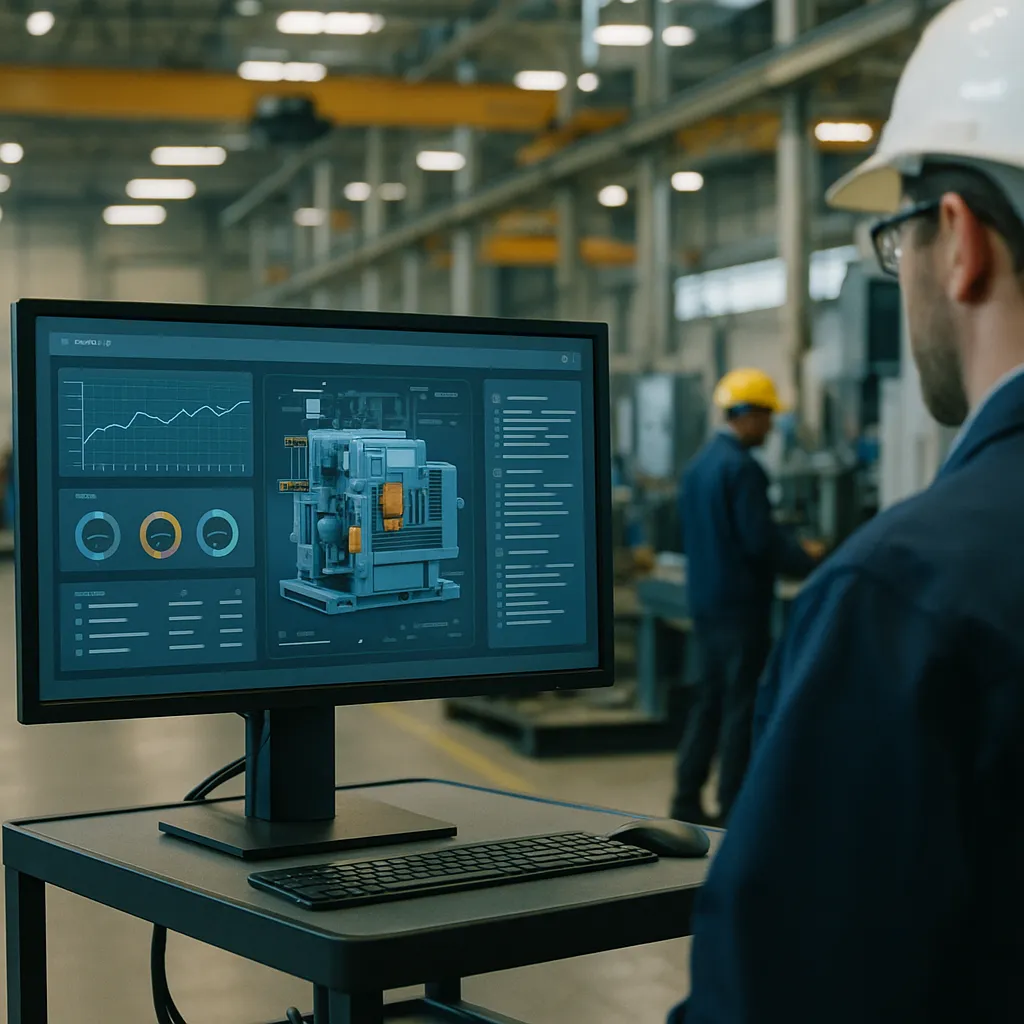
The most significant structural change is what has happened with digital twins — software models that mirror physical production systems in real time, allowing operators to run simulations and test changes before implementing them on the floor.
Two years ago, digital twin technology was primarily a pilot program tool: interesting for R&D and capital project planning, but not part of daily operations. The convergence of better IoT data feeds, faster AI modeling, and improved simulation software has changed that. Digital twins at leading manufacturers are now running continuously, used for daily schedule optimization, capacity rebalancing during supply disruptions, and real-time energy management.
The shift from pilot to daily operations infrastructure is the marker that separates technology demonstration from industrial transformation.
Where the Gains Are Concentrating
Not all manufacturing segments are moving at the same pace. The sectors showing the deepest AI-IoT-robotics integration share common characteristics:
- High-volume, precision manufacturing — automotive, electronics, aerospace — where defect rates have direct financial consequences and production volumes justify integrated systems investment
- Facilities with significant prior automation investment — companies that deployed earlier generations of robotics have the mechanical infrastructure on which to layer AI and IoT capabilities
- Operations facing labor cost pressure or skilled labor scarcity — particularly in North American and European markets where the economics of automation are improving relative to human labor
Smaller manufacturers and job shops face a different picture. The upfront capital requirements for full IIoT connectivity plus AI integration plus modern robotics remain substantial, and the ROI horizon is longer on lower volumes. The convergence story is real, but it is not yet democratized across the full manufacturing sector.
What to Watch
The next phase of this convergence is agentic AI in manufacturing — systems that not only analyze production data but take autonomous corrective actions, adjusting machine parameters, rerouting components, and flagging supply chain anomalies without waiting for human operators to review recommendations. Early deployments exist; broad adoption will follow as reliability data accumulates and manufacturers develop the governance frameworks to define where autonomous AI action is appropriate and where human authorization is required.
Did this help you understand AI better?
Your feedback helps us write more useful content.
Get tomorrow's AI briefing
Join readers who start their day with NexChron. Free, daily, no spam.