Standard Bots closed a $200 million Series C at a $1 billion valuation, becoming America's largest manufacturer of AI-native industrial robots with customers including Amazon, Lockheed Martin, and the U.S. Army.
Standard Bots Raises $200 Million, Hits $1 Billion Valuation as American AI Robot Maker
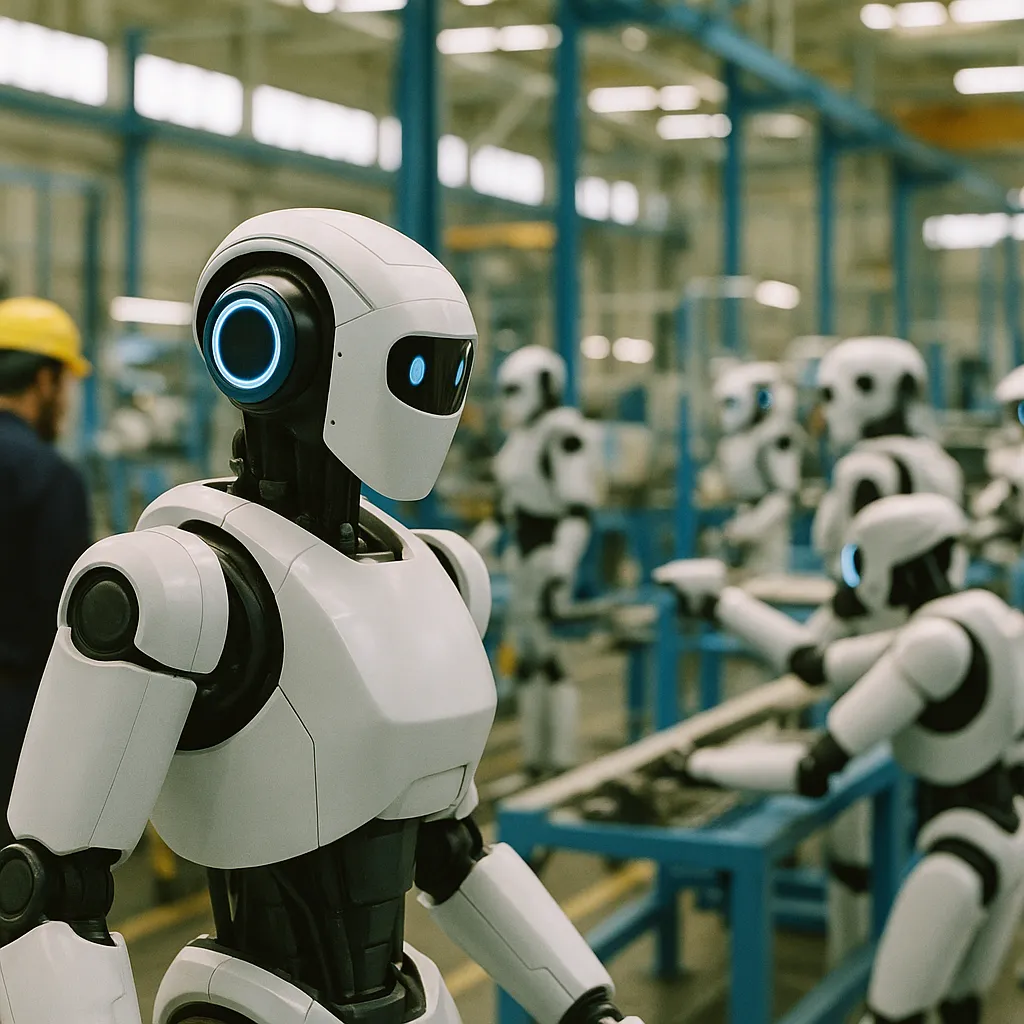
Standard Bots closed a $200 million Series C at a $1 billion valuation on June 9, 2026, becoming America's largest manufacturer of AI-native industrial robots — and one of the few in the sector to build its machines entirely in the United States. The funding round, led by RoboStrategy and General Catalyst, arrives as the U.S. government and private sector are both racing to reduce dependence on foreign-manufactured industrial automation equipment.
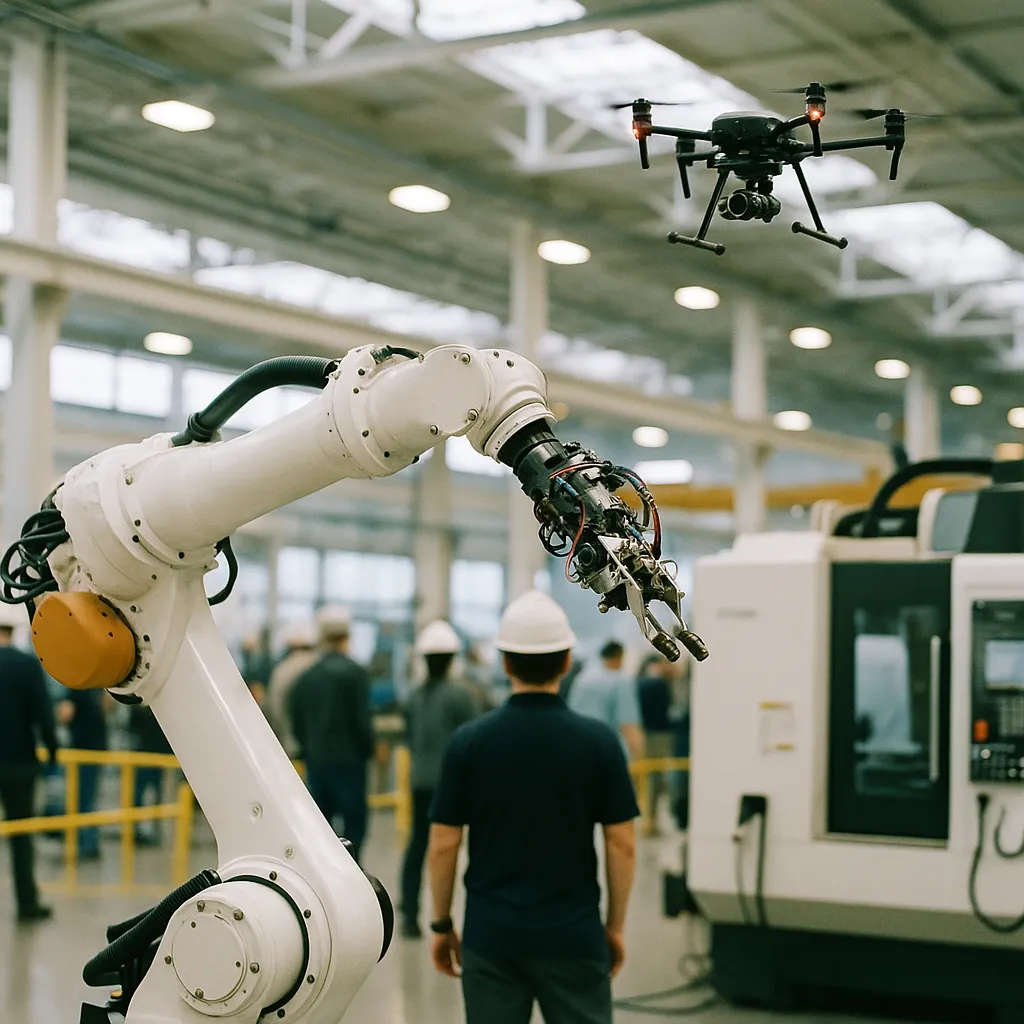
The company's technology distinction matters here: Standard Bots' robots are taught by demonstration, not by code. A factory worker physically guides the robot arm through a task once; the robot learns the motion pattern and replicates it. No programming degree required. That design choice has made the company competitive in manufacturing environments that don't employ robotics engineers — which describes most of American manufacturing.
The Funding and the Company
Standard Bots' Series C announcement makes it a unicorn — a startup valued at $1 billion or more — in a sector where hardware companies rarely achieve that benchmark on the speed typical of software. Industrial robotics has long capital cycles: design, manufacture, sell, install, support. The fact that Standard Bots reached a $1 billion valuation while still scaling production indicates investors see significant competitive moat in the teach-by-demonstration approach and the domestic manufacturing positioning.
The customer roster underscores that the technology is working in production, not just in demos:
- Sunoco — fuel and petrochemical logistics
- Lockheed Martin — defense manufacturing
- Amazon — warehouse and fulfillment automation
- U.S. Army — defense and logistics applications
These are not pilot customers. Each represents a demanding operational environment where reliability is non-negotiable. A robot that fails in a fulfillment center costs Amazon throughput per minute. A robot that fails in a Lockheed facility creates compliance and safety documentation events. Standard Bots' ability to maintain and expand those relationships reflects production-grade reliability.
Why "Taught by Demonstration" Is a Real Differentiator
Industrial robots have existed for decades. The reason they haven't penetrated smaller manufacturers is not cost alone — it's programming complexity. Traditional robot arms require specialized integrators to write motion programs, define safety zones, and tune parameters for each new task. Reprogramming for a new product run can take days and requires outside contractors. That economics model works for Toyota but not for a 200-person machine shop.
Get this in your inbox.
Daily AI intelligence. Free. No spam.
Standard Bots breaks that constraint. The demonstration-based learning model compresses task setup from days to hours, eliminates the integrator dependency, and allows factory floor workers to reconfigure the robot themselves. In manufacturing environments where product variety is high and run lengths are short — exactly the environment that defines most American mid-market manufacturing — that flexibility is the difference between AI adoption and a robot that sits idle between large orders.
The AI layer handles generalization: the robot doesn't just replay a recorded motion, it understands the task well enough to adapt to minor variations in part position, orientation, or dimension. That's the capability that separates current-generation AI-native robots from earlier teach-and-repeat systems.
The American Manufacturing Angle
Standard Bots building in the United States is increasingly a commercial argument, not just a patriotic one. Section 301 tariffs on Chinese goods, combined with growing scrutiny of technology supply chains in defense-adjacent manufacturing, have made domestic sourcing a procurement requirement rather than a preference for customers like Lockheed and the Army.
The company's projection — 10% of all new U.S. industrial robot deployments by 2027 — would represent a significant market share shift. The United States installed approximately 44,000 industrial robots in 2024, according to the International Federation of Robotics. Ten percent of new deployments at 2027 volumes would put Standard Bots at 5,000 to 6,000 units per year. Reaching that target requires both production capacity expansion and continued channel development — both of which the Series C is positioned to fund.
What the Investment Signals About the Sector
RoboStrategy and General Catalyst are not specialty robotics investors placing niche bets. General Catalyst, in particular, has a history of funding companies at inflection points in industries undergoing structural technology transition — healthcare (Livongo), fintech (Stripe), and enterprise software. Their lead position in a robotics round signals a belief that industrial automation is at that same inflection point now.
The adjacent context matters: Nvidia's recent announcements around physical AI, the Nvidia-Hyundai robotics hub in South Korea, and the wave of humanoid robot deployments at companies like BMW and Schaeffler are all pointing to the same conclusion — physical AI is graduating from lab demonstration to factory floor at scale. Standard Bots' timing is calibrated to that shift.
What to Watch
The $200 million will fund manufacturing capacity expansion and sales team growth. Watch for Standard Bots to announce new facility investments in Q3 2026 as it moves to meet the 10% deployment share target. Watch also for whether the U.S. Army and Lockheed contracts evolve from pilot deployments into multi-year program-of-record agreements — that transition would signal the Defense Department is treating AI-native domestic robots as a serious logistics and manufacturing asset, not a technology experiment.
Hector Herrera covers AI in manufacturing and robotics for NexChron.
Did this help you understand AI better?
Your feedback helps us write more useful content.
Get tomorrow's AI briefing
Join readers who start their day with NexChron. Free, daily, no spam.