NVIDIA released an open Physical AI Data Factory Blueprint that lowers the cost of generating synthetic training data for robotics, vision AI, and autonomous vehicles — and positions Omniverse as the default physical AI infrastructure.
NVIDIA Opens Its Physical AI Data Factory Blueprint — and Signals Its Omniverse Strategy
By Hector Herrera | June 6, 2026 | Science
NVIDIA announced an open Physical AI Data Factory Blueprint that lowers the cost of generating synthetic training data for robotics, vision AI agents, and autonomous vehicles — and in doing so, signals the company's long-term play to make its Omniverse simulation platform the default infrastructure for embodied AI development. The release solves a specific bottleneck: you can't train a robot on real-world data alone, and until now, building the simulation environments needed for synthetic data generation required expensive, proprietary toolchains that most teams couldn't afford.
Physical AI — systems that perceive, reason about, and act in the real world — requires training data volumes that real-world operation cannot provide at safe or affordable cost. A self-driving vehicle can't be driven into every crash scenario to learn from it. A robotic arm can't drop thousands of fragile objects to learn how they break. Simulation fills that gap, but building physically accurate simulation environments has historically required specialized engineering teams and months of setup. NVIDIA's blueprint is designed to change that.
What the Blueprint Provides
According to the NVIDIA Newsroom announcement, the Physical AI Data Factory Blueprint provides:
- A framework for building physically accurate simulation environments at scale without requiring proprietary toolchains
- Tools for generating synthetic training data calibrated to the sensor inputs — cameras, LiDAR, depth sensors — that robotic systems actually use
- Open access to the architecture, meaning research institutions, startups, and enterprise teams can adopt it without licensing Omniverse at the full commercial tier
The "physically accurate" qualifier is critical. Bad synthetic data is worse than no data. A robot trained on simulation environments that don't accurately model material friction, lighting variation, or object weight will fail in real-world deployment in ways that are hard to diagnose. NVIDIA's framework builds on physics simulation capabilities it has developed across gaming (PhysX engine) and industrial digital twin applications — domains where physical accuracy is commercially necessary.
The Three Target Applications
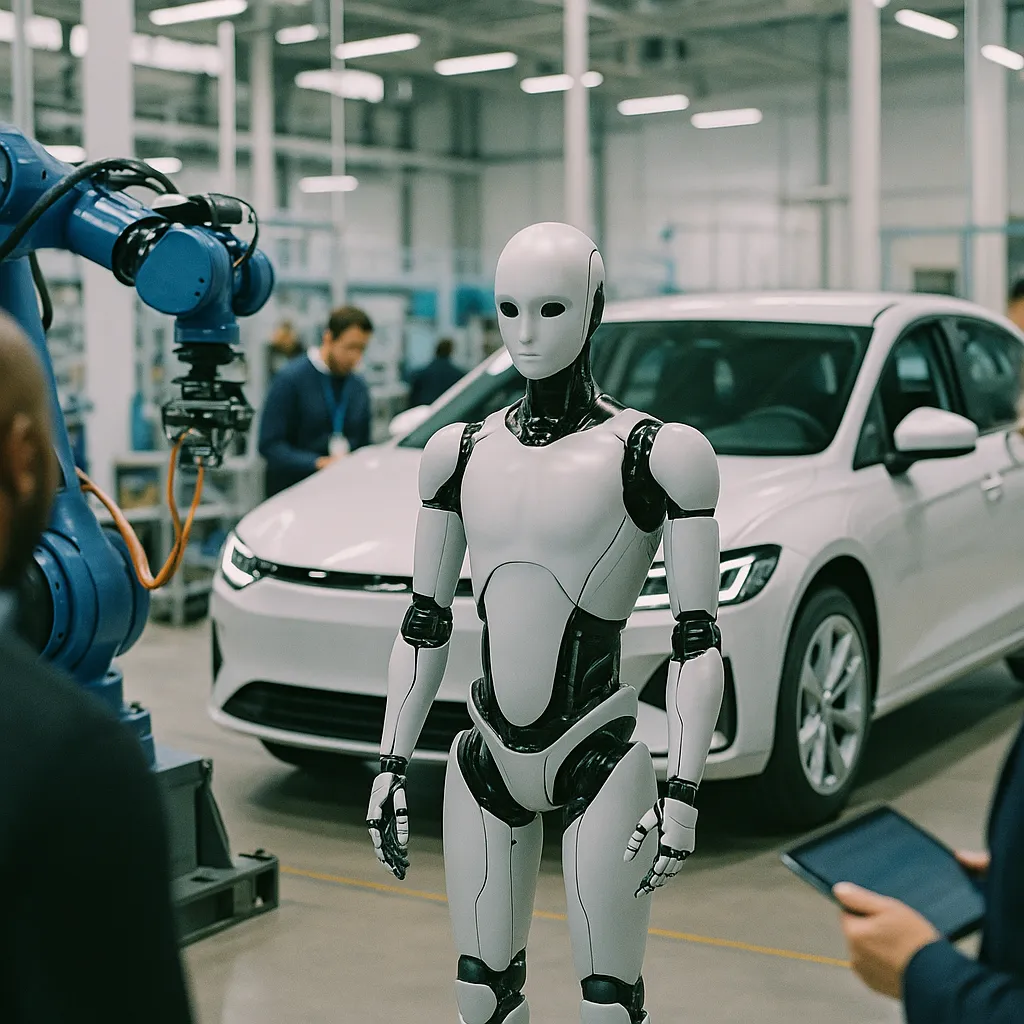
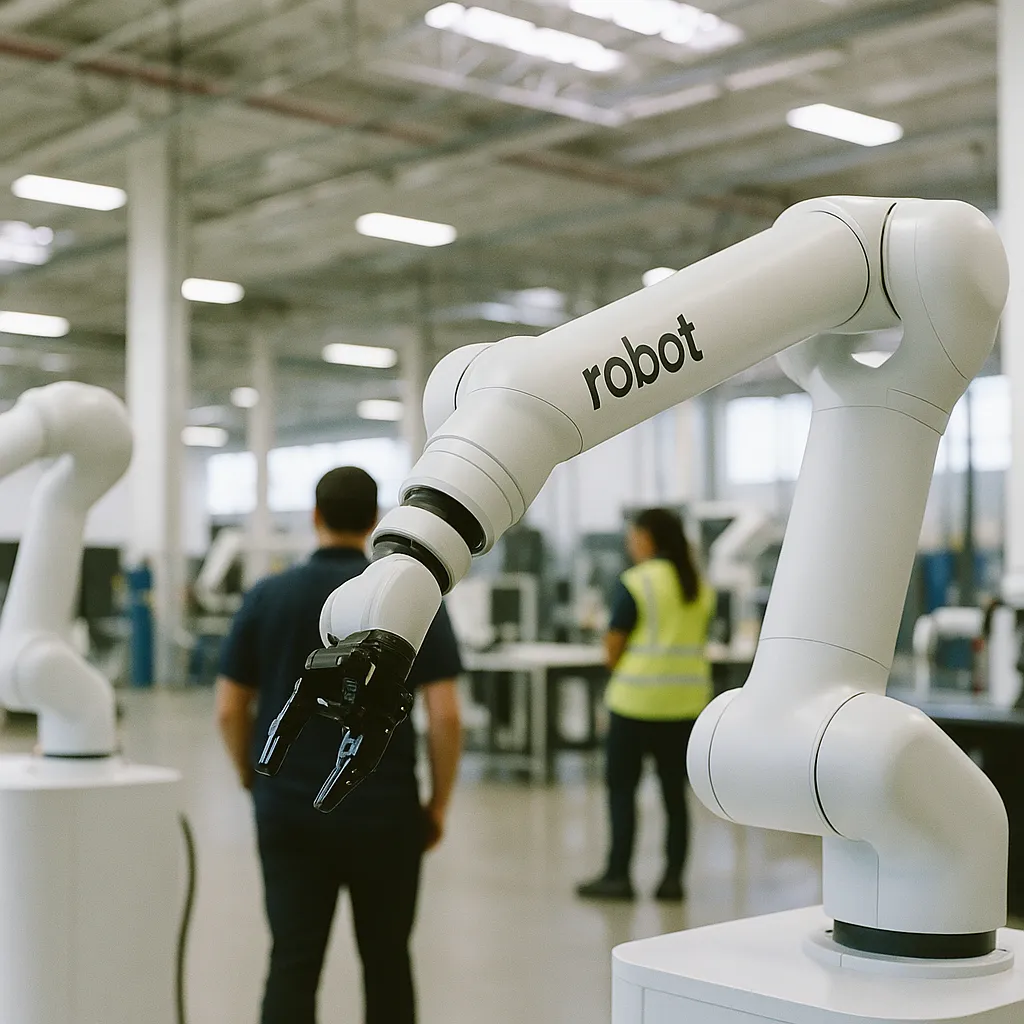
Robotics is the primary use case. Training a robot to handle novel objects — new shapes, materials, weights — requires enormous data variety that real-world collection can't provide economically. Synthetic environments let developers generate millions of object-handling scenarios in hours rather than months, across material and lighting conditions that would take years to encounter naturally.
Vision AI agents are systems that make decisions based on visual input: quality inspection on a manufacturing line, inventory verification in a warehouse, safety monitoring on a construction site. These systems need training data across lighting conditions, occlusion scenarios, and defect types that are difficult to capture comprehensively through real-world camera feeds.
Get this in your inbox.
Daily AI intelligence. Free. No spam.
Autonomous vehicles are the most established use case for synthetic training data. Most serious AV programs already use simulation heavily. NVIDIA's blueprint provides a standardized framework for teams that want to build their own simulation pipelines rather than rely on closed vendor tools — or on whatever simulation environment their AV platform vendor offers.
Why Open, and Why Now
NVIDIA's decision to release this as an open blueprint rather than a licensed product follows a familiar strategic pattern: open tooling drives ecosystem adoption; ecosystem adoption creates demand for the hardware — H100s, B200s, GH200s — that runs the training workloads. The blueprint is free; the compute it requires is not.
The timing is deliberate. Physical AI is at an inflection point. Humanoid robotics companies — Figure, 1X, Agility Robotics, Unitree — are moving from lab demonstrations to commercial pilots. Autonomous vehicle programs are seeing fresh investment after the 2023–2024 consolidation period. Industrial AI companies are deploying vision systems at scale in manufacturing. All of them need more training data than real-world collection can safely or affordably provide.
NVIDIA's blueprint addresses the data generation bottleneck before the demand spike hits its peak.
What This Means for the Physical AI Ecosystem
For robotics startups, the blueprint reduces a significant infrastructure cost. Building a physics-accurate simulation environment from scratch requires engineering resources that early-stage companies rarely have. An open, validated framework from NVIDIA — even if it requires customization — meaningfully lowers that barrier.
For enterprise manufacturers deploying vision AI, the blueprint lowers the barrier to customizing training data for specific facility conditions. A generic training dataset built in someone else's simulated warehouse will underperform compared to synthetic data generated in a simulation of your own facility, with your specific lighting, conveyor geometry, and product mix.
For NVIDIA's competitors in AI training infrastructure — AMD, Intel, and cloud providers — this move makes Omniverse more central to the physical AI development workflow. Teams that build simulation pipelines on Omniverse are likely to run training on NVIDIA GPUs, because the integration is tightest there. It's an ecosystem lock-in play executed through developer tooling rather than product exclusivity.
What to Watch
Watch for major robotics companies — Figure, Agility Robotics, Apptronik — to announce Omniverse integration in their training pipelines over the next two quarters. That would signal the blueprint is achieving the ecosystem adoption it's designed for. Also watch how "open" the open blueprint turns out to be in practice: licensing terms, data portability, and compute requirements will determine whether small teams can genuinely adopt it or whether the real beneficiaries are large enterprise customers already deep in NVIDIA's ecosystem.
Sources: NVIDIA Newsroom — Physical AI Data Factory Blueprint
Did this help you understand AI better?
Your feedback helps us write more useful content.
Get tomorrow's AI briefing
Join readers who start their day with NexChron. Free, daily, no spam.